
Andrew Ferguson (1) (1956–)
Author of Land of Lincoln: Adventures in Abe's America
For other authors named Andrew Ferguson, see the disambiguation page.
About the Author
Andrew Ferguson is a senior editor of the Weekly Standard and the author of Land of Lincoln: Adventures in Abe's America, named by the Wall Street Journal and the Chicago Tribune as Favorite Book of the Year. He lives with his wife, Denise, in suburban Washington, D.C. Visit him at show more www.andrewfergusonbooks.com. show less
Works by Andrew Ferguson
Associated Works
Parliament of Whores: A Lone Humorist Attempts to Explain the Entire U.S. Government (1991) — Foreword, some editions — 1,652 copies, 21 reviews
Backstabbers, Crazed Geniuses, and Animals We Hate: The Writers of Slate's "Assessment" Column Tell It Like It Is (2006) — Contributor — 20 copies
Beyond the Boom: New Voices on American Life, Culture, and Politics (1990) — Contributor — 15 copies
Can Congress be Fixed and is it Broken?: Five Essays on Congressional Reform (1995) — Contributor — 5 copies
Tagged
Common Knowledge
- Canonical name
- Ferguson, Andrew
- Birthdate
- 1956
- Gender
- male
- Education
- Occidental College
- Occupations
- journalist
editor
speechwriter
author - Organizations
- The Weekly Standard
- Nationality
- Ukraine
- Associated Place (for map)
- Ukraine
Members
Reviews
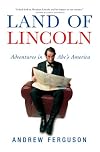
Using the narrative model put to such effective use by Tony Horwitz in his Confederates in the Attic, Weekly Standard editor Andrew Ferguson explores the man, the myth, the icon that is Abraham Lincoln in Land of Lincoln: Adventures in Abe's America (Atlantic Monthly Press, 2007). By visiting some of the many Lincoln sites, interviewing some of the premiere collectors of Lincolniana, attending a convention of Lincoln impersonators (or 'presenters', as he says they prefer to be called), and show more even speaking with a few Lincoln "haters," Ferguson attempts to reconcile some of his own longstanding perceptions of Lincoln with what he sees as the wider societal view of our sixteenth president.
If you find it possible to get past Ferguson's shocking conclusion that Lincoln was a complicated guy and his legacy's just as complicated (not exactly breaking news, I hope, to anyone who's ever thought much about the matter), there is much of interest in this book. His examination of the recent overhauls of major Lincoln exhibits at the Chicago Historical Society and the creation of the new Abraham Lincoln Presidential Library and Museum in Springfield are quite good - it's worrisome (to say the least) to think that the consultants who design exhibits for Disney are now also designing museums, and Ferguson's discussions with these designers (who threw about phrases like "emotional engineering", the type that make me cringe) are quite enlightening.
The interviews with top collectors of Lincoln memorabilia made for excellent reading, while Ferguson's retelling of his trip to a workshop based around promoting "Lincoln's values" fell flat. The only thing worse than having to attend a crappy workshop is reading about attending a crappy workshop. More to the point, as Ferguson points out, using Lincoln as a literal managerial model may not be the best idea. There are some amusing moments, as when Ferguson learns that the "Lincoln Heritage Trail" he wanted to recreate for his children to replicate a trip he took with his own parents was a gimmick dreamed up in the 1960s by the American Petroleum Institute to promote road tripping and gas consumption.
Ferguson gets a bit overly snarky about the National Park Service for my taste ("The reigning ideology of the Park Service is party poopery - a constant vigil against anyone taking unauthorized pleasure in a Park Service property", pg. 216). Yes, they make things a little clinical, but they do their job with what minimal resources they're given. You want to improve service at national parks? Support upping their budgets, don't complain about them.
In the end, Ferguson comes around to arguing that in the end, "I was more grateful for the icon. I was happy to find a Lincoln that was simpler and more plausible than the ones I'd gotten from scholars, haters, publicists, and buffs" (pg. 261). Whatever helps you sleep at night, I guess, but my view is that while we can all be grateful for the "icon" Lincoln has become, and admire him for the courage, wisdom, vision and perseverance he displayed, we should also seek to understand him as a person. This doesn't mean making him into soundbites or PowerPoint slides or dissecting his every word or action for signs of x or y or z (you name it, there's been a book or a paper written suggesting it). It does mean grappling with the fact that like all human beings, Lincoln wasn't born as a marble statue, that he held views which we may find go against the "iconic" image. Such is life, and such was Lincoln.
I must, as I often do, take issue with the way Ferguson documents his sources. He's got a couple of brief paragraphs discussing sources he used, but often in the text he offhandedly mentions books or authors without offering even a "for further reading" list, let along a bibliogaphy. Even worse, at several points he quotes authors without saying who they are or where the quote is from (see pg. 264, for example) - this is a frustrating and easily remedied habit that should not be allowed to continue.
At its core, this is a reasonably interesting trek through the Lincoln milieu. It's got a few faults, but the premise is worthwhile and much of the content holds up.
http://philobiblos.blogspot.com/2007/06/book-review-land-of-lincoln.html show less
If you find it possible to get past Ferguson's shocking conclusion that Lincoln was a complicated guy and his legacy's just as complicated (not exactly breaking news, I hope, to anyone who's ever thought much about the matter), there is much of interest in this book. His examination of the recent overhauls of major Lincoln exhibits at the Chicago Historical Society and the creation of the new Abraham Lincoln Presidential Library and Museum in Springfield are quite good - it's worrisome (to say the least) to think that the consultants who design exhibits for Disney are now also designing museums, and Ferguson's discussions with these designers (who threw about phrases like "emotional engineering", the type that make me cringe) are quite enlightening.
The interviews with top collectors of Lincoln memorabilia made for excellent reading, while Ferguson's retelling of his trip to a workshop based around promoting "Lincoln's values" fell flat. The only thing worse than having to attend a crappy workshop is reading about attending a crappy workshop. More to the point, as Ferguson points out, using Lincoln as a literal managerial model may not be the best idea. There are some amusing moments, as when Ferguson learns that the "Lincoln Heritage Trail" he wanted to recreate for his children to replicate a trip he took with his own parents was a gimmick dreamed up in the 1960s by the American Petroleum Institute to promote road tripping and gas consumption.
Ferguson gets a bit overly snarky about the National Park Service for my taste ("The reigning ideology of the Park Service is party poopery - a constant vigil against anyone taking unauthorized pleasure in a Park Service property", pg. 216). Yes, they make things a little clinical, but they do their job with what minimal resources they're given. You want to improve service at national parks? Support upping their budgets, don't complain about them.
In the end, Ferguson comes around to arguing that in the end, "I was more grateful for the icon. I was happy to find a Lincoln that was simpler and more plausible than the ones I'd gotten from scholars, haters, publicists, and buffs" (pg. 261). Whatever helps you sleep at night, I guess, but my view is that while we can all be grateful for the "icon" Lincoln has become, and admire him for the courage, wisdom, vision and perseverance he displayed, we should also seek to understand him as a person. This doesn't mean making him into soundbites or PowerPoint slides or dissecting his every word or action for signs of x or y or z (you name it, there's been a book or a paper written suggesting it). It does mean grappling with the fact that like all human beings, Lincoln wasn't born as a marble statue, that he held views which we may find go against the "iconic" image. Such is life, and such was Lincoln.
I must, as I often do, take issue with the way Ferguson documents his sources. He's got a couple of brief paragraphs discussing sources he used, but often in the text he offhandedly mentions books or authors without offering even a "for further reading" list, let along a bibliogaphy. Even worse, at several points he quotes authors without saying who they are or where the quote is from (see pg. 264, for example) - this is a frustrating and easily remedied habit that should not be allowed to continue.
At its core, this is a reasonably interesting trek through the Lincoln milieu. It's got a few faults, but the premise is worthwhile and much of the content holds up.
http://philobiblos.blogspot.com/2007/06/book-review-land-of-lincoln.html show less
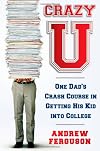
Excellent book: intelligent, informative, and funny. Interestingly, one of his best insights concerns the law of constant contradiction in online advice, and Pilarflores and I seem to have read different books. The chapter on the SATs is especially good (it turns out that the proposed alternatives are probably even more subjective and even more likely to advantage the advantaged kids). His descriptions of every college tour in the world, the mother of a girl with 2400s--Dave Barry couldn't show more have done it better. He also has done his research. He reports on interviews with the U.S. News and World Report statistician, admissions people, anti-SAT activists, and he goes to the Harvard information session and orders an online college essay so that we don't have to. His experience with FAFSA and CSS (the financial aid forms) don't quite ring true, and I suspect his income is a lot higher than he lets on, but the rest of it is just spot on and shines some much-needed perspective on a very fraught subject. show less
Andrew Ferguson’s Crazy U is an end-to-end winner.
Faced with the daunting task of getting a seemingly unfocused and lackadaisical son into a ‘good college’, Ferguson takes us along for the very funny ride through college rankings, applications, campus visits, wild-eyed parents rapidly losing their minds, and all the accoutrements of the overblown, overpriced, over-rated empire that is American higher education.
Although Crazy U is mostly for fun, there is plenty here to stop concerned show more readers (i.e. other parents with kids coming up to college age) right in their tracks. It’s actually a very useful, palatable introduction to the whole sordid process.
Recommended. show less
Faced with the daunting task of getting a seemingly unfocused and lackadaisical son into a ‘good college’, Ferguson takes us along for the very funny ride through college rankings, applications, campus visits, wild-eyed parents rapidly losing their minds, and all the accoutrements of the overblown, overpriced, over-rated empire that is American higher education.
Although Crazy U is mostly for fun, there is plenty here to stop concerned show more readers (i.e. other parents with kids coming up to college age) right in their tracks. It’s actually a very useful, palatable introduction to the whole sordid process.
Recommended. show less
Andrew Ferguson, a senior editor of "The Weekly Standard," details the still visible and tangible legacy of Abraham Lincoln in this rousing book. Writing with humor and insight, Ferguson visits the museums and monuments, interviews the main Lincoln collectors, and considers the shaping of Lincoln's meaning in American memory over the decades.
"Land of Lincoln" begins with the 2004 controversy over the installation of a statue of Lincoln in Richmond, Virginia, the former capitol of the show more Confederacy. The outrage clearly intrigued Ferguson, who wondered, as he writes, "Who could object to Lincoln?" (2) As Ferguson discovered, there's a strong contingent of people who dislike the sixteenth president. Attending a conference organized by Lincoln statue opponents, Ferguson was surprised to discover a room full of normal middle-class Americans, rather than rednecks or ignorant oafs, who seemed to know quite a bit about Lincoln. Listening to them, he was intrigued by a pattern that arose, exemplified by the writings of Thomas DiLorenzo:
"The pattern of DiLorenzo's awakening is common among the Lincoln haters. They all tell a similar story. Having inherited a vague but intensely admiring account of Lincoln in their youth, they were startled when they learned that some of it -- at least -- wasn't entirely accurate, and before long the whole edifice came tumbling down." (23)
From this beginning, Ferguson sets out to trace the shape of Lincoln's legacy, learning more about than the 'vague but intensely admiring account of Lincoln' from his own youth. Ferguson himself is very much a central figure in this narrative -- for all of his solid insight -- and this story is in some ways a modern-day odyssey for the writer. Along the way, he frequently comments on the Lincoln he met as a child, visiting the Chicago Historical Society years ago, or taking a family vacation along the Lincoln Heritage Trail.
Writing with humor and delicacy, Ferguson fleshes out his text, which at first seems to be just an entertaining travelogue: the author is always going somewhere to look for Lincoln, seeing the sights and talking to interesting people. Woven within this, though, is a wealth of historical facts about Lincoln and the development of his legacy, mixed with details about the changing contexts for Lincoln's legacy -- including the changing context of what is history -- and held together with the emotional response of Ferguson about what he's observing and learning.
The most entertaining chapter may be the brutal onslaught Ferguson launches at the Chicago Historical Society in a chapter entitled "The Past Isn't What It Used to Be." Ferguson remembers visiting the museum as a child, especially the graphic representations of history, like a reconstructed fort and Indian village or twenty dioramas showing scenes from Lincoln's life. When he revisited years later, all of these had been removed, in favor of social history. Ferguson is clearly an ideological conservative, which gives his comments about museums an edge, but fundamentally he is almost certainly right: narrative history is more comprehensible for the general public -- and has more interesting display pieces -- than social history.
This hugely entertaining diatribe aside, Ferguson is more amusedly balanced in the rest of his journey, whether considering the behemoth $145 million museum in Springfield, Illinois, talking to countless Lincoln impersonators at an annual Association of Lincoln Presenters conference, or dragging his own kids along a modified version of the Lincoln Heritage Trail (which turns out to have been a creation of the American Petroleum Institute to encourage lengthy automobile trips). He considers the use of Lincoln over the last 80 years to teach leadership secrets to business people. He writes about the breathtaking and expansive industry of Lincolniana that has developed over the years, including a visit with collector de jour Louise Taper, irrepressible and enthusiastic as always.
It is difficult to describe the superb tightrope act Ferguson performs in this book. The text is unassuming, almost journalistic, yet brimming with intelligence. It is unfailingly enjoyable to read and consistently interesting. Moreover, it is often downright touching, never more so than the beautiful and ironic story about Ferguson's visit with his kids to Lincoln's birthplace cabin. It has insights and research for the Lincoln buff, but will delight any reader.
This review is also published at http://lincolniana.blogspot.com/2009/04/book-review-land-of-lincoln-adventures.h.... show less
"Land of Lincoln" begins with the 2004 controversy over the installation of a statue of Lincoln in Richmond, Virginia, the former capitol of the show more Confederacy. The outrage clearly intrigued Ferguson, who wondered, as he writes, "Who could object to Lincoln?" (2) As Ferguson discovered, there's a strong contingent of people who dislike the sixteenth president. Attending a conference organized by Lincoln statue opponents, Ferguson was surprised to discover a room full of normal middle-class Americans, rather than rednecks or ignorant oafs, who seemed to know quite a bit about Lincoln. Listening to them, he was intrigued by a pattern that arose, exemplified by the writings of Thomas DiLorenzo:
"The pattern of DiLorenzo's awakening is common among the Lincoln haters. They all tell a similar story. Having inherited a vague but intensely admiring account of Lincoln in their youth, they were startled when they learned that some of it -- at least -- wasn't entirely accurate, and before long the whole edifice came tumbling down." (23)
From this beginning, Ferguson sets out to trace the shape of Lincoln's legacy, learning more about than the 'vague but intensely admiring account of Lincoln' from his own youth. Ferguson himself is very much a central figure in this narrative -- for all of his solid insight -- and this story is in some ways a modern-day odyssey for the writer. Along the way, he frequently comments on the Lincoln he met as a child, visiting the Chicago Historical Society years ago, or taking a family vacation along the Lincoln Heritage Trail.
Writing with humor and delicacy, Ferguson fleshes out his text, which at first seems to be just an entertaining travelogue: the author is always going somewhere to look for Lincoln, seeing the sights and talking to interesting people. Woven within this, though, is a wealth of historical facts about Lincoln and the development of his legacy, mixed with details about the changing contexts for Lincoln's legacy -- including the changing context of what is history -- and held together with the emotional response of Ferguson about what he's observing and learning.
The most entertaining chapter may be the brutal onslaught Ferguson launches at the Chicago Historical Society in a chapter entitled "The Past Isn't What It Used to Be." Ferguson remembers visiting the museum as a child, especially the graphic representations of history, like a reconstructed fort and Indian village or twenty dioramas showing scenes from Lincoln's life. When he revisited years later, all of these had been removed, in favor of social history. Ferguson is clearly an ideological conservative, which gives his comments about museums an edge, but fundamentally he is almost certainly right: narrative history is more comprehensible for the general public -- and has more interesting display pieces -- than social history.
This hugely entertaining diatribe aside, Ferguson is more amusedly balanced in the rest of his journey, whether considering the behemoth $145 million museum in Springfield, Illinois, talking to countless Lincoln impersonators at an annual Association of Lincoln Presenters conference, or dragging his own kids along a modified version of the Lincoln Heritage Trail (which turns out to have been a creation of the American Petroleum Institute to encourage lengthy automobile trips). He considers the use of Lincoln over the last 80 years to teach leadership secrets to business people. He writes about the breathtaking and expansive industry of Lincolniana that has developed over the years, including a visit with collector de jour Louise Taper, irrepressible and enthusiastic as always.
It is difficult to describe the superb tightrope act Ferguson performs in this book. The text is unassuming, almost journalistic, yet brimming with intelligence. It is unfailingly enjoyable to read and consistently interesting. Moreover, it is often downright touching, never more so than the beautiful and ironic story about Ferguson's visit with his kids to Lincoln's birthplace cabin. It has insights and research for the Lincoln buff, but will delight any reader.
This review is also published at http://lincolniana.blogspot.com/2009/04/book-review-land-of-lincoln-adventures.h.... show less
You May Also Like


Associated Authors
Statistics
- Works
- 6
- Also by
- 7
- Members
- 445
- Popularity
- #55,081
- Rating
- 3.8
- Reviews
- 16
- ISBNs
- 28