
Christopher Norris (1) (1947–)
Author of Deconstruction: Theory and Practice
For other authors named Christopher Norris, see the disambiguation page.
About the Author
Christopher Norris is Distinguished Research Professor in Philosophy at Cardiff University. He is the author of more than thirty books on aspects of Philosophy, literature, critical theory and the history of ideas.
Works by Christopher Norris
What's Wrong with Postmodernism?: Critical Theory and the Ends of Philosophy (Parallax: Re-visions of Culture and Society) (1990) 95 copies
Spinoza & the Origins of Modern Critical Theory (The Bucknell Lectures in Literary Theory) (1991) 30 copies
Reclaiming Truth: Contribution to a Critique of Cultural Relativism (Post-Contemporary Interventions) (1996) 30 copies
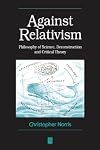
Against Relativism: Philosophy of Science, Deconstruction, and Critical Theory (1997) 27 copies, 1 review
Quantum Theory and the Flight from Realism: Philosophical Responses to Quantum Mechanics (2000) 24 copies
Associated Works
Tagged
Common Knowledge
- Canonical name
- Norris, Christopher
- Legal name
- Norris, Christopher Charles
- Birthdate
- 1947-11-06
- Gender
- male
- Education
- University College London (Ph.D|1975)
- Occupations
- literary critic
philosopher
professor - Organizations
- Cardiff University
- Nationality
- UK
- Associated Place (for map)
- UK
Members
Reviews

Published in the heyday of the American reception of deconstruction, Norris' book is a good, if somewhat dated (before Derrida's "ethical/political turn"), introduction to deconstruction, with an emphasis on its role in 20th century evolution of literary theory and criticism. Norris provides a lucid, sympathetic and mostly accurate, if occasionally (and he admits as much) simplifying, account of Derrida's work up to that point, including a bit on his relation to Heidegger and Husserl.
Much show more of the book is dedicated to providing an overview of the American reception of Derrida's work and its relation to main trends in American literary theory and criticism, specifically structuralism, New Criticism, and Marxist criticism. Norris clearly has his favourites among Derrida's American heirs: Paul de Man is repeatedly lauded for his rigour, while certain others come in for some minor censure for going too far into the sort of rhapsodic flights of imagination and whimsy that deconstruction can sometimes be taken to legitimate. But his criticism and praise avoid both fawning and the histrionics that deconstruction has sometimes inspired in its detractors.
If you are looking for a philosophical introduction to Derrida's work, this is not it, but that is clearly not its aim. show less
Much show more of the book is dedicated to providing an overview of the American reception of Derrida's work and its relation to main trends in American literary theory and criticism, specifically structuralism, New Criticism, and Marxist criticism. Norris clearly has his favourites among Derrida's American heirs: Paul de Man is repeatedly lauded for his rigour, while certain others come in for some minor censure for going too far into the sort of rhapsodic flights of imagination and whimsy that deconstruction can sometimes be taken to legitimate. But his criticism and praise avoid both fawning and the histrionics that deconstruction has sometimes inspired in its detractors.
If you are looking for a philosophical introduction to Derrida's work, this is not it, but that is clearly not its aim. show less
You May Also Like


Associated Authors
Statistics
- Works
- 41
- Also by
- 5
- Members
- 1,257
- Popularity
- #20,409
- Rating
- 3.2
- Reviews
- 2
- ISBNs
- 156
- Languages
- 4