
John Sadler (1) (1953–)
Author of Scottish Battles: from Mons Graupius to Culloden
For other authors named John Sadler, see the disambiguation page.
About the Author
Image credit: John Sadler, author of "Blood on the Wave" and "Scottish Battles"
Works by John Sadler
The Second Baron's War: Simon de Montfort and the Battles of Lewes and Evesham (2008) 24 copies, 1 review
Tagged
Common Knowledge
- Birthdate
- 1953
- Gender
- male
- Occupations
- author
historian (author of "Blood on the Wave" and "Scottish Battles")
lecturer (author of "Blood on the Wave" and "Scottish Battles")
tour guide (battlefield) (author of "Blood on the Wave" and "Scottish Battles")
historical interpreter (author of "Blood on the Wave" and "Scottish Battles")
lawyer (author of "Blood on the Wave" and "Scottish Battles") - Nationality
- UK
- Associated Place (for map)
- UK
Members
Reviews

" A battle is like a kind of dance...You have to sense your partner's moves, be ready to respond to the merest nuance. It was time this reel was ended."
In September of 1513 the English and Scottish forces prepare for battle on the boggy Flodden Field. King James IV of Scotland, married to King Henry VIII sister, Margaret Tudor is retaliating for King Henry VIII invasion of France. Alexander Lord Hume leads the Scottish troops and Isabella Hoppringle, the Abbess of Coldstream deals show more with the consequences of the violence with her young charges. Leading the English Forces is Sir Thomas Howard, an older, but wizened leader while King Henry VIII fights in France. John Heron of Ford strategizes, and Lord Dacre leads a Calvary force for England.
Blood Divide expertly recounts the battle of Flodden Field through the preparation, battle and aftermath. Through the points of view of Sir Thomas Howard, Alexander Hume, John Howard, Lord Dacre and Isabella Hoppringle along with letters from other significant players, a wide view of the battle is seen. Written with accurate and thorough historical fact, the reasoning behind the war is explored, the battle strategy on both sides, the weaponry choices as well as the consequences of victory for the English and defeat for the Scottish. I was most drawn into Isabella's story. As the Abess of Coldstream, she was pulled from her duties to aid the Scottish soldiers with medical care. With an amazing amount of grace and fortitude, she is able to save some soldiers while caring for others and deal with an amazing amount of carnage and death with the little amount of medical training she was given. I was also intrigued by the English strategy going into a battle that didn't seem like they would be able to win as well as the Scottish decision to send their King and all of their nobility in the front lines. I do wish there were better transitions between character points of view as I would get temporarily confused at many of the transition points. Overall, a wonderfully written and researched book about an overlooked battle during King Henry VIII reign.
This book was received for free in return for an honest review. show less
This book was received for free in return for an honest review. show less
 This review was written for LibraryThing Early Reviewers.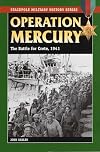
Operation Mercury, the World War II German invasion of Crete, was something of a disaster for both sides. The Allies lost the island but the Germans airborne troops took horrendous loses and were never able to stage another large-scale airborne attack. The Germans under Luftwaffe General Kurt Student made a number of errors – they underestimated the number and quality of Allied troops on the island; they dispersed their airborne landings, trying to capture several airfields; and they tried show more to resupply by sea in the face of the Royal Navy. The Allies, though, had the handicap of too much information, too much outdated experience, and not enough equipment. In the “too much information” department, New Zealand General Freyberg had Ultra intercepts that were misinterpreted to imply that the main German invasion would come by sea, and kept troops back against beach landings that never materialized. In the “outdated experience” department, Allied officers on Crete were usually World War One veterans and were used to cautious battles and minimizing casualties; what was needed to do was aggressive counterattacks before the German Fallschirmjägern could get organized. And the Allies were woefully undersupplied; the Greek units on the island had been starved of weapons and ammunition by a government afraid they might be used against it, and all the Allies were woefully short of communications equipment, leading to the use of runners and messengers rather than radios. Once the Germans were able to capture Maleme airport and start flying in reinforcements, the battle was over. The battle effectively ended the military careers of both commanders;
Author John Sadler’s pervious books have all be about Scottish wars, but he does an excellent job here. Insightful analysis of the campaign is interspersed with first-person accounts. There are good maps and appropriate action photographs. The only questionable comment was Sadler claims that German paratroops were unable to maneuver during their drop because their parachutes used “static lines”; my understanding is the static line is there to ensure the parachute opens and in-air maneuverability is a function of parachute design. However, I have no personal experience and could be all wrong. show less
Author John Sadler’s pervious books have all be about Scottish wars, but he does an excellent job here. Insightful analysis of the campaign is interspersed with first-person accounts. There are good maps and appropriate action photographs. The only questionable comment was Sadler claims that German paratroops were unable to maneuver during their drop because their parachutes used “static lines”; my understanding is the static line is there to ensure the parachute opens and in-air maneuverability is a function of parachute design. However, I have no personal experience and could be all wrong. show less
It took me a little while to get used to the rhythm of Mr. Sadler’s writing – I will admit that up front – but once I did I found myself fully engrossed in this tale of the battle of Flodden. This was a fascinating time in history; Henry VIII had just taken his throne and was full of his power. He wanted to fight France and take back what he felt was England’s, ie: France. James IV in Scotland was an ally of France so was committed to supporting it against Henry – and he wanted to show more prove to the world that his country was more than just a country of rough barbarians. He was young and thought he knew it all and wanted the “glory” of war. Henry and the bulk of his army headed off to France leaving the Howards to fight with what they can muster against the whole of the Scottish army.
This is more than a book about a battle as Mr. Sadler develops some lesser known characters such as the Bastard of Heron and Isabella Hoppringle – people who lived during the time but are not so well known to history. In this story they are much larger players and very fascinating. Mr. Sadler has really fleshed them out and despite John Heron’s reputation he becomes almost likable – almost. He’s still a bastard literally and figuratively. But he is the one in some ways driving the story.
The book is extensively researched and Mr. Sadler includes so many details yet the book is never dull. In fact this is one I’ll keep on my shelf for a second read. I suspect it will be even better on a second read. It is deep and rich look at a singular battle in English and Scottish history. show less
This is more than a book about a battle as Mr. Sadler develops some lesser known characters such as the Bastard of Heron and Isabella Hoppringle – people who lived during the time but are not so well known to history. In this story they are much larger players and very fascinating. Mr. Sadler has really fleshed them out and despite John Heron’s reputation he becomes almost likable – almost. He’s still a bastard literally and figuratively. But he is the one in some ways driving the story.
The book is extensively researched and Mr. Sadler includes so many details yet the book is never dull. In fact this is one I’ll keep on my shelf for a second read. I suspect it will be even better on a second read. It is deep and rich look at a singular battle in English and Scottish history. show less
This review was written for LibraryThing Early Reviewers.
The border between England and Scotland has long been disputed, the nobles of each side know who they support but the border reivers are less loyal. With Henry VIII away fighting an expensive and not very successful campaign in France, his brother-in-law James IV of Scotland sees his chance to invade England. Bolstered by a crack troop of Swiss infantry and a mighty collection of cannon, the Scots take a number of border strongholds before being challenged by the English under the command of show more Sir Thomas Howard. The ensuing battle settled the situation for this generation and is long remembered by the Scots.
Sadler is an eminent historian who has tried to bring a human side to this battle by telling it from various viewpoints. At first this is a little confusing, particularly as many of the participants have similar names. However there is a narrative from the Scots, a narrative from the English and two other, more interesting ones: John Heron, a bastard son of nobility, whose fight with one of James' lords was given as the reason for the scottish invasion, and Isabella Hoppringle, the lay abbess of a priory near Coldstream. Both of these are genuine historical figures and their perspectives allow the development of ideas about the actual brutality of the fight on ordinary men and the role of medics and women in 16th century warfare.
The battle scenes are superb, with details of both the horror of battle and the gruesome aftermath. Sadler's knowledge comes to the fore with descriptions of tactics, weapons etc. Less successful are the attempts at romance! show less
Sadler is an eminent historian who has tried to bring a human side to this battle by telling it from various viewpoints. At first this is a little confusing, particularly as many of the participants have similar names. However there is a narrative from the Scots, a narrative from the English and two other, more interesting ones: John Heron, a bastard son of nobility, whose fight with one of James' lords was given as the reason for the scottish invasion, and Isabella Hoppringle, the lay abbess of a priory near Coldstream. Both of these are genuine historical figures and their perspectives allow the development of ideas about the actual brutality of the fight on ordinary men and the role of medics and women in 16th century warfare.
The battle scenes are superb, with details of both the horror of battle and the gruesome aftermath. Sadler's knowledge comes to the fore with descriptions of tactics, weapons etc. Less successful are the attempts at romance! show less
You May Also Like


Associated Authors
Statistics
- Works
- 36
- Members
- 586
- Popularity
- #42,791
- Rating
- 3.5
- Reviews
- 26
- ISBNs
- 97
