
Paul Baker (1) (1972–)
Author of Fabulosa!: The Story of Polari, Britain's Secret Gay Language
For other authors named Paul Baker, see the disambiguation page.
About the Author
Paul Baker is Senior Lecturer, in Linguistics and English Language at Lancaster University. He is co-author of A Glossary of Corpus Linguistics (2006) and commissioning editor for the journal Corpora.
Works by Paul Baker
Associated Works
Tagged
Common Knowledge
- Legal name
- Baker, John Paul
- Birthdate
- 1972
- Gender
- male
- Organizations
- Lancaster University
- Map Location
- UK
Members
Reviews
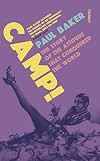
Camp is notoriously difficult to define but hits you in the face with the full force of a flamingo’s wing when you see it. This is a comprehensive history of the subject from the Court of Louis XIV to RuPaul’s Drag Race. Much of the terrain under surveillance will be familiar to connoisseurs of camp, and indeed camp connoisseurs, but Baker is an extremely perceptive analyst of all things camp and campy. He is also an unusually convivial writer with his own pleasing line in camp repartee. show more His text is peppered with autobiographical vignettes that are both funny and illuminating. I particularly enjoyed his reminiscences of watching Dynasty with his family in the 1980s. As a special treat, to enhance their appreciation of this everyday story of oil tycoons, Paul’s mum ‘would buy everyone a small bottle of lemonade and a packet of Smith’s Crispy Tubes crisps (which we viewed as ‘posh’ because they were advertised on television by a tennis umpire who referred to them as ‘rather elegant’)’. This juxtaposition of fantasy wealth and glamour, and real life domestic mundanity, is wonderfully camp in itself.
Susan Sontag, in her famous 1964 essay Notes on Camp, characterised camp as essentially depoliticised or apolitical. Baker provides lots of evidence to the contrary. During the Stonewall riots of 1969, for instance, gays, drag queens and trans people formed a spontaneous chorus line to face the line of helmeted police armed with nightsticks. Performing a Rockettes style synchronised high kicking routine, they sang a defiant song to the tune of ‘Ta-ra-ra-Boom-de-ay’: ‘We are the Stonewall girls. We wear our hair in curls. We don’t wear underwear. We show our pubic hair’. As Baker says: ‘It’s all in the context - and in certain circumstances, being camp is the ultimate political statement, where simply walking down the street or opening your mouth to speak is an act of rebellion’. I’ll drink to that, and also this treasurable philosophical nugget from Nancy Mitford: ‘Life is sometimes sad and often dull, but there are currants in the cake’. This excellent book is stuffed full with life-enhancing currants. show less
Susan Sontag, in her famous 1964 essay Notes on Camp, characterised camp as essentially depoliticised or apolitical. Baker provides lots of evidence to the contrary. During the Stonewall riots of 1969, for instance, gays, drag queens and trans people formed a spontaneous chorus line to face the line of helmeted police armed with nightsticks. Performing a Rockettes style synchronised high kicking routine, they sang a defiant song to the tune of ‘Ta-ra-ra-Boom-de-ay’: ‘We are the Stonewall girls. We wear our hair in curls. We don’t wear underwear. We show our pubic hair’. As Baker says: ‘It’s all in the context - and in certain circumstances, being camp is the ultimate political statement, where simply walking down the street or opening your mouth to speak is an act of rebellion’. I’ll drink to that, and also this treasurable philosophical nugget from Nancy Mitford: ‘Life is sometimes sad and often dull, but there are currants in the cake’. This excellent book is stuffed full with life-enhancing currants. show less
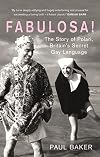
This is a fascinating topic, and the book is a relatively quick read. I didn't love it, and look some of that is a me problem; the book I want to read about Polari is probably also a book he would've loved to have had during his research phase. It just doesn't exist. So for this book, it's a little more general cultural history, and there's some language use in the description and linguistics that I question. Absolutely there's no reason to use g*psy so freely, in metaphor and description of show more the Roma; nevermind calling the language a sort of pidgin/creole when it's a whole-ass language family with several separate and fully complex languages alongside the para-romani branches that incorporate dominant population languages in different regions. Another quibble is a brief straw-man argument refuted with 'evidence' that is just the author's other work. All of that to say, I wish a passionate and well-rounded linguist would write a book on this topic, just for me. It's still not bad overall, there's plenty to hold interest, educate and entertain. *3.5 show less
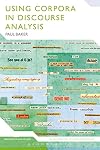
Aside from experiments with Mark Davies' COCA interface and WordSmith Tools, this book was my first exposure to corpus analysis.[As an aside: corpus analysis is a research methodology originating in linguistics. Today the methodology is associated primarily with large databases and specialized software packages that facilitate the examination of large bodies of text in order to uncover language patterns above the level of the sentence. An example of one such corpus is the Corpus of show more Contemporary American English (COCA), which is continuously updated and at present contains about 425 million words. Corpus analysis uses empirical methods (as opposed to armchair introspection) to develop theories of how natural language is used in specific contexts.] I think this book works quite well for those who have little experience with the field. As the title suggests, it's also geared more towards the researcher who wants to add some quantitative methods to the usual qualitative tools deployed by a discourse analyst (and probably mostly a critical discourse analyst: Fairclough is cited with fair regularity).The text's failings are perhaps only by design, since it is meant to be only an introduction and a how-to guide. However, for my tastes I would have preferred more theoretical framing of these methods (particularly in terms of epistemology, semiotics, or social theory). This would have helped me to wrap my mind around the kind of machine-aided pattern-matching typical of corpus analysis. (In general it seems as if the cultural/philosophical/historical significance of corpus as a method isn't touched in this book). At any rate, a brief survey of the literature on topics such as these would have been useful. show less
You May Also Like


Statistics
- Works
- 20
- Also by
- 1
- Members
- 441
- Popularity
- #55,515
- Rating
- 3.9
- Reviews
- 3
- ISBNs
- 106