
Tom Griffiths (1) (1957–)
Author of The Art of Time Travel: Historians and Their Craft
For other authors named Tom Griffiths, see the disambiguation page.
Works by Tom Griffiths
Associated Works
Tagged
Common Knowledge
Members
Reviews
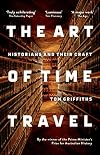
I don’t really know what I was expecting – I only chased up this book because it was shortlisted for the NSW Premier’s Literary Awards – but The Art of Time Travel, Historians and the Craft is such a wonderful surprise! To describe it as a collection of portraits of fourteen Australian historians is underwhelming to say the least, yet it turns out to be a captivating book which charmed me from start to finish.
The very first historian chosen is Eleanor Dark. Yes, the author of the show more much-loved novel that many Australians read at school, The Timeless Land. The choice of a novelist to lead the fray is emblematic of Tom Griffith’s approach: though Griffiths is himself a professor of history, he’s not hidebound by a formal academic definition of what historians might be, or where they might find their material, or what they do with it. So the chapter about Eleanor Dark is a wonderful portrait of a novelist whose research and ways of interpreting it told Australians an important story about who we are as a nation. This chapter kept making me want to retrieve my Eleanor Dark novels from the shelves and read them all over again, with fresh insights.
Curiously, Griffiths held me captive again with his next entry, Keith Hancock. I’d heard of him, but I’d never read his stuff the way I’ve read Eric Rolls, Geoffrey Blainey, Henry Reynolds and Inga Clendinnen – all of whom get their own chapter too. So it was from Griffiths that I learned that ‘If there were a Nobel Prize for History,’ observed Stuart Macintyre in 2010, ‘Hancock would surely have won it.’ It was Hancock’s pioneering work of environmental history, Discovering Monaro (1972) that provoked this accolade, and by Griffith’s account of it, it’s one I want to read.
To read the rest of my review please visit https://anzlitlovers.com/2017/05/15/the-art-of-time-travel-historians-and-their-... show less
The very first historian chosen is Eleanor Dark. Yes, the author of the show more much-loved novel that many Australians read at school, The Timeless Land. The choice of a novelist to lead the fray is emblematic of Tom Griffith’s approach: though Griffiths is himself a professor of history, he’s not hidebound by a formal academic definition of what historians might be, or where they might find their material, or what they do with it. So the chapter about Eleanor Dark is a wonderful portrait of a novelist whose research and ways of interpreting it told Australians an important story about who we are as a nation. This chapter kept making me want to retrieve my Eleanor Dark novels from the shelves and read them all over again, with fresh insights.
Curiously, Griffiths held me captive again with his next entry, Keith Hancock. I’d heard of him, but I’d never read his stuff the way I’ve read Eric Rolls, Geoffrey Blainey, Henry Reynolds and Inga Clendinnen – all of whom get their own chapter too. So it was from Griffiths that I learned that ‘If there were a Nobel Prize for History,’ observed Stuart Macintyre in 2010, ‘Hancock would surely have won it.’ It was Hancock’s pioneering work of environmental history, Discovering Monaro (1972) that provoked this accolade, and by Griffith’s account of it, it’s one I want to read.
To read the rest of my review please visit https://anzlitlovers.com/2017/05/15/the-art-of-time-travel-historians-and-their-... show less
Slicing the Silence is one of the best books I have read about Antarctica.
The main chapters are interleaved with diary entries from a voyage Tom Griffiths took to Antarctica in the summer of 2002-03 on the Polar Bird, a supply ship for the Australian Antarctic Division.
Presented as a history of human encounters with Antarctica, he covers a lot of ground between Cook's expeditions to the Southern Ocean in the latter half of the eighteenth century all the way to the current scientific programs show more and burgeoning tourist industry. As an Australian historian traveling to an Australian base many of his stories have a different perspective to those I have encountered before.
The early expeditions of what he calls the 'heroic era' will be familiar to most readers, but it is an excellent introduction to anyone who doesn't know the stories of the likes of Scott, Amundsen, Shackleton and Mawson. However Griffiths has also uncovered a lot of less well-known, but no-less fascinating characters like Robert Cushman Murphy – a young curator from the Brooklyn Museum of Natural History – who was so desperate to see penguins that he voyaged south on a whaling boat.
Griffiths is also particularly good on the absurdities of the flag planting and territorial claims that followed this initial exploration. But where the book became totally absorbing for me was when we entered the post-War era and Cold War geopolitics started to impinge on Antarctic exploration and science. This is a story that I haven't heard before and fills in the gap between the early explorers and the late twentieth century which are both covered extensively in many other places. (Edwin Mickleburgh's excellent Beyond the Frozen Sea does touch on this, but doesn't fill in the detail as well as Griffith does.)
Also fascinating is his history of the Australian researchers, base personnel and the bases themselves and how – in the 1980s – science and research suffered as the lions share of the ANARE budget was spent on building and maintaining the bases.
Finishing with the story of Captain Scott's biscuit he returns to the heroic age and seems to be suggesting that the most important lessons from man's experience of Antarctica still come from this time. show less
The main chapters are interleaved with diary entries from a voyage Tom Griffiths took to Antarctica in the summer of 2002-03 on the Polar Bird, a supply ship for the Australian Antarctic Division.
Presented as a history of human encounters with Antarctica, he covers a lot of ground between Cook's expeditions to the Southern Ocean in the latter half of the eighteenth century all the way to the current scientific programs show more and burgeoning tourist industry. As an Australian historian traveling to an Australian base many of his stories have a different perspective to those I have encountered before.
The early expeditions of what he calls the 'heroic era' will be familiar to most readers, but it is an excellent introduction to anyone who doesn't know the stories of the likes of Scott, Amundsen, Shackleton and Mawson. However Griffiths has also uncovered a lot of less well-known, but no-less fascinating characters like Robert Cushman Murphy – a young curator from the Brooklyn Museum of Natural History – who was so desperate to see penguins that he voyaged south on a whaling boat.
Griffiths is also particularly good on the absurdities of the flag planting and territorial claims that followed this initial exploration. But where the book became totally absorbing for me was when we entered the post-War era and Cold War geopolitics started to impinge on Antarctic exploration and science. This is a story that I haven't heard before and fills in the gap between the early explorers and the late twentieth century which are both covered extensively in many other places. (Edwin Mickleburgh's excellent Beyond the Frozen Sea does touch on this, but doesn't fill in the detail as well as Griffith does.)
Also fascinating is his history of the Australian researchers, base personnel and the bases themselves and how – in the 1980s – science and research suffered as the lions share of the ANARE budget was spent on building and maintaining the bases.
Finishing with the story of Captain Scott's biscuit he returns to the heroic age and seems to be suggesting that the most important lessons from man's experience of Antarctica still come from this time. show less
This was an encouraging preparation for my (anticipated) return to studying history in 2017. Griffiths surveys the history of how Australians write and tell the history of this land, not just in the work of professional historians but also in fiction, poetry and archaeology. Woven through the scholarly narrative are Griffiths’ recollections of his own training in the Melbourne and ANU history schools. His commitment to the twentieth-century French study of the longue durée, histories show more spanning centuries, leads him to argue for a long view of Australian history from the Pleistocene era to “the unfolding present” of human-inflicted climate change. show less
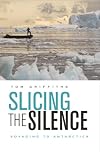
Since The Son and The Daughter came I have become an armchair adventurer rather than an outdoor adventurer. The tale of Shackleton’s adventure to Antarctica has always fascinated me; Trapped in ice for months and sailing to rescue in a small boat to an island hundreds of miles of away. I am always stunned that his entire crew survived in a situation where none should have.
I came across a blurb about Tom Griffiths’ Slicing the Silence: Voyaging to Antarctica in National Geographic’s show more Adventure magazine.
The author traveled to Antarctica and kept a diary. This book mixes entries from his diary with the history exploration of Antarctica and settlement on the icy continent. The book is about the enduring power of the “heroic era” stories of exploring Antarctica, as Edwardian figures sledged across the inhabited expanse of snow and ice.
[Antarctica] is a place where nature is lethal, humans are always just visitors and the land is covered by ice kilometers deep. This is a landscape in which the laws of chemistry and physics - and indeed the power of metaphysics - predominate, and terrestrial biology looks very marginal indeed. The ocean is where life is: the largest land animal is a mite. The ice is massive, deadly and - in spite of its own variety - reductionist. It simplifies and universalises
Griffiths does a great job of summarizing the history of exploration, living on Antarctica and the implication of Antarctic research on human behavior. He puts in contrast the easy death of humans on the continent with the abundant life in the ocean just offshore. He moves onto the current technology and climate research at the Antarctic bases. In this place where humans can barely exist, we are learning more about our world.
In the end, people go South to Antarctica “for purity, solitude, otherworldliness; they go there for the silence.” show less
I came across a blurb about Tom Griffiths’ Slicing the Silence: Voyaging to Antarctica in National Geographic’s show more Adventure magazine.
The author traveled to Antarctica and kept a diary. This book mixes entries from his diary with the history exploration of Antarctica and settlement on the icy continent. The book is about the enduring power of the “heroic era” stories of exploring Antarctica, as Edwardian figures sledged across the inhabited expanse of snow and ice.
[Antarctica] is a place where nature is lethal, humans are always just visitors and the land is covered by ice kilometers deep. This is a landscape in which the laws of chemistry and physics - and indeed the power of metaphysics - predominate, and terrestrial biology looks very marginal indeed. The ocean is where life is: the largest land animal is a mite. The ice is massive, deadly and - in spite of its own variety - reductionist. It simplifies and universalises
Griffiths does a great job of summarizing the history of exploration, living on Antarctica and the implication of Antarctic research on human behavior. He puts in contrast the easy death of humans on the continent with the abundant life in the ocean just offshore. He moves onto the current technology and climate research at the Antarctic bases. In this place where humans can barely exist, we are learning more about our world.
In the end, people go South to Antarctica “for purity, solitude, otherworldliness; they go there for the silence.” show less
Awards


You May Also Like


Statistics
- Works
- 11
- Also by
- 1
- Members
- 224
- Popularity
- #100,171
- Rating
- 3.8
- Reviews
- 6
- ISBNs
- 62
- Languages
- 6