
Gene Simmons (1) (1949–)
Author of Kiss and Make-Up
For other authors named Gene Simmons, see the disambiguation page.
About the Author
Image credit: Jason Mouratides
Works by Gene Simmons
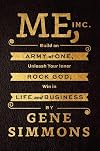
Me, Inc.: Build an Army of One, Unleash Your Inner Rock God, Win in Life and Business (2014) 56 copies, 3 reviews
On Power: My Journey Through the Corridors of Power and How You Can Get More Power (2017) 40 copies, 2 reviews
Ladies of the Night: A Historical and Personal Perspective on the Oldest Profession in the World (2008) 22 copies, 4 reviews
Eu, S. A. (Em Portugues do Brasil) 2 copies
Gene Simmons Family Jewels: Season 3 2 copies
Associated Works
All I Did Was Ask: Conversations with Writers, Actors, Musicians, and Artists (2004) — Contributor — 603 copies, 13 reviews
Tagged
Common Knowledge
- Other names
- Witz, Chaim (born)
- Birthdate
- 1949-08-25
- Gender
- male
- Occupations
- musician
singer
songwriter
actor
reality show star - Organizations
- Kiss
- Relationships
- Stanley, Paul (bandmate in Kiss)
Frehley, Ace (bandmate in Kiss) - Nationality
- Israel
USA - Birthplace
- Tirat HaCarmel, Israel
- Places of residence
- Hafia, Israel (birth)
New York, New York, USA
Beverly Hills, California, USA
Members
Reviews
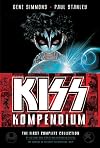
This thing is a monster, likely the biggest, heaviest, most unwieldy book I own. But Gene Simmons loves to do things big, and with this book, he succeeds. Physically, it was a bitch to read.
But what about the content? It's broken up into some distinct parts. There's the Marvel years, that are, pure and simple, cheese. The stories are dumb, the artwork is passable, but overall, it's candy floss. The last section, the Dark Horse years, isn't much better. The stories are just about as dumb, show more with the author almost trying to show Marvel how it should have been done, and failing almost as spectacularly. And the art is far too cartoonish for my liking.
But then there's the middle two-thirds of the book. The Image years, where it was the Psycho Circus run. The art is gorgeous, first by Angel Medina and later by Clayton Crain, but--and here I'm going to completely disagree with some of the others--it's the writing that really shines in this section.
Image went where no other company would go. The four mythic KISS personalities are not centre-stage. They aren't the main focus. Instead, they are the eternal gods, the watchers and the gate keepers, meting out punishment and reward as deemed necessary. And for the first time, they do become larger than life, and much more serious than the goofy rock musicians they're modeled from. Through the stories of different, mostly common peoples' lives, the veil is sometimes held aside and we're given a glimpse into the world of the Celestial, the Starchild, the Beast, and the Demon.
I was pleasantly surprised not only by the great writing and the various easter eggs strewn through both the art and the writing, but also by the depth and emotion of these stories...something never seen in any other iterations of the KISS brand.
If the Psycho Circus series had not been included in this collection, I likely would have given it a two, mostly for the actual design and feel of the book, but on the story and art, a one at best. It's the Image content that pushes this all the way up to a four.
But, I gotta say, it was a relief to put this one back on the shelf, though I do believe I did gain a little muscle tone but lugging it around and holding it while reading. show less
But what about the content? It's broken up into some distinct parts. There's the Marvel years, that are, pure and simple, cheese. The stories are dumb, the artwork is passable, but overall, it's candy floss. The last section, the Dark Horse years, isn't much better. The stories are just about as dumb, show more with the author almost trying to show Marvel how it should have been done, and failing almost as spectacularly. And the art is far too cartoonish for my liking.
But then there's the middle two-thirds of the book. The Image years, where it was the Psycho Circus run. The art is gorgeous, first by Angel Medina and later by Clayton Crain, but--and here I'm going to completely disagree with some of the others--it's the writing that really shines in this section.
Image went where no other company would go. The four mythic KISS personalities are not centre-stage. They aren't the main focus. Instead, they are the eternal gods, the watchers and the gate keepers, meting out punishment and reward as deemed necessary. And for the first time, they do become larger than life, and much more serious than the goofy rock musicians they're modeled from. Through the stories of different, mostly common peoples' lives, the veil is sometimes held aside and we're given a glimpse into the world of the Celestial, the Starchild, the Beast, and the Demon.
I was pleasantly surprised not only by the great writing and the various easter eggs strewn through both the art and the writing, but also by the depth and emotion of these stories...something never seen in any other iterations of the KISS brand.
If the Psycho Circus series had not been included in this collection, I likely would have given it a two, mostly for the actual design and feel of the book, but on the story and art, a one at best. It's the Image content that pushes this all the way up to a four.
But, I gotta say, it was a relief to put this one back on the shelf, though I do believe I did gain a little muscle tone but lugging it around and holding it while reading. show less
On Power: My Journey Through the Corridors of Power and How You Can Get More Power by Mr. Gene Simmons
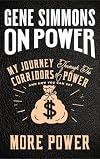
I'm giving this book four stars not because I agree with everything Simmons writes, but because I think it's a smart, engaging look at an important aspect of life which -- as he himself points out -- too many people don't think clearly about.
“So much of our popular mythology focuses on the negative aspects of power that we forget that gaining power is, perhaps, the only way to enable ourselves to make a difference in our lives and in the lives of others.”
Gene Simmons was born in Israel show more and began his life in poverty. His father walked out when he was very young, and his mother worked hard to support them, setting a powerful example he would always carry with him. They immigrated to America when he was still a child. As he grew up, he was driven by the desire to have money to be able to take care of his mother. He worked multiple jobs, saved his money, and made the conscious, deliberate choice to adapt his accent, his appearance, and his name to become more like those he observed to have power.
Simmons criticizes the idea that having power is inherently wrong, pointing out that power enables someone to accomplish their goals, to build a better life for themselves and those they care about, and have the ability to do meaningful good in the world. And I think he's right. Power and money are neutral in themselves. It's what a person does with them -- and to achieve them -- that carry ethical weight.
And this is where Simmons' himself becomes an interesting case study. While he does not advocate criminal behavior, he states again and again that a person needs to be ready to do whatever is necessary to achieve power and not worry too much about their own tender feelings. Flatter, lie, replace your deadbeat friends, if that's what it takes. If you're a beautiful woman, use that to your advantage without qualms. Once you're in power you can work to change the rules, but until then, ruthless pragmatism is necessary. And a lot of hard work. Although unashamedly Machiavellian in his outlook, Simmons pulls no punches about his belief in the necessity of working harder than anyone else, improving one's self, and achieving mastery of one's craft/art/business. His essential message is work hard, play the game, adapt yourself, and get to the top. Once you're there, you can take care of your loved ones, donate to charity (he lists, without self-congratulation, the charities he himself supports), and help others. "Secure your own breathing mask first," he orders. "Then you can help others."
It is only late in the book, when he discusses Warren Buffett, that Simmons discusses the importance of ethics in the drive to power. He admires Buffett's integrity and honesty and points out that they are essential to success. While not stating it directly, comparing the two sections of his book, he clearly considers social dishonesty acceptable as part of advancing one's self, but one's business ethics need to be above reproach.
The second half of the book is a series of case studies of successful people he admires, including Napoleon, Oprah, Michael Jordan, Buffett and others. They are less interesting than his own stories, but do provide a useful range of examples of different personalities and areas of achievement.
I think this would be a great book to read with one's kids (or other adults) and discuss. What do you think of power? What are the consequences of having it versus not having it? What are the ethical considerations? Do the ends always justify the means? How are you willing to change yourself -- or not -- to get what you want? Does power always corrupt? How did the people in Simmons' case studies -- and he himself -- change themselves or remain true to themselves in the course of their lives? Whether you agree with everything Simmons says or not, he offers a lot of food for thought.
Best of all, Simmons is a good writer. This isn't going to be a college textbook, but it's intelligent, easy to read, clear in its arguments, and frequently entertaining.
I was never a fan of KISS, but I was surprised by how much I enjoyed getting to know Gene Simmons a bit and spending some time in his virtual company. show less
“So much of our popular mythology focuses on the negative aspects of power that we forget that gaining power is, perhaps, the only way to enable ourselves to make a difference in our lives and in the lives of others.”
Gene Simmons was born in Israel show more and began his life in poverty. His father walked out when he was very young, and his mother worked hard to support them, setting a powerful example he would always carry with him. They immigrated to America when he was still a child. As he grew up, he was driven by the desire to have money to be able to take care of his mother. He worked multiple jobs, saved his money, and made the conscious, deliberate choice to adapt his accent, his appearance, and his name to become more like those he observed to have power.
Simmons criticizes the idea that having power is inherently wrong, pointing out that power enables someone to accomplish their goals, to build a better life for themselves and those they care about, and have the ability to do meaningful good in the world. And I think he's right. Power and money are neutral in themselves. It's what a person does with them -- and to achieve them -- that carry ethical weight.
And this is where Simmons' himself becomes an interesting case study. While he does not advocate criminal behavior, he states again and again that a person needs to be ready to do whatever is necessary to achieve power and not worry too much about their own tender feelings. Flatter, lie, replace your deadbeat friends, if that's what it takes. If you're a beautiful woman, use that to your advantage without qualms. Once you're in power you can work to change the rules, but until then, ruthless pragmatism is necessary. And a lot of hard work. Although unashamedly Machiavellian in his outlook, Simmons pulls no punches about his belief in the necessity of working harder than anyone else, improving one's self, and achieving mastery of one's craft/art/business. His essential message is work hard, play the game, adapt yourself, and get to the top. Once you're there, you can take care of your loved ones, donate to charity (he lists, without self-congratulation, the charities he himself supports), and help others. "Secure your own breathing mask first," he orders. "Then you can help others."
It is only late in the book, when he discusses Warren Buffett, that Simmons discusses the importance of ethics in the drive to power. He admires Buffett's integrity and honesty and points out that they are essential to success. While not stating it directly, comparing the two sections of his book, he clearly considers social dishonesty acceptable as part of advancing one's self, but one's business ethics need to be above reproach.
The second half of the book is a series of case studies of successful people he admires, including Napoleon, Oprah, Michael Jordan, Buffett and others. They are less interesting than his own stories, but do provide a useful range of examples of different personalities and areas of achievement.
I think this would be a great book to read with one's kids (or other adults) and discuss. What do you think of power? What are the consequences of having it versus not having it? What are the ethical considerations? Do the ends always justify the means? How are you willing to change yourself -- or not -- to get what you want? Does power always corrupt? How did the people in Simmons' case studies -- and he himself -- change themselves or remain true to themselves in the course of their lives? Whether you agree with everything Simmons says or not, he offers a lot of food for thought.
Best of all, Simmons is a good writer. This isn't going to be a college textbook, but it's intelligent, easy to read, clear in its arguments, and frequently entertaining.
I was never a fan of KISS, but I was surprised by how much I enjoyed getting to know Gene Simmons a bit and spending some time in his virtual company. show less
I'm not a huge KISS fan, so it was really just impulse that lead me to get this book from the library. That being said, it was a pleasant surprise. The first few comic collections are pretty decent and you can tell Gene Simmons must be a comic fan. (Harder to tell with the other members of the band).
The KISS Psycho Circus comics are easily my favorite out of the lot. Some of the issues are certainly melodramatic, but they're a great range of stories. Any horror comic fan should give these show more comics a chance.
The "Dark Horse" years aren't bad. Again a tribute to earlier comics they take much more of the "revival" style that's been getting popular lately. Of course, here the revival has a double-meeting as it reflects some of the actual issues the band seemed to have from what little I know of KISS.
My only complaint is I'd rather have seen this as a three volume series. It took a while to read this since I didn't want to be lugging this book around too much. Three volumes would have made it a bit easier to read without worrying about muscle strain ;). show less
The KISS Psycho Circus comics are easily my favorite out of the lot. Some of the issues are certainly melodramatic, but they're a great range of stories. Any horror comic fan should give these show more comics a chance.
The "Dark Horse" years aren't bad. Again a tribute to earlier comics they take much more of the "revival" style that's been getting popular lately. Of course, here the revival has a double-meeting as it reflects some of the actual issues the band seemed to have from what little I know of KISS.
My only complaint is I'd rather have seen this as a three volume series. It took a while to read this since I didn't want to be lugging this book around too much. Three volumes would have made it a bit easier to read without worrying about muscle strain ;). show less
Me, Inc.: Build an Army of One, Unleash Your Inner Rock God, Win in Life and Business by Gene Simmons
√ Better it's MY MONEY than anyone else's."
ME, INC. is a well-written, hard-hitting discussion on how to make lots of BIG MONEY. Gene has the answer, and it's very clear: Focus 100% on ME. Not your wife, not your children, not your friends. Just ME.
The first part of ME, INC is a biography of Simmons, and what he did to achieve world fame in heavy metal rock. This was interesting, and illustrates the author's point about the opportunities to achieve great success in America. Simmons (not show more his given name, of course) came to the U.S. not even knowing English. He worked hard, saved his money, got an education, and figured out how to create a BRAND.
Part two contains Simmons' recipes for success. He calls these 13 tips the "Art of More." These principles are pretty good ideas. For example, #16, "Find Partners who Complement you," #3, "Learn from the Masters," etc. The tips are okay, and many of them are different aspects of the American work ethic. Work diligently, stop looking for excuses, don't give up, save money, watch your spending, educate yourself, etc. He admits that you might have some unusual obstacles to overcome, but so what--life isn't fair. Get over it and stop whining.
As reasonable (and practical) as many of these ideas are, however, Simmons' business tips are not the central theme of this book, nor are they much different than what is found in many success books. Old fashioned hard work and self-reliance is a common theme in many business books.
Gene hammers home repeatedly the central theme: Pursue your dream with absolute ruthless passion. Build your brand, and do whatever it takes. However hard you have to work, whatever you have to sacrifice. Don't take vacations, work all night if necessary, don't get married, don't have too many children--ANYTHING it takes. "Wait until you build your fortune, so you can afford to get married or divorced." If you take vacations and holidays, "that spells 'loser.'"
Gene uses Steve Jobs as another creative genius who was on a ruthless mission. Jobs was not an electronics genius, but he pursued hiis dream with a vengeance. He didn't let anything get in his way of his dream product and company.
Although the author uses Jobs as an example of what to do--ignore friends and family, pursue your dream with 100% pure dediction, Gene nonetheless hopes the reader will be more kindly-hearted than the callous Jobs. It seems to me that the author trips himself up here. Jobs was more consistent in the self-centered, ruthless approach to business than Simmons is. Why should anyone be more kind? That doesn't follow if you are consistent with the 100% ME philosophy.
The author suggests the Ashton Kutcher movie, JOBS, but the movie pales in comparison with the outstanding book by Walter Isaacson.
√ The message of ME, INC., is extremely clear: Ruthlessly pursue Big Money; make it the absolutely #1 goal of your life. Do not compromise. Do whatever it takes. Don't let anyone get in your way. If your dream is in fact the rainbow of Big Money, then ME, INC. is the right book for you.
♫ A Review by Chris Lawson
Review copy courtesy of Edelweiss Distributors. Note: I do not know the author of this book, and no one requested I write this review. Gene was too cheap to even give me any free KISS tickets. show less
ME, INC. is a well-written, hard-hitting discussion on how to make lots of BIG MONEY. Gene has the answer, and it's very clear: Focus 100% on ME. Not your wife, not your children, not your friends. Just ME.
The first part of ME, INC is a biography of Simmons, and what he did to achieve world fame in heavy metal rock. This was interesting, and illustrates the author's point about the opportunities to achieve great success in America. Simmons (not show more his given name, of course) came to the U.S. not even knowing English. He worked hard, saved his money, got an education, and figured out how to create a BRAND.
Part two contains Simmons' recipes for success. He calls these 13 tips the "Art of More." These principles are pretty good ideas. For example, #16, "Find Partners who Complement you," #3, "Learn from the Masters," etc. The tips are okay, and many of them are different aspects of the American work ethic. Work diligently, stop looking for excuses, don't give up, save money, watch your spending, educate yourself, etc. He admits that you might have some unusual obstacles to overcome, but so what--life isn't fair. Get over it and stop whining.
As reasonable (and practical) as many of these ideas are, however, Simmons' business tips are not the central theme of this book, nor are they much different than what is found in many success books. Old fashioned hard work and self-reliance is a common theme in many business books.
Gene hammers home repeatedly the central theme: Pursue your dream with absolute ruthless passion. Build your brand, and do whatever it takes. However hard you have to work, whatever you have to sacrifice. Don't take vacations, work all night if necessary, don't get married, don't have too many children--ANYTHING it takes. "Wait until you build your fortune, so you can afford to get married or divorced." If you take vacations and holidays, "that spells 'loser.'"
Gene uses Steve Jobs as another creative genius who was on a ruthless mission. Jobs was not an electronics genius, but he pursued hiis dream with a vengeance. He didn't let anything get in his way of his dream product and company.
Although the author uses Jobs as an example of what to do--ignore friends and family, pursue your dream with 100% pure dediction, Gene nonetheless hopes the reader will be more kindly-hearted than the callous Jobs. It seems to me that the author trips himself up here. Jobs was more consistent in the self-centered, ruthless approach to business than Simmons is. Why should anyone be more kind? That doesn't follow if you are consistent with the 100% ME philosophy.
The author suggests the Ashton Kutcher movie, JOBS, but the movie pales in comparison with the outstanding book by Walter Isaacson.
√ The message of ME, INC., is extremely clear: Ruthlessly pursue Big Money; make it the absolutely #1 goal of your life. Do not compromise. Do whatever it takes. Don't let anyone get in your way. If your dream is in fact the rainbow of Big Money, then ME, INC. is the right book for you.
♫ A Review by Chris Lawson
Review copy courtesy of Edelweiss Distributors. Note: I do not know the author of this book, and no one requested I write this review. Gene was too cheap to even give me any free KISS tickets. show less
Lists
Rock Bios (2)
Awards

You May Also Like


Associated Authors
Statistics
- Works
- 18
- Also by
- 11
- Members
- 542
- Popularity
- #45,992
- Rating
- 3.5
- Reviews
- 21
- ISBNs
- 43
- Languages
- 2
