
William Harvey (1) (1578–1657)
Author of Britannica Great Books: Gilbert, Galileo, Harvey
For other authors named William Harvey, see the disambiguation page.
About the Author
Born in Folkestone, Kent, England, Harvey was a British physiologist whose discovery of the circulation of the blood drastically changed medicine. In fact, Harvey is generally regarded as the founder of modern physiology. The publication of his Exercitatio Anatomica de Motu Cordis et Sanguinis in show more Animalibus (1628) was a landmark event, widely considered the most important medical book ever published. His observations of the heart's functions and blood flow were based on anatomical studies on cadavers, animals, and himself. The son of a wealthy businessman, Harvey was a student at Cambridge University, where he studied medicine. He completed his medical training at the leading European medical school of the period, Padua, where he was a student of the famous anatomist Girolamo Fabricius. When he completed his doctorate in medicine in 1602 he returned to London and was appointed physician to St. Bartholomew's Hospital. His reputation grew, and he was elected to the Royal College of Physicians, with which he was associated for the rest of his career. Ten years prior to the publication of his great work, he was appointed as a physician to James I. After the Scottish civil war and the demise of James I, Harvey returned to London and resumed his medical practice. He continued to observe animal life wherever he traveled and wrote two additional works on animal locomotion and comparative and pathological anatomy. However, it was the publication of his book on the circulation of the blood that assured him "a place of first importance in the history of science and medicine. By this discovery he revolutionized physiological thought" (Dictionary of Scientific Biography). His work also encouraged others to study anatomy. Harvey's personal library, which he donated to the London College of Physicians, was unfortunately destroyed in the Great Fire of 1666. (Bowker Author Biography) show less
Image credit: Courtesy of the Clendening History of Medicine Library,
University of Kansas Medical Center
University of Kansas Medical Center
Works by William Harvey
Associated Works
Scientific Papers: Physiology, Medicine, Surgery, Geology (2003) — Contributor — 260 copies, 4 reviews
Tagged
Common Knowledge
- Birthdate
- 1578-04-01
- Date of death
- 1657-06-03
- Gender
- male
- Education
- University of Cambridge (Gonville and Caius College)
University of Padua
grammar school, Canterbury, England, UK - Occupations
- physician
writer
anatomist - Organizations
- Royal College of Physicians
- Relationships
- Conway, Anne (patient)
- Short biography
- William Harvey was the pioneering English physician who made vital contributions to our understand of anatomy and physiology. He was the first known person to describe completely and in detail the circulation and properties of blood as it is pumped by the heart through the body. After graduating from Cambridge University in 1597, he traveled in Europe and attended the University of Padua, Italy, renowned for its medical faculty. On his return to England, he earned a Doctor of Medicine degree from Cambridge, and became a fellow of Gonville and Caius College, his alma mater. He established himself as a physician in London, and married Elizabeth Browne. In 1607, he joined the staff at St. Bartholomew's Hospital, and became Physician in Charge in 1609. In 1615, he was appointed to the office of Lumleian lecturer of the Royal College of Physicians. He was named Physician Extraordinary to King James I in 1618, and later became the doctor to his successor, King Charles I. In 1628, he published his masterpiece treatise on the circulation of the blood, De Motu Cordis (On the Motion of the Heart and Blood).
- Nationality
- England
- Birthplace
- Folkestone, Kent, England
- Places of residence
- Folkestone, Kent, England
London, England
Canterbury, England
Padua, Italy
Burmarsh, Kent, England - Place of death
- London, England
- Burial location
- Harvey Chapel, Hempstead, Essex, England, UK
- Map Location
- England, UK
Members
Reviews
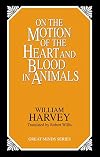
Clearly chosen for its value as scientific literature and historical context, Harvey's work also shows a better understanding of anatomy than one might otherwise expect from the mid 1600's. He refutes the then current view that the lungs connect directly to the right side of the heart, filling that cavity with air but only goes so far as suggesting the need for further investigation as to why the lungs could need so much blood supply. The path of blood, purpose and function of valves, show more differences between arteries and veins -- these were all discovered by that time. He also demonstrates a clear understanding of the full spectrum of animals in showing the differences and similarities in their circulatory systems. show less
Lists
You May Also Like


Associated Authors
Statistics
- Works
- 20
- Also by
- 1
- Members
- 832
- Popularity
- #30,688
- Rating
- 3.3
- Reviews
- 6
- ISBNs
- 57
- Languages
- 3
- Favorited
- 1

