

Roger L. Simon (1) (1943–)
Author of The Big Fix
For other authors named Roger L. Simon, see the disambiguation page.
Roger L. Simon (1) has been aliased into Roger Lichtenberg Simon.
About the Author
Roger L. Simon made his living writing novels and screenplays before co-founding the pioneering blog-aggregation and news and opinion website PJ Media (formerly Pajamas Media) in 2005. He is known for his prize-winning Moses Wine detective novels and for his screenplays: The Big Fix (with Richard show more Dreyfuss), Bustin' Loose (with Richard Pryor), Scenes from a Mall (with Bette Midler and Woody Allen), and Enemies, a Love Story, for which Simon was nominated for an Academy Award. Simon also directed the independent feature Prague Duet. He has taught screenwriting at the Sundance Institute and the American Film Institute and has written for the New York Times, the Los Angeles Times, the Washington Post, Commentary, and the New fork Post. He has also appeared as a political commentator on numerous talk radio and television shows. Simon is a graduate of Dartmouth College and the Yale School of Drama. show less
Series
Works by Roger L. Simon
Works have been aliased into Roger Lichtenberg Simon.
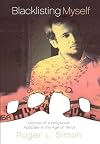
Blacklisting Myself: Memoir of a Hollywood Apostate in the Age of Terror (2009) 15 copies, 2 reviews
Turning Right at Hollywood and Vine: The Perils of Coming Out Conservative in Tinseltown (2011) 5 copies
My Man Adam 1 copy
Associated Works
Works have been aliased into Roger Lichtenberg Simon.
Tagged
Common Knowledge
- Canonical name
- Simon, Roger L.
- Legal name
- Simon, Roger Lichtenberg
- Birthdate
- 1943-11-22
- Gender
- male
- Nationality
- USA
Members
Reviews
Working in Hollywood or maybe even just living in our "post 9/11" world, its a daring thing to actually express an honest opinion. On anything. Much less mature and constantly evolving thoughts, prudently open for further consideration and evolution through discussion. (You know: thinking? Remember: "conversation?" The long lost art of rational and friendly debate?).
Our hyper-PC world is so full of snap judgment decisions and knee jerk volatile reactions, speaking your truth can get you show more eviscerated on all sides - from all radii of every spectrum. In a world where everything has been reduced to out of context clips or random tweets (or who sponsored the message or controls the medium), one meaningful or revealing comment can get you locked in a box with a label slapped on you forevermore by the smug, erroneous conclusion that that single utterance somehow reveals all the layers to your opinion and is the launch sequence for all the presumed toggle switches that define your entire life's belief systems.
Usually, this is done by hypo (and hyper) critical people, oblivious to their own ludicrous dualities, who are just too terrified to take a cold hard look at the provenance of their own values - much less ever truly challenge them - to really, truly have earned the right to proselytize (not that that's ever welcome). Instead, they are free to roam the earth, judging and pointing fingers, deliriously oblivious to their own delusions as to the inconsistencies between what they preach and how they "model" it.
I could go on and on - but this started out as a book review. Obviously, it got me thinking.
In Blacklisting Myself, Roger L. Simon has the balls to come out of the Hollywood political closet and lay his cards on the table. I respect that. Further, I agree with him on almost every point. And his journey is painfully poignant to so many in the artistic and entrepreneurial global arena.
An Academy Award-nominated screenwriter and mystery novelist, Roger L. Simon went from Mother Jones liberal, financing the Black Panther Breakfast Program; through some eerily familiar (let's call them "development," rather than "horror") stories with Richard Pryor, Warren Beatty, Timothy Leary, Richard Dreyfuss, Woody Allen and even an odd, few hour blip with Barbra Streisand; to pioneering as one of the first modern Americans to get behind the iron curtain to see the real People's Republic of China, Cuba and the Soviet Union (including a veiled KGB recruitment), to the elusive and fleeting red carpet moments, to a National Review endorsed 9/11 Democrat, to being an early adopter of - or shall we say, capitalizer on - the freedom of speech afforded in our new Wild West, our final frontier: the burgeoning blogosphere.
His is a fascinating and thoughtful, appreciably self-deprecating without posturing that he's figured it all out yet - but on a sincere and genuine quest through many of the contemporary and relevant -isms: Marxism, Freudianism, Libertarianism, Laissez-Faire Capitalism, Zen Buddhism, Quaker Pacifism, Neoconservatism, Neoliberalsim to his terror at the surging Islamofascism.
Defying all labels - or at least stringently trying to jockey them - this is a refreshing memoir full of profound personal insights along an interesting journey, surveying the cross-section of politics, religion and media from the sixties to the post 9/11 new millennium. show less
Our hyper-PC world is so full of snap judgment decisions and knee jerk volatile reactions, speaking your truth can get you show more eviscerated on all sides - from all radii of every spectrum. In a world where everything has been reduced to out of context clips or random tweets (or who sponsored the message or controls the medium), one meaningful or revealing comment can get you locked in a box with a label slapped on you forevermore by the smug, erroneous conclusion that that single utterance somehow reveals all the layers to your opinion and is the launch sequence for all the presumed toggle switches that define your entire life's belief systems.
Usually, this is done by hypo (and hyper) critical people, oblivious to their own ludicrous dualities, who are just too terrified to take a cold hard look at the provenance of their own values - much less ever truly challenge them - to really, truly have earned the right to proselytize (not that that's ever welcome). Instead, they are free to roam the earth, judging and pointing fingers, deliriously oblivious to their own delusions as to the inconsistencies between what they preach and how they "model" it.
I could go on and on - but this started out as a book review. Obviously, it got me thinking.
In Blacklisting Myself, Roger L. Simon has the balls to come out of the Hollywood political closet and lay his cards on the table. I respect that. Further, I agree with him on almost every point. And his journey is painfully poignant to so many in the artistic and entrepreneurial global arena.
An Academy Award-nominated screenwriter and mystery novelist, Roger L. Simon went from Mother Jones liberal, financing the Black Panther Breakfast Program; through some eerily familiar (let's call them "development," rather than "horror") stories with Richard Pryor, Warren Beatty, Timothy Leary, Richard Dreyfuss, Woody Allen and even an odd, few hour blip with Barbra Streisand; to pioneering as one of the first modern Americans to get behind the iron curtain to see the real People's Republic of China, Cuba and the Soviet Union (including a veiled KGB recruitment), to the elusive and fleeting red carpet moments, to a National Review endorsed 9/11 Democrat, to being an early adopter of - or shall we say, capitalizer on - the freedom of speech afforded in our new Wild West, our final frontier: the burgeoning blogosphere.
His is a fascinating and thoughtful, appreciably self-deprecating without posturing that he's figured it all out yet - but on a sincere and genuine quest through many of the contemporary and relevant -isms: Marxism, Freudianism, Libertarianism, Laissez-Faire Capitalism, Zen Buddhism, Quaker Pacifism, Neoconservatism, Neoliberalsim to his terror at the surging Islamofascism.
Defying all labels - or at least stringently trying to jockey them - this is a refreshing memoir full of profound personal insights along an interesting journey, surveying the cross-section of politics, religion and media from the sixties to the post 9/11 new millennium. show less
Like _The Kite Runner_, this is an impeccably written picture of horrors. If you've ever wondered what's wrong with American conservatism, this guy gives a very complete explanation. Religious conservatives, people who value virtue more than ideology, self-interest, and self-preservation, are significantly less common than 'paleocons,' the Kissinger or Metternich type who think nothing of selling out brown people for their own advantage and comfort, and 'neocons,' people like Mr. Simon here, show more who combines an aggressive and pragmatic geopolitical outlook with mockery of the bourgeois scruples that made him reluctant to commit adultery. (He is proud to say that he overcame those scruples.)
He also writes that he was a radical -- pro-Communist, pro-abortion, pro-drugs (apparently still a user; why is this scoundrel not in jail?), pro-you-name-it-if-it-kills-people -- back in the 1960s, and to a great extent even at the present; and he has no regrets, because it was the spirit of the times, and anyone who wasn't going along with that spirit was missing out on something memorable. A friend of mine wonders how that defense would have fared at Nuremburg. show less
He also writes that he was a radical -- pro-Communist, pro-abortion, pro-drugs (apparently still a user; why is this scoundrel not in jail?), pro-you-name-it-if-it-kills-people -- back in the 1960s, and to a great extent even at the present; and he has no regrets, because it was the spirit of the times, and anyone who wasn't going along with that spirit was missing out on something memorable. A friend of mine wonders how that defense would have fared at Nuremburg. show less

24 year old man, living on an inherited income, semi-accidentally kills his 18 year old girlfriend with an overdose of heroin. The rest of the novel consists of a series of interwoven flashbacks about his life leading up to that time and his very black humor-ish attempts to get rid of the body. The writing is good and this short novel will pull you through to the end, but it does become slightly tedious. The first-person narrative, supposedly written day-by-day as the events are happening, show more becomes a little difficult to credit given the young man's mental state, and the final part of the book, narrated by his long-time acquaintance (but never friend) has such a different tone it seems like a semi-hallucination itself. Nevertheless, this is pretty fascinating much of the time, and while the background (the novel was published in 1968 and is set against the backdrop of the Vietnam War) seems curiously dated, Simon manages to capture the absurdity and artificiality of how many of us live our lives. show less

Entertaining, but no "landmark in its field" contra a real master, Ross Macdonald. The escapes were too glib, and the criminal plot too corny. To win a large gambling pot, someone plots to blow up a freeway to scuttle presidential primary campaign.
Awards


You May Also Like


Associated Authors
Statistics
- Works
- 18
- Also by
- 2
- Members
- 493
- Popularity
- #50,126
- Rating
- 3.2
- Reviews
- 11
- ISBNs
- 88
- Languages
- 6
- Favorited
- 1