
Grant Allen (1) (1848–1899)
Author of An African Millionaire: Episodes in the Life of the Illustrious Colonel Clay
For other authors named Grant Allen, see the disambiguation page.
About the Author
Image credit: Portrait of Grant Allen from "Memoires", by Edward Clodd (1916)
Series
Works by Grant Allen
An African Millionaire: Episodes in the Life of the Illustrious Colonel Clay (1896) 113 copies, 3 reviews
At Market Value 5 copies
The jaws of death 5 copies
Paris 4 copies
The Duchess of Powysland : a novel 3 copies
The European Tour 2 copies
The incidental bishop 2 copies
Individualism and Socialism 2 copies
Short Science Fiction Collection 051 2 copies
For Maimie's sake 2 copies
The devil's die 2 copies
County and Town in England 2 copies
Dumaresq's daughter 2 copies
Rosalba 1 copy
Force and Energy 1 copy
The Mediterranean 1 copy
Spencer and Darwin 1 copy
De plant en haar leven 1 copy
An army doctor's romance 1 copy
Ivan Greet's masterpiece 1 copy
A Bride From the Desert 1 copy
John Creedy 1 copy
The backslider 1 copy
The sole trustee 1 copy
Florence (Volume 1) 1 copy
Dr. Pallisers' patient 1 copy
Side Lights 1 copy
A living apparition 1 copy
Kalee's shrine 1 copy
Associated Works
The Penguin Book of Victorian Women in Crime: Forgotten Cops and Private Eyes from the Time of Sherlock Holmes (2011) — Contributor — 217 copies, 3 reviews
The Penguin Book of Gaslight Crime: Con Artists, Burglars, Rogues, and Scoundrels from the Time of Sherlock Holmes (2009) — Contributor — 198 copies, 6 reviews
The Mammoth Book of Victorian and Edwardian Ghost Stories (1995) — Contributor — 174 copies, 4 reviews
Isaac Asimov Presents : The Best Science Fiction of the 19th Century (1981) — Contributor — 155 copies, 2 reviews
The Rivals of Sherlock Holmes: A Collection of Victorian Detective Tales (2008) — Contributor — 140 copies, 1 review
Frankenstein Dreams: A Connoisseur's Collection of Victorian Science Fiction (2017) — Contributor — 75 copies, 5 reviews
The Valancourt Book of Victorian Christmas Ghost Stories, Volume 2 (2017) — Contributor — 69 copies, 3 reviews
Science Fiction by Gaslight: A History and Anthology of Science Fiction in the Popular Magazines, 1891-1911 (1974) — Contributor, some editions — 61 copies
The End of the World: Classic Tales of Apocalyptic Science Fiction (2010) — Contributor — 60 copies, 2 reviews
The Origins of Science Fiction (Oxford World's Classics Hardback Collection) (2022) — Contributor — 23 copies, 1 review
Scientific Romance: An International Anthology of Pioneering Science Fiction (2016) — Contributor — 19 copies, 2 reviews
The Lady Sleuths MEGAPACK ®: 20 Modern and Classic Tales of Female Detectives (2014) — Contributor — 16 copies
Out of the Sand: Mummies, Pyramids, and Egyptology in Classic Science Fiction and Fantasy (2008) — Contributor — 5 copies
Botanica Delira: More Stories of Strange, Undiscovered, and Murderous Vegetation (2010) — Contributor — 4 copies
Wakacje Wśród Duchów — Contributor — 2 copies
Tagged
Common Knowledge
- Legal name
- Allen, Charles Grant Blairfindie
- Other names
- Rayner, Olive Pratt
Power, Cecil
Warborough, Martin Leach
Wilson, J. Arbuthnot - Birthdate
- 1848-02-24
- Date of death
- 1899-10-25
- Gender
- male
- Education
- King Edward's School, Birmingham, England
Merton College, Oxford - Occupations
- writer
professor
author - Nationality
- Canada (birth)
UK - Birthplace
- Alwington, Ontario, Canada
- Places of residence
- Kingston, Ontario, Canada
Hindhead, Haslemere, Surrey, England, UK - Place of death
- Hindhead, Haslemere, Surrey, England, UK
Members
Reviews
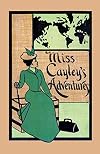
Well, this novel is, shall we say, comprehensive.
Lois Cayley's stepfather dies. He is her last near relation and she is left penniless, so she quite naturally decides to take a trip around the world. Who wouldn't? Along the way she hunts out new sources of income, or sometimes things find her. By turns she is a temporary lady's maid for a cantankerous old woman, a bicycle racer, a living bicycle advertisement and saleswoman, house sitter, preventer of theft and fraud, tiger hunter (I don't show more like that part), journalist, honored guest of a maharajah, and entrepreneur. In the end she has to turn detective, because her fiance is accused of forging his uncle's will. Turns out the will really is forged, but it's an exact forged copy of the real will. Why would anyone need to forge, unaltered, a copy of a will? I leave it to your imagination (or read the book).
Lois turns out to be a rather comical narrator, and I'm glad that I finally determined that this is not a book to be taken seriously, because it would be impossible. I chuckle when she says things like,
"My employer wrote, 'You are a born journalist.'
I confess this surprised me; for I have always considered myself a truthful person."
And the pictures! Lots of old books of this sort have the occasional sketch scattered throughout, but this one has pictures every few pages, so that you might accurately imagine Lois' latest escapade.
Although there are no noticeable puns or plays on language, I have to say that I think this author is literarily (but not literally) related to P.G. Wodehouse. A similar sense of the ridiculous, and frequently over-the-top, but everything comes right by the end of the episode. Yes, this book is written in episodes, tied together by a few common threads.
Some may want to take note that there are a dozen or so uses of the N-word around the middle of the book, but only out of the mouth of a character you are not supposed to like anyway. Oddly enough, he's not talking about people of African descent, but those from India. show less
Lois Cayley's stepfather dies. He is her last near relation and she is left penniless, so she quite naturally decides to take a trip around the world. Who wouldn't? Along the way she hunts out new sources of income, or sometimes things find her. By turns she is a temporary lady's maid for a cantankerous old woman, a bicycle racer, a living bicycle advertisement and saleswoman, house sitter, preventer of theft and fraud, tiger hunter (I don't show more like that part), journalist, honored guest of a maharajah, and entrepreneur. In the end she has to turn detective, because her fiance is accused of forging his uncle's will. Turns out the will really is forged, but it's an exact forged copy of the real will. Why would anyone need to forge, unaltered, a copy of a will? I leave it to your imagination (or read the book).
Lois turns out to be a rather comical narrator, and I'm glad that I finally determined that this is not a book to be taken seriously, because it would be impossible. I chuckle when she says things like,
"My employer wrote, 'You are a born journalist.'
I confess this surprised me; for I have always considered myself a truthful person."
And the pictures! Lots of old books of this sort have the occasional sketch scattered throughout, but this one has pictures every few pages, so that you might accurately imagine Lois' latest escapade.
Although there are no noticeable puns or plays on language, I have to say that I think this author is literarily (but not literally) related to P.G. Wodehouse. A similar sense of the ridiculous, and frequently over-the-top, but everything comes right by the end of the episode. Yes, this book is written in episodes, tied together by a few common threads.
Some may want to take note that there are a dozen or so uses of the N-word around the middle of the book, but only out of the mouth of a character you are not supposed to like anyway. Oddly enough, he's not talking about people of African descent, but those from India. show less
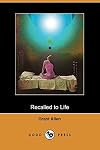
Self-Portrait as the Bootblack in Daguerre’s Boulevard du Temple
Robin Coste Lewis
(An erasure of Grant Allen’s Recalled to Life)
I don’t believe
I thought
or gave names
in any known language.
I spoke
of myself always
in the third person.
What led up to it,
I hadn’t the faintest idea.
I only knew the Event
itself took place. Constant
discrepancies. To throw them
off, I laughed,
talked—all games
and amusements—to escape
from the burden of my own
internal history.
But I was there
trying show more for once
to see you,
longed so
to see you.
I might meet you
in the street:
a bicycle leaning
up against the wall
by the window. Rendered
laws of my country
played before my face.
Historical, two-souled,
forgotten, unknown
freaks of memory.
The matter of debts,
the violent death
of a near relation,
and all landing
at the faintest conception.
Dark. Blue. And then.
All I can remember
is when I saw you.
It was you
or anyone else.
The shot
seemed to end
all. It belongs
to the New World:
the Present
all entangled, unable
to move. Everything
turned round
and looked
at you. show less
Robin Coste Lewis
(An erasure of Grant Allen’s Recalled to Life)
I don’t believe
I thought
or gave names
in any known language.
I spoke
of myself always
in the third person.
What led up to it,
I hadn’t the faintest idea.
I only knew the Event
itself took place. Constant
discrepancies. To throw them
off, I laughed,
talked—all games
and amusements—to escape
from the burden of my own
internal history.
But I was there
trying show more for once
to see you,
longed so
to see you.
I might meet you
in the street:
a bicycle leaning
up against the wall
by the window. Rendered
laws of my country
played before my face.
Historical, two-souled,
forgotten, unknown
freaks of memory.
The matter of debts,
the violent death
of a near relation,
and all landing
at the faintest conception.
Dark. Blue. And then.
All I can remember
is when I saw you.
It was you
or anyone else.
The shot
seemed to end
all. It belongs
to the New World:
the Present
all entangled, unable
to move. Everything
turned round
and looked
at you. show less

Grant Allen was a Canadian-origin science writer who, at the age of 36, put his heart and soul into his first novel 'Philistia' (1884). It got panned. This did not stop him from becoming a popular writer of 'sensational novels' and speculative fiction for the next fifteen years.
His turn from serious literature towards popular entertainment should not be regretted because he produced some fine genre work that made him at times the contemporary equal of Conan Doyle but this first effort bears show more re-visiting. It is, I think, better than most first novels that I have read.
The main reason that it was criticised stands up. It is a novel of ideas and, I am afraid, too frequently the ideas (while cogently expressed) are too often delivered as lengthy speeches by the protagonists (at least in the first third) but I suspect there was more to the dislike than this.
It is in fact a satire on the high Victorian class system and especially on the upper middle classes that happens to be both cynical and kindly at the same time. It is no accident that this was a colonial with a scientific mind enjoying the hypocrisies and complexities of the English class system.
I suspect some of the satirical strikes - especially at the expense of journalism and popular radicalism more than at the expense of the Church and aristocracy - hit home. There would be something here to displease every reader without a sense of humour.
In fact, while I could not say that this novel should be added to the syllabus of literary studies classes, it could, with profit, be read by anyone interested in high Victorian culture and even history . It could be used as a primer on almost everything that drove the ideology of the day.
The characters also prove to be surprisingly likeable even when they are foolish (which is often in some cases) while the 'hypocrites' and the conventional are allowed to condemn themselves by their speech and actions rather than be tagged by the author.
The 'socialism' in the novel is hidden in plain sight. Although Max Schurz, the old revolutionary, is clearly modelled on someone like Karl Marx, the kindly intellectual is clearly offering us something closer to Christian Socialism with added class struggle.
Indeed, a very British left-wing link betwen traditional Christian values (as opposed to established Church values) and the emerging secular socialism pushing up against the hypocrisies of Victorian radicalism is evident here.
The ambience is unusual - the interface between religious fervour, early idealistic socialism, the workings of the market (specifically journalism) and the idiosyncrasies of all classes which are treated as often the more absurd the higher they are in the pecking order.
The passionate cause of Ernest Le Breton walking out of his job in an aristocratic household - the moral wrongness of shooting pigeons - is a delightful bit of humour. The sharp caricature of the aristocracy sometimes has bite when it comes to the matter of the London slums.
And yet the most attractive and intriguing character is Lady Hilda Tregellis, a society beauty who is determined not to marry an Algy or Bertie or a Montie, has no theoretical ethics whatsoever but does the most practical good in cahoots with the likeable working class origin aesthete Arthur Berkeley.
Perhaps this is the indirect message of the book. Life is about how you deal with the people you care about and who are in your circle, grand ideas are all very well but success in life depends on having 'pals' and love will eventually conquer all.
The women in general are very much treated as interesting characters in their own right with another strong character in Selah, the Hastings lower middle class girl who stands her ground against one reprobate Le Breton brother and marries a nicer one.
Class is everything in this novel. The working classes are treated perhaps too comically or as 'other' but it is the lower middles and the wilful aristocratic woman who triumph and marry for love into the coterie of upper middle class intellectuals around whom the book is built.
Nor is Allen unwilling to shock the reader - a key character very surprisingly dies), The cynical reality of power and patronage and the impossibility of truly 'bucking the system' is made crystal clear. Although happiness breaks out for the deserving, it is quite definitely an authorial 'fix'.
So many aspects of Victorian life and ideas are covered in this novel that it would be tiresome to go much further. It is simultaneously a caricature of that society and a fond reaffirmation of the values of the best of the age - especially a mock-Dickensian compassion, good done through deeds.
No, it is not a masterpiece of English literature but it is amusingly written - only a couple of places removed from Wodehouse at times - and keeps the reader entertained with only very rare quasi-philosophical longeurs. The satire is biting but never cruel. show less
His turn from serious literature towards popular entertainment should not be regretted because he produced some fine genre work that made him at times the contemporary equal of Conan Doyle but this first effort bears show more re-visiting. It is, I think, better than most first novels that I have read.
The main reason that it was criticised stands up. It is a novel of ideas and, I am afraid, too frequently the ideas (while cogently expressed) are too often delivered as lengthy speeches by the protagonists (at least in the first third) but I suspect there was more to the dislike than this.
It is in fact a satire on the high Victorian class system and especially on the upper middle classes that happens to be both cynical and kindly at the same time. It is no accident that this was a colonial with a scientific mind enjoying the hypocrisies and complexities of the English class system.
I suspect some of the satirical strikes - especially at the expense of journalism and popular radicalism more than at the expense of the Church and aristocracy - hit home. There would be something here to displease every reader without a sense of humour.
In fact, while I could not say that this novel should be added to the syllabus of literary studies classes, it could, with profit, be read by anyone interested in high Victorian culture and even history . It could be used as a primer on almost everything that drove the ideology of the day.
The characters also prove to be surprisingly likeable even when they are foolish (which is often in some cases) while the 'hypocrites' and the conventional are allowed to condemn themselves by their speech and actions rather than be tagged by the author.
The 'socialism' in the novel is hidden in plain sight. Although Max Schurz, the old revolutionary, is clearly modelled on someone like Karl Marx, the kindly intellectual is clearly offering us something closer to Christian Socialism with added class struggle.
Indeed, a very British left-wing link betwen traditional Christian values (as opposed to established Church values) and the emerging secular socialism pushing up against the hypocrisies of Victorian radicalism is evident here.
The ambience is unusual - the interface between religious fervour, early idealistic socialism, the workings of the market (specifically journalism) and the idiosyncrasies of all classes which are treated as often the more absurd the higher they are in the pecking order.
The passionate cause of Ernest Le Breton walking out of his job in an aristocratic household - the moral wrongness of shooting pigeons - is a delightful bit of humour. The sharp caricature of the aristocracy sometimes has bite when it comes to the matter of the London slums.
And yet the most attractive and intriguing character is Lady Hilda Tregellis, a society beauty who is determined not to marry an Algy or Bertie or a Montie, has no theoretical ethics whatsoever but does the most practical good in cahoots with the likeable working class origin aesthete Arthur Berkeley.
Perhaps this is the indirect message of the book. Life is about how you deal with the people you care about and who are in your circle, grand ideas are all very well but success in life depends on having 'pals' and love will eventually conquer all.
The women in general are very much treated as interesting characters in their own right with another strong character in Selah, the Hastings lower middle class girl who stands her ground against one reprobate Le Breton brother and marries a nicer one.
Class is everything in this novel. The working classes are treated perhaps too comically or as 'other' but it is the lower middles and the wilful aristocratic woman who triumph and marry for love into the coterie of upper middle class intellectuals around whom the book is built.
Nor is Allen unwilling to shock the reader - a key character very surprisingly dies), The cynical reality of power and patronage and the impossibility of truly 'bucking the system' is made crystal clear. Although happiness breaks out for the deserving, it is quite definitely an authorial 'fix'.
So many aspects of Victorian life and ideas are covered in this novel that it would be tiresome to go much further. It is simultaneously a caricature of that society and a fond reaffirmation of the values of the best of the age - especially a mock-Dickensian compassion, good done through deeds.
No, it is not a masterpiece of English literature but it is amusingly written - only a couple of places removed from Wodehouse at times - and keeps the reader entertained with only very rare quasi-philosophical longeurs. The satire is biting but never cruel. show less
Lois Cayley is the quick-witted, sharp-tongued, stout-hearted heroine of this sweet little novel. She's so clever and masterful that her various triumphs come as no surprise, but her asides are so amusing that her near-perfection is never annoying. The quips and bon mots are hilarious (see my status updates for examples), and the characters memorable. The women are just as capable, full of agency, and rife with both foibles and strengths (including higher mathematics), as the men. The n-word show more pops up a number of times once Lois gets to India, but the main Indian character is far more admirable than most of the other characters, and not "in spite" of his race or creed. (It's disheartening to realize this was printed as early as 1899, and yet over a hundred years later the truths Allen found self-evident are still being argued about.) Everything is handled with a light, airy touch, and the humor has a wonderfully dry tone to it. The plot veers into melodrama at the end, but it's all in good fun.
I wish this was part of a series, because I am loathe to part with the admirable Miss Cayley! Can be found online here. show less
I wish this was part of a series, because I am loathe to part with the admirable Miss Cayley! Can be found online here. show less
Lists
Awards


You May Also Like


Associated Authors
Statistics
- Works
- 116
- Also by
- 51
- Members
- 883
- Popularity
- #29,018
- Rating
- 3.6
- Reviews
- 16
- ISBNs
- 565
- Languages
- 6
- Favorited
- 1