
Richard F. Burton (1) (1821–1890)
Author of The Arabian Nights
For other authors named Richard F. Burton, see the disambiguation page.
Richard F. Burton (1) has been aliased into Richard Francis Burton.
Works by Richard F. Burton
Works have been aliased into Richard Francis Burton.
The Illustrated Kama Sutra : Ananga-Ranga and Perfumed Garden - The Classic Eastern Love Texts (1987) 200 copies, 1 review
The Arabian Nights, Volume I: The Marvels and Wonders of The Thousand and One Nights (Signet Classics, 1/2) (2007) — Translator — 150 copies
The Arabian Nights: The Book of the Thousand Nights and a Night, all 16 volumes, with active table of contents (1978) 90 copies
Tales From The Arabian Nights: Selected from The Book Of The Thousand Nights And A Night (1983) 86 copies, 2 reviews
Favorite Tales from the Arabian Nights' Entertainments (Dover Thrift Editions) (2002) 60 copies, 1 review
THE ARABIAN NIGHTS ENTERTAINMENT: THE BOOK OF THE THOUSAND NIGHTS AND A NIGHT - VOLS. I - VI - THE COMPLETE BURTON TRANSLATION WITH COMPLETE BURTON NOTES, THE TERMINAL ESSAY, A… (1962) 50 copies, 1 review
Book of the Thousand and One Nights [selection, ed. Newby] (1959) — Translator — 39 copies, 1 review
Historia ilustrada de las formas artisticas/ illustrated History of the Artistic Shapes: Egipto (Spanish Edition) (1990) 28 copies, 1 review
The Book of the Thousand Nights and a Night (Complete Arabian Nights) Volume 17 (Volume 17) (2011) 15 copies
Tales from the Book of the Thousand Nights and a Night: A Plain and Literal Translation of the Arabian Nights Entertainments (2011) 7 copies
Book of the Thousand Nights and a Night: A Plain and Literal Translation of the Arabian Nights Entertainments; Vols. I-X [no supplement] (1903) 5 copies
Wit and Wisdom from West Africa: A Book of Proverbial Philosophy, Idioms, Enigmas, and Laconisms (1969) 5 copies
Arabian Nights: Tales Of Thousand Nights & A Night Vol 1 [Mar 01, 2017] Burton, Richard F. (2017) 2 copies
The Gold-Mines of Midian and the Ruined Midianite Cities: A Fortnight's Tour in North-Western Arabia (Classic Reprint) (2015) 1 copy
The Book of a Thousand Nights and One Night (Reprinted with permisiion form the 1934 edition. Volumes III and IV) (1934) 1 copy
Thousand Nights and a Night 1 copy
Associated Works
Works have been aliased into Richard Francis Burton.
Tagged
Common Knowledge
- Birthdate
- 1821-03-19
- Date of death
- 1890-10-20
- Gender
- male
- Nationality
- United Kingdom
- Birthplace
- Torquay, Devon, England, UK
- Map Location
- United Kingdom
Members
Reviews
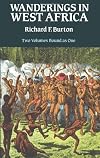
This was not only one of the books I was required to read for a seminar I took on "Adventure, Empire, and Escape," it was the one I ended up writing my seminar paper on. Yet I was unable to finish reading the book until two months after said seminar paper was due! That, perhaps, is the clearest indicator of the quality of the book: slow, uninteresting, and repetitive. Surely a travelogue of West Africa at a moment of transition ought to be fascinating, but Burton has a pedant's love of show more minutiae-- and a near-complete inability to make it interesting. There are very few of his own personal experiences recorded here on his journey from Liverpool to Fernando Po to take his position as consul there; mostly he relates history or customs he seems to have learned from books. Or, even more commonly, he relates why the history or customs he's learned from books are wrong, and tells you the real truth that he knows, always failing to explain on what authority his version is actually correct.
There's probably a fascinating paper to be written in the weird way that Burton usually privileges the British imperialist perspective yet occasionally lets through a glimmer of a more cosmopolitan worldview. My paper isn't it, as I got tired of writing about the book at fifteen pages, yet had another five to come up with. Burton says in his preface (though the book was published anonymously as the work of "A F.R.G.S." on its original publication, and he always refers to "the Consul" in the third person) that he wants to "lay down what a tolerably active voyager can see and do," but if so, one has to wonder why there's a chapter that isn't about the journey at all, but simply everything Burton knows about the presence of gold in West Africa. Which is, as you might imagine, thoroughly dull. show less
There's probably a fascinating paper to be written in the weird way that Burton usually privileges the British imperialist perspective yet occasionally lets through a glimmer of a more cosmopolitan worldview. My paper isn't it, as I got tired of writing about the book at fifteen pages, yet had another five to come up with. Burton says in his preface (though the book was published anonymously as the work of "A F.R.G.S." on its original publication, and he always refers to "the Consul" in the third person) that he wants to "lay down what a tolerably active voyager can see and do," but if so, one has to wonder why there's a chapter that isn't about the journey at all, but simply everything Burton knows about the presence of gold in West Africa. Which is, as you might imagine, thoroughly dull. show less
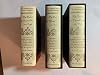
THE ARABIAN NIGHTS ENTERTAINMENT: THE BOOK OF THE THOUSAND NIGHTS AND A NIGHT - VOLS. I - VI - THE COMPLETE BURTON TRANSLATION WITH COMPLETE BURTON NOTES, THE TERMINAL ESSAY, A COMPLETE INDEX AND 1001 ILLUSTRATIONS BY VALENTI ANGELO (VOLUMES 1 - 6 IN THREE BOOKS.) by Richard F. Burton
Right, first off, if you’re going to read this, you should do it unabridged. Let’s face it, if you don’t, you’ve not read the 1001 nights but 648, or 385, or whatever the editor decided to trim off this masterpiece. If Sheherezade can tell 1001 stories to keep herself alive, give the woman’s effort some respect and read all the tales she tells. It’s only by doing so that you can really fully appreciate this vast collection and its influence on, not only the literature of Persia show more and Arabia, but huge aspects of its culture too.
There’s no better way to accomplish this task than by picking up the 6 volume boxed set of the 1962 Heritage Press edition of Richard Burton’s translation with his vast collection of footnotes and 1001 beautifully simple illustrations by Valenti Angelo. This made reading it a delight for me. There’s nothing better than picking up a book that people have taken such care to create.
I was privileged to be able to borrow this edition from a friend who hadn’t read it himself and who, I think, fully expected me never to actually complete the task. It took me over a year, but complete it I did.
This is not a book you read cover to cover. Instead, you bite off small, masticable pieces and chew them over slowly. While many of the stories do involve males smitten by females they have only momentarily caught a glimpse of, I was very impressed by the sheer range of storytelling. We have everything from the comic, to adventure, romance, religion, war, political intrigue, history, mysticism, fantasy, tragedy … there really was no predictability to it at all, and I enjoyed that very much.
And while the stories themselves are enough, for the most part, to keep you occupied, if you are at all interested in the culture and / or history of this area of the world, like me you will find this edition a rich treasure-trove of knowledge. Having lived in the Middle East for over a decade of my life and for the last five years, finding out that virtually every cultural point that Burton makes in his footnotes is still part of life here was very revealing. It seems that not much has changed since he plodded around the Arabian peninsula 200 years ago nor, in fact, since the original stories were first told. Remarkable.
Now, while it is a masterpiece, this fell a tad short of entering Arukiyomi’s very sparsely populated Hall of Fame. Why so? Well, as the radar review below reveals, while the legacy and achievement of the collection cannot be questioned, it fails somewhat when it comes to characterisation and readability.
Apart from a very few characters (the historical Harun Al Rashid, for example) who either appear repeatedly or have very long tales focussed on them, most characters are simple caricatures. This is because the tales they feature in need little more than a single characteristic to make them work. That’s fine for this genre, but you are not going to come away moved to any extent by a character as you do at the end of, say, the equivalently epic Les Miserables or even the diminutive Silk.
While my readability score is high, this is heavily skewed by the fact that I read it in a beautiful edition that was simply a joy to hold in my hands (yes, I do take that into account). Had I been reading any old paperback edition, I think this would have come in somewhere around the 55% mark simply because the frame story device and the repetitive nature of some of the tales can get a tad tedious. In fact, Burton comments himself when tales contain repetitions of others. Hey, if I had to keep you amused with tales every night for three years, I’d probably repeat myself too. Some of them were pretty long winded as well. There are a couple that are over 200 pages long each and could stand as novels in themselves. I have to say I rejoiced at the end of those.
Another factor that impacted readability is the often monotonous overtones of Allahu akbar. This is an Islamic compilation, of that there is no doubt. And while the Qur’an is actually fairly lenient to the “people of the book”, i.e. Christians and Jews, this seems to have passed the storyteller by. Anyone who isn’t muslim is depicted as base until they are either killed or embrace Islam. If the latter, then they finally become worthy human beings. At least the infidels fare better than the Africans who, one and all, are lower than the low, perpetrators of hideous acts and best off dead. While you can forgive this for being a product of its time, as I said above, I was struck by how little has changed in this region since these tales were first told. Nuffsed. show less
There’s no better way to accomplish this task than by picking up the 6 volume boxed set of the 1962 Heritage Press edition of Richard Burton’s translation with his vast collection of footnotes and 1001 beautifully simple illustrations by Valenti Angelo. This made reading it a delight for me. There’s nothing better than picking up a book that people have taken such care to create.
I was privileged to be able to borrow this edition from a friend who hadn’t read it himself and who, I think, fully expected me never to actually complete the task. It took me over a year, but complete it I did.
This is not a book you read cover to cover. Instead, you bite off small, masticable pieces and chew them over slowly. While many of the stories do involve males smitten by females they have only momentarily caught a glimpse of, I was very impressed by the sheer range of storytelling. We have everything from the comic, to adventure, romance, religion, war, political intrigue, history, mysticism, fantasy, tragedy … there really was no predictability to it at all, and I enjoyed that very much.
And while the stories themselves are enough, for the most part, to keep you occupied, if you are at all interested in the culture and / or history of this area of the world, like me you will find this edition a rich treasure-trove of knowledge. Having lived in the Middle East for over a decade of my life and for the last five years, finding out that virtually every cultural point that Burton makes in his footnotes is still part of life here was very revealing. It seems that not much has changed since he plodded around the Arabian peninsula 200 years ago nor, in fact, since the original stories were first told. Remarkable.
Now, while it is a masterpiece, this fell a tad short of entering Arukiyomi’s very sparsely populated Hall of Fame. Why so? Well, as the radar review below reveals, while the legacy and achievement of the collection cannot be questioned, it fails somewhat when it comes to characterisation and readability.
Apart from a very few characters (the historical Harun Al Rashid, for example) who either appear repeatedly or have very long tales focussed on them, most characters are simple caricatures. This is because the tales they feature in need little more than a single characteristic to make them work. That’s fine for this genre, but you are not going to come away moved to any extent by a character as you do at the end of, say, the equivalently epic Les Miserables or even the diminutive Silk.
While my readability score is high, this is heavily skewed by the fact that I read it in a beautiful edition that was simply a joy to hold in my hands (yes, I do take that into account). Had I been reading any old paperback edition, I think this would have come in somewhere around the 55% mark simply because the frame story device and the repetitive nature of some of the tales can get a tad tedious. In fact, Burton comments himself when tales contain repetitions of others. Hey, if I had to keep you amused with tales every night for three years, I’d probably repeat myself too. Some of them were pretty long winded as well. There are a couple that are over 200 pages long each and could stand as novels in themselves. I have to say I rejoiced at the end of those.
Another factor that impacted readability is the often monotonous overtones of Allahu akbar. This is an Islamic compilation, of that there is no doubt. And while the Qur’an is actually fairly lenient to the “people of the book”, i.e. Christians and Jews, this seems to have passed the storyteller by. Anyone who isn’t muslim is depicted as base until they are either killed or embrace Islam. If the latter, then they finally become worthy human beings. At least the infidels fare better than the Africans who, one and all, are lower than the low, perpetrators of hideous acts and best off dead. While you can forgive this for being a product of its time, as I said above, I was struck by how little has changed in this region since these tales were first told. Nuffsed. show less
Tales From The Arabian Nights: Selected from The Book Of The Thousand Nights And A Night by Richard F. Burton

Despite being an abridgment of Burton’s translation of the Arabian Nights this is still a chunky doorstop. The translator’s flowery style and archaic language is likely off putting for someone reading for pleasure but suitable if you are looking at it from a scholarly perspective. Caveats include misogyny and racism which is hard to determine whether it arises from the original text or Burton’s imperialist Victorian perspective. All wives were considered unfaithful and likely to be show more frolicking with ‘blackamoors’ when the husband is away therefore they all deserve to be murdered. Some of the stories are pretty hard to take. This reviewer would recommend a more modern translation with lots of annotations. show less
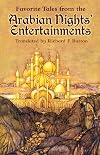
It's difficult to rate a book written so long ago because on the one hand it's a very important cultural and religious document, and on the other hand it's not very entertaining. Overall I am glad I read it so that I have a passing knowledge of the most important stories ("Sinbad," "Alladin" and "Ali Baba") and also so that I don't have to worry about reading it ever again.
The most interesting part of the book for me was the insights it gave into ancient Islamic morality, which don't appear show more to differ all that much from ancient Jewish or Christian morality (indeed this book in parts reminds me strongly of the Bible); killing is bad unless you're killing a bad person, wealth is good and it doesn't really matter how you get it, women are property, etc. Probably most interesting was the concept of riches, where someone like Aladdin starts out as an actual bad person but then is miraculously transformed into our hero just by the acquisition of money. It's arguably the most magical thing that occurs in the entire book.
I don't think I need waste much more analysis here. . . many people much more intelligent than I have written thousands of pages of critiques that will be much better than anything I have to say.
I will say one last thing concerning Sinbad: wouldn't his countrymen at some point have stopped getting on a boat with this guy? I don't know, sometime after the 2nd or 3rd voyage where everyone dies except him?
Disclaimer: I read the 214-pg., 6-story, abridged "Favorite Tales from the Arabian Nights' Entertainments" translated by Richard Burton, so I didn't have the enveloping story about the King's wife prolonging execution. I also don't feel like I really needed it at all and have no desire to ever search out a longer version. show less
The most interesting part of the book for me was the insights it gave into ancient Islamic morality, which don't appear show more to differ all that much from ancient Jewish or Christian morality (indeed this book in parts reminds me strongly of the Bible); killing is bad unless you're killing a bad person, wealth is good and it doesn't really matter how you get it, women are property, etc. Probably most interesting was the concept of riches, where someone like Aladdin starts out as an actual bad person but then is miraculously transformed into our hero just by the acquisition of money. It's arguably the most magical thing that occurs in the entire book.
I don't think I need waste much more analysis here. . . many people much more intelligent than I have written thousands of pages of critiques that will be much better than anything I have to say.
I will say one last thing concerning Sinbad: wouldn't his countrymen at some point have stopped getting on a boat with this guy? I don't know, sometime after the 2nd or 3rd voyage where everyone dies except him?
Disclaimer: I read the 214-pg., 6-story, abridged "Favorite Tales from the Arabian Nights' Entertainments" translated by Richard Burton, so I didn't have the enveloping story about the King's wife prolonging execution. I also don't feel like I really needed it at all and have no desire to ever search out a longer version. show less
Lists
Awards


You May Also Like
Associated Authors
Statistics
- Works
- 61
- Also by
- 4
- Members
- 2,345
- Popularity
- #10,931
- Rating
- 3.8
- Reviews
- 21
- ISBNs
- 117
- Languages
- 10
- Favorited
- 3