
Brian Williams (1) (1943–)
Author of Encyclopedia of World History: From the Stone Age to the 21st Century
For other authors named Brian Williams, see the disambiguation page.
About the Author
Brian Williams is the author of numerous information books for young people, and particularly enjoys writing about world history and contemporary issues.
Series
Works by Brian Williams
Kingfisher Encyclopedia of Questions and Answers (Volume 2 Animals and Plants Human body) (1998) 24 copies
Encyclopedia of Questions and Answers Volume 1 : Earth and Space, Science (Kingfisher) (1997) 19 copies
The Story Behind... John Steinbeck's Of Mice And Men (History in Literature: The Story Behind...) (2006) 6 copies
The Story Behind... The Story Behind Charles Dickens' Oliver Twist (History in Literature: The Story Behind...) (2007) 4 copies
Ular Dan Reptilia 2 copies
Fakta Paling Top Planet Bumi 2 copies
The Story Behind... The Story Behind John Steinbeck's Of Mice and Men (History in Literature: The Story Behind...) (2007) 2 copies
Four Guide Books for Adventures in France, Peru, South Africa and Italy (Highlights for Children) (1996) 1 copy
The Black Death 1 copy
Orchideen für jedermann. Die kultivierten Arten, ihre Haltung, Pflege und Vermehrung (1981) 1 copy, 1 review
Around the World 60s Quiz 1 copy
The Vatican 1 copy
napoleon bonaparte 1 copy
Insects and Spiders 1 copy
Associated Works
Tagged
Common Knowledge
- Legal name
- Williams, Brian Peter
- Other names
- STACY, Tom (pseudonym)
WILLIAMS, Brian Peter
WILLIAMS, Brian - Birthdate
- 1943-10-07
- Gender
- male
- Occupations
- editor
freelance writer
English teacher - Organizations
- Encyclopaedia Britannica
BBC Learning
BBC Primary History web site - Relationships
- Williams, Brenda (spouse)
- Nationality
- UK
- Associated Place (for map)
- UK
Members
Reviews
Orchids for Everyone: A Practical Guide to the Home Cultivation of over 250 of the World's Most Beautiful Varieties by Brian Williams

I've long been interested in orchids. Probably since the age of about 9 or 10 when my uncle Ken took me into his glasshouse. He was, at time, something like the president of the Orchid Growers Association of NSW so he was seriously into growing orchids and his glasshouse was, for me, like entering wonderland. Bright coloured flowers everywhere contrasting with the dark green foliage....I remember lots of reds but not much else about the visit. And, strangely enough, within a few years, Ken show more seemed to just lose his enthusiasm for orchids and the glasshouse was put to other uses. I think he gave my mother a couple which we had flowering at home for many years. And, from those times, I recall the word Cymbidium...which I knew was some special sort of orchid. But that was about the limit of my knowledge about orchids. And, years later, I've recently purchased this book...basically on a whim...and because it was cheap and I liked the photos.
Well, I have not been disappointed. I think it's quite a lovely book. It's an interesting mixture of the theoretical: about the morphology and nomenclature of Orchids; their geographic distribution, some of the interesting issues associated with their pollination and hybridisation; about growing them and caring for them and quite a large section with great illustrations of the various types of orchids. So it covers a lot of ground. I was especially fascinated by the section on meristem culture of orchids....in part because, I recall, one of my old lecturers had gone to Japan to study this technique....and it was very new at the time. And the potential for plant breeders seemed immense. But I didn't know much about it. Clearly, orchid growers have mastered the techniques because there are now about 25,000 orchid species and some 30,000 new hybrids.....not all produced via meristem culture but by the associated techniques of artificial pollination. (Also explained and illustrated really well).
The common features of an orchid are 3 sepals (coloured usually), and 3 petals with the lower middle petal being the lip or labellum being especially brightly coloured and attractive to insects. The flower is vertically symmetrical ..which has been used as a defining feature of orchids. Most, also appear of produce pseudo-bulbs or thickened stems ....presumably as a defence against drought. And I can recall being absolutely fascinated by finding some native Australian "rock-orchids" (Dendrobium speciosum) on a sandstone overhang in the Hawkesbury river....they were in flower.... when I was about 8 years old and wanting to take them home. (But, being convinced by my dad that they would not survive and were better left where they were....fairly sound advice). They have the rather thickened cane-like pseudo-bulbs. of the Dendrobiums ..more like a swollen stem than a bulb.
I think it's pretty obvious why orchids became popular from the early 1800's: the flowers were spectacular and the variety enormous ......but they were not easy to obtain nor were they easy to rear. England seemed to be a major centre for collectors (though maybe that's just the bias of this particular book......my impression is that the French, the Dutch and the Germans were all fairly avid travellers and collectors). And whilst on the subject we should give some considerable credit to the collectors....both those who were the financier/sponsors (like Joseph Banks or Joseph Paxton) and the actual collectors themselves who plunged into jungles and climbed mountains....many, never to be seen again. And the challenges they faced included tropical diseases like yellow fever and dengue but also the issues of keeping a collection alive on-board ship with salt water spray and heat. Many of the famous natural history collectors (including Joseph Banks and Alfred Russel Wallace) lost their whole collections (from years of work) in shipwrecks. But new varieties attracted high prices and encouraged adventurous young men to take up the role of plant collectors ...so much so that whole areas of trees were cut down simply to harvest the orchids in their upper branches and some species of cattleyas in Brazil became seriously depleted. It's reported that shipments of 10,000 plants were being sent to England.....enough to put some serious local pressure on the species. Around 1850 some of the cooler climate orchids started to find their way to Europe and this opened the field considerably for fanciers. Orchid growers also found that seedlings could be grown in agar in test tubes if infected with the correct mycorrhizal fungi..and in 1922 Knudson at Cornell produced a formula that has been used successfully ever since to artificially grow orchids. (Though my recollection from my botanical studies is that virtually all of the artificial growth media threw in a bit of coconut milk or some other organic component (Banana powder) that was never quite nailed down in terms of what exactly it was contributing to the growth....and Knudson's formula is usually tweaked in some way).
There are some really nice sections about the practicalities of raising orchids...like greenhouse design, orchid diseases etc. but this section (like the whole book) is clearly written for a British audience. In fact, I found this focus to be a bit limiting as I'm well aware of the huge industry of orchid growing in Malaysia and Singapore and also in Japan. In fact, in Japan, I recall examining specimens minutely to try and ascertain whether they were real or artificial plants....it was almost impossible to tell.....so good were the imitations.......which had the advantage that the blooms would last forever..(Well more or less). And the way that the blooms had been trained to fall in a beautiful broad swath was just amazing. Anyway, the issue is that orchids are grown and appreciated all around the world.
One thing mildly annoyed me and that is, I was unable to find a simple botanical key that would help me distinguish between the major species such as: Dendrobiums. Cattleyas, Oncidiums, Cymbidiums, Ontoglossums, Paphiopedilums, Phalaenopsis,Vandas. The pictures of the different species in the second half of the book are a great help and I think I can more or less pick a Vanda from a Dendrobium but not sure about the others. Maybe it's impossible to come up with something simple that is also accurate....and there are a huge number of "minor" species....and a key needs to account for all. There are a few hints about differences like monopodial and sympodial (more or less without a pseudobulb and with a pseudobulb...as far as I could make out). But it's certainly less than clear.
I've employed ChatGPT to develop a key for me and I've included it here for future reference.
If the orchid has tall spikes with large, showy flowers that come in a range of colors, it is likely a Cattleya (Cattleya sp.).
If the orchid has long, narrow leaves and tall spikes with many small flowers that have broad petals and sepals, it is likely a Cymbidium (Cymbidium sp.).
If the orchid has long, thin leaves and a tall spike with many small flowers that have a lip-shaped petal and sepals that flare out like wings, it is likely a Moth Orchid (Phalaenopsis sp.).
If the orchid has long, thin leaves and a tall spike with many small flowers that have long, thin petals and sepals that form a star shape, it is likely a Dendrobium (Dendrobium sp.).
If the orchid has a tall spike with many small flowers that have a lip-shaped petal and sepals that form a hood over the flower, it is likely a Slipper Orchid (Paphiopedilum sp.).
If the orchid has tall spikes with many small flowers that have long, narrow petals and sepals that form a tube, it is likely an Odontoglossum (Odontoglossum sp.).
If the orchid has long, narrow leaves and tall spikes with many small flowers that come in a range of colors, it is likely a Vanda (Vanda sp.).
It was first printed in 1980 so now is about 40 years old, but to my mind, it hasn't dated too much. Anyway, overall, I was quite enchanted by the book and happy to give it five stars. show less
Well, I have not been disappointed. I think it's quite a lovely book. It's an interesting mixture of the theoretical: about the morphology and nomenclature of Orchids; their geographic distribution, some of the interesting issues associated with their pollination and hybridisation; about growing them and caring for them and quite a large section with great illustrations of the various types of orchids. So it covers a lot of ground. I was especially fascinated by the section on meristem culture of orchids....in part because, I recall, one of my old lecturers had gone to Japan to study this technique....and it was very new at the time. And the potential for plant breeders seemed immense. But I didn't know much about it. Clearly, orchid growers have mastered the techniques because there are now about 25,000 orchid species and some 30,000 new hybrids.....not all produced via meristem culture but by the associated techniques of artificial pollination. (Also explained and illustrated really well).
The common features of an orchid are 3 sepals (coloured usually), and 3 petals with the lower middle petal being the lip or labellum being especially brightly coloured and attractive to insects. The flower is vertically symmetrical ..which has been used as a defining feature of orchids. Most, also appear of produce pseudo-bulbs or thickened stems ....presumably as a defence against drought. And I can recall being absolutely fascinated by finding some native Australian "rock-orchids" (Dendrobium speciosum) on a sandstone overhang in the Hawkesbury river....they were in flower.... when I was about 8 years old and wanting to take them home. (But, being convinced by my dad that they would not survive and were better left where they were....fairly sound advice). They have the rather thickened cane-like pseudo-bulbs. of the Dendrobiums ..more like a swollen stem than a bulb.
I think it's pretty obvious why orchids became popular from the early 1800's: the flowers were spectacular and the variety enormous ......but they were not easy to obtain nor were they easy to rear. England seemed to be a major centre for collectors (though maybe that's just the bias of this particular book......my impression is that the French, the Dutch and the Germans were all fairly avid travellers and collectors). And whilst on the subject we should give some considerable credit to the collectors....both those who were the financier/sponsors (like Joseph Banks or Joseph Paxton) and the actual collectors themselves who plunged into jungles and climbed mountains....many, never to be seen again. And the challenges they faced included tropical diseases like yellow fever and dengue but also the issues of keeping a collection alive on-board ship with salt water spray and heat. Many of the famous natural history collectors (including Joseph Banks and Alfred Russel Wallace) lost their whole collections (from years of work) in shipwrecks. But new varieties attracted high prices and encouraged adventurous young men to take up the role of plant collectors ...so much so that whole areas of trees were cut down simply to harvest the orchids in their upper branches and some species of cattleyas in Brazil became seriously depleted. It's reported that shipments of 10,000 plants were being sent to England.....enough to put some serious local pressure on the species. Around 1850 some of the cooler climate orchids started to find their way to Europe and this opened the field considerably for fanciers. Orchid growers also found that seedlings could be grown in agar in test tubes if infected with the correct mycorrhizal fungi..and in 1922 Knudson at Cornell produced a formula that has been used successfully ever since to artificially grow orchids. (Though my recollection from my botanical studies is that virtually all of the artificial growth media threw in a bit of coconut milk or some other organic component (Banana powder) that was never quite nailed down in terms of what exactly it was contributing to the growth....and Knudson's formula is usually tweaked in some way).
There are some really nice sections about the practicalities of raising orchids...like greenhouse design, orchid diseases etc. but this section (like the whole book) is clearly written for a British audience. In fact, I found this focus to be a bit limiting as I'm well aware of the huge industry of orchid growing in Malaysia and Singapore and also in Japan. In fact, in Japan, I recall examining specimens minutely to try and ascertain whether they were real or artificial plants....it was almost impossible to tell.....so good were the imitations.......which had the advantage that the blooms would last forever..(Well more or less). And the way that the blooms had been trained to fall in a beautiful broad swath was just amazing. Anyway, the issue is that orchids are grown and appreciated all around the world.
One thing mildly annoyed me and that is, I was unable to find a simple botanical key that would help me distinguish between the major species such as: Dendrobiums. Cattleyas, Oncidiums, Cymbidiums, Ontoglossums, Paphiopedilums, Phalaenopsis,Vandas. The pictures of the different species in the second half of the book are a great help and I think I can more or less pick a Vanda from a Dendrobium but not sure about the others. Maybe it's impossible to come up with something simple that is also accurate....and there are a huge number of "minor" species....and a key needs to account for all. There are a few hints about differences like monopodial and sympodial (more or less without a pseudobulb and with a pseudobulb...as far as I could make out). But it's certainly less than clear.
I've employed ChatGPT to develop a key for me and I've included it here for future reference.
If the orchid has tall spikes with large, showy flowers that come in a range of colors, it is likely a Cattleya (Cattleya sp.).
If the orchid has long, narrow leaves and tall spikes with many small flowers that have broad petals and sepals, it is likely a Cymbidium (Cymbidium sp.).
If the orchid has long, thin leaves and a tall spike with many small flowers that have a lip-shaped petal and sepals that flare out like wings, it is likely a Moth Orchid (Phalaenopsis sp.).
If the orchid has long, thin leaves and a tall spike with many small flowers that have long, thin petals and sepals that form a star shape, it is likely a Dendrobium (Dendrobium sp.).
If the orchid has a tall spike with many small flowers that have a lip-shaped petal and sepals that form a hood over the flower, it is likely a Slipper Orchid (Paphiopedilum sp.).
If the orchid has tall spikes with many small flowers that have long, narrow petals and sepals that form a tube, it is likely an Odontoglossum (Odontoglossum sp.).
If the orchid has long, narrow leaves and tall spikes with many small flowers that come in a range of colors, it is likely a Vanda (Vanda sp.).
It was first printed in 1980 so now is about 40 years old, but to my mind, it hasn't dated too much. Anyway, overall, I was quite enchanted by the book and happy to give it five stars. show less

Queen Elizabeth II is a great non-fiction read with some illustrations to go along with it.
I adore reading about the royal family and the British line of royalty. Their lives are very interesting, so it's nice to jump into a book about them. This non-fiction book has some cheesy illustrations, but does a great job following Queen Elizabeth II's life. I highly recommend picking this book up as a way to introduce yourself to the royals.
Three out of five stars.
Thank you to NetGalley and DK for show more providing me a free copy of this book in exchange of an honest review. show less
I adore reading about the royal family and the British line of royalty. Their lives are very interesting, so it's nice to jump into a book about them. This non-fiction book has some cheesy illustrations, but does a great job following Queen Elizabeth II's life. I highly recommend picking this book up as a way to introduce yourself to the royals.
Three out of five stars.
Thank you to NetGalley and DK for show more providing me a free copy of this book in exchange of an honest review. show less
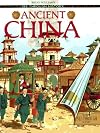
If you ever wondered what life was like in Imperial China, this gives you a glimpse at the vast arc of Chinese civilization during its 25, 000 year march from Stone Age society to the modern state we know today. From how the first kings were buried to the life of the farmer in the countryside, Williams shows how the Chinese people lived over the span of millennia, much of which remained unchanged up to the present day. With the see-through panels this series is known for, you can see the show more inner workings of houses and ships, tombs and the Forbidden City. show less

This does the job of an encyclopedia of history fairly well. It's great for young adults at about an 8-14 year old reading level. Gives just a taste of the history of various times with timelines.
Lists
You May Also Like


Associated Authors
Statistics
- Works
- 248
- Also by
- 2
- Members
- 3,927
- Popularity
- #6,441
- Rating
- 3.6
- Reviews
- 23
- ISBNs
- 901
- Languages
- 29