
Charles Lockwood (1) (1948–2012)
Author of The Siege of Washington: The Untold Story of the Twelve Days That Shook the Union
For other authors named Charles Lockwood, see the disambiguation page.
About the Author
Charles Lockwood, recognized as a "green real estate authority" by the Wall Street Journal, works with companies and investors on their corporate sustainability strategies and is a well-known author and speaker. He has been published in leading media worldwide, including the Harvard Business show more Review, the New York Times, Barron's, and the International Herald Tribune, and he has appeared on PBS and National Public Radio. show less
Image credit: Charles Lockwood
Works by Charles Lockwood
The Siege of Washington: The Untold Story of the Twelve Days That Shook the Union (2011) 159 copies, 7 reviews
Tagged
Common Knowledge
- Birthdate
- 1948-08-31
- Date of death
- 2012-03-28
- Gender
- male
- Education
- Princeton University
- Occupations
- architectural historian
- Agent
- Alexander C. Hoyt
- Relationships
- Lockwood, John (brother)
- Nationality
- USA
- Birthplace
- Washington, D.C., USA
- Places of residence
- New York, New York, USA
- Place of death
- Topanga, California, USA
- Associated Place (for map)
- USA
Members
Reviews

John Lockwood’s book “The Siege of Washington” looks at the twelve days after the fall of Fort Sumter when the nation's capital stood undefended in a sea of secessionists. Lockwood makes good use of diaries and memoirs to illustrate the claustrophobic sense of dread that the loyal citizens of Washington felt during those days. He manages to do this even though it is common knowledge that Washington did not fall to the armies of the slave South.
President Lincoln is shown to be a human, show more not a heroic, mythical being. He is shown in private moments wrestling with his sons and their friends, emotionally greeting the members of the “First Defenders”, shaking hands with every man in the regiment, as well as having the occasional outburst of temper, anger, and impatience. For me these glimpses of Lincoln the man sets this book far above other Civil War histories I have read.
The book is organized by day but occasionally jumps back or forward in time creating confusing gaps in the narrative. I understand that many of the personalities and events discussed need a background but perhaps there was a better way to handle that. My greatest issue with the book is over an omission, Lockwood mentions fairly early in the book an investigation done about the incidents in Baltimore but we never learn of the results. Yes, the investigation falls outside the twelve days covered in the book and I have complained about breaking the narrative but it, and other facts, could have been covered in an epilogue.
Overall the book was a entertaining and educational read and I would recommend it with only minor reservations. show less
President Lincoln is shown to be a human, show more not a heroic, mythical being. He is shown in private moments wrestling with his sons and their friends, emotionally greeting the members of the “First Defenders”, shaking hands with every man in the regiment, as well as having the occasional outburst of temper, anger, and impatience. For me these glimpses of Lincoln the man sets this book far above other Civil War histories I have read.
The book is organized by day but occasionally jumps back or forward in time creating confusing gaps in the narrative. I understand that many of the personalities and events discussed need a background but perhaps there was a better way to handle that. My greatest issue with the book is over an omission, Lockwood mentions fairly early in the book an investigation done about the incidents in Baltimore but we never learn of the results. Yes, the investigation falls outside the twelve days covered in the book and I have complained about breaking the narrative but it, and other facts, could have been covered in an epilogue.
Overall the book was a entertaining and educational read and I would recommend it with only minor reservations. show less
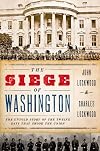
Most accounts of the crisis leading up to the start of the Civil War typically end with the bombardment of Fort Sumter on April 12, 1861, an event that is generally regarded as the first shots of the conflict. Yet this conclusion ignores the equally dramatic aftermath of the bombardment. With war now a certainty, the Lincoln administration scrambled to prepare by issuing a call for troops. Yet as they did so the very structure of government was crumbling around them, as Southerners in the show more military and the federal bureaucracy resigned. Indeed the capital itself was vulnerable to a possible Confederate attack. This extraordinary period is the subject of John and Charles Lockwood's book, which chronicles the twelve-day period from the fall of Fort Sumter on April 13 until the arrival of reinforcements on April 25, a span of time when the government's survival seemed in question
The authors begin with a broad portrait of the situation facing Lincoln and his cabinet in the wake of the fort's surrender. The attack on the fort had united the North, yet the start of hostilities also exposed Washington's vulnerability, one enhanced by the secessionist sympathies of many in the population. As the commanding general Winfield Scott planned for the city's defense, fears of a Confederate assault prompted many citizens to flee. The nearby states of New York, Pennsylvania, and Massachusetts quickly dispatched militia units to Washington, yet secessionist mobs in Baltimore and sabotage of the rails hindered their deployment. The immediate crisis ended only with the arrival of the Seventh regiment of the New York militia, which both bolstered the defenses and symbolized the reestablishment of the city's links to the rest of the Union.
The Lockwoods have provided a readable account of the panic that gripped Washington in the aftermath of Fort Sumter's fall. While ultimately demonstrating the overblown nature of the fears of attack, they nonetheless convey well the uncertainty that existed and the anxieties it fueled. As historians of Washington, their description of the city is particularly strong, providing a vivid study of what was still in many ways a sleepy Southern town with grandiose aspirations. This book is highly recommended to anyone seeking a snapshot of the nation's capital as it dealt with many of the first challenges of the war that had come. show less
The authors begin with a broad portrait of the situation facing Lincoln and his cabinet in the wake of the fort's surrender. The attack on the fort had united the North, yet the start of hostilities also exposed Washington's vulnerability, one enhanced by the secessionist sympathies of many in the population. As the commanding general Winfield Scott planned for the city's defense, fears of a Confederate assault prompted many citizens to flee. The nearby states of New York, Pennsylvania, and Massachusetts quickly dispatched militia units to Washington, yet secessionist mobs in Baltimore and sabotage of the rails hindered their deployment. The immediate crisis ended only with the arrival of the Seventh regiment of the New York militia, which both bolstered the defenses and symbolized the reestablishment of the city's links to the rest of the Union.
The Lockwoods have provided a readable account of the panic that gripped Washington in the aftermath of Fort Sumter's fall. While ultimately demonstrating the overblown nature of the fears of attack, they nonetheless convey well the uncertainty that existed and the anxieties it fueled. As historians of Washington, their description of the city is particularly strong, providing a vivid study of what was still in many ways a sleepy Southern town with grandiose aspirations. This book is highly recommended to anyone seeking a snapshot of the nation's capital as it dealt with many of the first challenges of the war that had come. show less
At the time that the Union surrendered Fort Sumter and the war was starting, neither the Confederacy or the United States was prepared for war. Some of the southern states had yet to decide on secession (Virginia, Maryland, North Carolina, Kentucky) but the major issue for the North was the location of its capital. Washington City was surrounded by slave holding states. When Lincoln requested troops from the loyal states to defend the capital on April 15th, a crisis erupted. Baltimoreans show more attacked the troops as they attempted to transfer trains for the capital. Riots broke out.
The residents of Washington felt threatened for the first 12 days of the war until troops arrived for its defense. Any moment they expected the Confederate Army to attack, "blow up the Capitol and Treasury Building, to burn the President's house and other edifices, and to leave in the blackened wreck of the ruined city, proof to the world that the Union was ruined." Others in the Confederacy felt that occupation of Washington and conversion of the city to the Confederate Capital held the benefits of establishing "instant legitimacy" for the new nation as well as recognition around the world. This would help the Confederacy negotiate loans and if the Union Government officials were captured, the war could possibly be ended quickly with little bloodshed.
However, the South was not prepared to make that step toward Washington. Arms were scarce in Virginia and Maryland. The Union destruction of the arsenal at Harper's Ferry had double blow - the destruction of the arms that the Virginians were hoping to capture as well as the morale of not defeating the Union troops that had been stationed there.
The details of the problems of getting the troops to Washington for its defense as well as the issues of housing, feeding, and sanitation are remarkable. The reader can almost feel and smell the air of fear throughout this book.
I've been reading a great number of Civil War books, but wish that I had found this one first. It would have been a great start, explaining the issues that effected both sides militarily as well as the social issues of the surrounding area. As a Marylander, I realize that my state fell below the Mason-Dixon line, but never realized until I read this book that there were actually skirmishes when the citizens tried to support the Confederacy. Most of all for me, it helped to enlightened me as to the areas in my home state that were directly affected by the war other than the battlefields.
A definite for anyone who wants to see the problems that greeted the Union and the Confederacy at the very beginning of the Civil War. show less
The residents of Washington felt threatened for the first 12 days of the war until troops arrived for its defense. Any moment they expected the Confederate Army to attack, "blow up the Capitol and Treasury Building, to burn the President's house and other edifices, and to leave in the blackened wreck of the ruined city, proof to the world that the Union was ruined." Others in the Confederacy felt that occupation of Washington and conversion of the city to the Confederate Capital held the benefits of establishing "instant legitimacy" for the new nation as well as recognition around the world. This would help the Confederacy negotiate loans and if the Union Government officials were captured, the war could possibly be ended quickly with little bloodshed.
However, the South was not prepared to make that step toward Washington. Arms were scarce in Virginia and Maryland. The Union destruction of the arsenal at Harper's Ferry had double blow - the destruction of the arms that the Virginians were hoping to capture as well as the morale of not defeating the Union troops that had been stationed there.
The details of the problems of getting the troops to Washington for its defense as well as the issues of housing, feeding, and sanitation are remarkable. The reader can almost feel and smell the air of fear throughout this book.
I've been reading a great number of Civil War books, but wish that I had found this one first. It would have been a great start, explaining the issues that effected both sides militarily as well as the social issues of the surrounding area. As a Marylander, I realize that my state fell below the Mason-Dixon line, but never realized until I read this book that there were actually skirmishes when the citizens tried to support the Confederacy. Most of all for me, it helped to enlightened me as to the areas in my home state that were directly affected by the war other than the battlefields.
A definite for anyone who wants to see the problems that greeted the Union and the Confederacy at the very beginning of the Civil War. show less
Fortunately for the United States, when the first shots of the Civil War were fired at Fort Sumter on April 12, 1861, the Southern states were as ill prepared to wage war as the Union states. Had it been otherwise, the South might have ended the war in a matter of days by overrunning the nation's capitol and capturing its entire government. Historians have often wondered why the South did not go for the kill anyway, having more to gain than to lose in a battle to take Washington. In "The show more Siege of Washington: The Untold Story of the Twelve Days That Shook the Union," historians John and Charles Lockwood explain.
Washington was poorly defended on April 14 when Fort Sumter was surrendered to Confederate General P.G.T. Beauregard. President Lincoln, recognizing the country's precarious situation, issued a call for troops the next day, Monday, April 15, and several Northern governors immediately began to mobilize state militias for Washington's defense. Actually getting those troops to Washington would prove to be the hard part.
Located some 60 miles south of the Mason-Dixon Line, Washington D.C. was solidly within slave-holding territory, and was, in fact, surrounded by the largely hostile populations of two states seen as likely to secede from the Union: Virginia and Maryland. The best way to get Union troops to Washington was to use the rail lines that passed through Baltimore - something that the citizens of Baltimore were determined to stop from happening. As the First Pennsylvania Volunteers, the Sixth and Eighth Massachusetts, and the Seventh New York tried to make its way to President Lincoln's defense, it became a race to see which army would arrive first: North or South.
John and Charles Lockwood, using private letters, diaries, newspaper stories, and firsthand accounts from Lincoln's secretaries (John Hay and John Nicolay), paint a vivid picture of life in a city whose citizens expected to be overrun by a hostile army at any moment. A substantial portion of the city's population sympathized with the Southern position, adding to President Lincoln's concern about whether Washington could effectively be defended against an invading Southern army. As conditions worsened, and it appeared more and more certain that Washington would be invaded, those who could leave, did so. By April 22, telegraph communication with the outside world had been cut off and it was impossible to reach the city by rail. As food supplies dwindled and bank runs became the order of the day, the nation's capitol was truly under siege.
"The Siege of Washington" is a well constructed, but at times repetitive, account of a twelve-day period (April 14-25, 1861), during which America's future might have been set on an entirely different path. The authors, by using the words of those who were there, recreate what it was like for Washington's citizens as they waited to see whose army would reach them first. Civil War buffs will appreciate this one.
Rated at: 4.0 show less
Washington was poorly defended on April 14 when Fort Sumter was surrendered to Confederate General P.G.T. Beauregard. President Lincoln, recognizing the country's precarious situation, issued a call for troops the next day, Monday, April 15, and several Northern governors immediately began to mobilize state militias for Washington's defense. Actually getting those troops to Washington would prove to be the hard part.
Located some 60 miles south of the Mason-Dixon Line, Washington D.C. was solidly within slave-holding territory, and was, in fact, surrounded by the largely hostile populations of two states seen as likely to secede from the Union: Virginia and Maryland. The best way to get Union troops to Washington was to use the rail lines that passed through Baltimore - something that the citizens of Baltimore were determined to stop from happening. As the First Pennsylvania Volunteers, the Sixth and Eighth Massachusetts, and the Seventh New York tried to make its way to President Lincoln's defense, it became a race to see which army would arrive first: North or South.
John and Charles Lockwood, using private letters, diaries, newspaper stories, and firsthand accounts from Lincoln's secretaries (John Hay and John Nicolay), paint a vivid picture of life in a city whose citizens expected to be overrun by a hostile army at any moment. A substantial portion of the city's population sympathized with the Southern position, adding to President Lincoln's concern about whether Washington could effectively be defended against an invading Southern army. As conditions worsened, and it appeared more and more certain that Washington would be invaded, those who could leave, did so. By April 22, telegraph communication with the outside world had been cut off and it was impossible to reach the city by rail. As food supplies dwindled and bank runs became the order of the day, the nation's capitol was truly under siege.
"The Siege of Washington" is a well constructed, but at times repetitive, account of a twelve-day period (April 14-25, 1861), during which America's future might have been set on an entirely different path. The authors, by using the words of those who were there, recreate what it was like for Washington's citizens as they waited to see whose army would reach them first. Civil War buffs will appreciate this one.
Rated at: 4.0 show less
You May Also Like


Associated Authors
Statistics
- Works
- 10
- Members
- 451
- Popularity
- #54,391
- Rating
- 4.0
- Reviews
- 7
- ISBNs
- 28
