
Ruth Robbins (1)
Author of Baboushka and the Three Kings
For other authors named Ruth Robbins, see the disambiguation page.
Works by Ruth Robbins
Emperors and the Drummer Boy 1 copy
Associated Works
Tagged
Common Knowledge
- Birthdate
- 1917?
- Gender
- female
- Education
- Pratt Institute
School of Design - Occupations
- art director
publisher - Organizations
- U.S. Public Health Service
Parnassus Press - Short biography
- [from University of Minnesota Libraries website]
Ruth Robbins was born in the late 1910s in Newark, NJ. She graduated from Pratt Institute in Brooklyn, NY in 1939 and continued on at the School of Design in Chicago. Robbins professional career began with the US Public Health Service, where she worked as an art director for four years. In 1956, she founded the publishing company Parnassus Press. As the vice president and art director, by 1978 Robbins had published over fifteen pieces of work, including her Caldecott Medal-winning story, Baboushka and the Three Kings. - Birthplace
- Newark, New Jersey, USA
- Places of residence
- Berkeley, California, USA
- Associated Place (for map)
- USA
Members
Reviews

Revised Review from 12/19/20:
Presented as a Christmas folktale from Russia, Baboushka and the Three Kings is an original story that tells of an old woman who, when the Three Kings stop at her humble cottage on their way to visit the Christ child, chooses not to accompany them on their journey. Regretting this decision almost instantly, Baboushka sets out to follow them the next day, only to find that she cannot overtake them, nor find the child...
Originally published in 1960, and awarded a show more Caldecott Medal for its illustrations in 1961, this Christmas picture-book is one I read back in 2010, and found quite interesting, despite my lack of appreciation for the artwork (see my original review below). The story reminded me of the Italian folktale concerning Old Befana, or the Dominican story of La Vieja Belen, and I assumed at the time that it was simply a Russian variant of a tale type found in multiple cultures. As someone who reads a great deal of folklore, I often find such parallels in the stories I encounter. At some point after writing my initial review, I discovered that this was in fact not a story taken from traditional Russian lore, and that its source was most likely American author Edith M. Thomas' 1907 poem Babushka (A Russian Legend), taken from her collection, Children of Christmas. Apparently there was also a play created for children from this piece. I am not sure what Thomas' sources were, as I have not investigated the subject that extensively, but clearly her work influenced subsequent American children's literature, when it comes to the presentation of this story.
In any case, I had intended to amend my review when I first discovered this new information, but then it somehow escaped me, and in the intervening years, removing the review from goodreads and then adding it again, I forgot all about it. My thanks to Olga, who commented on it, for reminding me. Readers should be aware that this is not a traditional Russian tale, and does not reflect Russian Christmas customs, although it does bear a striking resemblance to the Christmas folklore from other cultures.
Original Review from 12/10/10:
A Christmas folktale from Russia, Baboushka and the Three Kings tells the story of an old woman who, when the Three Kings stop at her humble cottage on their way to visit the Christ child, chooses not to accompany them on their journey. Regretting this decision almost instantly, Baboushka sets out to follow them the next day, only to find that she cannot overtake them, nor find the child...
I understand that Baboushka is something of a Santa Claus figure in traditional Russian culture, bringing holiday gifts for the children. For my part, I have always found this story of a woman's eternal search for the Christ child immensely poignant, and have read it as an allegory of the Christian experience. I wish I could say that I enjoyed Nicolas Sidjakov's illustrations - which were awarded the Caldecott Medal in 1961 - as much as the narrative, but I'm afraid that this particular style of four-color artwork, so popular in the 1960s, does not appeal to me. For those who feel the same, I recommend taking a look at Arthur Scholey's retelling of the same tale (Baboushka A Christmas Folktale from Russia), with illustrations by Helen Cann. show less
Presented as a Christmas folktale from Russia, Baboushka and the Three Kings is an original story that tells of an old woman who, when the Three Kings stop at her humble cottage on their way to visit the Christ child, chooses not to accompany them on their journey. Regretting this decision almost instantly, Baboushka sets out to follow them the next day, only to find that she cannot overtake them, nor find the child...
Originally published in 1960, and awarded a show more Caldecott Medal for its illustrations in 1961, this Christmas picture-book is one I read back in 2010, and found quite interesting, despite my lack of appreciation for the artwork (see my original review below). The story reminded me of the Italian folktale concerning Old Befana, or the Dominican story of La Vieja Belen, and I assumed at the time that it was simply a Russian variant of a tale type found in multiple cultures. As someone who reads a great deal of folklore, I often find such parallels in the stories I encounter. At some point after writing my initial review, I discovered that this was in fact not a story taken from traditional Russian lore, and that its source was most likely American author Edith M. Thomas' 1907 poem Babushka (A Russian Legend), taken from her collection, Children of Christmas. Apparently there was also a play created for children from this piece. I am not sure what Thomas' sources were, as I have not investigated the subject that extensively, but clearly her work influenced subsequent American children's literature, when it comes to the presentation of this story.
In any case, I had intended to amend my review when I first discovered this new information, but then it somehow escaped me, and in the intervening years, removing the review from goodreads and then adding it again, I forgot all about it. My thanks to Olga, who commented on it, for reminding me. Readers should be aware that this is not a traditional Russian tale, and does not reflect Russian Christmas customs, although it does bear a striking resemblance to the Christmas folklore from other cultures.
Original Review from 12/10/10:
A Christmas folktale from Russia, Baboushka and the Three Kings tells the story of an old woman who, when the Three Kings stop at her humble cottage on their way to visit the Christ child, chooses not to accompany them on their journey. Regretting this decision almost instantly, Baboushka sets out to follow them the next day, only to find that she cannot overtake them, nor find the child...
I understand that Baboushka is something of a Santa Claus figure in traditional Russian culture, bringing holiday gifts for the children. For my part, I have always found this story of a woman's eternal search for the Christ child immensely poignant, and have read it as an allegory of the Christian experience. I wish I could say that I enjoyed Nicolas Sidjakov's illustrations - which were awarded the Caldecott Medal in 1961 - as much as the narrative, but I'm afraid that this particular style of four-color artwork, so popular in the 1960s, does not appeal to me. For those who feel the same, I recommend taking a look at Arthur Scholey's retelling of the same tale (Baboushka A Christmas Folktale from Russia), with illustrations by Helen Cann. show less
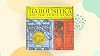
Baboushka and the Three Kings tells the story of the three wise men searching for baby Jesus. The men lose their way and stop at Baboushka's house to ask for directions. They ask if she would like to join them on their journey, but she declines to finish her housework. After she is finished, she wanders out to find the men. At the same time each year following Baboushka walks throughout the town and leaves small gifts for the children. I enjoyed this story because it was a different show more variation of the typical three wise men story. I think this would be great to read to children around Christmas to show children the various Christmas traditions around the world. show less
Baboushka, an old woman, is too busy with her household chores to go with the three kings in search of the child. She regrets and unsuccessfully tries to follow them. She continues to try to find the child each year, leaving gifts for children along her journey. The book won the Caldecott medal when it first came out, and the illustrations are surprisingly still lovely although probably in a different sort of way than they were in 1960. The book could be used to discuss the importance of show more seeking Christ before it is too late. Baboushka is somewhat like Santa Claus when it comes to leaving gifts for children. This Russian folk tale adaptation holds up well. The book includes the music and lyrics to a folk song about the woman. show less
I have never read a Russian folktale, so I enjoyed seeking out cultural connections in this story. The illustrations in this book stand out, because they consist of only the primary colors, black, and white. The pictures of buildings and characters look Russian, stylistically. This would be a fun story to use before Christmas time, because students would be able to compare Baboushka to Santa Claus. Plus, great critical thinking and discussions could take place around the life lesson that show more stood out to me which was "no regrets." show less
Lists
Awards


You May Also Like


Associated Authors
Statistics
- Works
- 7
- Also by
- 5
- Members
- 867
- Popularity
- #29,520
- Rating
- 4.0
- Reviews
- 37
- ISBNs
- 38
- Languages
- 1