
Dan O'Brien (1) (1947–)
Author of Buffalo for the Broken Heart: Restoring Life to a Black Hills Ranch
For other authors named Dan O'Brien, see the disambiguation page.
About the Author
Dan O'Brien ranks among the West's most celebrated writers. He divides his time between working as an endangered-species biologist, running a cattle ranch, & writing. He is the author of four novels, a short story collection, & three works of nonfiction, including the forthcoming "Buffalo Bill for show more the Broken Heart: Restoring a Piece of the American West". He lives in Whitewood, South Dakota. (Bowker Author Biography) show less
Works by Dan O'Brien
Associated Works
Tagged
Common Knowledge
- Birthdate
- 1947-11-23
- Gender
- male
- Occupations
- rancher
- Nationality
- USA
- Birthplace
- Findlay, Ohio, USA
- Places of residence
- South Dakota, USA
- Associated Place (for map)
- USA
Members
Reviews
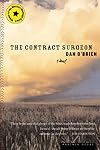
O'Brien tells a good story and The Contract Surgeon is a great read. I was particularly intrigued by the way he framed the story, having the narrator, Dr Valentine McGillycuddy, tell his tale from a vantage point of old age, nearly sixty years after the day that Crazy Horse died. This "old guy" narrator seems to keep popping up in my reading lately, notably in books like RULES FOR OLD MEN WAITING and the recent Pulitzer Prize winner, TINKERS. And it's cool; I like it. O'Brien had the show more foresight to make the most of this narrative tool by including A Chronology of Events that gives you a thumbnail history of the western Indian wars of the 1870s. This helps you follow the back and forth nature of the narrative. But the principals here - McGillycuddy and his wife Fanny - come across as very real people. Crazy Horse is not quite so well-realized. But perhaps the author felt there had already been enough written about this notorious war chief. Or maybe "notorious" is the wrong word, because Crazy Horse stories have run the gamut over the years. He has been both villified and deified. My guess is he was just a man, and O'Brien does a pretty good job of making him just that, in this case a pretty good man, who did the best he could. This was a pretty quick read. I was surprised how quickly it was over. If you are interested in western history, you'll probably like The Contract Surgeon. I don't think I've enjoyed a western novel quite this much since reading Will Henry's I, TOM HORN years ago. show less
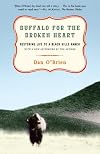
This is either a poignant, rather inspiring memoir of a person's search to give meaning to his life, or -- it's the longest. most sophisticated marketing brochure ever. I found myself comparing it favorably to Ivan Doig's sterling memoir, This House of Sky. Doig's memoir centers on his youth in Montana raising sheep, and this author's memoir is about his later adult life in South Dakota with bison, but the feeling of place and that deep connection with people and place is very similar, and, show more frankly, much appreciated by this reader. I am convinced that this is one of those rare books that both my wife and I would enjoy equally. show less
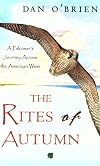
O'Brien tells the story of his attempt to "hack" (release into the wild) a peregrine falcon. He trains it to hunt, step by step acquiring the skills needed to catch more cunning prey, as they move south along the fall migration path from Montana to the Gulf of Mexico. The story is beautifully told, but without any excess sentimentality. O'Brien remains a realist, but his attachment to the falcon, Dolly, and to nature, is always clear and sometimes emerges in poetic prose: "If you show more concentrate, you can feel a peregrine become lighter just before she leaves your fist. It is their anticipation of flight, their mind-set that does it. If you don't watch them take off, if you just feel it, you would swear that they blend with the air somehow, simply becoming lighter, until finally gravity is not an obstacle." Hard to put down, and highly recommended. show less
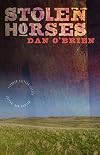
I always enjoy reading a book I know nothing about. The slate is clean. I have no expectations--good or bad. It's a nice feeling to make up my mind about a book with little outside influence. Honestly, I don't do it enough.
Stolen Horses was one of these reads. I'd never heard of it or its author until my MFA mentor recommended it to me. By the time I had a copy in hand, there were no forces pulling me one way or another aside from the singular recommendation.
In spirit of this refreshing show more perspective, I probably shouldn't mention how good this book was. I probably shouldn't say that Stolen Horses was a simple, yet interesting read, or that the characters were very desirable to follow, even through their most trivial actions. And of course it would be a mistake to talk about how the end of the novel was a wonderful payoff.
Of course, if I said all those positive things, I would be in error not to mention some of the things I didn't like in this novel. It would, after all, only make it fair. For instance, I might mention how O'Brien's theme was a bit heavy-handed at times. Or how the novel's bad characters weren't likable enough. Or that O'Brien should leave similes alone--really, I mean that in the nicest way (see pgs. 130 and 135). All relatively minor issues, but ones which did distract from a completely enjoyable read.
The problem is, if I say anything good about this book, then a reader who trusts my judgment will want to read it and be disappointed that it didn't live up to the hype. Then they'll never read another one of my reviews. And what will I do then? No, it's better to say nothing. Give the reader a blank slate.
So... read any good books lately? show less
Stolen Horses was one of these reads. I'd never heard of it or its author until my MFA mentor recommended it to me. By the time I had a copy in hand, there were no forces pulling me one way or another aside from the singular recommendation.
In spirit of this refreshing show more perspective, I probably shouldn't mention how good this book was. I probably shouldn't say that Stolen Horses was a simple, yet interesting read, or that the characters were very desirable to follow, even through their most trivial actions. And of course it would be a mistake to talk about how the end of the novel was a wonderful payoff.
Of course, if I said all those positive things, I would be in error not to mention some of the things I didn't like in this novel. It would, after all, only make it fair. For instance, I might mention how O'Brien's theme was a bit heavy-handed at times. Or how the novel's bad characters weren't likable enough. Or that O'Brien should leave similes alone--really, I mean that in the nicest way (see pgs. 130 and 135). All relatively minor issues, but ones which did distract from a completely enjoyable read.
The problem is, if I say anything good about this book, then a reader who trusts my judgment will want to read it and be disappointed that it didn't live up to the hype. Then they'll never read another one of my reviews. And what will I do then? No, it's better to say nothing. Give the reader a blank slate.
So... read any good books lately? show less
Awards


You May Also Like


Associated Authors
Statistics
- Works
- 14
- Also by
- 2
- Members
- 679
- Popularity
- #37,220
- Rating
- 4.1
- Reviews
- 24
- ISBNs
- 119
- Languages
- 5