
Robin Hardy (1) (1955–)
Author of Chataine's Guardian
For other authors named Robin Hardy, see the disambiguation page.
About the Author
Image credit: Robin Hardy reading an excerpt of her novel Streiker's Bride in preparation for recording the audiobook.
Series
Works by Robin Hardy
Sifted but Saved 1 copy
Tagged
Common Knowledge
- Legal name
- Hardy, Robin Moore
- Birthdate
- 1955
- Gender
- female
- Education
- Baylor University
- Occupations
- editor
- Nationality
- USA
- Places of residence
- Texas, USA
- Associated Place (for map)
- Texas, USA
Members
Reviews
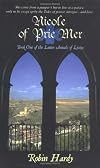
This the first title in the much-hyped ‘Latter Annals of Lystra’ series sets the tone for the following two novels.
Basically it begins with a peasant called Nicole who is invited to the palace at the behest of slutty princess Renee, by very unconvincingly passing her off as a noblewoman.
Within a few days she is married to Ares, the Commander of the army, but the course of love does not run smooth as Surchatain (King) Cedric has designs upon her, and Chatain (Prince) Tancred of Scylla show more also becomes infatuated with her.
When all these difficulties for Nicole are overcome Ares faces difficulties of his own as Cedric becomes increasingly hostile to him because of his rival claim to the throne, and fears Ares will father a child with Nicole, so thinks up every nefarious scheme he can to be rid of Ares.
As the brief synopsis suggests Hardy throws everything she can at Ares and Nicole in this novel, to the point it almost becomes unbelievable. Most of the ‘action’ of the novel consists of various relationship fiascos worthy of something from an episode of Jerry Springer or Oprah, with people jumping into each other’s beds, trying to steal other people’s spouses or lovers, boasting about how many people they have slept with, and lots of angry partners, tears and tantrums.
The most ludicrous character has to be Renee, who spends most of the novel throwing tantrums, whining about how horrible her parents are, or breaking up with her latest husband/fiancée when she is not trying to get Ares into bed with her, that is. When not doing this she is bragging about how many people she has slept with, telling rude jokes and stories or tormenting people.
Yet for all her shameless public conduct Renee still maintains a public facade and personal delusion that she is an ‘honourable’ ‘virtuous’ and ‘respectable’ Lady. So when her husband Magnus divorces her after only a few days of marriage because she was not a virgin Renee throws a tantrum to trump them all, taking out her anger on her ‘wicked’ father, and vowing revenge on the ‘wicked’ ex-husband who dared to tell the truth about her behaviour and supposedly damaged her ‘good’ reputation.
Yet is spite of the Renee’s well-known sexual promiscuity, which she makes no secret of, the audience is supposed to believe that Cedric Renee’s father is cruel and wicked for not allowing her to have men in her bedroom, and becoming suspicious and her suggestive and flirtatious behaviour.
Thus Cedric is demonized for the entire duration of the novel, mostly unfairly, as many of the actions for which he is demonized are justified and quite legitimate. Apparently he is ‘evil’ for ‘forcing’ his daughter into an arranged marriage, contrary to her wishes, despite the fact that this was the norm for aristocrats of both sexes in the Medieval period.
Most absurdly, we are supposed to believe that Cedric was to partially blame for his wife committing adultery, and when she is bought before him to answer charges she is presented as the innocent yet brave victim, and he as a maniacal ranting insanely jealous tyrant who is evil for wanting to punish her.
This highlights an important aspect of the morality in this series. It is implied throughout that it is quite acceptable for women to be sexually promiscuous, and commit adultery, but never for men.
Thus men who visit prostitutes, sleep around or cheat on their wives are depicted as lecherous, lustful and immoral. Yet women who behave this way are claimed to be ‘in love’, or their conduct is blamed on somebody else, or is regarded as morally and socially acceptable.
Not only is this a moral double standard, it is also historically and socially nonsensical, but then in the entire series the values and attitudes of the characters are almost entirely modern and do not reflect those of the period
For all the claims by the author that this novel promotes Christian sexual morality, and ‘God honouring sexuality’ I see little of either in it. So the first installment in this rather sorry series is arguably one of the worst of the lot, and certainly not worthy of the hyped-up praise that is heaped upon it. show less
Basically it begins with a peasant called Nicole who is invited to the palace at the behest of slutty princess Renee, by very unconvincingly passing her off as a noblewoman.
Within a few days she is married to Ares, the Commander of the army, but the course of love does not run smooth as Surchatain (King) Cedric has designs upon her, and Chatain (Prince) Tancred of Scylla show more also becomes infatuated with her.
When all these difficulties for Nicole are overcome Ares faces difficulties of his own as Cedric becomes increasingly hostile to him because of his rival claim to the throne, and fears Ares will father a child with Nicole, so thinks up every nefarious scheme he can to be rid of Ares.
As the brief synopsis suggests Hardy throws everything she can at Ares and Nicole in this novel, to the point it almost becomes unbelievable. Most of the ‘action’ of the novel consists of various relationship fiascos worthy of something from an episode of Jerry Springer or Oprah, with people jumping into each other’s beds, trying to steal other people’s spouses or lovers, boasting about how many people they have slept with, and lots of angry partners, tears and tantrums.
The most ludicrous character has to be Renee, who spends most of the novel throwing tantrums, whining about how horrible her parents are, or breaking up with her latest husband/fiancée when she is not trying to get Ares into bed with her, that is. When not doing this she is bragging about how many people she has slept with, telling rude jokes and stories or tormenting people.
Yet for all her shameless public conduct Renee still maintains a public facade and personal delusion that she is an ‘honourable’ ‘virtuous’ and ‘respectable’ Lady. So when her husband Magnus divorces her after only a few days of marriage because she was not a virgin Renee throws a tantrum to trump them all, taking out her anger on her ‘wicked’ father, and vowing revenge on the ‘wicked’ ex-husband who dared to tell the truth about her behaviour and supposedly damaged her ‘good’ reputation.
Yet is spite of the Renee’s well-known sexual promiscuity, which she makes no secret of, the audience is supposed to believe that Cedric Renee’s father is cruel and wicked for not allowing her to have men in her bedroom, and becoming suspicious and her suggestive and flirtatious behaviour.
Thus Cedric is demonized for the entire duration of the novel, mostly unfairly, as many of the actions for which he is demonized are justified and quite legitimate. Apparently he is ‘evil’ for ‘forcing’ his daughter into an arranged marriage, contrary to her wishes, despite the fact that this was the norm for aristocrats of both sexes in the Medieval period.
Most absurdly, we are supposed to believe that Cedric was to partially blame for his wife committing adultery, and when she is bought before him to answer charges she is presented as the innocent yet brave victim, and he as a maniacal ranting insanely jealous tyrant who is evil for wanting to punish her.
This highlights an important aspect of the morality in this series. It is implied throughout that it is quite acceptable for women to be sexually promiscuous, and commit adultery, but never for men.
Thus men who visit prostitutes, sleep around or cheat on their wives are depicted as lecherous, lustful and immoral. Yet women who behave this way are claimed to be ‘in love’, or their conduct is blamed on somebody else, or is regarded as morally and socially acceptable.
Not only is this a moral double standard, it is also historically and socially nonsensical, but then in the entire series the values and attitudes of the characters are almost entirely modern and do not reflect those of the period
For all the claims by the author that this novel promotes Christian sexual morality, and ‘God honouring sexuality’ I see little of either in it. So the first installment in this rather sorry series is arguably one of the worst of the lot, and certainly not worthy of the hyped-up praise that is heaped upon it. show less

As with all that came before in this series In Extremis groans under the burden of various historical inaccuracies, anachronisms and out of place modern terms and phrases, Americanisms and colloquialisms. This may seem pedantic, but I for one find it hard to take characters seriously as medieval people when they are speaking like modern Texans.
It takes a lot more than people using swords and riding horses and a peppering of a few period terms and phrases (or indeed an impressive sounding show more Latin title) to constitute historical authenticity and realism, something this series seems to be sadly lacking.
The novel recycles a number of scenarios and plot devices (perhaps coming to be a little over-used) from previous novels which make it seem all the more with yet more cunningly disguised secret tunnels which another character gets stuck in and sliding panels. The good ol’ slave traders are back again, the assorted bunch of nasties (‘cos everyone knows slavery is evil, right?) who have provided the characters with plenty of opportunities to catch and kill them.
Apparently, Lystrans aren't too keen on the common medieval pastime of hunting cute animals for sport. They do however have another of their favourite activities to keep them occupied- humiliating their guests.
This involves ‘scaring off’ an unwanted suitor for the ruler’s daughter with the usual tactics of subjecting him and his fellows to a round of insults and public humiliation. However, when behaving like this towards someone they don’t like (which seems to happen rather often), the stock of Lystrans royals and nobles show themselves to be entirely lacking in the most basic social graces and common courtesy, for their victims are their guests, partaking of their hospitality, and the incident in question as usual takes place at the dinner table.
Even today, insulting and humiliating one’s guests in such a way could be considered bad manners. However, for Medieval royals treat their guests who also happened to be Royal with such flagrant contempt and disrespect would appear entirely unacceptable for the period. Never mind that their behaviour is infantile, childish and quite simply pathetic.
Their guest (and the father of the suitor in question) called one of the Lystran royals names Renee a nasty name 17 years before, and instead of getting over it and moving on, the Lystrans take it upon themselves to punish him by calling him the same nasty name to make everyone laugh at him.
They seem to like making men out to be fools in this way, and particularly enjoy making fun of others an belittling those they don’t like for their own amusement.
It is not only men who fall foul of the Lystrans sadistic tendencies however, as Renee takes it upon herself to punish another character guilty of the heinous crime of having called her an ‘Old woman’ (Old witch old tart would be more fitting) several years before in much the same way.
Lystrans it seems cannot tolerate the same treatment as they dish out to others.
Men seem to get something of a raw deal in this novel and series. The male characters whom Renee, Nicole and her daughter Bonnie choose to pick on seem to be depicted lacking the wit, intelligence and backbone to stand up to or rebuff the onslaught of their apparently smarter female counterparts.
There also is one passage towards the end in which the main female protagonist Nicole, the wife of the ruler complains because the traditional betrothal vows her daughter takes require women to be virgins on their marriage but not men.
Like a modern day liberal whining about ancient customs which are not politically correct, Nicole wants to have them changed because she finds such a notion ‘inconsistent’ and unfair.
Like most other Lystrans, she believes in gender equality- because men are allowed to sleep around before they get married women should be allowed to as well.
Altogether, In Extremis proves to be another disagreeable seventh instalment in the rather sorry excuse for a ‘medieval fantasy’ saga that is the Latter Annals of Lystra. show less
It takes a lot more than people using swords and riding horses and a peppering of a few period terms and phrases (or indeed an impressive sounding show more Latin title) to constitute historical authenticity and realism, something this series seems to be sadly lacking.
The novel recycles a number of scenarios and plot devices (perhaps coming to be a little over-used) from previous novels which make it seem all the more with yet more cunningly disguised secret tunnels which another character gets stuck in and sliding panels. The good ol’ slave traders are back again, the assorted bunch of nasties (‘cos everyone knows slavery is evil, right?) who have provided the characters with plenty of opportunities to catch and kill them.
Apparently, Lystrans aren't too keen on the common medieval pastime of hunting cute animals for sport. They do however have another of their favourite activities to keep them occupied- humiliating their guests.
This involves ‘scaring off’ an unwanted suitor for the ruler’s daughter with the usual tactics of subjecting him and his fellows to a round of insults and public humiliation. However, when behaving like this towards someone they don’t like (which seems to happen rather often), the stock of Lystrans royals and nobles show themselves to be entirely lacking in the most basic social graces and common courtesy, for their victims are their guests, partaking of their hospitality, and the incident in question as usual takes place at the dinner table.
Even today, insulting and humiliating one’s guests in such a way could be considered bad manners. However, for Medieval royals treat their guests who also happened to be Royal with such flagrant contempt and disrespect would appear entirely unacceptable for the period. Never mind that their behaviour is infantile, childish and quite simply pathetic.
Their guest (and the father of the suitor in question) called one of the Lystran royals names Renee a nasty name 17 years before, and instead of getting over it and moving on, the Lystrans take it upon themselves to punish him by calling him the same nasty name to make everyone laugh at him.
They seem to like making men out to be fools in this way, and particularly enjoy making fun of others an belittling those they don’t like for their own amusement.
It is not only men who fall foul of the Lystrans sadistic tendencies however, as Renee takes it upon herself to punish another character guilty of the heinous crime of having called her an ‘Old woman’ (Old witch old tart would be more fitting) several years before in much the same way.
Lystrans it seems cannot tolerate the same treatment as they dish out to others.
Men seem to get something of a raw deal in this novel and series. The male characters whom Renee, Nicole and her daughter Bonnie choose to pick on seem to be depicted lacking the wit, intelligence and backbone to stand up to or rebuff the onslaught of their apparently smarter female counterparts.
There also is one passage towards the end in which the main female protagonist Nicole, the wife of the ruler complains because the traditional betrothal vows her daughter takes require women to be virgins on their marriage but not men.
Like a modern day liberal whining about ancient customs which are not politically correct, Nicole wants to have them changed because she finds such a notion ‘inconsistent’ and unfair.
Like most other Lystrans, she believes in gender equality- because men are allowed to sleep around before they get married women should be allowed to as well.
Altogether, In Extremis proves to be another disagreeable seventh instalment in the rather sorry excuse for a ‘medieval fantasy’ saga that is the Latter Annals of Lystra. show less

Two years after the end of the last book 'Road of Vanishing' and as usual there is a lot going on.
The Lystrans are preparing for the annual fair, and little Sophie has discovered a secret tunnel in which she believes to be haunted by a ghost. The 'ghost' then proceeds to use the tunnel to perform a kidnapping.
Things go on much the same way until the climax when the protagonists run into some characters from the older books, both of whom cause them a great deal of trouble.
This book I believe show more marked something of a transition in the series from the more original plotlines of the early books to the more repetitive and formulaic pattern of the later ones. Repetitive indeed , as the characters spend most of their time going to and fro through tunnels, and chasing after baddies and similar events keep happening over and over again.
The author seems to rely mostly on events from older stories to prop up this one with the dependence on a 'complex' series of interwoven plots and subplots none of which are really 'fleshed out' makes the whole novel rather weak. Even the element of mystery which ties up with the 'ghost' idea and the plot of a former book remains unsolved.
The characters display yet more absurdity and hypocrisy in their attitude towards a character called Renee, the promiscuous militant feminist who is the daughter of a former ruler.
In this novel she is 'courting' the latest in a long list if potential suitors, named Fanscali. Well 'courting' might not be the right word, as Ares suggests that the mere suggestion a husband might make her stay at home and have children will be enough to scare her off.
During the 'courtship itself, despite Renee's reputation for promiscuity and debauchery, Ares insists that Renee has a chaperone to protect her 'honour' (a figment of the collective imagination of the royal family) in case Fanscali tries to 'take advantage' of her, yet she is the one who demands that Ares puts him up in a room near to hers and tries to go to him room to have sex with him. Make sense?
Yet whilst her shameless and indecent public (mis)conduct that would never have been socially acceptable at this time is ignored and overlooked by the other characters, but at the same time they are vociferous in their condemnation of Fanscali for what they regard as 'dishonourable' behaviour on his part towards Renee for having deceiving her.
It apparently did not occur to the Lysrans that the medieval concept of 'honour' was meant to be a two-way thing in which both men and women were supposed to conduct themselves in a way that would have been deemed proper and acceptable in their society.
Such is typical of this series to present a one-sided view of morality and virtue in which one party is condemned for being 'nasty' to Renee, yet she is never censured, even when her behaviour was worse than that of the other person.
Renee's inevitable revenge provides one of the most dubious incidents of the whole novel (she always has to get revenge for any slight, real or perceived, and utterly disproportionate to what was done to her). Needless to say, it as usual involves harming innocent people who have never harmed or even met her in process- but its all perfectly okay because she 'prayed about it' first. Yup, apparently we're meant Renee whose only object of worship is herself and perhaps an assortment Greco-Roman deities related to her foremost object of reverence- being sex-prayed to the Christian one.
Subsequently he 'inspired' her to take revenge. Apparently, he's not only subject to her vindictive whims, but tacitly condones them- his favour depicted in the most cheesy manner of a light shining of her face. Could hardly be more corny if she sprouted a halo....
It's certainly a yarn which Nicole, the female Christian protagonist is caught on hook, line and sinker. As pretty much usual for her who is supposed to be intelligent.
So once again this novel, for all the superficial 'period' details does not reflect beliefs, attitudes, values and ideas common to the medieval period. It is basically historically inaccurate, poorly written garbage. show less
The Lystrans are preparing for the annual fair, and little Sophie has discovered a secret tunnel in which she believes to be haunted by a ghost. The 'ghost' then proceeds to use the tunnel to perform a kidnapping.
Things go on much the same way until the climax when the protagonists run into some characters from the older books, both of whom cause them a great deal of trouble.
This book I believe show more marked something of a transition in the series from the more original plotlines of the early books to the more repetitive and formulaic pattern of the later ones. Repetitive indeed , as the characters spend most of their time going to and fro through tunnels, and chasing after baddies and similar events keep happening over and over again.
The author seems to rely mostly on events from older stories to prop up this one with the dependence on a 'complex' series of interwoven plots and subplots none of which are really 'fleshed out' makes the whole novel rather weak. Even the element of mystery which ties up with the 'ghost' idea and the plot of a former book remains unsolved.
The characters display yet more absurdity and hypocrisy in their attitude towards a character called Renee, the promiscuous militant feminist who is the daughter of a former ruler.
In this novel she is 'courting' the latest in a long list if potential suitors, named Fanscali. Well 'courting' might not be the right word, as Ares suggests that the mere suggestion a husband might make her stay at home and have children will be enough to scare her off.
During the 'courtship itself, despite Renee's reputation for promiscuity and debauchery, Ares insists that Renee has a chaperone to protect her 'honour' (a figment of the collective imagination of the royal family) in case Fanscali tries to 'take advantage' of her, yet she is the one who demands that Ares puts him up in a room near to hers and tries to go to him room to have sex with him. Make sense?
Yet whilst her shameless and indecent public (mis)conduct that would never have been socially acceptable at this time is ignored and overlooked by the other characters, but at the same time they are vociferous in their condemnation of Fanscali for what they regard as 'dishonourable' behaviour on his part towards Renee for having deceiving her.
It apparently did not occur to the Lysrans that the medieval concept of 'honour' was meant to be a two-way thing in which both men and women were supposed to conduct themselves in a way that would have been deemed proper and acceptable in their society.
Such is typical of this series to present a one-sided view of morality and virtue in which one party is condemned for being 'nasty' to Renee, yet she is never censured, even when her behaviour was worse than that of the other person.
Renee's inevitable revenge provides one of the most dubious incidents of the whole novel (she always has to get revenge for any slight, real or perceived, and utterly disproportionate to what was done to her). Needless to say, it as usual involves harming innocent people who have never harmed or even met her in process- but its all perfectly okay because she 'prayed about it' first. Yup, apparently we're meant Renee whose only object of worship is herself and perhaps an assortment Greco-Roman deities related to her foremost object of reverence- being sex-prayed to the Christian one.
Subsequently he 'inspired' her to take revenge. Apparently, he's not only subject to her vindictive whims, but tacitly condones them- his favour depicted in the most cheesy manner of a light shining of her face. Could hardly be more corny if she sprouted a halo....
It's certainly a yarn which Nicole, the female Christian protagonist is caught on hook, line and sinker. As pretty much usual for her who is supposed to be intelligent.
So once again this novel, for all the superficial 'period' details does not reflect beliefs, attitudes, values and ideas common to the medieval period. It is basically historically inaccurate, poorly written garbage. show less
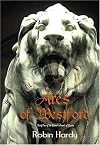
Ares of Westford picks up where the first novel finishes off shortly after the death of Surchatain Cedric. At 7 Henry his son is too young to reign himself, and Ares agrees to rule as `co-regent' alongside Carmine until he comes of age.
In the absence of the ruler various contenders and imposters turn up from far and wide to press claims to the throne, both genuine and false, and the Lystrans have to use all their `ingenuity' to deal with them whilst dealing with various threats from within show more and without.
There is certainly plenty of political intrigue in this novel, which can create tension, drama and interest and is certainly consistent with the reality of some medieval royal courts. Yet somehow perhaps the stories are a little too reliant on this device and complexity comes at the expense of character development, motivation or plausibility. Also, I felt some incidents were decidedly unrealistic and unconvincing.
In the most example the daughter of the former ruler (the title used in the novel is `Chataine' - equivalent to a Princess), decides to get revenge on her ex- by relating how she went to bed with his father and making out she enjoyed it.
In a society in which reputation and good-name mattered greatly especially for a woman, it seems totally unbelievable that any Lady of high standing would have dreamed of revealing she had having committed adultery and incest in public- Especially not a woman like Renee who had already been compromised.
Yet none of the other characters so much as raise an eyebrow, let alone considers her actions shocking. Apparently, they are so `liberal' and `enlightened' that bragging about sexual perversion in public is not considered inappropriate for a `respectable' and `honourable' Lady like Renee so her reputation miraculously survives intact. Of course, we are supposed to believe this was also because the characters realised, on hearing her recount how she willingly engaged in this act that she was actually `raped'. Yeah, right.
If nothing else the above is a good of how the common social, moral and religious attitudes, values, expectations and conventions of the medieval period do not seem to be represented by the character in this series, and are certainly not applied to Renee. There are a lot of period terms and phrases and details, but they seem superficial in comparison.
Moving on, in another place the Lystrans manage to fool someone that another character is royal by dressing up in a posh dress Not only did it seem implausible that he would have no idea how old the girl was, and so would be fooled by a woman several years older, but there was a lot more to being royal than clothes. So it did not seem plausible that one could just dress up a commoner and because she was `regal' nobody would notice the difference. What does that even mean anyway? Frankly though, pretty much all of the villains in this series appear stupid and gullible as they fall for the same dupes time and time again.
There were also some religious issues, with the implication in one passage that a person's good deed can outweigh their bad when Ares finds a law which can conveniently be interpreted in such a way as to exonerate some of his friends and royal officials of their unlawful acts. In another place it was stated that soldiers who died in battle had `commended their own souls to God' and gone to heaven when there was no indication that they had accepted Christ or been forgiven of their sin.
The conclusion of the novel, though arguably `dramatic' does seem a little predictable and perhaps bound to happen the way it did to bring about a happy ending.
Personally, Ares of Westford is not a novel I would recommend, particularly if one is looking for a good and authentic period novel with a sound spiritual message. show less
In the absence of the ruler various contenders and imposters turn up from far and wide to press claims to the throne, both genuine and false, and the Lystrans have to use all their `ingenuity' to deal with them whilst dealing with various threats from within show more and without.
There is certainly plenty of political intrigue in this novel, which can create tension, drama and interest and is certainly consistent with the reality of some medieval royal courts. Yet somehow perhaps the stories are a little too reliant on this device and complexity comes at the expense of character development, motivation or plausibility. Also, I felt some incidents were decidedly unrealistic and unconvincing.
In the most example the daughter of the former ruler (the title used in the novel is `Chataine' - equivalent to a Princess), decides to get revenge on her ex- by relating how she went to bed with his father and making out she enjoyed it.
In a society in which reputation and good-name mattered greatly especially for a woman, it seems totally unbelievable that any Lady of high standing would have dreamed of revealing she had having committed adultery and incest in public- Especially not a woman like Renee who had already been compromised.
Yet none of the other characters so much as raise an eyebrow, let alone considers her actions shocking. Apparently, they are so `liberal' and `enlightened' that bragging about sexual perversion in public is not considered inappropriate for a `respectable' and `honourable' Lady like Renee so her reputation miraculously survives intact. Of course, we are supposed to believe this was also because the characters realised, on hearing her recount how she willingly engaged in this act that she was actually `raped'. Yeah, right.
If nothing else the above is a good of how the common social, moral and religious attitudes, values, expectations and conventions of the medieval period do not seem to be represented by the character in this series, and are certainly not applied to Renee. There are a lot of period terms and phrases and details, but they seem superficial in comparison.
Moving on, in another place the Lystrans manage to fool someone that another character is royal by dressing up in a posh dress Not only did it seem implausible that he would have no idea how old the girl was, and so would be fooled by a woman several years older, but there was a lot more to being royal than clothes. So it did not seem plausible that one could just dress up a commoner and because she was `regal' nobody would notice the difference. What does that even mean anyway? Frankly though, pretty much all of the villains in this series appear stupid and gullible as they fall for the same dupes time and time again.
There were also some religious issues, with the implication in one passage that a person's good deed can outweigh their bad when Ares finds a law which can conveniently be interpreted in such a way as to exonerate some of his friends and royal officials of their unlawful acts. In another place it was stated that soldiers who died in battle had `commended their own souls to God' and gone to heaven when there was no indication that they had accepted Christ or been forgiven of their sin.
The conclusion of the novel, though arguably `dramatic' does seem a little predictable and perhaps bound to happen the way it did to bring about a happy ending.
Personally, Ares of Westford is not a novel I would recommend, particularly if one is looking for a good and authentic period novel with a sound spiritual message. show less
Awards

You May Also Like


Statistics
- Works
- 32
- Members
- 704
- Popularity
- #35,973
- Rating
- 3.7
- Reviews
- 12
- ISBNs
- 95
- Languages
- 1
- Favorited
- 1

