
Derek Robinson (1) (1932–)
Author of Goshawk Squadron
For other authors named Derek Robinson, see the disambiguation page.
Series
Works by Derek Robinson
Associated Works
Tagged
Common Knowledge
- Canonical name
- Robinson, Derek
- Other names
- Robson, Dirk
- Birthdate
- 1932-04-12
- Gender
- male
- Education
- Cotham grammar school, Bristol
University of Cambridge (Downing College) - Occupations
- author
novelist
screenwriter
rugby referee
broadcaster - Organizations
- Royal Air Force
- Short biography
- (fl. 1932-2007).
- Nationality
- UK
- Birthplace
- Bristol, Gloucestershire, England, UK
- Places of residence
- Bristol, Gloucestershire, England, UK
- Associated Place (for map)
- Bristol, Gloucestershire, England, UK
Members
Reviews
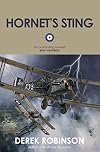
"The sun was shining as if nothing mattered." (pg. 232)
After a laboured start, Hornet's Sting ultimately proves to be one of the better Derek Robinson novels. The seven I have read out of the eight RFC/RAF books all have the same positives and negatives, but to different degrees: on the good side, they possess strong writing (particularly in aerial combat), intelligent discussion of the planes and the theatre of war chosen, and, when done in moderation, some sharp and witty dialogue. show more Characters are offed with an on-the-nose heartlessness that really rams home the waste of war. On the bad side, the books tend towards a lack of a plot through-line, a snarky cynicism that easily tilts into exhausting nihilism, and a strange emphasis on tedium, banter and cuckoldry over air combat and flight.
It's never about quality in Robinson's books, as this is something you can always be assured of to some extent; it's about the mixture. Hornet's Sting is the best so far of the RFC Quartet (I have yet to read A Splendid Little War) and only behind two of the RAF Quartet (A Good Clean Fight and Piece of Cake) on points. Hornet's Sting has some truly strong scenes; the first disastrous patrol of the Bristol Fighter and the scene in the aerial photography hut, as the pilots watch the mud creep over the Passchendaele front that the infantry must now take, both spring to mind.
The latter scene hints at one of Hornet's Sting's greatest strengths; its appreciation of the P.B.I. ('poor bloody infantry') even when the story is told exclusively from the point of view of the more upper-class, self-serving pilots of the Royal Flying Corps. "They didn't sacrifice their silly lives," one character says on page 272. "Other people organized their deaths." Derek Robinson's trademark cynicism-cum-nihilism is perfect for this battle, and this war, in a way that its predecessors, Goshawk Squadron and War Story, somehow lacked.
"He remembered what it was like to be a pilot; the glorious, god-like feeling of soaring away from the pettiness of Earth," Robinson writes in another fine passage (pg. 123), which makes it so odd and so frustrating that this writer so often indulges the same pettiness. At times, it seems like Robinson can only conceive of two types of pilot; the useless, wide-eyed novice and the malicious, upper-class bastard. It is slightly unfair to criticise Robinson's characterization, for he finds variation in character within these two paradigms, but the relentless cheerlessness can be extremely exhausting in such rich writing. It's almost like Robinson is cutting his nose off to spite his face, even before you get to such over-the-top scenes as the pilot who bayonets two soldiers on his own side, just because he can (pg. 389), and over-the-top characters like Dorothy, a prototype of the feckless upper-class slut Zoë from Damned Good Show and Hullo Russia, Goodbye England, who thankfully isn't indulged quite as much as the finished model from those later books.
My reviews of Robinson's books too often focus on the negatives, I know, but it's mostly out of exasperation than opposition, as the books repeatedly flash moments of brilliance alongside their wonkier moments. Robinson is technically excellent, but it can be hard to truly enjoy a writer who writes tedium, nihilism and public-schoolboy fatuousness so well. With one book to go, I'm unlikely to find a truly establishing representative of Robinson's talent that I can defend against all comers, but the fact that I've read and enjoyed seven testifies to their quality. Sometimes excellent, sometimes hard-going; with only one book remaining unread in the series, ultimately I think I'll miss them when they're gone. show less
After a laboured start, Hornet's Sting ultimately proves to be one of the better Derek Robinson novels. The seven I have read out of the eight RFC/RAF books all have the same positives and negatives, but to different degrees: on the good side, they possess strong writing (particularly in aerial combat), intelligent discussion of the planes and the theatre of war chosen, and, when done in moderation, some sharp and witty dialogue. show more Characters are offed with an on-the-nose heartlessness that really rams home the waste of war. On the bad side, the books tend towards a lack of a plot through-line, a snarky cynicism that easily tilts into exhausting nihilism, and a strange emphasis on tedium, banter and cuckoldry over air combat and flight.
It's never about quality in Robinson's books, as this is something you can always be assured of to some extent; it's about the mixture. Hornet's Sting is the best so far of the RFC Quartet (I have yet to read A Splendid Little War) and only behind two of the RAF Quartet (A Good Clean Fight and Piece of Cake) on points. Hornet's Sting has some truly strong scenes; the first disastrous patrol of the Bristol Fighter and the scene in the aerial photography hut, as the pilots watch the mud creep over the Passchendaele front that the infantry must now take, both spring to mind.
The latter scene hints at one of Hornet's Sting's greatest strengths; its appreciation of the P.B.I. ('poor bloody infantry') even when the story is told exclusively from the point of view of the more upper-class, self-serving pilots of the Royal Flying Corps. "They didn't sacrifice their silly lives," one character says on page 272. "Other people organized their deaths." Derek Robinson's trademark cynicism-cum-nihilism is perfect for this battle, and this war, in a way that its predecessors, Goshawk Squadron and War Story, somehow lacked.
"He remembered what it was like to be a pilot; the glorious, god-like feeling of soaring away from the pettiness of Earth," Robinson writes in another fine passage (pg. 123), which makes it so odd and so frustrating that this writer so often indulges the same pettiness. At times, it seems like Robinson can only conceive of two types of pilot; the useless, wide-eyed novice and the malicious, upper-class bastard. It is slightly unfair to criticise Robinson's characterization, for he finds variation in character within these two paradigms, but the relentless cheerlessness can be extremely exhausting in such rich writing. It's almost like Robinson is cutting his nose off to spite his face, even before you get to such over-the-top scenes as the pilot who bayonets two soldiers on his own side, just because he can (pg. 389), and over-the-top characters like Dorothy, a prototype of the feckless upper-class slut Zoë from Damned Good Show and Hullo Russia, Goodbye England, who thankfully isn't indulged quite as much as the finished model from those later books.
My reviews of Robinson's books too often focus on the negatives, I know, but it's mostly out of exasperation than opposition, as the books repeatedly flash moments of brilliance alongside their wonkier moments. Robinson is technically excellent, but it can be hard to truly enjoy a writer who writes tedium, nihilism and public-schoolboy fatuousness so well. With one book to go, I'm unlikely to find a truly establishing representative of Robinson's talent that I can defend against all comers, but the fact that I've read and enjoyed seven testifies to their quality. Sometimes excellent, sometimes hard-going; with only one book remaining unread in the series, ultimately I think I'll miss them when they're gone. show less

For the most part, A Splendid Little War can be enjoyed or endured on the same terms as the previous seven books in Derek Robinson's RFC/RAF series. I wrote in my review of the previous book, Hornet's Sting, that all the books possess positives in strong writing, particularly regarding the combat, the history and (in moderation) the sharp dialogue. They also possess negatives in that there is often the lack of a grounded plot, tending instead towards rambles through a wide theatre of war, show more and there is a snarky cynicism which easily tilts into exhausting nihilism.
Overall quality in a Robinson book is more or less assured; what is at stake is the mixture when you open a new title. If it's off-balance, it can feel like you're re-reading a book from earlier in the series. If it's done right, it's much easier to be taken along. You can breathe, and it's the difference between fresh air and cabin air. A Splendid Little War does the mixture fairly well, and there were no moments – as there had been in previous books – where it felt sluggish and difficult to endure. Robinson is a writer to admire.
Where A Splendid Little War stands out from the other books is its setting: the British intervention in the Russian Civil War of 1919. Robinson has tackled untypical topics before (Hullo Russia, Goodbye England covered the M.A.D. nuclear-bomber strategy of the 1960s), but A Splendid Little War felt particularly fresh. Partly this was because the other six books in the series cover the two World Wars (three apiece), but mostly it's because the 1919 'Intervention' doesn't loom large in Western history, and so reading the book feels like a real education. Robinson does very well to build up the reader's knowledge of the campaign over the course of 300 pages, while also staying honest as a storyteller with regard to the characters and so on. It's a very creditable piece of historical fiction.
It can be rather uncanny for a British reader to read of the 1919 Intervention; even that year, '1919', seems strange when you look at it on the pages of war. A Splendid Little War takes place in a theatre involving Kharkov, Kursk and Tsaritsyn (later Stalingrad), and the reader's mind quite naturally goes to a different later conflict, one without British combatants. Or, seeking the familiar, the reader clutches at knowledge of a much earlier British escapade in the Crimea. Robinson's success is in steering us into the reality of the 1919 war. It stops being a novelty and becomes a page of history in its own right.
The Intervention was brutal, shambolic and by no means small; Robinson tells us in his Foreword that Britain invested the equivalent of a billion pounds in modern money in the conflict, and the main story tells us that many hundreds of British lives were lost (to say nothing of the Russians). Robinson's signature suddenness and ruthlessness in killing off main characters takes on even more potency here; it's much more blackly comic to see a pilot lost in a minor skirmish in an unknown Russian war than it is in the two World Wars, where we can at least hold on to scraps of grand meaning and worth. But, as one White Russian says on page 79, "Russia is not a tennis court," and the 'splendid little war' that Britain hoped to find turned out to be an ugly, chaotic mess – and one with great consequences. Robinson raises the point in the final chapter, and in his Author's Note at the end, that Western violation of Russian borders in 1919 was a major factor in the Russian cultural mindset well into the Cold War. In light of the shambles that Robinson has just unfolded for the reader over the previous 300 pages, it's a quietly sobering – and enduringly relevant – criticism of futile military adventures, particularly ones entered into with ignorance. Regardless of their mixture, Robinson's books have always had this dose-of-smelling-salts intelligence, and reading him has never been futile. show less
Overall quality in a Robinson book is more or less assured; what is at stake is the mixture when you open a new title. If it's off-balance, it can feel like you're re-reading a book from earlier in the series. If it's done right, it's much easier to be taken along. You can breathe, and it's the difference between fresh air and cabin air. A Splendid Little War does the mixture fairly well, and there were no moments – as there had been in previous books – where it felt sluggish and difficult to endure. Robinson is a writer to admire.
Where A Splendid Little War stands out from the other books is its setting: the British intervention in the Russian Civil War of 1919. Robinson has tackled untypical topics before (Hullo Russia, Goodbye England covered the M.A.D. nuclear-bomber strategy of the 1960s), but A Splendid Little War felt particularly fresh. Partly this was because the other six books in the series cover the two World Wars (three apiece), but mostly it's because the 1919 'Intervention' doesn't loom large in Western history, and so reading the book feels like a real education. Robinson does very well to build up the reader's knowledge of the campaign over the course of 300 pages, while also staying honest as a storyteller with regard to the characters and so on. It's a very creditable piece of historical fiction.
It can be rather uncanny for a British reader to read of the 1919 Intervention; even that year, '1919', seems strange when you look at it on the pages of war. A Splendid Little War takes place in a theatre involving Kharkov, Kursk and Tsaritsyn (later Stalingrad), and the reader's mind quite naturally goes to a different later conflict, one without British combatants. Or, seeking the familiar, the reader clutches at knowledge of a much earlier British escapade in the Crimea. Robinson's success is in steering us into the reality of the 1919 war. It stops being a novelty and becomes a page of history in its own right.
The Intervention was brutal, shambolic and by no means small; Robinson tells us in his Foreword that Britain invested the equivalent of a billion pounds in modern money in the conflict, and the main story tells us that many hundreds of British lives were lost (to say nothing of the Russians). Robinson's signature suddenness and ruthlessness in killing off main characters takes on even more potency here; it's much more blackly comic to see a pilot lost in a minor skirmish in an unknown Russian war than it is in the two World Wars, where we can at least hold on to scraps of grand meaning and worth. But, as one White Russian says on page 79, "Russia is not a tennis court," and the 'splendid little war' that Britain hoped to find turned out to be an ugly, chaotic mess – and one with great consequences. Robinson raises the point in the final chapter, and in his Author's Note at the end, that Western violation of Russian borders in 1919 was a major factor in the Russian cultural mindset well into the Cold War. In light of the shambles that Robinson has just unfolded for the reader over the previous 300 pages, it's a quietly sobering – and enduringly relevant – criticism of futile military adventures, particularly ones entered into with ignorance. Regardless of their mixture, Robinson's books have always had this dose-of-smelling-salts intelligence, and reading him has never been futile. show less
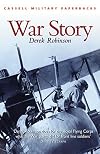
War Story by Derek Robinson is set in World War I and is about a squadron of pilots who are stationed in France and are being sent up against the Hun on a daily basis. At first it seems that it’s all banter, games of cricket on the airfield, and Etonian old boys reunions but it isn’t long before the cracks show through. These are men that have given up hope, can’t see an end, other than death or disfigurement, to this war. A newly trained lieutenant, a little too earnest and pompous, show more eager to prove himself to king and country, arrives and can’t understand why or how the craziness is allowed. His CO sets his plane on fire, his bunk-mate hates him on sight because he recently lost his friend and can’t accept his death, everyone else either ignores him or calls him by a wrong name.
War Story is a frightening look at what was happening to the young men who thought they were in for a heroic but short adventure. As the CO spirals out of control and eventually commits suicide by flying his plane directly into a German one, our naive main character becomes as disillusioned as the pilots around him.
Derek Robinson excels in stories about war, both with War Story which is part of a WW I trilogy and also his trilogy about WW II. His descriptions of aerial combat are compelling and place the reader in the sky alongside the pilots. The dialogue rings true, and the atmosphere feels authentic, and there is plenty of black humor but it is his portrait of young men barely hanging onto their sanity that the reader will carry away with him. show less
War Story is a frightening look at what was happening to the young men who thought they were in for a heroic but short adventure. As the CO spirals out of control and eventually commits suicide by flying his plane directly into a German one, our naive main character becomes as disillusioned as the pilots around him.
Derek Robinson excels in stories about war, both with War Story which is part of a WW I trilogy and also his trilogy about WW II. His descriptions of aerial combat are compelling and place the reader in the sky alongside the pilots. The dialogue rings true, and the atmosphere feels authentic, and there is plenty of black humor but it is his portrait of young men barely hanging onto their sanity that the reader will carry away with him. show less
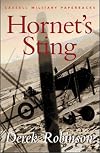
This is a good story about the "Hornet Squadron" fighting over the Western Front in 1917. It is often funny, but throughout it is an accurate portrayal of the horror of the war its effect on the men who fought it. It is difficult to talk about the cast of characters, because very few can be followed through the complete story: an accurate reflection of the astonishingly short life-span of the pilots, so short that they become interchangeable because they are transient on their short road to show more death. As a result, as noted by one new pilot, there does not seem to be the comradery that he expected, but rather a manic existence of boredom punctuated by the terror and death of air patrols and battles and sudden, if you're lucky, death and the wild, cathartic parties of booze and high spirits and the smashing of furniture. This produces a hedonistic approach to life where every chance for fleeing happiness, or sexual congress, must be grasped because there may be no tomorrow. The futility of the great "pushes" by the infantry, where hundreds of thousand of men were slain for a few meters of ground likely given up a few weeks or months later, are mirrored in the Deep Offensive Patrols demanded by the Air Service which put the pilots at great risk for the sake of a theory that had little to do with the reality of fighting in the air.
The clash between reality and theory is also shown when the squadron receives some new Bristol fighters (two-seaters) and practice a static, positional type of formation-fighting that results in a great number of aircraft being shot down the first time they encounter the enemy. It is Wooley, the complete non-conformist, cynical, former squadron leader and then instructor and then back to the front as a pilot, who shows the skeptical pilots how to fly the Bristol like a real fighter so as to be able to take advantage of what it can do. And the stupidity of the war machine never ceases to amaze with the provost-marshal investigating the loss of 200 jars of marmalade while men are dying daily, and to what end? The other thing that strikes one in reading about how these men reacted and fought in the air war, is how very young they were: anyone in his early 20s would be considered old, and many were only in their late teens, formative years that forge in them an ability to kill and to try to deal with terror of capricious and sudden death, but which some know will equip them for nothing else should they survive the carnage.
There is an almost surreal scene towards the end of the book when Paxton, one of the pilots, crash lands his aircraft in a forest on the German side of the lines. He survives because the trees break the fall, he finds and kills two German guards at an empty ammunition depot, puts on a German uniform and mixes among the troops, unnoticed as just another wounded, disoriented, hungry, dispossessed soldier who eventually gets caught up in an attack over the top into British machine guns. Before the attack a German soldier shares his flask of schnapps and when this man is killed in the attack, Paxton storms the machine-gun nest, killing the two British soldiers, and then turning the machine-gun on the advancing Germans until relieved by British troops. Paxton is taken back to the airdrome, but dies days later of delayed shock. Robinson captures nicely the madness of the war and the interchangeability of the experience and hopes and fears of the men on either side, men simply trying to survive in an unimaginable world of terror and high explosive for which they saw no end, and no reason. show less
The clash between reality and theory is also shown when the squadron receives some new Bristol fighters (two-seaters) and practice a static, positional type of formation-fighting that results in a great number of aircraft being shot down the first time they encounter the enemy. It is Wooley, the complete non-conformist, cynical, former squadron leader and then instructor and then back to the front as a pilot, who shows the skeptical pilots how to fly the Bristol like a real fighter so as to be able to take advantage of what it can do. And the stupidity of the war machine never ceases to amaze with the provost-marshal investigating the loss of 200 jars of marmalade while men are dying daily, and to what end? The other thing that strikes one in reading about how these men reacted and fought in the air war, is how very young they were: anyone in his early 20s would be considered old, and many were only in their late teens, formative years that forge in them an ability to kill and to try to deal with terror of capricious and sudden death, but which some know will equip them for nothing else should they survive the carnage.
There is an almost surreal scene towards the end of the book when Paxton, one of the pilots, crash lands his aircraft in a forest on the German side of the lines. He survives because the trees break the fall, he finds and kills two German guards at an empty ammunition depot, puts on a German uniform and mixes among the troops, unnoticed as just another wounded, disoriented, hungry, dispossessed soldier who eventually gets caught up in an attack over the top into British machine guns. Before the attack a German soldier shares his flask of schnapps and when this man is killed in the attack, Paxton storms the machine-gun nest, killing the two British soldiers, and then turning the machine-gun on the advancing Germans until relieved by British troops. Paxton is taken back to the airdrome, but dies days later of delayed shock. Robinson captures nicely the madness of the war and the interchangeability of the experience and hopes and fears of the men on either side, men simply trying to survive in an unimaginable world of terror and high explosive for which they saw no end, and no reason. show less
Lists
Awards


You May Also Like


Associated Authors
Statistics
- Works
- 28
- Also by
- 1
- Members
- 1,379
- Popularity
- #18,645
- Rating
- 3.9
- Reviews
- 38
- ISBNs
- 152
- Languages
- 3
- Favorited
- 3