
Michael Rosen (1) (1946–)
Author of We're Going on a Bear Hunt
For other authors named Michael Rosen, see the disambiguation page.
About the Author
Michael Rosen started writing as a teenager, when his mother needed some poems for Radio programs she was making. While at college, he wrote a play which was staged at the Royal Court theatre in London. Rosen's first book was published in 1974, and he is one of Britain's leading children's poets. show more Michael Rosen launched the National Year of Literacy project, which encouraged children to help produce an Anthology to be used during the Literacy Hour in primary schools. Children ages 4-11 were invited to submit poems and illustrations featuring their favorite tree. Rosen also led the final judging sessions to decide which submissions would be included. (Bowker Author Biography) show less
Image credit: Michael Rosen (1)
Series
Works by Michael Rosen
Workers' Tales: Socialist Fairy Tales, Fables, and Allegories from Great Britain (2018) — Editor — 61 copies
Bananas in My Ears: A Collection of Nonsense Stories, Poems, Riddles, & Rhymes (2011) — Author — 51 copies, 2 reviews
Getting Better: Life lessons on going under, getting over it, and getting through it (2023) 37 copies
What is humanism? How do you live without a god? And other big questions for kids (2015) 29 copies, 1 review
Who Are Refugees and Migrants? What Makes People Leave Their Homes? and Other Big Questions (2016) 25 copies
Michael Rosen's Book of Play: Why play really matters, and 101 ways to get more of it in your life (2019) 21 copies
Sonsense Nongs: Michael Rosen's Book of Silly Songs, Daft Ditties, Crazy Croons, Loony Lyrics, Batty Ballads, and Nutty Numbers (1992) 7 copies
Tip-Top 1 copy
Your Brother Danny 1 copy
Monkey 1 copy
Associated Works
Children's Literature: Classic Texts and Contemporary Trends (2009) — Contributor — 31 copies, 1 review
The Prince Who Thought He Was a Rooster and Other Jewish Stories (2007) — Introduction — 25 copies, 1 review
Tagged
Common Knowledge
- Legal name
- Rosen, Michael Wayne
- Birthdate
- 1946-05-07
- Gender
- male
- Education
- University of Oxford (Wadham College)
Watford Grammar School for Boys
Middlesex Hospital Medical School - Occupations
- children's book author
television presenter
poet - Awards and honors
- Children's Laureate (2007-2009)
Chevalier de l'Ordre des Arts et des Lettres (2008)
Action for Children's Arts (J. M. Barrie Award | 2021)
Hans Christian Andersen Award (2026) - Nationality
- UK
- Birthplace
- Harrow, Middlesex, England, UK
- Places of residence
- Pinner, Middlesex, England, UK
London, Middlesex, England, UK - Map Location
- England, UK
Members
Reviews
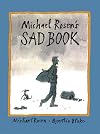
The Nature of the Beast
Grief waxes and wanes.
It is a beast of many faces, many forms.
It cowers in the shadows, then tiptoes gently, bearing warm, sad, poignant memories.
Occasionally, it wanders off for two or three days.
Then it pounces, baring its teeth, and drawing blood and tears.
Some days I feel almost “normal”, and others, even three months later, I’m tearful all day. Most of the time, it’s somewhere in between, with a mask to cover the cracks, and spare others from dealing show more with my pain.
Losing my father, who was only 77 and in good health, with no warning at all, is my first encounter with raw grief of someone very close.
I’m not a spiritual person and have not sought solace in religion.
My pain is uniquely my own, and has reopened wider family complexities that go beyond what would be suitable for a bereavement group.
For weeks, I could barely read.
I talk: to myself, my family, my friends, and recently, a therapist, but mostly to myself.
But books call, speak, and soothe. Somehow I found my way to this short picture book.
Image: ”He doesn’t say anything, because he’s not there any more.” The empty cell says it all.
Why This Book?
This is only the second book explicitly tied to bereavement I’ve picked up. (The first, was Mary Oliver’s poetry collection, Thirst, which I reviewed HERE). I don’t normally read, let alone seek out children’s books (unless there’s a child around), but I’m glad I did.
Who’s This For?
I never had to face close bereavement in childhood: I lost my grandparents in my twenties and beyond: all reached a good age, ending with a period of decline. Nor did I have to help my own child through bereavement when small.
I’m not sure this book would be suitable for a sensitive child who had not lost a loved one, especially as Rosen is writing about the sudden death of his son, but for anyone in the early throes of grief, including young children, it’s beautiful, cathartic, and true.
As one who writes far too many words, I appreciate the power of Rosen’s brevity, enhanced by Blake’s sensitive artistry. (I’ve long loved both, and they’ve collaborated many times.)
This book is not about death itself. It simply and sensitively portrays and validates the fluctuating feelings experienced by those left behind after a death, admits to failings (taking it out on the cat, for example), and gently suggests coping mechanisms.
“Every day I try to do one thing I can be proud of. Then, when I go to bed, I think very, very hard about this one thing.”
“Every day I try to do one thing that means I have a good time. It can be anything so long as it doesn’t make anyone else unhappy.”
You think it’s ending on a happy, positive note (he loves birthdays, and “There must be candles”), and then you turn the final page: not a word, just this:
Six years and a couple of days after my father ended his life
November 2024. Mostly, I've learned to continue my life around the shock and unanswerable questions. I don't mark the anniversary, at least, not consciously. But today, a well-intentioned comment, offered in levity, triggered an instant and powerful tsunami of those feelings. I'm grateful for friends, memories, therapy, medication - and books like this (and others mentioned in this review). show less
Grief waxes and wanes.
It is a beast of many faces, many forms.
It cowers in the shadows, then tiptoes gently, bearing warm, sad, poignant memories.
Occasionally, it wanders off for two or three days.
Then it pounces, baring its teeth, and drawing blood and tears.
Some days I feel almost “normal”, and others, even three months later, I’m tearful all day. Most of the time, it’s somewhere in between, with a mask to cover the cracks, and spare others from dealing show more with my pain.
Losing my father, who was only 77 and in good health, with no warning at all, is my first encounter with raw grief of someone very close.
I’m not a spiritual person and have not sought solace in religion.
My pain is uniquely my own, and has reopened wider family complexities that go beyond what would be suitable for a bereavement group.
For weeks, I could barely read.
I talk: to myself, my family, my friends, and recently, a therapist, but mostly to myself.
But books call, speak, and soothe. Somehow I found my way to this short picture book.
Image: ”He doesn’t say anything, because he’s not there any more.” The empty cell says it all.
Why This Book?
This is only the second book explicitly tied to bereavement I’ve picked up. (The first, was Mary Oliver’s poetry collection, Thirst, which I reviewed HERE). I don’t normally read, let alone seek out children’s books (unless there’s a child around), but I’m glad I did.
“Sad is a place
that is deep and dark
like the space
under the bed
sad is a place
that is high and light
like the sky
above my head
When it’s deep and dark
I don’t dare go there
When it’s high and light
I want to be thin air.”
Who’s This For?
I never had to face close bereavement in childhood: I lost my grandparents in my twenties and beyond: all reached a good age, ending with a period of decline. Nor did I have to help my own child through bereavement when small.
I’m not sure this book would be suitable for a sensitive child who had not lost a loved one, especially as Rosen is writing about the sudden death of his son, but for anyone in the early throes of grief, including young children, it’s beautiful, cathartic, and true.
As one who writes far too many words, I appreciate the power of Rosen’s brevity, enhanced by Blake’s sensitive artistry. (I’ve long loved both, and they’ve collaborated many times.)
This book is not about death itself. It simply and sensitively portrays and validates the fluctuating feelings experienced by those left behind after a death, admits to failings (taking it out on the cat, for example), and gently suggests coping mechanisms.
“Every day I try to do one thing I can be proud of. Then, when I go to bed, I think very, very hard about this one thing.”
“Every day I try to do one thing that means I have a good time. It can be anything so long as it doesn’t make anyone else unhappy.”
You think it’s ending on a happy, positive note (he loves birthdays, and “There must be candles”), and then you turn the final page: not a word, just this:
Six years and a couple of days after my father ended his life
November 2024. Mostly, I've learned to continue my life around the shock and unanswerable questions. I don't mark the anniversary, at least, not consciously. But today, a well-intentioned comment, offered in levity, triggered an instant and powerful tsunami of those feelings. I'm grateful for friends, memories, therapy, medication - and books like this (and others mentioned in this review). show less
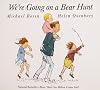
You know, I think this is the first book I bought for Eddie new. He was just gone one at the time, and believe me, he had no shortage of books. Some were presents, the rest were picked up at assorted car boot sales and sales of work and such. But this one appealed to me because of the title, which was of the loud and raucous old campfire call-and-response poem we’d chanted in scouts, and the illustrations, which are gorgeous.
The story has four children and their Dad heading off on the show more titular bear hunt, steadily marching through the assorted obstacles which confront them (grass, river, mud, wood) with attendant sound effects. There’s a chorus repeated, a description of the obstacle and then the noisy march, all to be chanted rhythmically until finally the bear is found and the family flee back through each obstacle until they get safely back under the covers of their bed and the bear goes back to his cave.
I’ve heard more than one parent complain about Going On A Bear Hunt. ‘Oh yeah it’s great,’ they say, ‘Until you’ve done it about a hundred times.’ And, well, yes, it’s the sort of thing that can get old fast for a grown-up while remaining a perpetual favourite of the child. At first the repetitive nature of the words are mitigated by the beautiful illustrations, full of charm and personality, but even that’s got to pale for after a while.
Eddie and I certainly read Bear Hunt A LOT, and we did so loudly and quickly, especially at the end when the pace can get quite breathless. Casual visitors were often startled by the energy we put into it, but that’s what made it fun. I never really got sick of it, though, because it was never Eddie’s only book, though for a long time it was his favourite, so if you really didn’t want to read it to him, there were always plenty of others to choose from.
He’s two and a half now, and almost never asks for it, though he’ll take it if it’s offered. Lately he’s become a bit more ambivalent about the role of the bear. Now he has a slightly better grasp of stories and how they work, the realisation has dawned that the bear is the villain of the piece, and I don’t think he entirely approves. Between Goldilocks and The Three Bears, Jill Murphy’s Peace At Last and a few others, including Bear in the Big Blue House, bears, as far as he’s concerned, are the good guys. Certainly, when he gets to the last wordless double page spread of the bear trudging along the moonlit beach to his cave, head bowed, all alone, his sympathy is definitely with the bear.
‘Poor bear,’ he said when I read it to him today. ‘He lost his dinner.’ show less
The story has four children and their Dad heading off on the show more titular bear hunt, steadily marching through the assorted obstacles which confront them (grass, river, mud, wood) with attendant sound effects. There’s a chorus repeated, a description of the obstacle and then the noisy march, all to be chanted rhythmically until finally the bear is found and the family flee back through each obstacle until they get safely back under the covers of their bed and the bear goes back to his cave.
I’ve heard more than one parent complain about Going On A Bear Hunt. ‘Oh yeah it’s great,’ they say, ‘Until you’ve done it about a hundred times.’ And, well, yes, it’s the sort of thing that can get old fast for a grown-up while remaining a perpetual favourite of the child. At first the repetitive nature of the words are mitigated by the beautiful illustrations, full of charm and personality, but even that’s got to pale for after a while.
Eddie and I certainly read Bear Hunt A LOT, and we did so loudly and quickly, especially at the end when the pace can get quite breathless. Casual visitors were often startled by the energy we put into it, but that’s what made it fun. I never really got sick of it, though, because it was never Eddie’s only book, though for a long time it was his favourite, so if you really didn’t want to read it to him, there were always plenty of others to choose from.
He’s two and a half now, and almost never asks for it, though he’ll take it if it’s offered. Lately he’s become a bit more ambivalent about the role of the bear. Now he has a slightly better grasp of stories and how they work, the realisation has dawned that the bear is the villain of the piece, and I don’t think he entirely approves. Between Goldilocks and The Three Bears, Jill Murphy’s Peace At Last and a few others, including Bear in the Big Blue House, bears, as far as he’s concerned, are the good guys. Certainly, when he gets to the last wordless double page spread of the bear trudging along the moonlit beach to his cave, head bowed, all alone, his sympathy is definitely with the bear.
‘Poor bear,’ he said when I read it to him today. ‘He lost his dinner.’ show less
This is a tough book to review. It’s an honest and poignant look at grief, and it’s told in simple language, bit by bit, for children to read and understand. Inspired by the author’s grief at the death of his son, this story tells of a man struggling to pick up the pieces of his life. There is no overarching plot, but the book touches on different aspects of the man’s life in the time of sadness. Little things that were once simple are now impossible, and even the most mundane parts show more of life are changed and painful. Disturbing, raw, powerful, and vivid, this is the kind of book that stays with you long after you’ve read the last page. show less
A favorite for all three of our kids (our family hardback has finally pretty much fallen apart), this book offers multiple layers of contrast: repeated phrases vs. new content, easy vocabulary vs. fun nonsense sounds, mock-scary vs. cozy/comfortable, and black-and-white vs. color illustrations. Not to mention an opportunity for an over-the-top, frenetic reading of the last few pages.
Lists
Jewish Books (1)
Ulenspiegel (1)
Five in a Row (1)
Five in a Row (1)
Youth: Zoology (2)
Sonlight Books (1)
Awards


You May Also Like


Associated Authors
Statistics
- Works
- 212
- Also by
- 15
- Members
- 18,692
- Popularity
- #1,173
- Rating
- 4.0
- Reviews
- 360
- ISBNs
- 1,037
- Languages
- 27
- Favorited
- 10

