
John Woodward (1) (1954–)
Author of What Lives in the Garden?
For other authors named John Woodward, see the disambiguation page.
Series
Works by John Woodward
Tagged
Common Knowledge
- Birthdate
- 1954-02-22
- Gender
- male
- Nationality
- UK
- Associated Place (for map)
- UK
Members
Reviews

As I write this there is a female Great Spotted Woodpecker on the bird feeder, hammering away at the fat balls. I don’t hear it early morning now as it taps the bark on the dying Scots pine outside – maybe there’s no live food available, or maybe I’m not waking early enough – but it’s got bolder and no longer flies away in fright when we appear at the window, as the occasional shy jay does. The woodpecker is a sight to swell the heart, with its striking pied plumage and the bold show more splash of red under its tail clearly visible as it feeds.
As it’s winter now, with the first appearances of sleet and snow, it’s vital to keep the feeders replenished, with mixed seed and fat balls. The fat balls are loved not just by the woodpecker but also by the odd starling, and particularly by the various tits – Great, Blue, Coal and even the occasional Long-tailed or Willow Tit – which cluster greedily on them. Irritatingly, some of the tits, especially the Coal Tits, go for the seed feeder, seeking out the black sunflower seeds and spitting out the other seeds to carpet the ground. That’s great for the ground feeders such as solitary robins and thrushes and the cowardly magpies, but it’s a messy sight and we worry about it attracting vermin – rats, grey squirrels and so on.
Of the other common birds attracted by the never-ending feast we regularly see sparrows (who, hereabouts don’t seem to have realised that their species is in decline) and finches (especially chaffinches). There are often over ten birds on the feeders, with almost that number waiting their turn in nearby branches, such as on the small oak that sits potted up on the decking. Blackbirds hop around or flit from beech hedge to buddleia, the males asserting territorial dominance and ownership of the bashful female lurking quietly in the shadows.
We catch glimpses of other avians in the sky, some gliding around such as the ubiquitous buzzards and the occasional Red Kite, some passing overhead like the pair of ravens announcing their presence by a distinctive ‘cronk’ or, in season, the Canada geese who visit a neighbour’s lake and take a morning or evening turn in their pairs, calling exultantly to each other. High up we often see gulls wheeling or returning to the sea, and once we were lucky to see a flock of lapwings alight in a nearby field en route from or to somewhere exotic.
If it wasn’t for the various mini-guides we wouldn’t know even half the species that fly around our neck of the woods. The RSPB Pocket Birds guide is our usual first port of call, with its wealth of concise information, photos and distribution maps contained in half-page or full-page entries, though we supplement that with the Collins Complete British Birds photo guide, where the photos are in a little more detail. Every day, whether it’s grey and misty or less frequently sunny, when we go for a constitutional or just stare out the windows, we wonderingly repeat the mantra “We’re so lucky!” Thanks to guides like these we can appreciate just how lucky we are.
http://calmgrove.wordpress.com/2013/01/17/birds/ show less
As it’s winter now, with the first appearances of sleet and snow, it’s vital to keep the feeders replenished, with mixed seed and fat balls. The fat balls are loved not just by the woodpecker but also by the odd starling, and particularly by the various tits – Great, Blue, Coal and even the occasional Long-tailed or Willow Tit – which cluster greedily on them. Irritatingly, some of the tits, especially the Coal Tits, go for the seed feeder, seeking out the black sunflower seeds and spitting out the other seeds to carpet the ground. That’s great for the ground feeders such as solitary robins and thrushes and the cowardly magpies, but it’s a messy sight and we worry about it attracting vermin – rats, grey squirrels and so on.
Of the other common birds attracted by the never-ending feast we regularly see sparrows (who, hereabouts don’t seem to have realised that their species is in decline) and finches (especially chaffinches). There are often over ten birds on the feeders, with almost that number waiting their turn in nearby branches, such as on the small oak that sits potted up on the decking. Blackbirds hop around or flit from beech hedge to buddleia, the males asserting territorial dominance and ownership of the bashful female lurking quietly in the shadows.
We catch glimpses of other avians in the sky, some gliding around such as the ubiquitous buzzards and the occasional Red Kite, some passing overhead like the pair of ravens announcing their presence by a distinctive ‘cronk’ or, in season, the Canada geese who visit a neighbour’s lake and take a morning or evening turn in their pairs, calling exultantly to each other. High up we often see gulls wheeling or returning to the sea, and once we were lucky to see a flock of lapwings alight in a nearby field en route from or to somewhere exotic.
If it wasn’t for the various mini-guides we wouldn’t know even half the species that fly around our neck of the woods. The RSPB Pocket Birds guide is our usual first port of call, with its wealth of concise information, photos and distribution maps contained in half-page or full-page entries, though we supplement that with the Collins Complete British Birds photo guide, where the photos are in a little more detail. Every day, whether it’s grey and misty or less frequently sunny, when we go for a constitutional or just stare out the windows, we wonderingly repeat the mantra “We’re so lucky!” Thanks to guides like these we can appreciate just how lucky we are.
http://calmgrove.wordpress.com/2013/01/17/birds/ show less
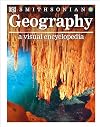
This is a beautifully put together book that I would not mind having in my library. It is an elegant coffetable book in which the Smithsonian Institute participated in its creation. Although listed for a juvenile audience, anyone could appreciate it. It is chock full of information.

Generally informative book. About three illustrations, mixed photographs and drawings, per spread. A few errors of fact. Occasionally, a difficult word is glossed in parentheses, often with a poorly chosen synonym.
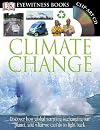
Genre: Informational: Science
Grade level; 3rd-5th
Key words: Climate Change
Possible topics: I could use this book to talk about climate change, the different characteristics of climate change, and the different things that are a part of climate change.
Grade level; 3rd-5th
Key words: Climate Change
Possible topics: I could use this book to talk about climate change, the different characteristics of climate change, and the different things that are a part of climate change.
Awards


You May Also Like


Associated Authors
Statistics
- Works
- 91
- Members
- 2,531
- Popularity
- #10,141
- Rating
- 4.0
- Reviews
- 8
- ISBNs
- 381
- Languages
- 12