
John J. Miller (1) (1970–)
Author of Our Oldest Enemy: A History of America's Disastrous Relationship with France
For other authors named John J. Miller, see the disambiguation page.
About the Author
John J. Miller is director of the Dow Journalism Program at Hillsdale College, national correspondent for National Review, a contributor to the Wall Street Journal, and the author of five books, including the novel The First Assassin.
Works by John J. Miller
Our Oldest Enemy: A History of America's Disastrous Relationship with France (2004) 108 copies, 3 reviews
The Unmaking of Americans: How Multiculturalism Has Undermined the Assimilation Ethic (1998) 18 copies
The Polygamist King: A True Story of Murder, Lust, and Exotic Faith in America (Kindle Single) (2015) 8 copies, 1 review
Alternatives to Afrocentrism 3 copies
Associated Works
Tagged
Common Knowledge
- Birthdate
- 1970
- Gender
- male
- Occupations
- journalist
- Organizations
- The New Republic
Reason
The Wall Street Journal
National Review
Hillsdale College - Nationality
- USA
- Associated Place (for map)
- USA
Members
Discussions
The First Assassin, John J. Miller in World Reading Circle (February 2013)
Reviews

So basically conservatives are for everything wonderful and against everything annoying in life--so if you love puppies and hate cancer, you're a total Republican, obvs--and all those annoying things are part of a vast state conspiracy to make our lives shittier, supported by self-hating liberals. So the Beatles' "Taxman" is a conservative rock song because Harrison (I think?) came up with a throwaway populist lyric to go with that sweet riff, because only right-wingers dislike paying taxes show more and the rest of us are shit-eating sycophants. And "Rock the Casbah" is a conservative rock song because "the troops" like it because its lyrics can be misinterpreted to mean "bomb the Ayrabs". That makes "Born in the USA" a conservative rock song too. (Joe Strummer apparently wept upon hearing that the title of his song had been painted on American bombs in Iraq.) And the carefully crafted ambiguity and personal-political opposition of Bowie's "Heroes" makes it a conservative rock song because apparently what being a conservative is is participating in an "us vs. them" mentality where all of life gets swept up into your totalizing hatred. The evidence is here. Jesus Jones's "Right Here, Right Now" only REFERS to the fall of the Soviet Union, and that makes it right-wing too. If everybody who's not actively, at this second, demonstrating their batshit insanity is a conservative, then I guess I'm one too. But John J. Miller, by that standard you might just fail.
The number one conservative rock song of all time is the Who's "Won't Get Fooled Again", because mocking the vapidity of hippie idealism means buying into the right-wing worldview. And these people really do use "right-wing" and "conservative" interchangeably, switching from one to the other when they want to seem like the positivist visionaries or the responsible grown-ups, respectively. This is filthy and shameless. (National Review.) show less
The number one conservative rock song of all time is the Who's "Won't Get Fooled Again", because mocking the vapidity of hippie idealism means buying into the right-wing worldview. And these people really do use "right-wing" and "conservative" interchangeably, switching from one to the other when they want to seem like the positivist visionaries or the responsible grown-ups, respectively. This is filthy and shameless. (National Review.) show less
Review originally published on my blog: AWordsWorth.blogspot.com
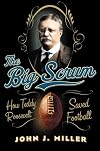
Being the football nut I am, there was no way I could pass this one up. I haven't read much football history, and had no idea Teddy Roosevelt had anything to do with football - let alone saving it. Boy, did I learn a lot! John Miller did a wonderful job of blending fact and narrative - even though I was reading a lot of history and biography, it read like a story. Or possibly a collection of stories, since Roosevelt is not the show more only person spotlighted.
The Big Scrum is a look at the beginning of football in America: the very beginnings of "'pick-up games" and the evolution into a bloody battle-esque game that raised eyebrows even as it attracted a growing fan-base. To understand football, you have to understand everything surrounding it's "birth" and evolution, and Miller introduces the ideologies and mindsets that helped football prosper. Movements such as "Muscular Christianity" and the growing realization that a healthy, active nation will become a powerful nation. I loved getting a glimpse of the way "athletics" infiltrated society - even appearing in popular literature. I also loved watching the development of a distinctly American game - football - out of the English traditions of soccer and rugby.
In addition to the cultural and intellectual history presented, Miller also looks at the lives of key players in the development of American athletics, as well as football itself. While the primary focus is on Roosevelt: his life, his impact on society and nation, as well as his personal involvement with physical exertion and contests, particularly his love of football, other figures who are mentioned are examined more closely, to offer insight into their various positions on the issue. It adds a roundness, a completeness to the argument that my inner-historian appreciates. (My inner-historian also geeked out at Miller's use of a variety of sources, including a lot of primary sources that really added depth and merit to the study). And of course, I loved the story too, the way football grew, was attacked and almost did not survive, and then through masterful negotiations and much passion, it rose from the mud as that glorious past time I live for every fall.
A wonderful nonfiction offering that reads as a pleasure book, with a ton of historical information presented in a manner that intrigues and excites rather than overwhelms. (Why didn't anybody tell me you could do history like this?) It's football history, yes, but a reader with an interest in Teddy Roosevelt or America in the Gilded and Progressive eras will also appreciate The Big Scrum. show less
Being the football nut I am, there was no way I could pass this one up. I haven't read much football history, and had no idea Teddy Roosevelt had anything to do with football - let alone saving it. Boy, did I learn a lot! John Miller did a wonderful job of blending fact and narrative - even though I was reading a lot of history and biography, it read like a story. Or possibly a collection of stories, since Roosevelt is not the show more only person spotlighted.
The Big Scrum is a look at the beginning of football in America: the very beginnings of "'pick-up games" and the evolution into a bloody battle-esque game that raised eyebrows even as it attracted a growing fan-base. To understand football, you have to understand everything surrounding it's "birth" and evolution, and Miller introduces the ideologies and mindsets that helped football prosper. Movements such as "Muscular Christianity" and the growing realization that a healthy, active nation will become a powerful nation. I loved getting a glimpse of the way "athletics" infiltrated society - even appearing in popular literature. I also loved watching the development of a distinctly American game - football - out of the English traditions of soccer and rugby.
In addition to the cultural and intellectual history presented, Miller also looks at the lives of key players in the development of American athletics, as well as football itself. While the primary focus is on Roosevelt: his life, his impact on society and nation, as well as his personal involvement with physical exertion and contests, particularly his love of football, other figures who are mentioned are examined more closely, to offer insight into their various positions on the issue. It adds a roundness, a completeness to the argument that my inner-historian appreciates. (My inner-historian also geeked out at Miller's use of a variety of sources, including a lot of primary sources that really added depth and merit to the study). And of course, I loved the story too, the way football grew, was attacked and almost did not survive, and then through masterful negotiations and much passion, it rose from the mud as that glorious past time I live for every fall.
A wonderful nonfiction offering that reads as a pleasure book, with a ton of historical information presented in a manner that intrigues and excites rather than overwhelms. (Why didn't anybody tell me you could do history like this?) It's football history, yes, but a reader with an interest in Teddy Roosevelt or America in the Gilded and Progressive eras will also appreciate The Big Scrum. show less

Not sure how to rate this! To me it is a kind of book that I would take to the beach! I don't like typical beach reads but it is a very fast read and I will read anything, fiction or non-fiction that is connected to the Civil War or Lincoln. Lincoln had a small part but he had some good lines of humor. This was set in the time just before the war started and already assassin were after him.
I loved that a slave girl, Portia, demonstrated great courage and determination on her mission to show more protect Pres ident Lincoln. Added interest was provided by a bookshop owner and a poor bookbinder. I had no sympathy for the people planning the assassination. It was mainly a fictional account of a planned assassination of President Lincoln and with story giving a good picture of slave life during the during the time period with an accurate representation of the laws involving fugitive slaves. show less
I loved that a slave girl, Portia, demonstrated great courage and determination on her mission to show more protect Pres ident Lincoln. Added interest was provided by a bookshop owner and a poor bookbinder. I had no sympathy for the people planning the assassination. It was mainly a fictional account of a planned assassination of President Lincoln and with story giving a good picture of slave life during the during the time period with an accurate representation of the laws involving fugitive slaves. show less
The Polygamist King: A True Story of Murder, Lust, and Exotic Faith in America (Kindle Single) by John J. Miller
This is a history of the evolution of a part of the Mormon Religion. Some might want to read it because they have an interest in Mormon religion in general. Some readers may be caught by parts of the title “murder, lust, exotic religion.” Some readers may remember that they almost had a chance to vote for a presidential candidate who occupies high office in a group that believes in magic underwear. Then there is the fascination from people like me who cannot imagine there are so many show more folks who do not start their day out with a cup of coffee.
For those who are just interested in the “weird”, this is not the book for you. This is a well researched and clearly presented history of the efforts of a few egotistical and possibly aberrant people who managed to impose their beliefs on a mass far more vulnerable and gullible than themselves. show less
For those who are just interested in the “weird”, this is not the book for you. This is a well researched and clearly presented history of the efforts of a few egotistical and possibly aberrant people who managed to impose their beliefs on a mass far more vulnerable and gullible than themselves. show less
Awards

You May Also Like


Associated Authors
Statistics
- Works
- 8
- Also by
- 1
- Members
- 322
- Popularity
- #73,504
- Rating
- 3.4
- Reviews
- 14
- ISBNs
- 42
- Languages
- 5