

James R. Gaines (1) (1947–)
Author of Evening in the Palace of Reason : Bach meets Frederick the Great in the Age of Enlightment
For other authors named James R. Gaines, see the disambiguation page.
About the Author
A native of Dayton, Ohio, James R. Gaines is the former managing editor of Time, Life, and People magazines and the author of several books, including Wit's End: Days and Nights of the Algonquin Round Table and, most recently, Evening in the Palace of Reason, a book that explains the clash of the show more Baroque and the Enlightenment and the conflict between faith and reason through the music of Johann Sebastian Bach show less
Works by James R. Gaines
Evening in the Palace of Reason : Bach meets Frederick the Great in the Age of Enlightment (2005) — Author — 576 copies, 8 reviews
Associated Works
Tagged
Common Knowledge
- Birthdate
- 1947-08-11
- Gender
- male
- Education
- McBurney School
University of Michigan - Occupations
- editor
- Organizations
- Time Inc.
- Nationality
- USA
- Places of residence
- Washington D.C, USA
Paris, France - Associated Place (for map)
- USA
Members
Reviews
Evening in the Palace of Reason : Bach meets Frederick the Great in the Age of Enlightenment by James R. Gaines
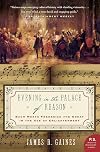
Evening in the Palace of Reason is a joint biography of J. S. Bach and Frederick the Great-two prominent, and very different, historical figures. Gaines begins his tale with their first and only meeting. Frederick, the Enlightenment's poster child, scorns Bach and his music as old fashioned, unsightly and-worst of all- religious. He presents Bach with two musical challenges, which Bach responds to in his typical fashion.
After this initial introduction, Gaines begins the biographies of these show more two great men, recording their extreme dissimilarities and showing how these would culminate into Fredrick's difficult test, and Bach's equally difficult rejoinder. Into their stories, Gaines weaves many different threads-musical history, musical theory, theology, religious history, philosophy and the basic history of their time and place-to create a complex background on which to place the two, making for a detailed and fascinating story.
There were few "dull" places, though I did find some of the music theory hard-going, due to my lack of pre-knowledge. However, I came away from reading Evening in the Palace of Reason with a firmer grasp of not only Bach and Frederick, but counterpoint, Lutheranism, the 18th century, Prussian history and many more things I knew nothing about before I picked up the book!Though this is a scholarly work, Gaines did not target a purely scholarly audience, and as a result it can be enjoyed by layperson or historian alike.
I did find a few faults with this work, the most aggrieving being the lack of dates. Though I am a history enthusiast myself, I still need solid, concrete dates to place an incident within the framework of what was occurring in other parts of the world. Despite knowing when the Enlightenment "occurred", I would have preferred dates on the essential issues, such as the year of their births, the year in which they met, the year in which anything occurred. I found this lack of dates to be a continual frustration.
Otherwise, except for a few passages that were simply not well written, Gaines has done an admirable job with Evening in the Palace of Reason. This is a great read for amateur social or music historians, or biography aficionados. I thoroughly enjoyed it and rate it a solid four out of five. show less
After this initial introduction, Gaines begins the biographies of these show more two great men, recording their extreme dissimilarities and showing how these would culminate into Fredrick's difficult test, and Bach's equally difficult rejoinder. Into their stories, Gaines weaves many different threads-musical history, musical theory, theology, religious history, philosophy and the basic history of their time and place-to create a complex background on which to place the two, making for a detailed and fascinating story.
There were few "dull" places, though I did find some of the music theory hard-going, due to my lack of pre-knowledge. However, I came away from reading Evening in the Palace of Reason with a firmer grasp of not only Bach and Frederick, but counterpoint, Lutheranism, the 18th century, Prussian history and many more things I knew nothing about before I picked up the book!Though this is a scholarly work, Gaines did not target a purely scholarly audience, and as a result it can be enjoyed by layperson or historian alike.
I did find a few faults with this work, the most aggrieving being the lack of dates. Though I am a history enthusiast myself, I still need solid, concrete dates to place an incident within the framework of what was occurring in other parts of the world. Despite knowing when the Enlightenment "occurred", I would have preferred dates on the essential issues, such as the year of their births, the year in which they met, the year in which anything occurred. I found this lack of dates to be a continual frustration.
Otherwise, except for a few passages that were simply not well written, Gaines has done an admirable job with Evening in the Palace of Reason. This is a great read for amateur social or music historians, or biography aficionados. I thoroughly enjoyed it and rate it a solid four out of five. show less
Evening in the Palace of Reason: Bach Meets Frederick the Great in the Age of Enlightenment (P.S.) by James R. Gaines
I'm a pretty big fan of this book. It does sortof amount to the grown-up equivalent of doodling "I Ricercar is a total success, man. Six voices was too many even for Bach.)
The history is solid and the story is good, but what really elevates this for me is Gaines' descriptions of some of Bach's work. It's very difficult to write about music, which makes it surprising that so many people try to. Gaines really nails it; he makes you desperate to hear the pieces he's raving about (I spent show more several hours on the couch reading this book and listening to each piece as he got to it), and once you hear them, crucially, you think, "Yes: he's totally right about that, whatever, catabasis there." (Except in the case of his defense of the Ricercar. A for effort, bud.)
For what it's worth, the best writing about music I've ever seen is the treatment of the Trout Sonata in Vikram Seth's [b:An Equal Music.|50366|An Equal Music|Vikram Seth|http://photo.goodreads.com/books/1170368734s/50366.jpg|2307024] I'm sure you were wondering. I don't remember anything about that book except that now I'm a huge fan of the Trout. (Incidentally, one of the many times I fell in love with my wife was while watching her play that piece.)
The essential question in Gaines' book is the difference between music as mathematics and music as free expression, and that's one that's fascinated me ever since Music Comp II when we learned all sorts of arcane rules for how to modulate between keys. It was extremely scientific; that might sound awful, but it's not...necessarily. In my hands it was pretty awful. Bach, on the other hand, was obsessively mindful of all this, but you don't notice it at all. Some think these rules - the dissonance in a tritone, the consonance in a fifth - are the secrets to the universe, no different than Einstein's E=MC2. That's bullshit, but it's really interesting bullshit, isn't it?
Added and weird bonus: this book also started one of my very rare and much-wished-for literary conversations on the T, from a New England Conservatory student of indeterminate gender. The bad news is that it reminded me: the sort of person who comes rushing over to talk about your history book with you is also the sort of person who insists on pronouncing "Bach" all pretentious-like. Just say it Bock, dude(tte?). You sound like the kind of douche who pretends to like the Ricercar. show less
The history is solid and the story is good, but what really elevates this for me is Gaines' descriptions of some of Bach's work. It's very difficult to write about music, which makes it surprising that so many people try to. Gaines really nails it; he makes you desperate to hear the pieces he's raving about (I spent show more several hours on the couch reading this book and listening to each piece as he got to it), and once you hear them, crucially, you think, "Yes: he's totally right about that, whatever, catabasis there." (Except in the case of his defense of the Ricercar. A for effort, bud.)
For what it's worth, the best writing about music I've ever seen is the treatment of the Trout Sonata in Vikram Seth's [b:An Equal Music.|50366|An Equal Music|Vikram Seth|http://photo.goodreads.com/books/1170368734s/50366.jpg|2307024] I'm sure you were wondering. I don't remember anything about that book except that now I'm a huge fan of the Trout. (Incidentally, one of the many times I fell in love with my wife was while watching her play that piece.)
The essential question in Gaines' book is the difference between music as mathematics and music as free expression, and that's one that's fascinated me ever since Music Comp II when we learned all sorts of arcane rules for how to modulate between keys. It was extremely scientific; that might sound awful, but it's not...necessarily. In my hands it was pretty awful. Bach, on the other hand, was obsessively mindful of all this, but you don't notice it at all. Some think these rules - the dissonance in a tritone, the consonance in a fifth - are the secrets to the universe, no different than Einstein's E=MC2. That's bullshit, but it's really interesting bullshit, isn't it?
Added and weird bonus: this book also started one of my very rare and much-wished-for literary conversations on the T, from a New England Conservatory student of indeterminate gender. The bad news is that it reminded me: the sort of person who comes rushing over to talk about your history book with you is also the sort of person who insists on pronouncing "Bach" all pretentious-like. Just say it Bock, dude(tte?). You sound like the kind of douche who pretends to like the Ricercar. show less
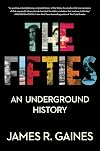
The Fifties: An Underground History by James R Gaines is an interesting read highlighting a few of the people who helped pave the way for what became the gay rights, feminist, civil rights, and environmental movements.
The portraits of these people make for fascinating reading and the documentation for anyone wanting to read further is extensive. This not only gives credit where it has sometimes been scarce but serves as a great starting point for readers who want to know more.
I do have two show more relatively minor issues, one of which will likely be corrected before publication. First, I am afraid the hyperbole of the marketing copy will turn some people off. No one believes these movements formed ex nihilo in the 60s, of course there were people in the 50s, and before, who went against the status quo. That does not "upend the myth of the fifties," it simply shows who some of these people were.
My second issue, while likely corrected in the final version, makes me question just what Gaines' foundational knowledge is in some areas. He no doubt is well read and intelligent, but to attribute Bigger Thomas to Ralph Ellison would seem to show exactly where his blind spots are in his literary and cultural history. That goes a bit beyond a typo or incorrect dates, it is attributing a major character to the incorrect major author. This happened in the introduction which put the entire rest of the book under a cloud for me.
Those things aside I would still recommend this book to those interested in reading about early figures in social justice issues as well as those who like to read about something other than the dominant narrative about the middle of the last century.
Reviewed from a copy made available by the publisher via NetGalley. show less
The portraits of these people make for fascinating reading and the documentation for anyone wanting to read further is extensive. This not only gives credit where it has sometimes been scarce but serves as a great starting point for readers who want to know more.
I do have two show more relatively minor issues, one of which will likely be corrected before publication. First, I am afraid the hyperbole of the marketing copy will turn some people off. No one believes these movements formed ex nihilo in the 60s, of course there were people in the 50s, and before, who went against the status quo. That does not "upend the myth of the fifties," it simply shows who some of these people were.
My second issue, while likely corrected in the final version, makes me question just what Gaines' foundational knowledge is in some areas. He no doubt is well read and intelligent, but to attribute Bigger Thomas to Ralph Ellison would seem to show exactly where his blind spots are in his literary and cultural history. That goes a bit beyond a typo or incorrect dates, it is attributing a major character to the incorrect major author. This happened in the introduction which put the entire rest of the book under a cloud for me.
Those things aside I would still recommend this book to those interested in reading about early figures in social justice issues as well as those who like to read about something other than the dominant narrative about the middle of the last century.
Reviewed from a copy made available by the publisher via NetGalley. show less
Evening in the Palace of Reason: Bach Meets Frederick the Great in the Age of Enlightenment (P.S.) by James R. Gaines
This book needs to get an award just for the length of the subtitle!
Entertaining, excellent, and approachable history. Not a biography, but an examination of the lives of J.S. Bach and Frederick the Great inspired by their famous meeting. Late in Bach’s life, he journeyed to the court of Frederick (where his son, C.P.E. Bach, was a court musician). Summoned by Frederick, he was presented with a theme and asked to compose a fugue on it in three parts. Back improvised the fugue, to the show more astonishment of everyone. Later, when Bach returned to Leipzig, he composed and had printed the “Musical Offering” on Frederic’s theme and sent it to the court.
The author does a lot of creative reading between the lines to fill out the historical record. That is what makes the book so enjoyable, presenting the facts and giving an entertaining interpretation. He fills in the history of Bach and Frederick, and casts their meeting as a collision of the serious baroque music of Bach with the lighter music favored by Frederick, and uses that as a metaphor for the change from the religious reformation to the birth of the Enlightenment. show less
Entertaining, excellent, and approachable history. Not a biography, but an examination of the lives of J.S. Bach and Frederick the Great inspired by their famous meeting. Late in Bach’s life, he journeyed to the court of Frederick (where his son, C.P.E. Bach, was a court musician). Summoned by Frederick, he was presented with a theme and asked to compose a fugue on it in three parts. Back improvised the fugue, to the show more astonishment of everyone. Later, when Bach returned to Leipzig, he composed and had printed the “Musical Offering” on Frederic’s theme and sent it to the court.
The author does a lot of creative reading between the lines to fill out the historical record. That is what makes the book so enjoyable, presenting the facts and giving an entertaining interpretation. He fills in the history of Bach and Frederick, and casts their meeting as a collision of the serious baroque music of Bach with the lighter music favored by Frederick, and uses that as a metaphor for the change from the religious reformation to the birth of the Enlightenment. show less
Lists
Awards

You May Also Like


Associated Authors
Statistics
- Works
- 7
- Also by
- 1
- Members
- 1,069
- Popularity
- #24,075
- Rating
- 3.9
- Reviews
- 13
- ISBNs
- 33
- Languages
- 3
- Favorited
- 2