
Tony Ballantyne (1) (1972–)
Author of Recursion
For other authors named Tony Ballantyne, see the disambiguation page.
About the Author
Image credit: Danie Ware
Series
Works by Tony Ballantyne
Aristotle OS 4 copies
Third Person 4 copies
Seeds 2 copies
Worlds Apart 2 copies
Star! 1 copy
The Sixth VNM (short story) 1 copy
Takeaway 1 copy
Why Are Rocks? 1 copy
A New Beginning 1 copy
Pretty Teeth 1 copy
Associated Works
Solaris Rising 3: The New Solaris Book of Science Fiction (2014) — Contributor — 47 copies, 6 reviews
Tagged
Common Knowledge
- Legal name
- Ballantyne, Anthony
- Birthdate
- 1972
- Gender
- male
- Occupations
- teacher (The Blue Coat School ∙ Oldham)
science fiction writer - Nationality
- UK
- Birthplace
- County Durham, England, UK
- Places of residence
- Oldham, GMA, England, UK
- Associated Place (for map)
- England, UK
Members
Reviews
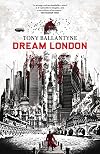
What a pleasant surprise this was. I only read ‘Dream London’ because I came across [b:Dream Paris|23492561|Dream Paris|Tony Ballantyne|https://images.gr-assets.com/books/1418103846s/23492561.jpg|43082774] and found it was the second in a series. I was less enthusiastic about the potential of ‘Dream London’ as I much prefer to Paris to London, moreover it has an unpromising male narrator. Still, it seemed fairly intriguing and necessary to read for the sake of the sequel. As I began, show more my spirits fell as I realised the narrative was in the first person and the person in question was an irritating macho caricature. However, to my delight, I soon realised that the book constantly mocks and undermines this caricature. It’s unusual to find a first person narrator whose narrative has so little respect for them and their role, so this was both entertaining and refreshing. Moreover, this absurd pseudo-heroic personality that Captain Jim Wedderburn is sporting plays into the world-building neatly. ‘Dream London’ depicts a city that is mutating into some muddled pastiche of its past, mixed with alien elements. When I saw this in the blurb I thought, “That could make an interesting political analogy, but I bet it won’t be addressed.” How wrong I was! The political subtext is in fact text and the whole plot is based on the fact that London has been doomed to displacement from reality as a result of foolish property market speculation. How could I resist that?
As a novel it certainly isn’t perfect; sometimes good ideas are executed a little clumsily. There are some memorably excellent moments, though, and it was vastly less heteronormative and sexist than I’d feared. The weird and wonderful world-building details were very appealing, such as accordions, quantum train travel, and blue monkeys. And the use of brass bands was inspired. Don’t expect the plot to make a great deal of sense, but that seems to be largely intentional meta. Our narrator initially thinks he’s a hero and gradually realises he’s a pawn. The people around him generally have a much better idea of what’s happening than he does, and are happy to call him on his many flaws. Notably, the fact that he's a pimp is not treated as acceptable. Wrapped up in all the strangeness of this dreamworld are some rather sharp critiques of London’s economic dependence on finance and property. I wish more fantastical novels addressed such topics and look forward to reading the sequel, if the library indulges my request to acquire it. show less
As a novel it certainly isn’t perfect; sometimes good ideas are executed a little clumsily. There are some memorably excellent moments, though, and it was vastly less heteronormative and sexist than I’d feared. The weird and wonderful world-building details were very appealing, such as accordions, quantum train travel, and blue monkeys. And the use of brass bands was inspired. Don’t expect the plot to make a great deal of sense, but that seems to be largely intentional meta. Our narrator initially thinks he’s a hero and gradually realises he’s a pawn. The people around him generally have a much better idea of what’s happening than he does, and are happy to call him on his many flaws. Notably, the fact that he's a pimp is not treated as acceptable. Wrapped up in all the strangeness of this dreamworld are some rather sharp critiques of London’s economic dependence on finance and property. I wish more fantastical novels addressed such topics and look forward to reading the sequel, if the library indulges my request to acquire it. show less
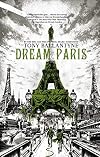
I read ‘Dream Paris’ in one go on a long train journey, of which there have been quite a few recently. It’s a sequel to [b:Dream London|17571913|Dream London|Tony Ballantyne|https://images.gr-assets.com/books/1376474374s/17571913.jpg|24286314], which I didn’t have great expectations of then really enjoyed. As I like Paris much more than London and the protagonist has my name, I was more excited about ‘Dream Paris’. On balance I think I enjoyed the two books an equal amount, for show more only slightly different reasons. They are both clever, weird, and engaging allegorical fantasies. ‘Dream Paris’ has a better protagonist (an excellent Anna), however the depiction of Paris was less atmospheric than that of London. I have an ongoing obsession with the French Revolution, so was hoping for more references to that. Instead, the focus is on allegorising contemporary economic problems, which admittedly I’m also a big fan of. For example, here’s an unsubtle colonialism metaphor, courtesy of a conversation between a literal china doll, our heroine, and her bodyguard Francis:
Thus the china dolls end up trapped in debt. Although the writing style can sometimes get a bit unwieldy, it is also very witty at times. Memorable comments include:
And this is a neat summary of the aftermath of the 2007/8 financial crisis:
I won’t quote every bit that I appreciated, but will note that the conversation with veal, the cocoa solids social index, frog racism, a programmer named Dave (I know two such), and the integer bomb were all highlights. The terroir/terreur wordplay was fun; actually, the terroir business reminded me slightly of the [b:Area X: The Southern Reach Trilogy|22752442|Area X The Southern Reach Trilogy (Southern Reach, #1-3)|Jeff VanderMeer|https://images.gr-assets.com/books/1412547809s/22752442.jpg|42299018]. On the other hand, and I don’t often say this about novels, there weren’t enough ants. The treatment of the French Revolution was quite effective for our cynical times, rather than being historically grounded. No simple counterpoint to financialised neoliberal Dream capitalism is proposed, indeed it is made clear that breaking free from such a system is incredibly difficult. Nonetheless, the ending is very satisfying and I liked the fact that the most powerful and revolutionary act in the whole narrative is an impulsive kindness. I hope there will be further entries in this series, ideally featuring Anna as protagonist. show less
”Do you know the history of the China people?”
“Kaolin told us,” I said, “There was a bank of mud by the river. The Banca di Primavera loaned it intelligence so it could become.”
“That’s right. The Banca di Primavera loaned intelligence to a bank of mud. The mud learned how to form bodies such as mine… The mud learned how to use those bodies to make other china artifacts. Cups and crockery, vases, and all manner of ceramics. The Banca di Primavera took a percentage of the profit of the sales of those artefacts as payment for the loan of intelligence. There were only four bodies back then, and they would have quickly repaid the loan, but the Banca wanted to make more money. ‘Listen,’ it said, ‘At the moment you are making money from making cups and crockery. Are you happy with this?’ ‘We are!’ said the four bodies. ‘Surely this is just a lack of ambition on your part! You make some money, it’s true, but over in Dream Delft they have constructed a whole village made of china. Imagine that! Houses and inns and shops and cafes all built of china! They have people travelling from all over the Dream World to visit them and to buy their produce.'... 'But we’re happy as we are!' 'But with more money, you could be even happier!'”
Thus the china dolls end up trapped in debt. Although the writing style can sometimes get a bit unwieldy, it is also very witty at times. Memorable comments include:
She looked like a deflated set of bagpipes, and like a set of bagpipes, the thought of her being put to her intended purpose was enough to fill any rational person with a sense of horror.
And this is a neat summary of the aftermath of the 2007/8 financial crisis:
”Dream London is mostly gone. We would wish for property in London itself.”
“That could be arranged.”
“No!” I couldn’t believe what I was hearing. “You can’t be serious! You can’t be thinking about letting them back in! Remember what happened last time?”
Mr Twelvetrees raised a hand. Calm down, dear!
“Anna, this is perfectly normal business practice. We shall be trying to establish premises in Dream Paris, too.”
“I’m sure that’s what they said last time! Mr. Twelvetrees, you can’t be serious! You can’t let the Dream World in again! It will take over.”
“Last time we were caught off-guard. This time the incursion will be controlled.”
I won’t quote every bit that I appreciated, but will note that the conversation with veal, the cocoa solids social index, frog racism, a programmer named Dave (I know two such), and the integer bomb were all highlights. The terroir/terreur wordplay was fun; actually, the terroir business reminded me slightly of the [b:Area X: The Southern Reach Trilogy|22752442|Area X The Southern Reach Trilogy (Southern Reach, #1-3)|Jeff VanderMeer|https://images.gr-assets.com/books/1412547809s/22752442.jpg|42299018]. On the other hand, and I don’t often say this about novels, there weren’t enough ants. The treatment of the French Revolution was quite effective for our cynical times, rather than being historically grounded. No simple counterpoint to financialised neoliberal Dream capitalism is proposed, indeed it is made clear that breaking free from such a system is incredibly difficult. Nonetheless, the ending is very satisfying and I liked the fact that the most powerful and revolutionary act in the whole narrative is an impulsive kindness. I hope there will be further entries in this series, ideally featuring Anna as protagonist. show less

This was an interesting book which was not at all what I was expecting it to be. The publishers seem to have marketed it as a rip-roaring action adventure with warring robots. Well the war is there and so are the robots, but so are a great deal of ruminations on determinism vs. free will, totalitarianism vs. individualism, the meaning of life, evolution, and parenthood.
The setting is Penrose, a world inhabited by robots. Counter-intuitively, the technological level of the robots is somewhere show more around Earth's in WW1 - with railways the primary means of transport. On the continent of Shull, a totalitarian state is gradually taking over the continent, state by state, stripping each state of of its precious resources (metal) and using them in fueling their war machine. The last surviving city-state is Turing City, where the people are confronted with the choice of building the minds of the next generation of children either in the traditional individualistic manner of the city or in a manner closer to the totalitarian philosophy of Nyro who put the state above all else and declared that all robots and their minds are just metal to be used in the service of the state.
The robot societies are vivid and imaginatively described. At times, the author inserts myths and allegorical tales which form the common basis of the robotic cultures of Shull, which gives the book a far less technophillic tone than one would expect of such a setting and is at times almost fantastic or mythical in tone. The story unfolds from shifting point of views of different male and female characters from the various city-states who are caught up in the war. In their depictions Tony Ballantyne succeeds in making them both alien and oddly human at the same time. I won't get too much into the story here, but it certainly gripped my attention throughout, mostly because I wanted to know what happened to the characters next. The ending was a little unsatisfying, but is obviously setting things up for the next in the series (a planned trilogy I believe).
Overall, an entertaining and engaging read which is very different in feel and tone to most other contemporary SF. show less
The setting is Penrose, a world inhabited by robots. Counter-intuitively, the technological level of the robots is somewhere show more around Earth's in WW1 - with railways the primary means of transport. On the continent of Shull, a totalitarian state is gradually taking over the continent, state by state, stripping each state of of its precious resources (metal) and using them in fueling their war machine. The last surviving city-state is Turing City, where the people are confronted with the choice of building the minds of the next generation of children either in the traditional individualistic manner of the city or in a manner closer to the totalitarian philosophy of Nyro who put the state above all else and declared that all robots and their minds are just metal to be used in the service of the state.
The robot societies are vivid and imaginatively described. At times, the author inserts myths and allegorical tales which form the common basis of the robotic cultures of Shull, which gives the book a far less technophillic tone than one would expect of such a setting and is at times almost fantastic or mythical in tone. The story unfolds from shifting point of views of different male and female characters from the various city-states who are caught up in the war. In their depictions Tony Ballantyne succeeds in making them both alien and oddly human at the same time. I won't get too much into the story here, but it certainly gripped my attention throughout, mostly because I wanted to know what happened to the characters next. The ending was a little unsatisfying, but is obviously setting things up for the next in the series (a planned trilogy I believe).
Overall, an entertaining and engaging read which is very different in feel and tone to most other contemporary SF. show less
This book couldn't be more different from its predecessor. Where Dream London was whimsical, imaginative and laugh-out-loud funny, Dream Paris is perpetually grim and often grotesque, bordering on horror. (There is a long dining sequence that gives Monty Python's The Meaning of Life a run for its money.) The Dream World isn't particularly dreamy; there's some odd stuff here and there but nothing to compare to what was seen in the previous novel. But the worst thing about it is the show more protagonist and narrator, a miserable misandrist teenage girl who never misses an opportunity to insert a snide remark about how men always are, or how they are always doing this or that to women. A perfect opportunity for a character arc, you would think, but despite a wake-up call late in the story, she doesn't really change. She continues to take maximum offense at everything men say to her, no matter how innocuous. There must have been some microaggressions that I missed. show less
Lists
Best Dystopias (1)
Awards


You May Also Like


Associated Authors
Statistics
- Works
- 33
- Also by
- 22
- Members
- 1,271
- Popularity
- #20,173
- Rating
- 3.4
- Reviews
- 34
- ISBNs
- 85
- Languages
- 2
- Favorited
- 2
