
Timothy Clark (1)
Author of Martin Heidegger
For other authors named Timothy Clark, see the disambiguation page.
About the Author
Timothy Clark is based at Durham University. He is co-editor of the Oxford Literary Review and author of Derrida, Heidegger, Blanchot: Sources of Derrida's Notion and Practice of Literature (1992), The Theory of Inspiration (2000), The Poetics of Singularity (2005) and The Cambridge Introduction to show more Literature and the Environment (2010). show less
Works by Timothy Clark
The Cambridge Introduction to Literature and the Environment (Cambridge Introductions to Literature) (2011) 23 copies
Derrida, Heidegger, Blanchot: Sources of Derrida's Notion and Practice of Literature (1992) 8 copies
The theory of inspiration : composition as a crisis of subjectivity in romantic and post-romantic writing (1997) 5 copies
Poetry of Shelley 1 copy
Associated Works
Tagged
Common Knowledge
- Gender
- male
Members
Reviews
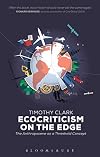
This book examines the implications of the Anthropocene not only for ecocriticism, but for literary criticism in general. Starting from the premise that the Anthropocene is a threshold event that changes the way in which we have to think about the human and its relation to the planet, the book argues that the Anthropocene forces us to radically revise ideas of human agency, scales of time and space and ideas of historical recovery (i.e. events in the past that seemed insignificant now appear show more to have been hugely important). Modes of reading and thinking which take for granted the human as the default scale, Clark argues, now look to be have been complicit in producing the Anthropocene. Instead, we need to think about the way that texts operate at multiple scales simultaneously, and the ways in which while at one level a text may appear innocuous, at another scale it might reveal something profound about the Anthropocene.
Clark’s argument is provocative and sometimes even pessimistic (he ultimately seems to conclude that literature is very limited in being able to express ideas about climate change). Yet, Clark is rigorous in his argumentation, providing plenty of examples to back up his ideas and offering a number of case studies that put into practice the theory he has developed. Some of the authors that Clark turns to are Gary Snyder, Raymond Carver, Ben Okri and Lorrie Moore. One of the great strengths of this book is that although Clark is drawing from both scientific studies and critical theory, he writes with such clarity and incisiveness that it is both enjoyable to read and easy to follow.
In terms of literary criticism that has turned to the concept of the Anthropocene, this is both one of the widest ranging and most well-argued study yet to emerge. As such it is essential reading for anyone interested not only in the future of ecocriticism, but the future of literary studies itself. show less
Clark’s argument is provocative and sometimes even pessimistic (he ultimately seems to conclude that literature is very limited in being able to express ideas about climate change). Yet, Clark is rigorous in his argumentation, providing plenty of examples to back up his ideas and offering a number of case studies that put into practice the theory he has developed. Some of the authors that Clark turns to are Gary Snyder, Raymond Carver, Ben Okri and Lorrie Moore. One of the great strengths of this book is that although Clark is drawing from both scientific studies and critical theory, he writes with such clarity and incisiveness that it is both enjoyable to read and easy to follow.
In terms of literary criticism that has turned to the concept of the Anthropocene, this is both one of the widest ranging and most well-argued study yet to emerge. As such it is essential reading for anyone interested not only in the future of ecocriticism, but the future of literary studies itself. show less
You May Also Like
Associated Authors
Statistics
- Works
- 9
- Also by
- 1
- Members
- 146
- Popularity
- #141,735
- Rating
- 4.2
- Reviews
- 1
- ISBNs
- 76
- Languages
- 2