
Nicholas Royle (1)
Author of An Introduction to Literature, Criticism and Theory
For other authors named Nicholas Royle, see the disambiguation page.
About the Author
Nicholas Royle is Professor of English at the University of Sussex. He is the author of many acclaimed books, including Telepathy and Literature (1991) and The Uncanny (2003).
Works by Nicholas Royle
Associated Works
Tagged
Common Knowledge
Members
Reviews
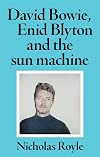
I've no idea how to describe this utterly unique book but I absolutely loved it and will be one of my favourite reads of this year.
Nicholas Royle was a professor of English at the University of Sussex, and during the crazy times of the pandemic he decides to accept voluntary redundancy. This book is his swan-song, a collection of lectures delivered to an audience of no one except us readers, blending aspects of memoir, creative non-fiction (although he hates that phrase), essay, music, art show more and literary criticism and philosophy.
The basis of the book (although I use that word loosely, as it disappears off in many tangents) draws parallels between the tour de force creativity of Enid Blyton and David Bowie. Whilst they worked in different mediums, both brought unrivalled imagination and unique perspective to their art, a luminosity that needs balanced by the dark in order to work. The sun machine referred to in the title is an odd concept to grasp, but my take on it is the ability of a piece of amazing art or something which pervades the senses to have such an effect on you that it lifts the soul and makes the world that much brighter, whilst also acting as a kind of time-travelling device which can transport you in an instant back to a stored memory from the path, or propel you forward with a hunger and ambition for the future.
It's bizarre, it's amusing, it's thought-provoking and it's a rally cry for the importance of keeping literature and the arts alive in this modern world where the arts and creativity are increasingly viewed as something fanciful and irrelevant.
4.5 stars - it's niche and utterly up my alley as Enid Blyton was the hallmark of my childhood reading days and David Bowie is my favourite musician, so I can't say with any confidence that this book will speak to many others in the same way it did to me, but if you have a general appreciation of both and a love of literature and ideas I can highly recommend it.
Punctuated with requests to go off and listen to certain pieces of music (often Bowie songs, but not always), this would be a tremendous book to listen to on audio (if publishing licences permit the songs to be included).
Such a smart book. I feel a bit bereft now. Nicholas Royle taught me a lot between these pages. show less
Nicholas Royle was a professor of English at the University of Sussex, and during the crazy times of the pandemic he decides to accept voluntary redundancy. This book is his swan-song, a collection of lectures delivered to an audience of no one except us readers, blending aspects of memoir, creative non-fiction (although he hates that phrase), essay, music, art show more and literary criticism and philosophy.
The basis of the book (although I use that word loosely, as it disappears off in many tangents) draws parallels between the tour de force creativity of Enid Blyton and David Bowie. Whilst they worked in different mediums, both brought unrivalled imagination and unique perspective to their art, a luminosity that needs balanced by the dark in order to work. The sun machine referred to in the title is an odd concept to grasp, but my take on it is the ability of a piece of amazing art or something which pervades the senses to have such an effect on you that it lifts the soul and makes the world that much brighter, whilst also acting as a kind of time-travelling device which can transport you in an instant back to a stored memory from the path, or propel you forward with a hunger and ambition for the future.
It's bizarre, it's amusing, it's thought-provoking and it's a rally cry for the importance of keeping literature and the arts alive in this modern world where the arts and creativity are increasingly viewed as something fanciful and irrelevant.
4.5 stars - it's niche and utterly up my alley as Enid Blyton was the hallmark of my childhood reading days and David Bowie is my favourite musician, so I can't say with any confidence that this book will speak to many others in the same way it did to me, but if you have a general appreciation of both and a love of literature and ideas I can highly recommend it.
Punctuated with requests to go off and listen to certain pieces of music (often Bowie songs, but not always), this would be a tremendous book to listen to on audio (if publishing licences permit the songs to be included).
Such a smart book. I feel a bit bereft now. Nicholas Royle taught me a lot between these pages. show less
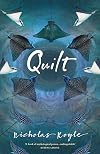
I picked this short novel up, almost on a whim, last year, at my award winning local independent shop Five Leaves, and I have finally got round to finding the few hours needed to read it. I am glad that I did, as it is very original and entertaining, if somewhat baffling at times.
The surface story is that of a man dealing with his father's death and living in his parents' house who acquires a bizarre obsession with stingrays and manta rays, filling the house with aquaria and gradually losing show more his sanity. There is plenty of humour, wordplay and symbolism so the surface is largely symbolic. The narrative viewpoint switches from first to second person about halfway through, the second part being narrated by the young woman who is a sort of girlfriend living and working in another country.
Royle uses a lot of obscure language, some of it made up - I didn't look much up because the gist was always clear enough.
Incidentally, this Nicholas Royle is the author of [b:An English Guide to Birdwatching|34502776|An English Guide to Birdwatching|Nicholas Royle|https://images.gr-assets.com/books/1488897396s/34502776.jpg|55627803], and the excellent reviews of that book by Neil, Paul and Gumble's Yard contributed to my decision to buy it. show less
The surface story is that of a man dealing with his father's death and living in his parents' house who acquires a bizarre obsession with stingrays and manta rays, filling the house with aquaria and gradually losing show more his sanity. There is plenty of humour, wordplay and symbolism so the surface is largely symbolic. The narrative viewpoint switches from first to second person about halfway through, the second part being narrated by the young woman who is a sort of girlfriend living and working in another country.
Royle uses a lot of obscure language, some of it made up - I didn't look much up because the gist was always clear enough.
Incidentally, this Nicholas Royle is the author of [b:An English Guide to Birdwatching|34502776|An English Guide to Birdwatching|Nicholas Royle|https://images.gr-assets.com/books/1488897396s/34502776.jpg|55627803], and the excellent reviews of that book by Neil, Paul and Gumble's Yard contributed to my decision to buy it. show less
Wow, what does one say of this? I've spent two days trying to come up with the words for a proper review that sufficiently reflects the complexity and charm of this slim volume, but I'm afraid my muse has deserted me; or rather, has been humbled into awed silence by the erudite extravagance of Prof. Royle's mesmerizing monograph. That, and I'm still trying to figure out the ending :-)
I suppose Quilt qualifies loosely as a novel, in the sense that it has characters (really just the two), time show more more-or-less flows forward in linear fashion, and the author shows a grudging nod to such plot niceties as beginning, middle, and end. However, it's also free-association stream-of-consciousness poesis, in which the writer gives full rein to his obvious infatuation with ontological wordplay.
The book starts out as a reasonably coherent if lyrical tale about a man dealing with his father's demise, but quickly develops a Kafka-esque quality as the protagonist waxes weird on the philosophical and theological import of...wait for it...stingrays. As it happens, I have a thing for sharks and their compressed cousins myself, so was delighted by the professor's unexpected dive into the philological murk of our subconscious substrate; however, crafty readers hoping for allusions to actual quilting will be much surprised, as mantuas are masked by mantas, and purls passed over for pearls.
Four stars, for reminding us that syntax is our servant, not master, and that words were created expressly to share thoughts, feelings and dreams which could not otherwise be communicated simply by pointing to rock, and grunting. show less
I suppose Quilt qualifies loosely as a novel, in the sense that it has characters (really just the two), time show more more-or-less flows forward in linear fashion, and the author shows a grudging nod to such plot niceties as beginning, middle, and end. However, it's also free-association stream-of-consciousness poesis, in which the writer gives full rein to his obvious infatuation with ontological wordplay.
The book starts out as a reasonably coherent if lyrical tale about a man dealing with his father's demise, but quickly develops a Kafka-esque quality as the protagonist waxes weird on the philosophical and theological import of...wait for it...stingrays. As it happens, I have a thing for sharks and their compressed cousins myself, so was delighted by the professor's unexpected dive into the philological murk of our subconscious substrate; however, crafty readers hoping for allusions to actual quilting will be much surprised, as mantuas are masked by mantas, and purls passed over for pearls.
Four stars, for reminding us that syntax is our servant, not master, and that words were created expressly to share thoughts, feelings and dreams which could not otherwise be communicated simply by pointing to rock, and grunting. show less
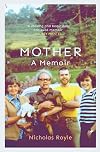
Mother: A Memoir is a book that immediately intrigued me. I love to read stories of 'ordinary' people, who often have lived the most interesting of lives.
Nicholas Royle writes of his mother primarily. It is around her that most of his narrative revolves. But he also writes of family life, both immediate (his parents, himself and his younger brother) and a little wider (aunts, cousins, grandparents and so on). It is the devastating 'loss of her marbles' that starts Nicholas's remembrances of show more his mother, and from there we hear about her younger life, working life, married life, and family life.
Royle himself says that the memoir 'makes no pretence at being comprehensive, chronological or orderly' and it definitely is a series of random snapshots and memories of his mother at various times. This works fine for me as I rather enjoy reading in a non-linear fashion but it won't suit readers who like to read in chronological order. Royle's writing style is very poetic in style, maybe a little too much for my personal tastes. He's a Professor of English so way above my intellectual level, but I cannot deny that his writing is graceful and sensitive.
What shines through is his immense love for his mother, the way she cared for him, indulged him and his brother in whatever they wanted to do. Alzheimer's robbed not only Kathleen of her marbles but also Royle of the mother he knew and the reader cannot help but empathise. I very much enjoyed the photographs interspersed throughout the book which, although the narrative would have managed fine without them, did complement the author's account perfectly.
Mother: A Memoir is a moving and thoughtful read of the love of a son for his mother and his lifelong respect for her. show less
Nicholas Royle writes of his mother primarily. It is around her that most of his narrative revolves. But he also writes of family life, both immediate (his parents, himself and his younger brother) and a little wider (aunts, cousins, grandparents and so on). It is the devastating 'loss of her marbles' that starts Nicholas's remembrances of show more his mother, and from there we hear about her younger life, working life, married life, and family life.
Royle himself says that the memoir 'makes no pretence at being comprehensive, chronological or orderly' and it definitely is a series of random snapshots and memories of his mother at various times. This works fine for me as I rather enjoy reading in a non-linear fashion but it won't suit readers who like to read in chronological order. Royle's writing style is very poetic in style, maybe a little too much for my personal tastes. He's a Professor of English so way above my intellectual level, but I cannot deny that his writing is graceful and sensitive.
What shines through is his immense love for his mother, the way she cared for him, indulged him and his brother in whatever they wanted to do. Alzheimer's robbed not only Kathleen of her marbles but also Royle of the mother he knew and the reader cannot help but empathise. I very much enjoyed the photographs interspersed throughout the book which, although the narrative would have managed fine without them, did complement the author's account perfectly.
Mother: A Memoir is a moving and thoughtful read of the love of a son for his mother and his lifelong respect for her. show less
Lists
You May Also Like


Associated Authors
Statistics
- Works
- 19
- Also by
- 1
- Members
- 766
- Popularity
- #33,217
- Rating
- 3.8
- Reviews
- 8
- ISBNs
- 152
- Languages
- 3