

John Gray (1) (1948–)
Author of Straw Dogs: Thoughts on Humans and Other Animals
For other authors named John Gray, see the disambiguation page.
About the Author
John Gray is the author of many critically acclaimed books, including Seven Types of Atheism, The Silence of Animals, The Immortalization Commission, Black Mass, and Straw Dogs. A regular contributor to The New York Review of Books, he has been a professor of politics at Oxford, a visiting show more professor at Harvard and Yale, and a professor of European thought at the London School of Economics. He now writes full-time. show less
Image credit: https://www.facebook.com/john.n.gray/
Works by John Gray
The Immortalization Commission: Science and the Strange Quest to Cheat Death (2011) 209 copies, 4 reviews
Enlightenment's Wake: Politics and Culture at the Close of the Modern Age (Routledge Classics) (1995) 129 copies, 2 reviews
Associated Works
Messages from a Lost World: Europe on the Brink (2016) — Foreword, some editions — 80 copies, 4 reviews
Tagged
Common Knowledge
- Canonical name
- Gray, John
- Legal name
- Gray, John Nicholas
- Other names
- Gray, J.
- Birthdate
- 1948-04-17
- Gender
- male
- Education
- Exeter College, Oxford University (BA|M.Phil|D.Phil)
- Occupations
- professor
philosopher
political philosopher - Organizations
- London School of Economics and Political Science
Jesus College, University of Oxford
University of Essex - Awards and honors
- Premio Nonino (2017)
- Nationality
- UK
- Birthplace
- South Shields, County Durham, England, UK
- Associated Place (for map)
- England, UK
Members
Reviews
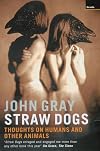
Gray's book - like much of his work - is an attack upon religion, especially the monotheistic, Judaeo-Christian variety. He sees this as influencing the secular humanist beliefs in the fundamental goodness of human nature, and the possibility of social progress - both of which Gray rejects, arguing that that a distorted understanding of Darwinism is responsible. However, he argues, if we read Darwin correctly, then humans are merely animals, driven by irrational instincts, and therefore show more destined never to improve or escape these dictates. He also points out that Darwinian evolution has no end or purpose - another humanist misreading - and therefore that humanity cannot be seen as its highest expression. As such, he sees even Nietzsche as caught up in an alternative expression of the humanist spell. It is the tragic expression of these two mistakes that Gray traces in this and other books.
In contrast, Gray champions the pessimistic nihilism of Schopenhauer and looks similarly to Buddhism to relieve us of the necessary suffering implied in all existence. I'm not sure this really provides much solace, and we might also question the basis of Gray's assertions - his determinism, his reductive materialism, his pessimistic nihilism - which as Nietzsche himself pointed out, are no less value-driven conclusions.
That said, I do like his work. Like Nietzsche, even where you don't agree with him, his viewpoint provides a useful tool from which to dissect the inbuilt assumptions of and prejudices that drive the scientific humanism that still largely dominates the modern Western worldview.
Gareth Southwell is a philosopher, writer and illustrator. show less
In contrast, Gray champions the pessimistic nihilism of Schopenhauer and looks similarly to Buddhism to relieve us of the necessary suffering implied in all existence. I'm not sure this really provides much solace, and we might also question the basis of Gray's assertions - his determinism, his reductive materialism, his pessimistic nihilism - which as Nietzsche himself pointed out, are no less value-driven conclusions.
That said, I do like his work. Like Nietzsche, even where you don't agree with him, his viewpoint provides a useful tool from which to dissect the inbuilt assumptions of and prejudices that drive the scientific humanism that still largely dominates the modern Western worldview.
Gareth Southwell is a philosopher, writer and illustrator. show less
From the premise that humans are not a special case, and rather just another species of animal that has evolved on Earth, Gray proceeds to tear down much of contemporary Western society.
The prose was easy to read, and despite the gloomy tone, the book was enjoyable. Each section was a short thought, building up to an overall picture of a human species that is unremarkable, and yet full of a fantastic conceit as to its place in the cosmos, and its destiny to greatness. This culture is show more apparent in the Christian faith, and its atheist successor humanism.
Christian and Humanist modes of thought are foundations of western culture, and the tendrils of this line of reasoning can be found in the big ideas of church and state, and right down to our own desire and motivation to find our personal calling.
The book doesn't offer any solutions to this situation. Rather, I get the feeling Gray has pulled the curtains back on the elaborate theatre of modern society, but leaves us to decide if we'll continue to play our assigned role. show less
The prose was easy to read, and despite the gloomy tone, the book was enjoyable. Each section was a short thought, building up to an overall picture of a human species that is unremarkable, and yet full of a fantastic conceit as to its place in the cosmos, and its destiny to greatness. This culture is show more apparent in the Christian faith, and its atheist successor humanism.
Christian and Humanist modes of thought are foundations of western culture, and the tendrils of this line of reasoning can be found in the big ideas of church and state, and right down to our own desire and motivation to find our personal calling.
The book doesn't offer any solutions to this situation. Rather, I get the feeling Gray has pulled the curtains back on the elaborate theatre of modern society, but leaves us to decide if we'll continue to play our assigned role. show less
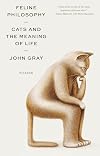
I ordered this book expecting a whimsical walk through the wisdom of cats. What I got was a profound, brilliant dissection of human hubris, it's baseline causes and why felines are far happier than humans, no matter what the circumstances. Not to mention an excoriating take down of monotheism as a moral system, and of philosophy in general as glorified navel gazing. Once I picked this book up I could not put it down until completed. Read this book.
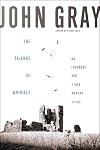
If there ever was a creature that was torn between its own nature and limitations and apparent unlimited creativity it is human being. Imagine a creature so involved with itself that it tries to hide all its faults by inventing such an imaginative worlds and concepts to explain itself to itself (instead of just looking in the mirror) that it ends up in constant turmoil, always aware of its faults and always unable to admit them and driven by this constant turmoil creates magnificent show more things.
Author gives us overview of the ways humans paint themselves for themselves so they can live with themselves, various myths starting from how we generally describe ourselves as civilized (chapter about Naples was horrifying), and how we flirt with our divine role on this world. We live with so many noise in our heads that very way of handling this static is what actually makes human a human. Though sometimes unbearable this noise is what drives us forward and enables us to create beautiful and amazing things but also forces us to come up as so unintelligent at times it is unbelievable.
It is constant search for meaning of life. While rest of the living world (even non-living if we are to allow for some of the philosophies) lives in peace satisfied with their own existence (or at least they are living their existence without constant attempts to reinvent themselves) humans are in essence incapable of such a feat. Humans want to find the meaning of life because it seems that living the life for life's sake is just not enough. And of course this causes so many short circuits in the brain that people do things that range from wonderful to deeply terrifying and disturbing.
Take religion for example. It always had its place in human life (again this constant strive for purpose and meaning) and we can never remove it, it is part of human psyche and required for normal functioning of humans that every replacement, be it science, sociological theories or various theories on human past, present and future only ends up being revered as a new religion (in standard fashion of out with the old, in with the new). As author states we say to ourselves (and thus we build myths) we do not need it but we constantly create new religions to which we want to devote our lives to. We do not call them religion but approach it with same zeal that for objective outside observer (if such thing was possible) would see no difference at all.
I especially liked chapters on Freud and Jung, author managed to capture the very essence of their disagreement and it is not surprising that Jung became the more famous one while Freud was shunned away - his thesis and approach was too close to the target.... and that hurts.
What permeates the entire book is the notion that no matter how far we think we have come we are still only an advanced animal and I mean this not in some romantic but pure biological sense. We need to come to terms with that if we want to progress and actually level up scientific/technological and social achievements. We need to change our own behavior. Unfortunately same as the author I am skeptical that this will happen any time soon. If anything this year proved maxim that remains true and unfortunately will remain true for a long time - humans are and will remain irrational and incapable of common sense behavior, they want drama and chaos because then they can find the meaning of life at least as martyrs in forced hard conditions of life. And that is one very sad fact.
I cannot but chuckle whenever I hear how we will conquer the space:) it seems like 1960's happened in parallel universe. Short episode in human history, time of enlightenment that was cut short because only small number of people was involved - for majority this was something that happened at the edge of their perception and this is where this breakthrough period withered and died. Reality and survival will always prevail over something that for majority is unreachable and in the end does not have immediate practical value.
Very interesting book, author's style is great and draws you in a way that you are glued to the book till the very end - you will find yourself constantly saying just one more page. And this is quite an achievement for the the philosophical/sociological work.
Highly recommended. show less
Author gives us overview of the ways humans paint themselves for themselves so they can live with themselves, various myths starting from how we generally describe ourselves as civilized (chapter about Naples was horrifying), and how we flirt with our divine role on this world. We live with so many noise in our heads that very way of handling this static is what actually makes human a human. Though sometimes unbearable this noise is what drives us forward and enables us to create beautiful and amazing things but also forces us to come up as so unintelligent at times it is unbelievable.
It is constant search for meaning of life. While rest of the living world (even non-living if we are to allow for some of the philosophies) lives in peace satisfied with their own existence (or at least they are living their existence without constant attempts to reinvent themselves) humans are in essence incapable of such a feat. Humans want to find the meaning of life because it seems that living the life for life's sake is just not enough. And of course this causes so many short circuits in the brain that people do things that range from wonderful to deeply terrifying and disturbing.
Take religion for example. It always had its place in human life (again this constant strive for purpose and meaning) and we can never remove it, it is part of human psyche and required for normal functioning of humans that every replacement, be it science, sociological theories or various theories on human past, present and future only ends up being revered as a new religion (in standard fashion of out with the old, in with the new). As author states we say to ourselves (and thus we build myths) we do not need it but we constantly create new religions to which we want to devote our lives to. We do not call them religion but approach it with same zeal that for objective outside observer (if such thing was possible) would see no difference at all.
I especially liked chapters on Freud and Jung, author managed to capture the very essence of their disagreement and it is not surprising that Jung became the more famous one while Freud was shunned away - his thesis and approach was too close to the target.... and that hurts.
What permeates the entire book is the notion that no matter how far we think we have come we are still only an advanced animal and I mean this not in some romantic but pure biological sense. We need to come to terms with that if we want to progress and actually level up scientific/technological and social achievements. We need to change our own behavior. Unfortunately same as the author I am skeptical that this will happen any time soon. If anything this year proved maxim that remains true and unfortunately will remain true for a long time - humans are and will remain irrational and incapable of common sense behavior, they want drama and chaos because then they can find the meaning of life at least as martyrs in forced hard conditions of life. And that is one very sad fact.
I cannot but chuckle whenever I hear how we will conquer the space:) it seems like 1960's happened in parallel universe. Short episode in human history, time of enlightenment that was cut short because only small number of people was involved - for majority this was something that happened at the edge of their perception and this is where this breakthrough period withered and died. Reality and survival will always prevail over something that for majority is unreachable and in the end does not have immediate practical value.
Very interesting book, author's style is great and draws you in a way that you are glued to the book till the very end - you will find yourself constantly saying just one more page. And this is quite an achievement for the the philosophical/sociological work.
Highly recommended. show less
Lists
Reading list (2)
Five star books (1)
Awards


You May Also Like


Associated Authors
Statistics
- Works
- 50
- Also by
- 5
- Members
- 5,680
- Popularity
- #4,349
- Rating
- 3.7
- Reviews
- 103
- ISBNs
- 1,182
- Languages
- 32
- Favorited
- 15
