

Mark Lilla
Author of The Stillborn God: Religion, Politics, and the Modern West
About the Author
Mark Lilla was born in Detroit in 1956. He is Professor of Humanities at Columbia University and a regular essayist for The New York Review of Books and other publications worldwide. His books include The Shipwrecked Mind: On Political Reaction (2016). The Stillborn God: Religion, Politics, and the show more Modern West (2007), and G.B. Vico: The Making of an Anti-Modem (1994), as well as The Legacy of Isaiah Berlin (2001) with Ronald Dworkin and Robert B. Silvers. show less
Image credit: Elena Seibert
Works by Mark Lilla
For Daniel Bell 1 copy
Associated Works
Tagged
Common Knowledge
- Birthdate
- 1956
- Gender
- male
- Education
- Wayne State University
University of Michigan
Harvard University - Occupations
- political scientist
university professor - Organizations
- New York University
University of Chicago
Columbia University - Nationality
- USA
- Birthplace
- Detroit, Michigan, USA
- Places of residence
- Detroit, Michigan, USA
New York, New York, USA - Associated Place (for map)
- USA
Members
Reviews
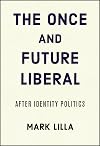
While I agree with Mr. Lilla about the perils of identity politics, I think he unknowingly demonstrates why his prescriptions will never happen. He seems to think that the American trait of self-centeredness began with Reagan. I'm sure that Mr. Lilla would say that Trump didn't create the polarized atmosphere in which we currently live but merely exploited it. Therefore, it isn't a stretch to say that Reagan did the same thing with self-centeredness/individualism and yet he came back to it show more so often that one could be forgiven for having the impression that Mr. Lilla thinks the Reagan-revolution was the genesis of American narcissism.
Another reason I think his hopes are doomed to failure is that the vision he puts forth of present day America is one that a centrist like me disagrees with. To top it all off, he has a go at the people who voted for Trump, I'm not among them, by saying that even though they know that they're being ignored by the Democrat Party there is no excuse for voting for Trump. Why not just call them a basket of deplorables for good measure? It would have the same effect as listing what they're reasons were for voting Trump and then saying they had no excuse to do so. show less
Another reason I think his hopes are doomed to failure is that the vision he puts forth of present day America is one that a centrist like me disagrees with. To top it all off, he has a go at the people who voted for Trump, I'm not among them, by saying that even though they know that they're being ignored by the Democrat Party there is no excuse for voting for Trump. Why not just call them a basket of deplorables for good measure? It would have the same effect as listing what they're reasons were for voting Trump and then saying they had no excuse to do so. show less
I really wanted to like this book. I agree 100% with its thesis: that solidarity is the core liberal value missing in the US on both the Right (libertarianism) and Left (identity politics). And certainly I am hoping for a sane Left to re-emerge not just in the US but in all world democracies where the Left is in retreat. But while arguing forcefully that politics is not a morality play, the author basically falls into the trap he claims needs to be avoided. He repeatedly labels Republicans show more as evil, Trump voters as misguided & immoral fools, Trump as the anti-Christ. I’m obviously exaggerating, but only a bit.
Liberalism is a child of the Enlightenment, and the core value on which that was based is skepticism. Lila lacks skepticism regarding his own political values and beliefs. He lives with the religious fervor that the Democrats are the only true democrats. It’s totally fair to disagree with conservatives and Republicans, and Trump and his voters. But labeling them all as evil and unprincipled while claiming you believe in solidarity, makes you a preachy hypocrite. show less
Liberalism is a child of the Enlightenment, and the core value on which that was based is skepticism. Lila lacks skepticism regarding his own political values and beliefs. He lives with the religious fervor that the Democrats are the only true democrats. It’s totally fair to disagree with conservatives and Republicans, and Trump and his voters. But labeling them all as evil and unprincipled while claiming you believe in solidarity, makes you a preachy hypocrite. show less
I'm very sympathetic not only with Lilla's criticisms of the right but nearly all of those of the left—which are hard to dispel if one's spent any time at all in left-of-center political spaces without collecting a check or social capital in maintaining its status quo.
Lilla's honest—he's a liberal and therefore, has great use for the institutions of our democracy. This reveals his biggest blindspot; though he decries an erosion of a sense of "citizenship," particularly over the last 50 show more years, he doesn't have time for pondering the erosion of trust in his beloved institutions, nor the erosion of public goods (as distinct from his public good), nor of American life, broadly. This decay of his first "dispensation" betrays a lack of a class consciousness in America and he leaves unexamined the idea of the individual as consumer or even homeowner, themselves normative identities that exist in meaningful constellation with the identities he criticizes.
Also, when are the disenfranchised for whom Lilla rends his garments supposed to become "citizens" in his fullest definition, engaging in party politics and running for mayor? Along with the turns he describes, people needed more than one job to make ends meet, became exhausted from increased productivity with stagnant wages, became parents, were caregivers...all exploited by his libertarian Reaganists and his coastal elite.
Maybe in this sense of exploitation being shared by the majority of the population there's a commonality to be built upon rather than the "conjuring" of citizenship that Lilla himself admits would be a miracle. Lilla glosses right over this point actually, resigning this Marxian point of view of a huge swath of exploited versus a small ruling class—the kind of numbers that win the elections he's so fond of—as being a musty, old notion. Ah, well.
Funniest moment: Lilla incredulous that Black activists would criticize Hillary Clinton. show less
Lilla's honest—he's a liberal and therefore, has great use for the institutions of our democracy. This reveals his biggest blindspot; though he decries an erosion of a sense of "citizenship," particularly over the last 50 show more years, he doesn't have time for pondering the erosion of trust in his beloved institutions, nor the erosion of public goods (as distinct from his public good), nor of American life, broadly. This decay of his first "dispensation" betrays a lack of a class consciousness in America and he leaves unexamined the idea of the individual as consumer or even homeowner, themselves normative identities that exist in meaningful constellation with the identities he criticizes.
Also, when are the disenfranchised for whom Lilla rends his garments supposed to become "citizens" in his fullest definition, engaging in party politics and running for mayor? Along with the turns he describes, people needed more than one job to make ends meet, became exhausted from increased productivity with stagnant wages, became parents, were caregivers...all exploited by his libertarian Reaganists and his coastal elite.
Maybe in this sense of exploitation being shared by the majority of the population there's a commonality to be built upon rather than the "conjuring" of citizenship that Lilla himself admits would be a miracle. Lilla glosses right over this point actually, resigning this Marxian point of view of a huge swath of exploited versus a small ruling class—the kind of numbers that win the elections he's so fond of—as being a musty, old notion. Ah, well.
Funniest moment: Lilla incredulous that Black activists would criticize Hillary Clinton. show less
This is a hard book to rate. I resist giving it three stars even though four seems like it might be too many.
This is a super-brief political-social history of the "how we got to here," starting roughly in 1960, but with references to the 40's and 50's, the 1770's, etc. combined with an indictment of Identity Politics in general, but most specifically those of the modern "identity liberal." Then a short section of "we can't just rehash Rooseveltian liberalism" but "we need to make common show more purpose and citizenship the core of our discourse and liberal platform(s)," without any real specifics beyond that.
I'm sick and tired of identity politics, of politics as the personal, of politics as religion; of the reduction of all and everything to power and nothing more; of much or even all that Lilla is sick and tired (and angry and worried) about. But... I wonder if he gives identity liberalism and its practitioners/proponents too short shrift? He nods in the direction -multiple times- of there being real issues of racism, sexism, anti-LGBTQ, etc. But he fails to connect those nods to what he is criticizing.
Much as we need to understand the real issues that are driving "Trump voters" are not all/only about racism, xenophobia, and general revanchism, that there are issues of equality, poverty, criminal justice, "vision" and the like that are completely open to "liberal" solutions, we also need to understand the issues that, to take an example Lilla calls out, BLM are driving forward and/or fueled by. Lilla fails to do that.
But maybe that isn't his role. He's in his sixties, after all, and "social justice warriors" are, broadly speaking, somewhere between their teens and their 30's. Maybe people from that "generation" (edges of X, Y, and Z) need to step up. I think that is happening, at least in some amount. I dunno, we'll see...
In any case, 3.5 stars for part of an important critique and not-quite counterproposal. show less
This is a super-brief political-social history of the "how we got to here," starting roughly in 1960, but with references to the 40's and 50's, the 1770's, etc. combined with an indictment of Identity Politics in general, but most specifically those of the modern "identity liberal." Then a short section of "we can't just rehash Rooseveltian liberalism" but "we need to make common show more purpose and citizenship the core of our discourse and liberal platform(s)," without any real specifics beyond that.
I'm sick and tired of identity politics, of politics as the personal, of politics as religion; of the reduction of all and everything to power and nothing more; of much or even all that Lilla is sick and tired (and angry and worried) about. But... I wonder if he gives identity liberalism and its practitioners/proponents too short shrift? He nods in the direction -multiple times- of there being real issues of racism, sexism, anti-LGBTQ, etc. But he fails to connect those nods to what he is criticizing.
Much as we need to understand the real issues that are driving "Trump voters" are not all/only about racism, xenophobia, and general revanchism, that there are issues of equality, poverty, criminal justice, "vision" and the like that are completely open to "liberal" solutions, we also need to understand the issues that, to take an example Lilla calls out, BLM are driving forward and/or fueled by. Lilla fails to do that.
But maybe that isn't his role. He's in his sixties, after all, and "social justice warriors" are, broadly speaking, somewhere between their teens and their 30's. Maybe people from that "generation" (edges of X, Y, and Z) need to step up. I think that is happening, at least in some amount. I dunno, we'll see...
In any case, 3.5 stars for part of an important critique and not-quite counterproposal. show less
Lists
Awards


You May Also Like


Associated Authors
Statistics
- Works
- 19
- Also by
- 3
- Members
- 1,540
- Popularity
- #16,721
- Rating
- 3.8
- Reviews
- 29
- ISBNs
- 73
- Languages
- 9
- Favorited
- 1