
Bill Fawcett (1) (1947–)
Author of The Fleet
For other authors named Bill Fawcett, see the disambiguation page.
Series
Works by Bill Fawcett
How to Lose a Battle: Foolish Plans and Great Military Blunders (How to Lose Series) (2006) 184 copies, 4 reviews
100 Mistakes that Changed History: Backfires and Blunders That Collapsed Empires, Crashed Economies, and Altered the Course of Our World (2010) 159 copies, 3 reviews
It Looked Good on Paper: Bizarre Inventions, Design Disasters, and Engineering Follies (2009) 79 copies
How to Lose a War: More Foolish Plans and Great Military Blunders (How to Lose Series) (2009) 64 copies
Oval Office Oddities: An Irreverent Collection of Presidential Facts, Follies, and Foibles (2008) 55 copies, 1 review
How to Lose a War at Sea: Foolish Plans and Great Naval Blunders (How to Lose Series) (2013) 49 copies, 5 reviews
How to Lose the Civil War: Military Mistakes of the War Between the States (How to Lose Series) (2011) 41 copies, 1 review
101 Stumbles in the March of History: What If the Great Mistakes in War, Government, Industry, and Economics Were Not Made? (2016) 38 copies
Trust Me, I Know What I'm Doing: 100 More Mistakes That Lost Elections, Ended Empires, and Made the World What It Is Today (2012) 30 copies
The Battle for Azeroth: Adventure, Alliance, and Addiction in the World of Warcraft (Smart Pop series) (2006) — Editor — 29 copies, 1 review
We Three Dragons: A Trio of Dragon Tales for the Holiday Season (2005) — Editor — 27 copies, 2 reviews
Making Contact: A Serious Handbook For Locating And Communicating With Extraterrestrials (1997) 27 copies, 1 review
The United States Navy SEALs Workout Guide : The Exercises and Fitness Programs Used by the U.S. Navy SEALS and Bud's Training (1998) 23 copies
Dwarves: A Complete Kingdom and Adventure Suitable for Advanced Dungeons & Dragons (Role Aids) (1986) — Editor — 18 copies
Last Of The Fourth 1 copy
Bolos 1 copy
Mission From Hel 1 copy
Congealed Stories 1 copy
The Twain Shall Meet 1 copy
Demon Sword 1 copy
Associated Works
Don't Forget Your Spacesuit, Dear: The Mother of All Anthologies (1996) — Contributor — 229 copies, 5 reviews
Stepping Through the Stargate: Science, Archaeology and the Military in Stargate SG1 (2004) — Contributor — 106 copies, 1 review
So Say We All: An Unauthorized Collection of Thoughts and Opinions on Battlestar Galactica (2006) — Contributor — 81 copies, 2 reviews
Tagged
Common Knowledge
- Legal name
- Fawcett, William Brian
- Other names
- Fawcett, Quinn (with Chelsea Quinn Yarbro)
- Birthdate
- 1947-05-13
- Gender
- male
- Occupations
- editor
science fiction writer
book packager
fantasy writer
professor
teacher (show all 7)
college dean - Organizations
- Mayfair Games
- Relationships
- Nye, Jody Lynn (wife)
- Short biography
- Bill has been a professor, teacher, corporate executive, company founder, CMO, CEO and college dean. His entire life has been spent in the creative fields. He is co-founder of Mayfair Games, a board and role playing game company; where he wrote and edited many of the 50+ game adventures and supplements. He is also the designer of almost a dozen board games, including several Charles Roberts Award winners for Best Board Game of the Year.
In 1984, Bill became the founder and manager of Games Plus Hobbies in Mount Prospect Illinois. Games Plus remains the largest gaming goods store in the Midwest. Incorporated in 1985, Bill Fawcett & Associates packaged over 300 books for major publishers. These include a number of best selling Science Fiction, Mystery, and Action novels. His most recently co-authored published works are fun looks at bad decisions in history, including: It Seemed Like a Good Idea, Great Historical Fiascos and You Did What?, and recently released Oval Office Oddities and The 100 Mistakes that Changed History from Penguin/Caliber books. He joined Transit Computing in 2005 as our CFO.
http://www.transitcomputing.com/about... - Nationality
- USA
- Associated Place (for map)
- USA
Members
Discussions
Found: SciFi Book Series with female avian alien and human male. in Name that Book (April 2022)
Reviews

An average fantasy book all around. We have your dark outsider, your disguised royalty, your country bumpkin maturing into greatness, your forbidden magic saving the day, your evil and mysterious outlanders plotting the fall of civilization as we know it, your occasional lapses into horribly purple prose, and so on and so forth. By the end the plot gets a little contorted, what with characters suddenly warping between two major points of conflict and talking through psychic channels, which show more tore down the sense of isolation and urgency that one might expect in a book about a three pronged assault against a distant fortress at the edge of civilization. Inconsistencies like describing fire as the ultimate insult to the dead in one chapter and the ultimate honor in the next tend to pop up now an again as well.
While Lord of Cragsclaw is nothing special, it makes for a decent popcorn read, and its cast is sympathetic enough that I'll be spending a few hours to read the second book in the series. show less
While Lord of Cragsclaw is nothing special, it makes for a decent popcorn read, and its cast is sympathetic enough that I'll be spending a few hours to read the second book in the series. show less

It's an absurd notion that, by programing in to a computer biographical details about a dead person and their time, you can create a sentient version of that historical personage. It's probably not even original to this shared world anthology. And, certainly, the idea of sentient programs haunting cyberspace goes back to earlier work by Vernor Vinge and William Gibson.
But Silverberg is a master reclaimer of the old vigor of cliches. And here the effort, under his editorial direction, mostly show more works.
The usual gimmick in each story is the meeting of two famous people who never met in reality. Between each story is the barest of expository mortar to hold things together, and three fifths of the collection works well.
Silverberg's own "Enter a Soldier. Later: Enter Another" begins things with a startling proof of concept: a compare and contrast of Pizarro and Socrates. The ruthless, amoral, and illiterate conquestidor holds his own against the philosopher. After computer simulcra prove feasible, a crash US program to develop their commerical potential is the subject of Robert Sheckley's "The Resurrection Machine". But when your products are Cicero and the anarchist Bakunin, rollout isn't going to happen as planned -- if at all. Whether through sheer stubborness or master manipulation, both get their way. Given their frequent use of history in their fiction, it's no surprise that Silverberg's story and Poul Anderson's "Statesmen" are the book's highlights. Machiavelli and Frederick the Great advise two warring economic combines and reintroduce the world to the finer points of intrigue, statecraft, and propaganda. And Anderson reminds us that, in a world of material plenty, there are still plenty of reasons for war.
Unfortunately, the collection then goes downhill. Surprisingly, Gregory Benford's "The Rose and the Scalpel" doesn't work on its own terms or in the context of the collection. Starting from an unlikely premise that the political and cultural future of France hinges on a debate between simulcras of Voltaire and Joan of Arc, he grafts on a farcical war of the sexes and the question of robot rights. Unfortunately, sentient robots only make their appearance in this story of the anthology, so it seems a gratuitious example of a theme better treated in Benford's independent work. Benford does present some interesting details about Voltaire's life. Pat Murphy's "How I Spent My Summer Vacation" now seems oh-so-1980s in its romantic view of hacker anarchists. It's clash of historical titans features a return of Bakunin and his meeting with Queen Victoria.
The lives of its famous characters and their unlikely juxtaposition is the delight of this collection, and Sheckley, Silverberg, and Anderson combine that with thoughtful stories that work on their own terms and with the shared world. They make the collection worth reading. show less
But Silverberg is a master reclaimer of the old vigor of cliches. And here the effort, under his editorial direction, mostly show more works.
The usual gimmick in each story is the meeting of two famous people who never met in reality. Between each story is the barest of expository mortar to hold things together, and three fifths of the collection works well.
Silverberg's own "Enter a Soldier. Later: Enter Another" begins things with a startling proof of concept: a compare and contrast of Pizarro and Socrates. The ruthless, amoral, and illiterate conquestidor holds his own against the philosopher. After computer simulcra prove feasible, a crash US program to develop their commerical potential is the subject of Robert Sheckley's "The Resurrection Machine". But when your products are Cicero and the anarchist Bakunin, rollout isn't going to happen as planned -- if at all. Whether through sheer stubborness or master manipulation, both get their way. Given their frequent use of history in their fiction, it's no surprise that Silverberg's story and Poul Anderson's "Statesmen" are the book's highlights. Machiavelli and Frederick the Great advise two warring economic combines and reintroduce the world to the finer points of intrigue, statecraft, and propaganda. And Anderson reminds us that, in a world of material plenty, there are still plenty of reasons for war.
Unfortunately, the collection then goes downhill. Surprisingly, Gregory Benford's "The Rose and the Scalpel" doesn't work on its own terms or in the context of the collection. Starting from an unlikely premise that the political and cultural future of France hinges on a debate between simulcras of Voltaire and Joan of Arc, he grafts on a farcical war of the sexes and the question of robot rights. Unfortunately, sentient robots only make their appearance in this story of the anthology, so it seems a gratuitious example of a theme better treated in Benford's independent work. Benford does present some interesting details about Voltaire's life. Pat Murphy's "How I Spent My Summer Vacation" now seems oh-so-1980s in its romantic view of hacker anarchists. It's clash of historical titans features a return of Bakunin and his meeting with Queen Victoria.
The lives of its famous characters and their unlikely juxtaposition is the delight of this collection, and Sheckley, Silverberg, and Anderson combine that with thoughtful stories that work on their own terms and with the shared world. They make the collection worth reading. show less
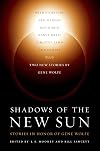
Writing a short story in honour of Gene Wolfe is a tough gig, because Gene Wolfe is one of the best short story writers going around - certainly within the speculative fiction fields - and he doesn't have the kind of immediate linguistic markers in his fiction that make it easy to pastiche his style (other, perhaps, than his most famous work, the four-volume Book of the New Sun).
The stories in this volume, including two by Wolfe himself, are a mixed bag - as one would expect. A few too many show more never go anywhere much, but there are a few that are worthy additions to Wolfe's worlds. I'd encourage those new to Gene Wolfe's work to go straight to the source, and give existing gene Wolfe fans cautious encouragement to check this out. show less
The stories in this volume, including two by Wolfe himself, are a mixed bag - as one would expect. A few too many show more never go anywhere much, but there are a few that are worthy additions to Wolfe's worlds. I'd encourage those new to Gene Wolfe's work to go straight to the source, and give existing gene Wolfe fans cautious encouragement to check this out. show less
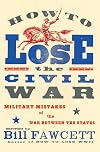
Although the 37 essays sometimes contradict each other, "How to Lose the Civil War" is an effective collection of thoughts on Civil War battles, generals, politicians, and wartime economies that will provide plenty for the average reader to ponder. There are also more than a few glaring editorial failures on the part of the book's editor, Bill Fawcett, that should have been caught and corrected before "How to Lose the Civil War" went to print...such as placing Hagerstown in Pennsylvania show more rather than in Maryland as one essayist managed to do.
Readers seeking a general understanding of the war from this book will get considerably more than that from it. The book should lead the curious reader along several research tracks of his own, and this is probably it's biggest contribution to amateur historians everywhere. There is plenty to argue about in this book...and about...this book. show less
Readers seeking a general understanding of the war from this book will get considerably more than that from it. The book should lead the curious reader along several research tracks of his own, and this is probably it's biggest contribution to amateur historians everywhere. There is plenty to argue about in this book...and about...this book. show less
Lists
You May Also Like


Associated Authors
Statistics
- Works
- 63
- Also by
- 28
- Members
- 3,971
- Popularity
- #6,356
- Rating
- 3.4
- Reviews
- 51
- ISBNs
- 123
- Languages
- 4
- Favorited
- 1