
Joan Slonczewski
Author of A Door Into Ocean
About the Author
Image credit: From Amazon
Series
Works by Joan Slonczewski
Microbe {short story} 7 copies
Associated Works
Gateways: A Feast of Great New Science Fiction Honoring Grand Master Frederik Pohl (2010) — Contributor — 113 copies, 2 reviews
Tagged
Common Knowledge
- Legal name
- Slonczewski, Joan Lyn
- Birthdate
- 1956-08-14
- Gender
- female
- Education
- Bryn Mawr (BA | Biology)
Yale University (PhD | Molecular Biology) - Occupations
- biologist
teacher
novelist - Organizations
- Science Fiction and Fantasy Writers of America
- Nationality
- USA
- Birthplace
- Hyde Park, New York, USA
- Associated Place (for map)
- New York, USA
Members
Discussions
"Door Into Ocean" group discussion in Group Reads - Sci-Fi (September 2011)
A Door Into Ocean in Someone explain it to me... (May 2009)
Reviews
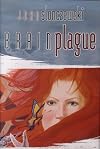
Pros: brilliant world-building, fascinating characters, thought-provoking
Cons:
Chrysoberyl of Dolomoth is a pyroscape artist with the Seven Stars. In order to improve her financial and artistic positions she agrees to become a carrier. Carriers play host to sentient microbial symbionts, visible to the host via their optic neuroports. Chrys’ ‘people’, the Eleutherians, call her the God of Mercy, but they don’t always act in her best interests. And there are other strains of micros show more going around, ones that take over their hosts, turning them into vampires and drug addicts. These hosts eventually travel to the Slave World, a place no one ever returns from.
You’re dropped into this complex world with no explanation, so it takes a few chapters to become familiar with all the terms, characters, and ideas. You do learn about the micros and how being a carrier works along with Chrys, but there’s a lot outside of that to take in: Chrys’ art, elves, sentients, simians, the Underworld, vampires, anti-simian groups, etc. The world is multi-layered and realistically complex.
The characters, both humanoid and micro, are quite fascinating. Chris must learn how to deal with the little people in her head and their demands on her time (for themselves and for the larger micro community as a whole) while also continuing with her own life (her art, lost friends, religious family, learning how to handle money, personal relationships).
The book does… meander a bit. While there are several linear plot threads, there are also a fair number of asides into complementary issues. The author examines different problems associated with being a host, and how different hosts treat their people. It also goes into how the hosts treat each other - both in the carrier community and outside of it. Then there’s the inter-racial problems: simians and physician sentients face discrimination, elves believe their society is perfect and so ignore the real threat one of their members poses everyone, should micros have the same rights as carriers, etc.
I really enjoyed the book. It’s fascinating seeing the different groups interact, and the micros are so much fun. show less
Cons:
Chrysoberyl of Dolomoth is a pyroscape artist with the Seven Stars. In order to improve her financial and artistic positions she agrees to become a carrier. Carriers play host to sentient microbial symbionts, visible to the host via their optic neuroports. Chrys’ ‘people’, the Eleutherians, call her the God of Mercy, but they don’t always act in her best interests. And there are other strains of micros show more going around, ones that take over their hosts, turning them into vampires and drug addicts. These hosts eventually travel to the Slave World, a place no one ever returns from.
You’re dropped into this complex world with no explanation, so it takes a few chapters to become familiar with all the terms, characters, and ideas. You do learn about the micros and how being a carrier works along with Chrys, but there’s a lot outside of that to take in: Chrys’ art, elves, sentients, simians, the Underworld, vampires, anti-simian groups, etc. The world is multi-layered and realistically complex.
The characters, both humanoid and micro, are quite fascinating. Chris must learn how to deal with the little people in her head and their demands on her time (for themselves and for the larger micro community as a whole) while also continuing with her own life (her art, lost friends, religious family, learning how to handle money, personal relationships).
The book does… meander a bit. While there are several linear plot threads, there are also a fair number of asides into complementary issues. The author examines different problems associated with being a host, and how different hosts treat their people. It also goes into how the hosts treat each other - both in the carrier community and outside of it. Then there’s the inter-racial problems: simians and physician sentients face discrimination, elves believe their society is perfect and so ignore the real threat one of their members poses everyone, should micros have the same rights as carriers, etc.
I really enjoyed the book. It’s fascinating seeing the different groups interact, and the micros are so much fun. show less
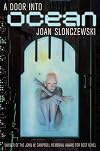
A Door into Ocean is a new all time favorite book that I wish I’d read sooner! I’d say this is the sort of science fiction that falls into a “The Left Hand of Darkness” category, and would appeal to fans of Ursula K. Le Guin in general.
A Door into Ocean is a feminist utopia set on a water-covered planet that comes into contact and conflict with a colonizing power.
This book is incredible in so many ways. Through a slowly unfolding philosophical storyline, we encounter an alien society show more that is well thought out and feels realistic. Slonczewski presents the reader with moral dilemmas that are actually dilemmas with no easy “right” answers. There is so much emotional payoff as you get closer to the ending (many tears were shed on my part). Because Slonczewski’s area of expertise is microbiology, they’re able to create this immersive scifi world that actually feels like it could exist. I truly felt like I had LIVED this book by the time I got to the end.
This is one of those books that I think everyone should read, but I especially recommend A Door into Ocean to:
- readers who want to be fully immersed in an alien culture
- fans of slow contemplative scifi
- readers hungry for a story about non-violent resistance
After I was done reading, I stumbled across a link the author has on their website that explains their thought process in creating A Door into Ocean! But don’t click on the link until you finish the book because there are spoilers galore. Putting the link here for ease of access, as it’s a little hard to find: https://biology.kenyon.edu/slonc/books/adoor_art/adoor_study.htm show less
A Door into Ocean is a feminist utopia set on a water-covered planet that comes into contact and conflict with a colonizing power.
This book is incredible in so many ways. Through a slowly unfolding philosophical storyline, we encounter an alien society show more that is well thought out and feels realistic. Slonczewski presents the reader with moral dilemmas that are actually dilemmas with no easy “right” answers. There is so much emotional payoff as you get closer to the ending (many tears were shed on my part). Because Slonczewski’s area of expertise is microbiology, they’re able to create this immersive scifi world that actually feels like it could exist. I truly felt like I had LIVED this book by the time I got to the end.
This is one of those books that I think everyone should read, but I especially recommend A Door into Ocean to:
- readers who want to be fully immersed in an alien culture
- fans of slow contemplative scifi
- readers hungry for a story about non-violent resistance
After I was done reading, I stumbled across a link the author has on their website that explains their thought process in creating A Door into Ocean! But don’t click on the link until you finish the book because there are spoilers galore. Putting the link here for ease of access, as it’s a little hard to find: https://biology.kenyon.edu/slonc/books/adoor_art/adoor_study.htm show less

A sequel to A Door into Ocean that's very different in tone. Door was dark and grim and pretty one-sided. The evil Valan militaristic agents of the Patriarchy were despoiling the ocean planet of Shora and attempting to force the matriarchal nonviolent Sharers to their will through imprisonment and torture. Though much is made of Slonczewski scientific credentials, whatever science she used in her world-building was hidden. In one scene, her Sharer life-shapers, who value organic life and show more abhor inorganic objects seemed surprised to realize that everything is made out of the same elements. The book ended with intimations that any victory the Sharers had would be short-lived.
In Daughter, there is political conflict but nothing so dark and grim. Hundreds of years have passed. The Valans are still villains, but they have gone corporate and are mostly off-stage. Shora has been colonized by the Elysians -- genetically engineered to live thousands of years but unable to breed -- who live in bubbles floating on Shora's ocean. The outside observers to tour Elysium are patterned after Native Americans.
The pace of Daughter is leisurely. The big conflicts are about overpopulation and terrraforming and who counts as human, but these themes, some present in Door, are developed slowly. The mode is debate, with many chapters reading like chapters from Walton's Thessaly cycle. It's not that things are less black and white than they were in Door so much as that the path to seeing what's black and white is more of a challenge for the characters.
The author's biological expertise is more clearly on display here, as one of the main characters works on a genetic engineering project to restore fertility to the Elysians.
Recommended for its world building and intelligence, but if you really love Door, you may be disappointed in the change of style here. show less
In Daughter, there is political conflict but nothing so dark and grim. Hundreds of years have passed. The Valans are still villains, but they have gone corporate and are mostly off-stage. Shora has been colonized by the Elysians -- genetically engineered to live thousands of years but unable to breed -- who live in bubbles floating on Shora's ocean. The outside observers to tour Elysium are patterned after Native Americans.
The pace of Daughter is leisurely. The big conflicts are about overpopulation and terrraforming and who counts as human, but these themes, some present in Door, are developed slowly. The mode is debate, with many chapters reading like chapters from Walton's Thessaly cycle. It's not that things are less black and white than they were in Door so much as that the path to seeing what's black and white is more of a challenge for the characters.
The author's biological expertise is more clearly on display here, as one of the main characters works on a genetic engineering project to restore fertility to the Elysians.
Recommended for its world building and intelligence, but if you really love Door, you may be disappointed in the change of style here. show less
This book in the same universe as Door Into Ocean and Daughter of Elysium is as different from them as they were from each other. Though many SFNal elements are shared with Daughter, where that book began slowly with mostly cultural observations spread over out several chapters, this book begins with an info-dump that in a few pages sets out a pulp novel baseline befitting its title: vampires (we would call them zombies these days) are biting people, spreading the brain plague, and taking show more their victims to the Slave World. The main character is an artist whose life on a slummy lower level involves avoiding both the vampires and cancerous patches of nanoplast, the material from which the entire city is built. After that blast from the 1930s, things settle down, perhaps a little too much. The main character stays fairly naive for a bit too long, while everyone around her knows more about what is going on than she does.
Still and all, this ends up being more the kind of biological SF that I had hoped for from this author. The core idea is intelligent microbes who colonize the arachnoid matter of the human brain. There are many -- um -- cultures of these microbes. Our hero's culture has grand artistic visions as she does but also subversive revolutionary ambitions. One of the best parts of the book's premise is that it leads to two parallel tales in two very different timeframes. Her story of gradual awakening to social issues and taking a stance takes place over a few months. The microbial timeframe is a several hundred times faster so a multi-generational saga is told of an evolving civilization. Another interesting idea is how each carrier (human with microbes) is like a different continent. There are occasional visits, invasions, and cultural assimilation of microbes from different hosts. The dangers in the relationship between carriers and microbes are several. There is the god-complex relationship between microbes and their hosts, which serves neither side well, but the bigger danger is that only cultural prohibitions -- and eventual host-death -- prevent the microbes from enslaving their hosts through the repeated triggering of the pleasure response via dopamine release. This tension -- that humans can and frequently do wipe out entire microbial civilizations and microbes can and frequently do enslave their hosts -- creates a solid base of tension throughout the book. The microbes are too human-like in my opinion, but I feel that way about the aliens in almost all SF.
The richness of ideas and awkwardness of exposition makes this book feel like a first novel, but the ideas win out. Recommended. show less
Still and all, this ends up being more the kind of biological SF that I had hoped for from this author. The core idea is intelligent microbes who colonize the arachnoid matter of the human brain. There are many -- um -- cultures of these microbes. Our hero's culture has grand artistic visions as she does but also subversive revolutionary ambitions. One of the best parts of the book's premise is that it leads to two parallel tales in two very different timeframes. Her story of gradual awakening to social issues and taking a stance takes place over a few months. The microbial timeframe is a several hundred times faster so a multi-generational saga is told of an evolving civilization. Another interesting idea is how each carrier (human with microbes) is like a different continent. There are occasional visits, invasions, and cultural assimilation of microbes from different hosts. The dangers in the relationship between carriers and microbes are several. There is the god-complex relationship between microbes and their hosts, which serves neither side well, but the bigger danger is that only cultural prohibitions -- and eventual host-death -- prevent the microbes from enslaving their hosts through the repeated triggering of the pleasure response via dopamine release. This tension -- that humans can and frequently do wipe out entire microbial civilizations and microbes can and frequently do enslave their hosts -- creates a solid base of tension throughout the book. The microbes are too human-like in my opinion, but I feel that way about the aliens in almost all SF.
The richness of ideas and awkwardness of exposition makes this book feel like a first novel, but the ideas win out. Recommended. show less
Lists
Awards


You May Also Like


Associated Authors
Statistics
- Works
- 17
- Also by
- 12
- Members
- 2,563
- Popularity
- #10,020
- Rating
- 3.8
- Reviews
- 76
- ISBNs
- 68
- Languages
- 2
- Favorited
- 10