
Eleanor Arnason
Author of Ring of Swords
About the Author
Image credit: Uncanny Magazine
Series
Works by Eleanor Arnason
Three Tiptree Award–Winning Novels: A Woman of the Iron People, Waking the Moon, and Larque on the Wing (2018) 10 copies
Knapsack Poems 6 copies
The Potter of Bones 5 copies
Holmes Sherlock 4 copies
Stellar harvest {novelette} 4 copies
Moby Quilt 3 copies
The Dog's Story 2 copies
Tunnels [short fiction] 2 copies
Big Green Mama Falls in Love 2 copies
Mines 2 copies
Meduse 2 copies
The Scrivener 1 copy
Lifeline (short story) 1 copy
Ruins (novelette) 1 copy
Going Down (short story) 1 copy
The Actors 1 copy
Ace 167 1 copy
The Semen Thief 1 copy
Grandmother Troll 1 copy
Associated Works
The Year's Best Science Fiction: Twenty-Second Annual Collection (2005) — Contributor — 578 copies, 11 reviews
The Year's Best Science Fiction: Nineteenth Annual Collection (2002) — Contributor — 557 copies, 6 reviews
The Year's Best Science Fiction: Seventeenth Annual Collection (2000) — Contributor — 556 copies, 2 reviews
The Year's Best Science Fiction: Twentieth Annual Collection (2003) — Contributor — 525 copies, 1 review
The Norton Book of Science Fiction: North American Science Fiction, 1960-1990 (1993) — Contributor — 344 copies, 6 reviews
Sisters of the Revolution: A Feminist Speculative Fiction Anthology (2015) — Contributor — 343 copies, 8 reviews
The Year's Best Science Fiction: Twenty-Eighth Annual Collection (2011) — Contributor — 328 copies, 3 reviews
The Year's Best Science Fiction: Thirtieth Annual Collection (2013) — Contributor — 254 copies, 3 reviews
The New Women of Wonder: Recent Science Fiction Stories by Women about Women (1977) — Contributor — 197 copies, 5 reviews
The Year's Best Science Fiction: Thirty-Third Annual Collection (2016) — Contributor — 190 copies, 2 reviews
Women of Wonder, the Classic Years: Science Fiction by Women from the 1940s to the 1970s (1995) — Contributor — 189 copies, 1 review
The Very Best of the Best: 35 Years of The Year's Best Science Fiction (2019) — Contributor — 182 copies, 1 review
Lightspeed Magazine, Issue 49 • June 2014 (Women Destroy Science Fiction! special issue) (2014) — Contributor — 174 copies, 11 reviews
The Best Science Fiction and Fantasy of the Year, Volume 7 (2013) — Contributor — 154 copies, 3 reviews
The Year's Best Science Fiction: Thirty-Fifth Annual Collection (2018) — Contributor — 152 copies, 3 reviews
The Year's Best Science Fiction: Thirty-Fourth Annual Collection (2017) — Contributor — 146 copies, 4 reviews
The Best Science Fiction and Fantasy of the Year, Volume 8 (2014) — Contributor — 116 copies, 6 reviews
The Future Is Female! Volume Two, The 1970s: More Classic Science Fiction Storie s By Women: A Library of America Special Publication (2022) — Contributor — 108 copies, 3 reviews
The James Tiptree Award Anthology 3: Subversive Stories about Sex and Gender (2007) — Contributor — 98 copies, 2 reviews
Nebula Awards Showcase 2002: The Year's Best SF and Fantasy (2002) — Contributor — 95 copies, 1 review
The Best Science Fiction and Fantasy of the Year, Volume 9 (2015) — Contributor — 73 copies, 3 reviews
Nebula Awards 29: SFWA's Choices For The Best Science Fiction And Fantasy Of The Year (Nebula Awards Showcase) (1995) — Contributor — 57 copies
Flying Cups and Saucers: Gender Explorations in Science Fiction and Fantasy (1998) — Author — 57 copies, 3 reviews
Women of Other Worlds: Excursions Through Science Fiction and Feminism (1999) — Contributor — 42 copies
The Women Who Walk Through Fire : Women's Fantasy and Science Fiction (1990) — Contributor — 40 copies
Women of Vision : Essays by Women Writing Science Fiction (1988) — Contributor, some editions — 34 copies, 1 review
Asimov's Science Fiction: Vol. 35, No. 10 & 11 [October/November 2011] (2011) — Contributor — 25 copies, 2 reviews
The Magazine of Fantasy and Science Fiction July/August 2013, Vol. 125, Nos. 1 & 2 (2013) 19 copies, 5 reviews
Subterranean Magazine Winter 2014 — Contributor — 6 copies
Best of the Rest 2: The Best Unknown Science Fiction and Fantasy of 1998 (1999) — Contributor — 4 copies
Lady Poetesses from Hell — Contributor — 1 copy
Tagged
Common Knowledge
- Canonical name
- Arnason, Eleanor
- Legal name
- Arnason, Eleanor Atwood
- Birthdate
- 1942-12-28
- Gender
- female
- Education
- Swarthmore College (BA|1964)
University of Minnesota - Occupations
- science fiction writer
- Organizations
- Science Fiction and Fantasy Writers of America
National Writers Union
Minnesota Democratic–Farmer–Labor Party - Awards and honors
- James Tiptree Jr. Award (1991)
Mythopoeic Award (1992)
Gaylactic Spectrum Award for Best Short Fiction (2000)
Homer Award (2000) - Relationships
- Arnason, H. Harvard (father)
- Nationality
- USA
- Birthplace
- New York, New York, USA
- Places of residence
- Detroit, Michigan, USA
New York, New York, USA
Chicago, Illinois, USA
Washington, D.C., USA
London, England, UK
Paris, France (show all 8)
St. Paul, Minnesota, USA
Minneapolis, Minnesota, USA - Map Location
- USA
Members
Reviews

Ring of Swords was the first book I read by Eleanor Arnason because at the time (1995) it had just been published, but in this interview she says it's the book readers who are coming to her for the first time should start out with.
Arnason is usually described as a feminist writer, though I--who typically have little patience for feminist theory--would say she transcends that sort of label. Science fiction at its best can throw a new light on our own world, and that's exactly what Arnason show more uses the genre to do, creating alien cultures that allow us to examine the role of gender and sexuality in our own society in a way we never would otherwise.
Ring of Swords tells the story of Anna Perez, a biologist who is somewhat reluctantly drafted into the peace negotiations between humanity and an alien race named the Hwarhath, with whom we have been on the brink of war since first contact some decades ago. The Hwarhath negotiators are exclusively male warriors; Hwarhath society is completely gender segregated, with little to no contact between males and females.
Consequently the Hwarhath have developed an entirely homosexual society. They view humanity, with their practices of gender integration and heterosexuality, as disgustingly perverted. As the novel progresses, we learn that, while humanity's contact with the Hwarhath comes through the spacefaring males, real power lies with the females who remain on the homeworld; the gender segregation originally arose as a way to protect the females from masculine violence. And while talks continue between the two races' respective negotiators, on the Hwarhath homeworld the females are conducting a debate of their own: whether the practice of a disgusting sexual abomination like heterosexuality means humans in fact have no souls, and therefore should be subject simply to extermination as animals rather than negotiating over peace or war.
A brilliant read with some profound insights into the relationship between power and gender roles. Ring of Swords holds up a mirror to our own society and lets us examine aspects of it in the way that only science fiction can. show less
Arnason is usually described as a feminist writer, though I--who typically have little patience for feminist theory--would say she transcends that sort of label. Science fiction at its best can throw a new light on our own world, and that's exactly what Arnason show more uses the genre to do, creating alien cultures that allow us to examine the role of gender and sexuality in our own society in a way we never would otherwise.
Ring of Swords tells the story of Anna Perez, a biologist who is somewhat reluctantly drafted into the peace negotiations between humanity and an alien race named the Hwarhath, with whom we have been on the brink of war since first contact some decades ago. The Hwarhath negotiators are exclusively male warriors; Hwarhath society is completely gender segregated, with little to no contact between males and females.
Consequently the Hwarhath have developed an entirely homosexual society. They view humanity, with their practices of gender integration and heterosexuality, as disgustingly perverted. As the novel progresses, we learn that, while humanity's contact with the Hwarhath comes through the spacefaring males, real power lies with the females who remain on the homeworld; the gender segregation originally arose as a way to protect the females from masculine violence. And while talks continue between the two races' respective negotiators, on the Hwarhath homeworld the females are conducting a debate of their own: whether the practice of a disgusting sexual abomination like heterosexuality means humans in fact have no souls, and therefore should be subject simply to extermination as animals rather than negotiating over peace or war.
A brilliant read with some profound insights into the relationship between power and gender roles. Ring of Swords holds up a mirror to our own society and lets us examine aspects of it in the way that only science fiction can. show less
https://nwhyte.livejournal.com/2883700.html
I enjoyed A Woman of the Iron People a lot. It's a great piece of speculative anthropological writing, about vulnerable Earth people exploring a planet where gender roles are very different from ours (men live solitary hunting lives, and possibly are not all that bright; women run all the settlements and technology). The tensions in the human starship crew and among the locals are sharply defined. It's in the shadow of The Left Hand of Darkness, show more obviously, but I thought Arnason managed the exceptionally difficult feat of creating an alien society and then concentrating on those who are deviant within that society's own constraints - by contrast, Gethen seems to be full of "straight" Gethenians. show less
I enjoyed A Woman of the Iron People a lot. It's a great piece of speculative anthropological writing, about vulnerable Earth people exploring a planet where gender roles are very different from ours (men live solitary hunting lives, and possibly are not all that bright; women run all the settlements and technology). The tensions in the human starship crew and among the locals are sharply defined. It's in the shadow of The Left Hand of Darkness, show more obviously, but I thought Arnason managed the exceptionally difficult feat of creating an alien society and then concentrating on those who are deviant within that society's own constraints - by contrast, Gethen seems to be full of "straight" Gethenians. show less

A Woman of the Iron People by Eleanor Arnason was a gift from my friend Matt. It's the second Arnason book I've read (Ring of Swords was the first, also from the same friend). I liked this one better than the first, in contrast to Matt, who liked Ring of Swords better. Eleanor Arnason appears to have a thing for catlike intelligent species, since both books feature different feline aliens. She also uses these nonhuman cultures to explore the nature of gender roles, using the first-contact show more setting to contrast with human preconceptions/assumptions.
The story is in third person and reads something like a science fiction/mythological Canterbury Tales. It's something of a first-contact novel, where a human expedition sends ethnologists down to this new planet to study the primitive native culture. And like many human traditional cultures, the natives are organized into tribes who have their own territories, with some movement and trade among their different communities. Like Ring of Swords, the sexes are geographically separated--the women live communally in villages, the men lead solitary existences in their individual territories located around the villages. During breeding season, the women head out into the hills (male territories). All social interactions are structured around gift giving (since they do not have the concept of money), and individual tribes are known (named) for particular gifts (or skills, if you will), such as working iron or copper or weaving reed baskets.
Much of the story is told from the native perspective, starting with Nia, the woman who gives the book its title. She's a blacksmith who had trouble in her home village and moved away. When Lu Lixia, a Hawai'ian of Chinese ethnicity, appears on the scene, Nia decides to travel with her. So begins the road trip. Along the way, they pick up some traveling companions and have various run-ins with other characters. The other two travelers who join them are Voice of the Waterfall--a very atypical native man and shaman--and Derek, another ethnographer and the only male agent who manages to remain on the planet, given that men aren't allowed into villages and strangers aren't welcome in male territories. Derek is a California cross between Native American and surfer dude--with dark skin and bleached blonde hair, and one of the few on the expedition with that rarest of all sinecures--academic tenure.
So the four travelers range across the landscape, sharing stories (and collecting more stories from people they meet), running into trouble (not hard to do when they're violating social norms by traveling together, leaving aside that two of them are clearly not native), and generally having an interesting time. Meanwhile, back on the human ship, controversy develops. Establish an outpost or a full-blown colony or just collect information?
Arnason has done a fabulous job of world-building. Moreover, I like the cultures she's developed here. I love that much of the communication is nonverbal, relying on a great many hand gestures to convey feelings and opinions. One of the problems the humans face is trying to explain human history to the natives who have no concept of war (another detail I love). And while she makes it very clear what the social norms are, in terms of gender roles, village dynamics, and the like, every character we meet violates those norms to some degree, so that in the end we feel like everyone has some experience being the "other," and every person has to find an individual solution to how to fit in or at least get along. And even someone like Nia, who is by the time of the story widely infamous for her "perversion" of shacking up with a man to raise a nuclear family together in the hills, still has quite conventional attitudes and can be appalled by someone else's quirk that doesn't fit societal mores. And she's done a great job showing the inherent diversity among individuals and groups, within the shared social and biological framework.
The other reason I like the story is the take on human history. My friend thinks this part of the story is satire, and whether it is or not, I think it's brilliant. Nearly all science fiction stories that posit human space travel from Earth conceive of either a single, unified planetary government in some sort of we're all one big happy human family utopia, or capitalism and democracy in space--lots of individual merchant types or a sort of international space colonization race--the American model in space (given that I'm reading mostly authors from the U.S., I guess this isn't too surprising). And many authors start from more distant future points that have little connection to our current geopolitical and socioeconomic situation. And of course, most humans in these science fiction scenarios are white, straight, etc.
Not in this book. Arnason appears to start from the geopolitical situation of the last 30 years or so. This human ship is a collaborative venture by a coalition of governments and other organizations. None of them have hegemony, and just about all of the continents and cultural groups are represented, from indigenous South Americans to Marxist Chinese to Russians and so on. Moreover, all of the supplies were donated by just about every organization and institution on earth, so the human expedition is like a giant ad campaign, with every dish, item of clothing, or first-aid bandage labeled with the name of that particular sponsor. There's a certain sly humor to this--when the fair-skinned Lixia is injured and applies the flesh-toned synthetic skin, it turns out to be extremely dark brown because it came from an African republic (I'm blanking on which one right now). Similarly, the characters remark how difficult it is to eliminate the sexism or racism inherent to the English language thanks to various idioms still in use.
So Arnason does a fabulous job creating diverse human and native characters, making this story very different from mainstream science fiction. She doesn't really address human religion at all, though she does explore native spiritual beliefs thanks to the shaman in the group, the shamenesses and others they meet, the various creation myths they encounter, and some of the trouble they run into.
Sexuality could be considered a bit of a weakness, and I suspect why Matt is less fond of this book. Derek and Lixia appear to be very straight, since they hook up and there's no indication either is bisexual. I don't think any other human has enough of a role to know their sexual orientation, because the human part of the plot is strictly political rather than personal. And the only evidence of homosexual activity among the natives is regarded with deep loathing and suspicion by Nia, the main native protagonist. When we first encounter her, she has a smithy outside of a village where some of the women go off into the forest together rather than seeking men during breeding season.
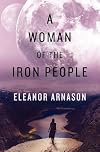
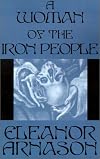
The cover sucks and has nothing to do with the story. That's the major flaw in this book. It's full of great characters, good dialogue, many interesting ideas and perspectives, and a plot that keeps moving at a steady pace. If you like storytelling and social exploration, this is the book for you. show less
The story is in third person and reads something like a science fiction/mythological Canterbury Tales. It's something of a first-contact novel, where a human expedition sends ethnologists down to this new planet to study the primitive native culture. And like many human traditional cultures, the natives are organized into tribes who have their own territories, with some movement and trade among their different communities. Like Ring of Swords, the sexes are geographically separated--the women live communally in villages, the men lead solitary existences in their individual territories located around the villages. During breeding season, the women head out into the hills (male territories). All social interactions are structured around gift giving (since they do not have the concept of money), and individual tribes are known (named) for particular gifts (or skills, if you will), such as working iron or copper or weaving reed baskets.
Much of the story is told from the native perspective, starting with Nia, the woman who gives the book its title. She's a blacksmith who had trouble in her home village and moved away. When Lu Lixia, a Hawai'ian of Chinese ethnicity, appears on the scene, Nia decides to travel with her. So begins the road trip. Along the way, they pick up some traveling companions and have various run-ins with other characters. The other two travelers who join them are Voice of the Waterfall--a very atypical native man and shaman--and Derek, another ethnographer and the only male agent who manages to remain on the planet, given that men aren't allowed into villages and strangers aren't welcome in male territories. Derek is a California cross between Native American and surfer dude--with dark skin and bleached blonde hair, and one of the few on the expedition with that rarest of all sinecures--academic tenure.
So the four travelers range across the landscape, sharing stories (and collecting more stories from people they meet), running into trouble (not hard to do when they're violating social norms by traveling together, leaving aside that two of them are clearly not native), and generally having an interesting time. Meanwhile, back on the human ship, controversy develops. Establish an outpost or a full-blown colony or just collect information?
Arnason has done a fabulous job of world-building. Moreover, I like the cultures she's developed here. I love that much of the communication is nonverbal, relying on a great many hand gestures to convey feelings and opinions. One of the problems the humans face is trying to explain human history to the natives who have no concept of war (another detail I love). And while she makes it very clear what the social norms are, in terms of gender roles, village dynamics, and the like, every character we meet violates those norms to some degree, so that in the end we feel like everyone has some experience being the "other," and every person has to find an individual solution to how to fit in or at least get along. And even someone like Nia, who is by the time of the story widely infamous for her "perversion" of shacking up with a man to raise a nuclear family together in the hills, still has quite conventional attitudes and can be appalled by someone else's quirk that doesn't fit societal mores. And she's done a great job showing the inherent diversity among individuals and groups, within the shared social and biological framework.
The other reason I like the story is the take on human history. My friend thinks this part of the story is satire, and whether it is or not, I think it's brilliant. Nearly all science fiction stories that posit human space travel from Earth conceive of either a single, unified planetary government in some sort of we're all one big happy human family utopia, or capitalism and democracy in space--lots of individual merchant types or a sort of international space colonization race--the American model in space (given that I'm reading mostly authors from the U.S., I guess this isn't too surprising). And many authors start from more distant future points that have little connection to our current geopolitical and socioeconomic situation. And of course, most humans in these science fiction scenarios are white, straight, etc.
Not in this book. Arnason appears to start from the geopolitical situation of the last 30 years or so. This human ship is a collaborative venture by a coalition of governments and other organizations. None of them have hegemony, and just about all of the continents and cultural groups are represented, from indigenous South Americans to Marxist Chinese to Russians and so on. Moreover, all of the supplies were donated by just about every organization and institution on earth, so the human expedition is like a giant ad campaign, with every dish, item of clothing, or first-aid bandage labeled with the name of that particular sponsor. There's a certain sly humor to this--when the fair-skinned Lixia is injured and applies the flesh-toned synthetic skin, it turns out to be extremely dark brown because it came from an African republic (I'm blanking on which one right now). Similarly, the characters remark how difficult it is to eliminate the sexism or racism inherent to the English language thanks to various idioms still in use.
So Arnason does a fabulous job creating diverse human and native characters, making this story very different from mainstream science fiction. She doesn't really address human religion at all, though she does explore native spiritual beliefs thanks to the shaman in the group, the shamenesses and others they meet, the various creation myths they encounter, and some of the trouble they run into.
Sexuality could be considered a bit of a weakness, and I suspect why Matt is less fond of this book. Derek and Lixia appear to be very straight, since they hook up and there's no indication either is bisexual. I don't think any other human has enough of a role to know their sexual orientation, because the human part of the plot is strictly political rather than personal. And the only evidence of homosexual activity among the natives is regarded with deep loathing and suspicion by Nia, the main native protagonist. When we first encounter her, she has a smithy outside of a village where some of the women go off into the forest together rather than seeking men during breeding season.
The cover sucks and has nothing to do with the story. That's the major flaw in this book. It's full of great characters, good dialogue, many interesting ideas and perspectives, and a plot that keeps moving at a steady pace. If you like storytelling and social exploration, this is the book for you. show less
This one sure did take a long time to read for such a short book.
On the one hand this book is fascinating. Anthropologists of a future Earth being dropped onto another planet with a similarly configured species of intelligent life. Sign me up for reading it, right?
But it wasn't just the explorations of the cultures of the aliens that got to me, it was the exploration through asides of a possible future Earth that's very different from the one we know now already.
I was fond of how thoroughly show more anthropologist Lixia is in this story. Not every form of fictional anthropologist does, most even break the ethical rules of the field, but Lixia is pretty close here. The story discusses ethics codes a lot, and really deals with the complications that can cause someone to break them, or cause them to be unusable on a situation. Straight up, this is one of the best depictions of anthropology I've seen in fiction.
The problem with the books is that it's dense enough in meaning to need a slow read, to need someone's attention on it and not half on other tasks.
So yeah, this gets a full five stars from me, but it's probably dense and boring to a lot of readers. show less
On the one hand this book is fascinating. Anthropologists of a future Earth being dropped onto another planet with a similarly configured species of intelligent life. Sign me up for reading it, right?
But it wasn't just the explorations of the cultures of the aliens that got to me, it was the exploration through asides of a possible future Earth that's very different from the one we know now already.
I was fond of how thoroughly show more anthropologist Lixia is in this story. Not every form of fictional anthropologist does, most even break the ethical rules of the field, but Lixia is pretty close here. The story discusses ethics codes a lot, and really deals with the complications that can cause someone to break them, or cause them to be unusable on a situation. Straight up, this is one of the best depictions of anthropology I've seen in fiction.
The problem with the books is that it's dense enough in meaning to need a slow read, to need someone's attention on it and not half on other tasks.
So yeah, this gets a full five stars from me, but it's probably dense and boring to a lot of readers. show less
Lists
Awards


You May Also Like


Associated Authors
Statistics
- Works
- 52
- Also by
- 64
- Members
- 1,474
- Popularity
- #17,428
- Rating
- 3.7
- Reviews
- 43
- ISBNs
- 34
- Languages
- 1
- Favorited
- 5
