
Robert Forsyth (1)
Author of JV 44: The Galland Circus
For other authors named Robert Forsyth, see the disambiguation page.
Series
Works by Robert Forsyth
Heinkel He162 VolksjAger: From Drawing Board to Destruction: The VolksjAger Spatz (2009) 32 copies, 2 reviews
Messerschmitt Me 264 Amerikabomber: The Luftwaffe's Lost Transatlantic Bomber (2006) 29 copies, 2 reviews
Luftwaffe Emergency Fighters: Blohm & Voss BV P.212 , Heinkel P.1087C, Junkers EF 128, Messerschmitt P.1101, Focke-Wulf Ta 183 and Henschel Hs P.135 (X-Planes) (2017) 18 copies, 1 review
Associated Works
Tagged
Common Knowledge
Members
Reviews
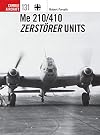
While it's not news to aviation enthusiasts that the Messerschmitt Me 210/410 was a major debacle for the German war effort in WWII, these planes usually get treated as an afterthought, and I hoped that Robert Forsyth would examine the relevant issues with more precision. In that respect I was quite satisfied.
One, as to why what seemed like whimsical changes were made to Woldemar Voight's original design, a return to which were needed to make the machine viable, it mostly came down to Willi show more Messerschmitt's obsession with lightness in pursuit of speed. The problem being that this obsession destroyed the handling of the new plane, besides making it too fragile for serious war service.
Two, as to what its pilots really thought about the machine that eventually entered service, that was a very mixed bag. Yes, the greater speed was appreciated, but it really wasn't enough to enable the 410 to escape the machines it couldn't fight. It also still lacked survivability as compared to the Bf 110. And there was the small matter that the 410 was harder to bail out of if worse came to worse as compared to the 110, which was likely to happen by 1943/44.
Finally, I've always wondered about the flat statement that the Hungarians rather liked their license-built Me 210s. It turns out that the 210s built in Hungary were based on the originally intended dimensions, not the prototype that sacrificed everything for speed.
So, just when one thinks that there is nothing new to say about the Luftwaffe in English, Robert Forsyth comes through again for his readership. show less
One, as to why what seemed like whimsical changes were made to Woldemar Voight's original design, a return to which were needed to make the machine viable, it mostly came down to Willi show more Messerschmitt's obsession with lightness in pursuit of speed. The problem being that this obsession destroyed the handling of the new plane, besides making it too fragile for serious war service.
Two, as to what its pilots really thought about the machine that eventually entered service, that was a very mixed bag. Yes, the greater speed was appreciated, but it really wasn't enough to enable the 410 to escape the machines it couldn't fight. It also still lacked survivability as compared to the Bf 110. And there was the small matter that the 410 was harder to bail out of if worse came to worse as compared to the 110, which was likely to happen by 1943/44.
Finally, I've always wondered about the flat statement that the Hungarians rather liked their license-built Me 210s. It turns out that the 210s built in Hungary were based on the originally intended dimensions, not the prototype that sacrificed everything for speed.
So, just when one thinks that there is nothing new to say about the Luftwaffe in English, Robert Forsyth comes through again for his readership. show less
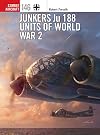
The Junkers Ju 188 might be the classic "what if" aircraft of the German bomber effort of World War II, as instead of flirting with the pie-in-the-sky "Bomber B" project, the Luftwaffe might have had this aircraft in service six months sooner when it might have made a difference. Or just bought enough time to allow Berlin the honor of receiving the first atomic bombing; some differences have no significance.
Be that as it may, Robert Forsyth probably can't write a bad book about German show more warplanes, and he ably leads one through the roundabout effort that saw the Ju 88B get redesignated as the Ju 188, and its use as a bomber, a strategic recon asset, a maritime strike machine, and its service as a transport for intelligence operatives. Forsyth even manages to squeeze in some astute observations about the Ju 388, an effort to stretch the basic design a little bit further in performance, but which turned out to be a stretch too far. show less
Be that as it may, Robert Forsyth probably can't write a bad book about German show more warplanes, and he ably leads one through the roundabout effort that saw the Ju 88B get redesignated as the Ju 188, and its use as a bomber, a strategic recon asset, a maritime strike machine, and its service as a transport for intelligence operatives. Forsyth even manages to squeeze in some astute observations about the Ju 388, an effort to stretch the basic design a little bit further in performance, but which turned out to be a stretch too far. show less
Heinkel He 162 - From Drawing Board to Destruction: The Volksjager - Classic Aviation Series No. 17 by Robert Forsyth
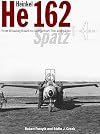
Another read from my personal Great Reserve Army of Books, I'm inclined to agree with the previous reviewer that the authors are probably overly impressed with this machine, as it really just represents another milepost on the Third Reich's final death march. To put it another way, an aircraft that is only suitable for a very experienced pilot (one British tester suggested about 2500 hours) is not a military solution. Still, it's technological misadventures such as the He 162 that help to show more maintain the fascination people have with Hitler's disastrous regime. show less
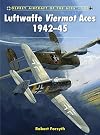
last Osprey Luftwaffe aces title ? ...probably yes, since much of the content of LUFTWAFFE VIERMOT ACES 1942-45 has been covered in detail in previous Osprey titles. That said there is some interesting new material for Osprey Aces fans here. This is the first Osprey Aces book to include details of less well known units such as JG 4 and the ZG heavy fighter Gruppen. Formed in 1942 to defend the petroleum fields of the Reich's Rumanian ally, JG 4 saw its first major combat action over the show more refineries of Ploesti during Operation Tidal Wave on 1 August 1943 - the cover illustration depicts 28-victory JG 4 ace Fw. Albert Palm in his `Yellow 6' downing a 44th BG B-24 during Tidal Wave on 1 August 1943. Refineries and oil were to take on a vital importance given the Reich's ever increasing fuel requirements the longer the conflict went on.
Robert Forsyth's well-written text reveals - perhaps surprisingly for a US readership - that the first Allied four-engine bomber raids mounted over Europe were the RAF's Stirling and Halifax bombers sent to attack Kriegsmarine battleships in the ports of Brittany, France, as early as July 1941 (see also Osprey Elite 'JG 2'). Although the first USAAF bomber missions, launched in mid-August 1942, were tentative affairs, the Luftwaffe would soon face the challenge of going into combat against ever-increasing numbers of heavily-armed B-17s and B-24s. In response to this growing threat, the Luftwaffe formed new fighter units and brought back battle-hardened units from other fronts to protect Germany's western borders - III./JG 3 was just one such Gruppe. Equipped with the Bf 109 G-6 mounting underwing cannon and led by Kommandeur Hauptmann Walter Dahl, III./JG 3 arrived from Russia and settled in at Munster on the western German border. Virtually their first action following their return to Germany after two years in Russia occurred on 17 August 1943 - the combined Schweinfurt Regensburg mission, the famous raid on the ball-bearing and Messerschmitt production plants. (see also Osprey 'Bf 109 aces of the Western Front') In total some 370 bombers set out on this first major USAAF daylight raid on Germany. The result was a disaster for the Americans - escorted only as far as the German border by P-47 Thunderbolts and RAF Spitfires, the Jagdgruppen launched wave after wave of attacks - some 60 B-17 fortresses were shot down, only some 135 managing to return to friendly territory undamaged ! ( As Regensburg was only 40 miles from the Czech border the 4th Bombardment Wing flew on to bases in North Africa ). Yet while the raid resulted in heavy losses for the fledging 8th Air Force bomber fleet, Schweinfurt-Regensburg proved to be an early high water mark in the Defence of the Reich. Aside from hastening the introduction of long-range US escort fighters, the Schweinfurt raid forced the German defenders to recognise their shortcomings in equipment and tactics. The American four engine bombers - Viermots in German jargon - operated close to the limits of the high altitude performance of the Bf 109 and Fw 190 fighters, and with their 40 metre wingspans the B-17s and B-24s were tough opponents, filling the Luftwaffe fighter's gun sights while they were still some way out of range and putting up a powerful defensive crossfire when in their combat 'boxes'. The favoured tactic of the German fighters was the head-on pass, yet with combined closing speeds of nearly 700 mph the conventional frontal attack was fraught with risk and required above average piloting skills. A firing pass from the rear was even riskier, leaving the attacking fighter exposed to the bomber boxes defensive fire power for a longer period.
The defenders tested any number of expedients as they sought ways of knocking down significant numbers of bombers in order to bring a halt to the offensive as detailed in this account. In August 1943 the WGr 21 was first introduced. This 21cm diameter air-to-air rocket was equipped with a time fuse and fired into the bomber formations to break up flying cohesion and the integrity of the 'boxes', thus exposing individual B-17s to fighter attack. The primary units toting these sorts of weapons were the heavy fighter or 'destroyer' Gruppen. Forsyth devotes a chapter to the heavy fighters of ZG 1, 26 and 76 including mini-bios of ZG aces such as Egon Albrecht and Peter Jenne -both of whom later converted onto single-seat fighters and were promptly KIA. Yet while German fighter armament was being upgraded to provide the punch to knock down the bombers, the impact on manoeuvrability meant that the attacking 109s, 190s, Bf 110s and Me 410s, now laden with heavy weapons, were increasingly to become prey for high performance and agile USAAF escort fighters. The Luftwaffe gradually lost air superiority over its own territory. Forsyth's text goes on to deal with other innovations introduced in German air defence - the Sturmgruppen (see also Osprey Elite 'The Sturmgruppen', 'Fw 190 aces of the Western Front'), units which adopted ramming as a combat tactic, and the first Luftwaffe jet units (see also this author's Osprey Elite 'JG 7' and 'JV 44').
During the summer and autumn of 1944 the American strategic daylight bombing offensive against the Reich was at its height. The air battles waged in the skies of Germany over this three-month period were some of the largest and most savage in the history of aerial warfare. By war's end, over 110 Luftwaffe pilots had claimed 10 or more Viermot kills. One Geschwader in particular was at the forefront of Reichs defence - JG 300. If there is to be another Luftwaffe aces title, then the publishers could certainly look at JG 300. For the first time in the Osprey Aces series aces, JG 300 aces such as Ernst Hirschfeld, Peter Jenne and Konrad Bauer are all covered in this volume, which is a fitting tribute to these less-well known Luftwaffe aces. And while this volume must be the last of Osprey's Luftwaffe aces titles, it loses two 'stars' for coverage of events already well detailed in other recent Osprey volumes. However, I would still rate this book as 'worth a purchase' for Luftwaffe 'fans' - the superlative and highly realistic profile artwork by Jim Laurier, including for the first time both port and starboard side views of the same aircraft- is worth the price of admission alone! show less
Robert Forsyth's well-written text reveals - perhaps surprisingly for a US readership - that the first Allied four-engine bomber raids mounted over Europe were the RAF's Stirling and Halifax bombers sent to attack Kriegsmarine battleships in the ports of Brittany, France, as early as July 1941 (see also Osprey Elite 'JG 2'). Although the first USAAF bomber missions, launched in mid-August 1942, were tentative affairs, the Luftwaffe would soon face the challenge of going into combat against ever-increasing numbers of heavily-armed B-17s and B-24s. In response to this growing threat, the Luftwaffe formed new fighter units and brought back battle-hardened units from other fronts to protect Germany's western borders - III./JG 3 was just one such Gruppe. Equipped with the Bf 109 G-6 mounting underwing cannon and led by Kommandeur Hauptmann Walter Dahl, III./JG 3 arrived from Russia and settled in at Munster on the western German border. Virtually their first action following their return to Germany after two years in Russia occurred on 17 August 1943 - the combined Schweinfurt Regensburg mission, the famous raid on the ball-bearing and Messerschmitt production plants. (see also Osprey 'Bf 109 aces of the Western Front') In total some 370 bombers set out on this first major USAAF daylight raid on Germany. The result was a disaster for the Americans - escorted only as far as the German border by P-47 Thunderbolts and RAF Spitfires, the Jagdgruppen launched wave after wave of attacks - some 60 B-17 fortresses were shot down, only some 135 managing to return to friendly territory undamaged ! ( As Regensburg was only 40 miles from the Czech border the 4th Bombardment Wing flew on to bases in North Africa ). Yet while the raid resulted in heavy losses for the fledging 8th Air Force bomber fleet, Schweinfurt-Regensburg proved to be an early high water mark in the Defence of the Reich. Aside from hastening the introduction of long-range US escort fighters, the Schweinfurt raid forced the German defenders to recognise their shortcomings in equipment and tactics. The American four engine bombers - Viermots in German jargon - operated close to the limits of the high altitude performance of the Bf 109 and Fw 190 fighters, and with their 40 metre wingspans the B-17s and B-24s were tough opponents, filling the Luftwaffe fighter's gun sights while they were still some way out of range and putting up a powerful defensive crossfire when in their combat 'boxes'. The favoured tactic of the German fighters was the head-on pass, yet with combined closing speeds of nearly 700 mph the conventional frontal attack was fraught with risk and required above average piloting skills. A firing pass from the rear was even riskier, leaving the attacking fighter exposed to the bomber boxes defensive fire power for a longer period.
The defenders tested any number of expedients as they sought ways of knocking down significant numbers of bombers in order to bring a halt to the offensive as detailed in this account. In August 1943 the WGr 21 was first introduced. This 21cm diameter air-to-air rocket was equipped with a time fuse and fired into the bomber formations to break up flying cohesion and the integrity of the 'boxes', thus exposing individual B-17s to fighter attack. The primary units toting these sorts of weapons were the heavy fighter or 'destroyer' Gruppen. Forsyth devotes a chapter to the heavy fighters of ZG 1, 26 and 76 including mini-bios of ZG aces such as Egon Albrecht and Peter Jenne -both of whom later converted onto single-seat fighters and were promptly KIA. Yet while German fighter armament was being upgraded to provide the punch to knock down the bombers, the impact on manoeuvrability meant that the attacking 109s, 190s, Bf 110s and Me 410s, now laden with heavy weapons, were increasingly to become prey for high performance and agile USAAF escort fighters. The Luftwaffe gradually lost air superiority over its own territory. Forsyth's text goes on to deal with other innovations introduced in German air defence - the Sturmgruppen (see also Osprey Elite 'The Sturmgruppen', 'Fw 190 aces of the Western Front'), units which adopted ramming as a combat tactic, and the first Luftwaffe jet units (see also this author's Osprey Elite 'JG 7' and 'JV 44').
During the summer and autumn of 1944 the American strategic daylight bombing offensive against the Reich was at its height. The air battles waged in the skies of Germany over this three-month period were some of the largest and most savage in the history of aerial warfare. By war's end, over 110 Luftwaffe pilots had claimed 10 or more Viermot kills. One Geschwader in particular was at the forefront of Reichs defence - JG 300. If there is to be another Luftwaffe aces title, then the publishers could certainly look at JG 300. For the first time in the Osprey Aces series aces, JG 300 aces such as Ernst Hirschfeld, Peter Jenne and Konrad Bauer are all covered in this volume, which is a fitting tribute to these less-well known Luftwaffe aces. And while this volume must be the last of Osprey's Luftwaffe aces titles, it loses two 'stars' for coverage of events already well detailed in other recent Osprey volumes. However, I would still rate this book as 'worth a purchase' for Luftwaffe 'fans' - the superlative and highly realistic profile artwork by Jim Laurier, including for the first time both port and starboard side views of the same aircraft- is worth the price of admission alone! show less
You May Also Like


Associated Authors
Statistics
- Works
- 43
- Also by
- 2
- Members
- 846
- Popularity
- #30,226
- Rating
- 4.1
- Reviews
- 19
- ISBNs
- 91