
Ian Wilson (1) (1941–)
Author of Jesus: The Evidence
For other authors named Ian Wilson, see the disambiguation page.
About the Author
Born in London in 1941, Ian Wilson attended Emanuel School in London and Magdalen College in Oxford. After his schooling, Wilson pursued a career in business management. In 1973, he was invited to study the Shroud of Turin, a topic of interest very close to his heart. His work resulted in the show more best-seller The Turin Shroud, which was later translated into 10 languages. Wilson also co-scripted a critically-acclaimed television documentary on the subject, entitled The Silent Witness. This was followed by the best-selling book Jesus: The Evidence. Wilson is known for the investigative approach he takes in examining the evidence for life after death, stigmata, the biblical Exodus, the discovery of America, and the historical Shakespeare. Such was his approach in writing The Blood and the Shroud, which is the first detailed re-appraisal of the Shroud of Turin following the famous carbon dating. Wilson is married and has two sons. (Bowker Author Biography) show less
Works by Ian Wilson
The Blood and the Shroud: New Evidence That the World's Most Sacred Relic is Real (1998) 287 copies, 2 reviews
Before the Flood: The Biblical Flood as a Real Event and How It Changed the Course of Civilization (2001) 168 copies, 4 reviews
Shakespeare: The Evidence: Unlocking the Mysteries of the Man and His Work (1994) 127 copies, 2 reviews
Undiscovered: The Fascinating World of Undiscovered Places, Graves, Wrecks and Treasure (1987) 58 copies
Associated Works
The Folio Book of Historical Mysteries (2008) — Co-Author: Is the Turin Shroud a Fake?, some editions — 113 copies
Tagged
Common Knowledge
- Birthdate
- 1941
- Gender
- male
- Education
- University of Oxford (Magdalen College)
- Occupations
- author
- Short biography
- Wilson, Ian, 1941-
Author writes on religious and scientific books - Nationality
- UK
- Birthplace
- Clapham, London, England, UK
- Places of residence
- Bristol, Gloucestershire, England, UK
Brisbane, Queensland, Australia - Associated Place (for map)
- England, UK
Members
Reviews
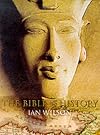
I tend to read non-fiction books a chapter a day, in conjunction with something lighter. So it says something tat I laid aside the novel and devoured this in three days. Unputdownable!
Enlivened with many maps, photos of ancient artefacts, I think my lasting impression was that the author considers the historicity of the Bible- when examined against archeology, other sources etc - in an extremely even-handed manner. Never fearing to point out apparent inconsistencies or events lacking show more independent evidence, the more sceptical reader would never feel he was being steam rollered into accepting the Scriptures. Indeed, I began by wondering if an author who seemed to dismiss Adam & Eve etc as a likely myth, could have much to say to me.
However I found the book FASCINATING - taking us from Eden, through the whole OT and up to Jesus. The author 's conclusion, that "the Bible..embodies real history, and for all prepared to listen to it, enshrines what are still the truest, the most important and the most influential life-guidance messages ever written." show less
Enlivened with many maps, photos of ancient artefacts, I think my lasting impression was that the author considers the historicity of the Bible- when examined against archeology, other sources etc - in an extremely even-handed manner. Never fearing to point out apparent inconsistencies or events lacking show more independent evidence, the more sceptical reader would never feel he was being steam rollered into accepting the Scriptures. Indeed, I began by wondering if an author who seemed to dismiss Adam & Eve etc as a likely myth, could have much to say to me.
However I found the book FASCINATING - taking us from Eden, through the whole OT and up to Jesus. The author 's conclusion, that "the Bible..embodies real history, and for all prepared to listen to it, enshrines what are still the truest, the most important and the most influential life-guidance messages ever written." show less
Lost World of the Kimberley: Extraordinary New Glimpses of Australia's Ice Age Ancestors by Ian Wilson

This was a slightly frustrating book. On the one hand, Ian Wilson introduces an extremely fascinating subject about rock art in the Kimberley, that seems to be about 20,000 years old. And it seems to be more sophisticated than later art. On the other hand he indulges in some totally wild speculation. He seems to have done the same with other books...eg the Shroud of Turin......which made me a bit suspect.
I was first introduced to the Bradshaw art when I was doing some work with the show more Kimberley Land Council (with/for) my daughter and we visited the most remote settlement in the Kimberley: Kalumbaru. Some of the local women were trying to sell us art works that they had painted themselves with Bradshaw-like figures. They muttered something about "before ice age". At that stage I had no knowledge and no interest in these figures but was curious about them. Interestingly..but not surprisingly, the local women clearly had no idea about what the original works of art meant either...they were just copying. Hence, Ian Wilson's book, for me, has opened up a wealth of information about the rock art in the Kimberley...but specifically the Bradshaw figures.
He very clearly is not a great fan of Graham Walsh who appears to be the living authority on the Bradshaw figures. Though there is some sympathy for Walsh's dedication to preserving the rock art by not disclosing the locations. In fact, I think probably the best chapter in the book is the last one that speaks of the importance of the Bradshaw art and the need to preserve it and the difficulty of preserving it from visitors, fires etc.
However, I was not terribly impressed by Ian Wilson's logic which runs along the lines:
1. The Bradshaw art shows people standing in a boat.
2. The boat is curved at both ends, therefore it is a sea going boat.
3. We have similar boats elsewhere in Asia and even in Egypt ...therefore it's possible that the Bradshaw people came here in sophisticated boats.
4. They were boomerang users as shown by the boomerangs they are holding and boomerangs are used elsewhere in the world. (The oldest boomerang is made from a mammoth tusk and was found in Poland....therefore maybe the technology for this came from the Bradshaw people after they got flooded out when the sea levels rose).
In fact, there seems to be too much speculative thinking which is not based on evidence.
Even his assumption that some (or many) of the figures are female is suspect because none of them seems to show female genetalia or breasts.
He also assumes that the drawn figures reflect the actual people. OK not an unreasonable assumption but they may actually be a stylised, ritualised form (such as Christian icons or the Greek concept of the ideal figure). He assume that because the figures are "willowy" that the people must be "willowy" but if a future civilisation finds the sculptures of Giacometti and then leaps to the conclusion that this is how the people actually were in real life....then they will be profoundly wrong. (It would help if there were some human bones or the right age to give some corroborative evidence).
Likewise, he assumes that the standing figures are standing in a boat... (Which would be quite unstable with the sizes shown). But they might be standing on a log, or a curved platform.....how can we be sure it is a sea going boat?.....Even a painting which showed a boat with some sea creatures around would help cement the interpretation.
And the Polish "boomerang"? Well yes, it's flat on one side and curved on the other but the longitudinal shape is just the natural curve of the tusk and the weight would be very high. Would it fly and/or return? I doubt it. Maybe it was just a "collector's item" and the tusk had been cut in halves.
The middle part of the book is full of rather wild claims or suggestions...along the lines of some of the Bradshaw paintings have dilly bags attached to their heads and there is a cult statue of Artemis of Ephesus that has round objects around her chest......could they have their origins in dilly bags carried by early Australians? Well yes. But they could equally have their origins in extra-terrestrial visitors. Or maybe they represent eggs as a symbol of fertility. This sort of wild speculation.... making associations between the Bradshaw art and anything else, anywhere in the world that might be similar ......seems quite specious and seriously undermines his narrative.
I'm also a little concerned about the dating that has been done for this ancient art. It seems clear that the wandjina figures have been superimposed over the Bradshaw art....hence the Bradshaw figures are older. The one bit of dating that seems ok is where the wasps nest on top of a Bradshaw was dated to 15,500 BC. But this is just one dating. Other measures seemed all over the place. I would have been happier if a lot of similar measurements could have been made (to the wasp nest measurement) and then been able to get some idea of variance and some corroboration.
Wilson has a bit of an odd writing style: eg., "Needing particularly to be appreciated amidst all this devastation is that the twin scourges of prolonged drought and...." I think the editor should have picked this up.
Despite the wild speculations and drawing fantastic links together there are some reasonable assumptions:
1. The Bradshaw art is very old...pre-dating the modern group of aborigines in the Kimberley
2. They were around when the sea levels were much lower and the land extended far out towards Indonesia
3. There are pictures of deer in the Bradshaw work and the Sambar deer are native to Indonesia.
4. Seems fairly clear that the aborigines had to get from Indonesia to Australia across the water. But not clear how they did it. Also clear that the highland people in PNG had to get from Indonesia (or Philippines) to PNG across deep water.
5. The Wallace line makes it clear that there never was a land bridge between the two areas ...but they did get very close.
5. Maybe there were some sort of boats, or rafts, or maybe they came floating on debris whipped up by a tsunami. But Ian Wilson's suggestion that they had boats and that's how they got to Australia is not totally unreasonable...though, in my estimation, unproven.
6. There seem to be linkages with similar art forms in Arnhem Land....and one might expect this.
So we seem to be faced with a curmudgeonly figure in the form of Graham Walsh who won't disclose locations and is very secretive about his work. He has formed associations with wealthy benefactors who have placed large segments of the art off limits...on the grounds that visitors will destroy it. (Maybe they are right). But it is clearly a public good and we really need to know more about it to understand Australian history better.
My impression is that it may just be possible to skill the Kalumbaru people (and others in other areas) up so that they can take care of the art and manage it.....though it's over a vast area and the track record with the bungled attempts to "refresh" the Wandjina art do not inspire confidence.
I was also amused by the comment by Billy King (Elder of West Kimberley) about Mowaljarlai..an aboriginal author claiming a connection with the Bradshaw art:
"Never even talk about Bradshaw paintings before, but when a little bit of money was attached to it. they come an tell a whole lot of stories about it. Well, that stories not true". Hard to know what to believe with oral tradition. I recall being quietly told that one of the senior aboriginal men knew nothing about the plants and trees of the area despite an assumption that he had detailed knowledge. And I also recall that a very senior level botanist was "blown away" by the in-depth knowledge that some of the women (in particular) had about the species in their area. Certainly, the injection of the European influence has changed things and maybe resulted in this loss of traditional knowledge.
But there is clearly a massive artistic resource in the Kimberley, (as well as spectacular scenery and coastline) which, if properly managed could sustain the indigenous communities and provide meaningful careers for young people for a long time into the future.
Not sure how to rate this book. Good from the perspective of raising awareness of the Bradshaws but very poor in respect of the wild speculations and drawing specious linkages with other parts of the world. Poor in terms of his apparent vendetta against Graham Walsh but good in terms of wanting to see the art protected. I give it 3 stars. show less
I was first introduced to the Bradshaw art when I was doing some work with the show more Kimberley Land Council (with/for) my daughter and we visited the most remote settlement in the Kimberley: Kalumbaru. Some of the local women were trying to sell us art works that they had painted themselves with Bradshaw-like figures. They muttered something about "before ice age". At that stage I had no knowledge and no interest in these figures but was curious about them. Interestingly..but not surprisingly, the local women clearly had no idea about what the original works of art meant either...they were just copying. Hence, Ian Wilson's book, for me, has opened up a wealth of information about the rock art in the Kimberley...but specifically the Bradshaw figures.
He very clearly is not a great fan of Graham Walsh who appears to be the living authority on the Bradshaw figures. Though there is some sympathy for Walsh's dedication to preserving the rock art by not disclosing the locations. In fact, I think probably the best chapter in the book is the last one that speaks of the importance of the Bradshaw art and the need to preserve it and the difficulty of preserving it from visitors, fires etc.
However, I was not terribly impressed by Ian Wilson's logic which runs along the lines:
1. The Bradshaw art shows people standing in a boat.
2. The boat is curved at both ends, therefore it is a sea going boat.
3. We have similar boats elsewhere in Asia and even in Egypt ...therefore it's possible that the Bradshaw people came here in sophisticated boats.
4. They were boomerang users as shown by the boomerangs they are holding and boomerangs are used elsewhere in the world. (The oldest boomerang is made from a mammoth tusk and was found in Poland....therefore maybe the technology for this came from the Bradshaw people after they got flooded out when the sea levels rose).
In fact, there seems to be too much speculative thinking which is not based on evidence.
Even his assumption that some (or many) of the figures are female is suspect because none of them seems to show female genetalia or breasts.
He also assumes that the drawn figures reflect the actual people. OK not an unreasonable assumption but they may actually be a stylised, ritualised form (such as Christian icons or the Greek concept of the ideal figure). He assume that because the figures are "willowy" that the people must be "willowy" but if a future civilisation finds the sculptures of Giacometti and then leaps to the conclusion that this is how the people actually were in real life....then they will be profoundly wrong. (It would help if there were some human bones or the right age to give some corroborative evidence).
Likewise, he assumes that the standing figures are standing in a boat... (Which would be quite unstable with the sizes shown). But they might be standing on a log, or a curved platform.....how can we be sure it is a sea going boat?.....Even a painting which showed a boat with some sea creatures around would help cement the interpretation.
And the Polish "boomerang"? Well yes, it's flat on one side and curved on the other but the longitudinal shape is just the natural curve of the tusk and the weight would be very high. Would it fly and/or return? I doubt it. Maybe it was just a "collector's item" and the tusk had been cut in halves.
The middle part of the book is full of rather wild claims or suggestions...along the lines of some of the Bradshaw paintings have dilly bags attached to their heads and there is a cult statue of Artemis of Ephesus that has round objects around her chest......could they have their origins in dilly bags carried by early Australians? Well yes. But they could equally have their origins in extra-terrestrial visitors. Or maybe they represent eggs as a symbol of fertility. This sort of wild speculation.... making associations between the Bradshaw art and anything else, anywhere in the world that might be similar ......seems quite specious and seriously undermines his narrative.
I'm also a little concerned about the dating that has been done for this ancient art. It seems clear that the wandjina figures have been superimposed over the Bradshaw art....hence the Bradshaw figures are older. The one bit of dating that seems ok is where the wasps nest on top of a Bradshaw was dated to 15,500 BC. But this is just one dating. Other measures seemed all over the place. I would have been happier if a lot of similar measurements could have been made (to the wasp nest measurement) and then been able to get some idea of variance and some corroboration.
Wilson has a bit of an odd writing style: eg., "Needing particularly to be appreciated amidst all this devastation is that the twin scourges of prolonged drought and...." I think the editor should have picked this up.
Despite the wild speculations and drawing fantastic links together there are some reasonable assumptions:
1. The Bradshaw art is very old...pre-dating the modern group of aborigines in the Kimberley
2. They were around when the sea levels were much lower and the land extended far out towards Indonesia
3. There are pictures of deer in the Bradshaw work and the Sambar deer are native to Indonesia.
4. Seems fairly clear that the aborigines had to get from Indonesia to Australia across the water. But not clear how they did it. Also clear that the highland people in PNG had to get from Indonesia (or Philippines) to PNG across deep water.
5. The Wallace line makes it clear that there never was a land bridge between the two areas ...but they did get very close.
5. Maybe there were some sort of boats, or rafts, or maybe they came floating on debris whipped up by a tsunami. But Ian Wilson's suggestion that they had boats and that's how they got to Australia is not totally unreasonable...though, in my estimation, unproven.
6. There seem to be linkages with similar art forms in Arnhem Land....and one might expect this.
So we seem to be faced with a curmudgeonly figure in the form of Graham Walsh who won't disclose locations and is very secretive about his work. He has formed associations with wealthy benefactors who have placed large segments of the art off limits...on the grounds that visitors will destroy it. (Maybe they are right). But it is clearly a public good and we really need to know more about it to understand Australian history better.
My impression is that it may just be possible to skill the Kalumbaru people (and others in other areas) up so that they can take care of the art and manage it.....though it's over a vast area and the track record with the bungled attempts to "refresh" the Wandjina art do not inspire confidence.
I was also amused by the comment by Billy King (Elder of West Kimberley) about Mowaljarlai..an aboriginal author claiming a connection with the Bradshaw art:
"Never even talk about Bradshaw paintings before, but when a little bit of money was attached to it. they come an tell a whole lot of stories about it. Well, that stories not true". Hard to know what to believe with oral tradition. I recall being quietly told that one of the senior aboriginal men knew nothing about the plants and trees of the area despite an assumption that he had detailed knowledge. And I also recall that a very senior level botanist was "blown away" by the in-depth knowledge that some of the women (in particular) had about the species in their area. Certainly, the injection of the European influence has changed things and maybe resulted in this loss of traditional knowledge.
But there is clearly a massive artistic resource in the Kimberley, (as well as spectacular scenery and coastline) which, if properly managed could sustain the indigenous communities and provide meaningful careers for young people for a long time into the future.
Not sure how to rate this book. Good from the perspective of raising awareness of the Bradshaws but very poor in respect of the wild speculations and drawing specious linkages with other parts of the world. Poor in terms of his apparent vendetta against Graham Walsh but good in terms of wanting to see the art protected. I give it 3 stars. show less

I have decided to read Ian Wilson's books on the Shroud of Turin in order, to see how his views have changed over time and how he has influenced the study of sindonolgy. Wilson's writing is easy-to-understand and his grasp of all the research (in a time before internet research) is astounding. And, here, in all its glory is Wilson's hypothesis that the Shroud of Turin was, in fact, the Mandylion (or Image of Edessa), that was removed from Edessa to Constantinople and then looted by the Latin show more Knights in 1204, where it ended up in France (via the Knights Templar) as the Shroud of Turin. His hypothesis makes good sense. His comparison of Jesus images after the Mandylion's display and comparisons to the face on the Shroud of Turin are compelling (the Vignon markings). It is a good case, and pretty much all books on the Shroud written after this must deal with Wilson's hypotheses. Knowing what is going to happen a few years after this book's 1978 publication, it is interesting to see Wilson praise Walter McCrone (pp. 202ff.), who would later be a Shroud skeptic, and hear Wilson enthusiastically recommend radiocarbon dating (pp. 203ff.), knowing Wilson will later discount the AD 1260–1390 carbon dating as mistaken. Endpaper map, black-and-white plates, appendices (the most interesting of which is the "Reconstructed Chronology of the Turin Shroud"), endnotes. Unfortunately, no bibliography and no index. show less

I have decided to read Ian Wilson's books on the Shroud of Turin in order, to see how his views have changed over time and how he has influenced the study of sindonolgy. This is the third book, 1998's Blood and the Shroud: New Evidence That the World's Most Sacred Relic is Real, after 1978's The Shroud of Turin: The Burial Cloth of Jesus Christ?, which set out his theory that the Shroud was the Mandylion or Image of Edessa, and 1986's The Evidence of the Shroud, which added some evidence, show more but was mainly a pictorial redo of his first book.
This is his first book after the Shroud's carbon dating in 1988, which dated it to AD 1260–1390. So, Wilson must address that. But, first, after an introduction, Wilson splits his book into four parts. Part 1 reassesses the image, showing that medically and historically it seems to conform to facts and appears genuine. Part 2 assesses the object as an object, looking at the weave, the image as artifact, and debris (mainly pollen) on the Shroud. Part 3 traces the Shroud backward past it's appearance in the 1300s: back to 1204 and a description of it in Constantinople, back to the sixth century as the Image of Edessa in Constantinople, and finally back to Edessa as Christ's possible burial shroud. Part 4 addresses the carbon dating. Wilson counters this in two ways: (1) if the dating is correct, how did a medieval forger do it? No modern person, using old materials, has found a way to make an image anything like or with the properties of the Shroud. If we can't do it, how did they do it? And, (2) how could the carbon dating be wrong? The main theories being that (a) new parts were cut off for testing; (b) the samples were contaminated by fire, water, or tons of hands, smoke, and detritus; and (c) "bio-plastic coating," a phenomenon of bacteria and such that has been known to muck with carbon dating before.
Add all this up and, in his conclusion, Wilson believes that the Shroud is still the genuine gravecloth of Christ, and proof of the resurrection too.
Wilson laughs off Pickett and Prince's idea that Leonardo da Vinci constructed the Shroud as a joke, even putting his own face on it. Wilson is still ecumenical to McCrone, though McCrone (and Joe Nickell) come off as jerks. Wilson adds some small facts and quotes that appears to buttress his argument that something Shroud-like was in Edessa and Constantinople. The argument Wilson made in 1978's The Shroud of Turin is reinforced.
Wilson writes well, and this is a great book. You needn't have read his previous works, either. This work has new images, with better-drawn maps, illustrations, etc. Several informative black-and-white plates. Notes and bibliography. An index this time. Again, like his first book, one of the best things about the book is the "Chronology of the Turin Shroud" put between the notes and the bibliography. Like his 1978 book, which had a "Reconstructed Chronology of the Turin Shroud," it is one of the best parts of the book. The "Chronology of the Turin Shroud" lays out all the evidence, all the manuscript references, all the quotes, and all the information, and all the suppositions in chronological format. It is well worth reading as a conclusion or even reading first as an appetizer to entice you to read the book. show less
This is his first book after the Shroud's carbon dating in 1988, which dated it to AD 1260–1390. So, Wilson must address that. But, first, after an introduction, Wilson splits his book into four parts. Part 1 reassesses the image, showing that medically and historically it seems to conform to facts and appears genuine. Part 2 assesses the object as an object, looking at the weave, the image as artifact, and debris (mainly pollen) on the Shroud. Part 3 traces the Shroud backward past it's appearance in the 1300s: back to 1204 and a description of it in Constantinople, back to the sixth century as the Image of Edessa in Constantinople, and finally back to Edessa as Christ's possible burial shroud. Part 4 addresses the carbon dating. Wilson counters this in two ways: (1) if the dating is correct, how did a medieval forger do it? No modern person, using old materials, has found a way to make an image anything like or with the properties of the Shroud. If we can't do it, how did they do it? And, (2) how could the carbon dating be wrong? The main theories being that (a) new parts were cut off for testing; (b) the samples were contaminated by fire, water, or tons of hands, smoke, and detritus; and (c) "bio-plastic coating," a phenomenon of bacteria and such that has been known to muck with carbon dating before.
Add all this up and, in his conclusion, Wilson believes that the Shroud is still the genuine gravecloth of Christ, and proof of the resurrection too.
Wilson laughs off Pickett and Prince's idea that Leonardo da Vinci constructed the Shroud as a joke, even putting his own face on it. Wilson is still ecumenical to McCrone, though McCrone (and Joe Nickell) come off as jerks. Wilson adds some small facts and quotes that appears to buttress his argument that something Shroud-like was in Edessa and Constantinople. The argument Wilson made in 1978's The Shroud of Turin is reinforced.
Wilson writes well, and this is a great book. You needn't have read his previous works, either. This work has new images, with better-drawn maps, illustrations, etc. Several informative black-and-white plates. Notes and bibliography. An index this time. Again, like his first book, one of the best things about the book is the "Chronology of the Turin Shroud" put between the notes and the bibliography. Like his 1978 book, which had a "Reconstructed Chronology of the Turin Shroud," it is one of the best parts of the book. The "Chronology of the Turin Shroud" lays out all the evidence, all the manuscript references, all the quotes, and all the information, and all the suppositions in chronological format. It is well worth reading as a conclusion or even reading first as an appetizer to entice you to read the book. show less
Awards


You May Also Like


Associated Authors
Statistics
- Works
- 32
- Also by
- 1
- Members
- 2,261
- Popularity
- #11,346
- Rating
- 3.5
- Reviews
- 25
- ISBNs
- 187
- Languages
- 10