
David King (1) (1943–2016)
Author of The Commissar Vanishes. The Falsification of Photographs and Art in the Soviet Union
For other authors named David King, see the disambiguation page.
About the Author
Senior Lecturer, University of Stirling. 050
Works by David King
The Commissar Vanishes. The Falsification of Photographs and Art in the Soviet Union (1997) 285 copies, 3 reviews
Red Star Over Russia: A Visual History of the Soviet Union from the Revolution to the Death of Stalin (2009) 128 copies, 2 reviews
Tagged
Common Knowledge
- Legal name
- King, David John
- Birthdate
- 1943-04-30
- Date of death
- 2016-05-11
- Gender
- male
- Education
- London School of Printing and Graphic Arts
- Occupations
- Collector
designer
photographer
graphic designer
design historian - Organizations
- Tate Modern Gallery
The Sunday Times (Magazine) - Nationality
- UK
- Birthplace
- Isleworth, Middlesex, England, UK
- Place of death
- London, England, UK
- Associated Place (for map)
- England, UK
Members
Reviews
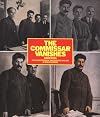
A haunting collection of photographs and paintings, most from between 1905-1953, that detail the literal obliteration of Stalin's political opponents and perceived enemies of the Communist Party.
Stalin, wishing to take on the mantle (and halo) of his predecessor, Lenin, mounted a two-pronged media campaign: he had photographs and paintings doctored to make it look as though he was closer to Lenin than he actually was (Lenin grew increasingly worried about Stalin's aggressive power grabs, show more but was felled by a stroke before he could do more than urge his colleagues to reign Stalin in); and he decreed it a crime against the State to possess any images of people -- officials and otherwise -- who had been "eliminated." Hence we see curious posed photographs, from author David King's extensive personal collection, published years or even months apart, heavily doctored to eliminate one or many subjects. Chillingly, as time progresses, these photos become less populated -- as though the subjects never existed.
One by one, the commissars...vanish. show less
Stalin, wishing to take on the mantle (and halo) of his predecessor, Lenin, mounted a two-pronged media campaign: he had photographs and paintings doctored to make it look as though he was closer to Lenin than he actually was (Lenin grew increasingly worried about Stalin's aggressive power grabs, show more but was felled by a stroke before he could do more than urge his colleagues to reign Stalin in); and he decreed it a crime against the State to possess any images of people -- officials and otherwise -- who had been "eliminated." Hence we see curious posed photographs, from author David King's extensive personal collection, published years or even months apart, heavily doctored to eliminate one or many subjects. Chillingly, as time progresses, these photos become less populated -- as though the subjects never existed.
One by one, the commissars...vanish. show less
John Heartfield. Laughter is a devastating weapon ; his original photomontages and printed matter from Akademie der Künste Berlin and the David King Collection at Tate Modern by David King

Helmut Herzfeld was born to an activist couple in 1891. His mother was a textile worker agitating for unionisation when she met his father, a writer with anarchist sympathies. Helmut was the first of four children but the family was so poor the parents eventually abandoned them to public charity. They never reunited but oddly enough, Helmut's first paying job involved designing the look of a book of his father's selected works.
In 1916 Helmut Herzfeld showed his colours and mad courage, when show more in the midst of a war as jingoistic as the WWI he formally changed his name to "John Heartfield", in order, as he said, to protest the nationalism and anti-British sentiment of his country. The trigger was the infamous Gott strafe England, a refrain from a song that sounded from every corner in those days.
Two years later he and his younger brother Wieland joined the KPD, receiving their cards from no other than Rosa Luxemburg herself. The Heartfield/Herzfeld brothers started a leftist publishing house, the legendary Malik Verlag, famous for its George Grosz portfolios and John Heartfield's pioneering cover designs, including the wraparound photo cover and montages.
Heartfield also contributed over eight years 240 full-page montages to the Communist illustrated weekly Arbeiter Illustrierte Zeitung (AIZ), just a prodigious amount of work, especially considering his unparalleled pains-taking: every detail could take many hours if not days of work to perfect, and everything had to be real. For one photo of a man in a barrel of mustard, that much mustard had to be found to fill the barrel.
Unsurprisingly, when the Nazis came to power Heartfield fled, at first to Prague, and when the Nazis caught up with him there too (he was number five on their list of prey), in December 1938 he managed to get to London.
But the Brits didn't care for German Communists much more than the Nazis did, and he was interned as an "enemy alien" in conditions so terrible that his health was broken in six weeks and he was released to be hospitalised.
He and his third wife, another German refugee he met in England, would spend about twelve years there, but eventually go to the DDR (where Brecht, among others, helped them settle). The entire time they were in England, even in peacetime, they were under surveillance by the MI5, the MI6, and the civil police--their phone tapped, the mail opened, interviews staged out of the blue etc.
Heartfield was small and fierce. In 1929 he saw a newsreel of the massacre of the workers that May Day parade. Some Nazi ape triple his size was guffawing the whole time. You swine, shouted Heartfield, you swine! The ape waited for him at the exit and asked him what did he call him. You are a swine, a swine, a swine... Heartfield kept going as the other one was pummeling him into a bloody mess. If the crowd hadn't intervened, Heartfield might have died then and there.
In Prague he got a small tortoise and carried it everywhere with him because he worried that otherwise the tortoise would be lonely. This was the man who as an eight year old took care of his siblings for days until all the food had gone and he then had to walk from the cottage in the mountain to the village in the valley to ask for help... and you bet that he worried, about the six year old Wieland and the two babies. show less
In 1916 Helmut Herzfeld showed his colours and mad courage, when show more in the midst of a war as jingoistic as the WWI he formally changed his name to "John Heartfield", in order, as he said, to protest the nationalism and anti-British sentiment of his country. The trigger was the infamous Gott strafe England, a refrain from a song that sounded from every corner in those days.
Two years later he and his younger brother Wieland joined the KPD, receiving their cards from no other than Rosa Luxemburg herself. The Heartfield/Herzfeld brothers started a leftist publishing house, the legendary Malik Verlag, famous for its George Grosz portfolios and John Heartfield's pioneering cover designs, including the wraparound photo cover and montages.
Heartfield also contributed over eight years 240 full-page montages to the Communist illustrated weekly Arbeiter Illustrierte Zeitung (AIZ), just a prodigious amount of work, especially considering his unparalleled pains-taking: every detail could take many hours if not days of work to perfect, and everything had to be real. For one photo of a man in a barrel of mustard, that much mustard had to be found to fill the barrel.
Unsurprisingly, when the Nazis came to power Heartfield fled, at first to Prague, and when the Nazis caught up with him there too (he was number five on their list of prey), in December 1938 he managed to get to London.
But the Brits didn't care for German Communists much more than the Nazis did, and he was interned as an "enemy alien" in conditions so terrible that his health was broken in six weeks and he was released to be hospitalised.
He and his third wife, another German refugee he met in England, would spend about twelve years there, but eventually go to the DDR (where Brecht, among others, helped them settle). The entire time they were in England, even in peacetime, they were under surveillance by the MI5, the MI6, and the civil police--their phone tapped, the mail opened, interviews staged out of the blue etc.
Heartfield was small and fierce. In 1929 he saw a newsreel of the massacre of the workers that May Day parade. Some Nazi ape triple his size was guffawing the whole time. You swine, shouted Heartfield, you swine! The ape waited for him at the exit and asked him what did he call him. You are a swine, a swine, a swine... Heartfield kept going as the other one was pummeling him into a bloody mess. If the crowd hadn't intervened, Heartfield might have died then and there.
In Prague he got a small tortoise and carried it everywhere with him because he worried that otherwise the tortoise would be lonely. This was the man who as an eight year old took care of his siblings for days until all the food had gone and he then had to walk from the cottage in the mountain to the village in the valley to ask for help... and you bet that he worried, about the six year old Wieland and the two babies. show less
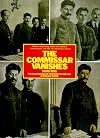
Recently, I've seen a lot of people on social media whining about history being erased. They freak out when a statue or the Confederate flag is removed from a place of prominence. They're upset when teachers try to bring up the history of marginalized peoples that wasn't in the textbooks from which they learned history as a child, as if those books were engraved in stone or as sacred as the Bible.
Sorry, but I don't see erasure. I see an engagement with history when a society grapples with show more what they value and how their story has been told. If social media snowflakes want to see what erasure really means, they need to leaf through this book and watch a dictator literally having his foes -- real and imagined -- removed from the historical record with black ink and airbrushes. They need to see people so scared of their government, they pull their own books off the shelves in their own homes and start scratching out, blotting out, and cutting out words and images that might cause them to get arrested and summarily shot.
The book itself is fascinating in the best coffee table book manner, as you flip pages and watch a photograph of four men get cropped down to three men, then airbrushed to two men, and finally end up as a solitary portrait of Stalin. It's numbing to read again and again how the disappearing men were arrested and shot, arrested and shot, arrested and shot.
So there is a lot of repetition and the dry text is cursory and assumes knowledge about the Russian Revolution and the reign of Stalin and his Great Purge of the 1930s. But the pictures pretty much tell the story. show less
Sorry, but I don't see erasure. I see an engagement with history when a society grapples with show more what they value and how their story has been told. If social media snowflakes want to see what erasure really means, they need to leaf through this book and watch a dictator literally having his foes -- real and imagined -- removed from the historical record with black ink and airbrushes. They need to see people so scared of their government, they pull their own books off the shelves in their own homes and start scratching out, blotting out, and cutting out words and images that might cause them to get arrested and summarily shot.
The book itself is fascinating in the best coffee table book manner, as you flip pages and watch a photograph of four men get cropped down to three men, then airbrushed to two men, and finally end up as a solitary portrait of Stalin. It's numbing to read again and again how the disappearing men were arrested and shot, arrested and shot, arrested and shot.
So there is a lot of repetition and the dry text is cursory and assumes knowledge about the Russian Revolution and the reign of Stalin and his Great Purge of the 1930s. But the pictures pretty much tell the story. show less
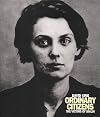
These portrait-photographs (“mugshots” as King calls them: what an ugly word!) from the Central Archives of the KGB are published here for the first time in the West. They were taken by Stalin’s secret police during the Great Purge in the 1930s. The images are reproduced here enlarged from small passport-size photographs pasted onto cardboard.
These are the most extraordinary portrait-photographs I ever encountered. These faces, these people from all walks of live are united by the show more terrible knowledge that they are accused of trumped-up charges and will be sentenced to die. Taken by natural light, the faces are expressive.
David King writes in his introduction:
“The faces are haunting, the expressions often heart-breaking. They stare straight back into the lens with defiance, disdain fear or sometimes just a terrible sadness. There is fury on the faces of one or two. Some show signs of torture. Some look mad. Most shockingly, a few attempt the hint of a smile.”
(X-11) ***** show less
These are the most extraordinary portrait-photographs I ever encountered. These faces, these people from all walks of live are united by the show more terrible knowledge that they are accused of trumped-up charges and will be sentenced to die. Taken by natural light, the faces are expressive.
David King writes in his introduction:
“The faces are haunting, the expressions often heart-breaking. They stare straight back into the lens with defiance, disdain fear or sometimes just a terrible sadness. There is fury on the faces of one or two. Some show signs of torture. Some look mad. Most shockingly, a few attempt the hint of a smile.”
(X-11) ***** show less
Lists
99 (1)
Awards
You May Also Like


Associated Authors
Statistics
- Works
- 10
- Members
- 595
- Popularity
- #42,222
- Rating
- 4.5
- Reviews
- 8
- ISBNs
- 200
- Languages
- 13