
William J. Palmer (1) (1943–)
Author of The Detective and Mr. Dickens: Being an Account of the Macbeth Murders and the Strange Events Surrounding Them
For other authors named William J. Palmer, see the disambiguation page.
About the Author
William J. Palmer teaches English at Purdue University in West Lafayette, Indiana.
Series
Works by William J. Palmer
The Detective and Mr. Dickens: Being an Account of the Macbeth Murders and the Strange Events Surrounding Them (1990) 167 copies, 6 reviews
The Highwayman and Mr. Dickens: An Account of the Strange Events of the Medusa Murders: A Secret Victorian Journal, Attributed to Wilkie Collins (1992) 109 copies, 2 reviews
Tagged
Common Knowledge
Members
Reviews
The Detective and Mr. Dickens: Being an Account of the Macbeth Murders and the Strange Events Surrounding Them by William J. Palmer
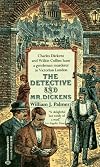
This one started strong before devolving into a cringy exercise in silly melodrama and gratuitous smut.
The premise: Dickens and his pal/protégé Wilkie Collins find themselves involved in solving the murder of a gentleman – a murder witnessed by a pretty Irish prostitute who saw the victim stabbed by a group of fellow gentleman and rolled into the Thames.
Palmer does a creditable job of casting Dickens as a detective. As you read this, you find yourself buying into the idea that Dickens’ show more consuming curiosity about London's underword and his insatiable sociability might legitimately have motivated him to become involved in on-going sensational crimes and investigations. Alas, his characterization of Collins isn’t nearly as satisfying: in Palmer’s hands, Wilkie comes off as a bland sort of Watson character rather than a personality in his own right, an author who would eventually come to rival Dickens' brilliance and ingenuity. (I'm not even going to get into the irony of Palmer's casting Dickens as the detective when it's Collins that ends up writing literature's first detective novel.)
It's once they’ve figured out who the murderer is - a business dispatched by the end of the first half of the novel - that things start to unravel.
The book swiftly devolves into a sort of bawdy “Perils of Pauline” melodrama in which Dickens and Collins, assisted by a cooperative police detective and a roguish highwayman-with-a-heart-of-gold, rush around the city in an attempt to protect a virginal waif from the sexual villainy of a pack of depraved aristocrats, which in turn provides a pretext all sorts of gratuitous sexual content: passages of graphic text from the journals of the aristocrats, naughty prostitutes doing what naughty prostitutes do, and four pages – four WHOLE pages – dedicated to describing a girl fight between two whores, complete with breathless descriptions of bouncing boobies and uplifted skirts. I’d love to understand what led Palmer to believe that readers interested in a literary mystery would be entertained by such unimaginative, purposeless smut.
I enjoyed parts of this. Palmer gets the period detail right, and unlike most novels of the “famous person as detective” genre, his Dickens hits as historically accurate and psychologically credible. Palmer's clearly done more than just skim the many Dickens bios currently in print. But the pulpy, preposterous denoument really, really didn’t work for me, and prevents me from recommending this to readers who, like me, were hoping for an engrossing historical mystery with a dash of literary seasoning. show less
The premise: Dickens and his pal/protégé Wilkie Collins find themselves involved in solving the murder of a gentleman – a murder witnessed by a pretty Irish prostitute who saw the victim stabbed by a group of fellow gentleman and rolled into the Thames.
Palmer does a creditable job of casting Dickens as a detective. As you read this, you find yourself buying into the idea that Dickens’ show more consuming curiosity about London's underword and his insatiable sociability might legitimately have motivated him to become involved in on-going sensational crimes and investigations. Alas, his characterization of Collins isn’t nearly as satisfying: in Palmer’s hands, Wilkie comes off as a bland sort of Watson character rather than a personality in his own right, an author who would eventually come to rival Dickens' brilliance and ingenuity. (I'm not even going to get into the irony of Palmer's casting Dickens as the detective when it's Collins that ends up writing literature's first detective novel.)
It's once they’ve figured out who the murderer is - a business dispatched by the end of the first half of the novel - that things start to unravel.
The book swiftly devolves into a sort of bawdy “Perils of Pauline” melodrama in which Dickens and Collins, assisted by a cooperative police detective and a roguish highwayman-with-a-heart-of-gold, rush around the city in an attempt to protect a virginal waif from the sexual villainy of a pack of depraved aristocrats, which in turn provides a pretext all sorts of gratuitous sexual content: passages of graphic text from the journals of the aristocrats, naughty prostitutes doing what naughty prostitutes do, and four pages – four WHOLE pages – dedicated to describing a girl fight between two whores, complete with breathless descriptions of bouncing boobies and uplifted skirts. I’d love to understand what led Palmer to believe that readers interested in a literary mystery would be entertained by such unimaginative, purposeless smut.
I enjoyed parts of this. Palmer gets the period detail right, and unlike most novels of the “famous person as detective” genre, his Dickens hits as historically accurate and psychologically credible. Palmer's clearly done more than just skim the many Dickens bios currently in print. But the pulpy, preposterous denoument really, really didn’t work for me, and prevents me from recommending this to readers who, like me, were hoping for an engrossing historical mystery with a dash of literary seasoning. show less

Certainly for more sexually explicit than one would imagine a book set in that time period, it is a cracking good story with many real people and events thrown in for good measure.
Palmer does tend to liberally use sensationalism for its own sake, and not to move the story along. My guess is that he wanted to illustrate that sexual depravity wasn't anything new. That even supposed upper class people were just as apt to be involved in perversion as anyone else.
Palmer's characters, as depicted show more in the book, were interesting and the use of the First Person narrative makes it seem like we are actually witnessing the same events as Wilkie, the teller of the tale.
Worth a read, whether you are a fan of Dickens or not. show less
Palmer does tend to liberally use sensationalism for its own sake, and not to move the story along. My guess is that he wanted to illustrate that sexual depravity wasn't anything new. That even supposed upper class people were just as apt to be involved in perversion as anyone else.
Palmer's characters, as depicted show more in the book, were interesting and the use of the First Person narrative makes it seem like we are actually witnessing the same events as Wilkie, the teller of the tale.
Worth a read, whether you are a fan of Dickens or not. show less
These 'Secret journals' by Wilkie Collins are incredible. They provide insight into the lives of Dickens and Collins that is not covered in any of the numerous biographies on the two Victorian authors. But, maybe more importantly, they show a side of Victorian society that we rarely get to see. The true character of the Victorian underworld and the beginnings of the art of detection, which is obviously, still a major fascination in our society. These are a must read!!!
The Detective and Mr. Dickens: Being an Account of the Macbeth Murders and the Strange Events Surrounding Them by William J. Palmer

A secret diary of Wilkie Collins about his early days with Charles Dickens in London, this novel was smart about the era with its characters, and even managed to introduce Dickens' late life love, Ellen Ternan, in mysterious circumstances. The subtitle about the Macbeth murders is terribly misleading, as the play and its characters are non-entities in the plot. I did find Palmer's dialect writing annoying and sometimes distracting to the plot. As a scholar in the era, I'm sure he was show more correct, but an occasional "cheat" for readers would have helped the story move along. This story did make innovative use of a real-life man who is often abused by other writers, and I found the mystery satisfying. show less
You May Also Like


Statistics
- Works
- 9
- Members
- 381
- Popularity
- #63,386
- Rating
- 3.2
- Reviews
- 12
- ISBNs
- 35
- Languages
- 1