
Andrew Cohen (1)
Author of While Canada Slept: How We Lost Our Place in the World
For other authors named Andrew Cohen, see the disambiguation page.
About the Author
Andrew Cohen is an a ward-winning journalist whom the New York Times has called one of "Canada's most distinguished authors." A native of Montreal, he attended Choate-Rosemary Hall, McGill University, and the University of Cambridge. Among his host-selling hooks is While Canada Slept: How We Lost show more Our Place in the World, a finalist for the Governor General's Literary Award for Non-fiction. Cohen has won two National Newspaper Awards, three National Magazine Awards, and received the Queen's Diamond jubilee Medal. He has written for UPI, Time, and the Globe and Mail from Washington, as well as London, Berlin, Toronto, and Ottawa, where he teaches journalism at Carleton University and writes a syndicated column for the Ouawa Citizen. show less
Image credit: Andrew Cohen
Works by Andrew Cohen
Tagged
Common Knowledge
- Birthdate
- 20th century
- Gender
- male
- Education
- McGill University (B.A.)
Carleton University (MA) - Occupations
- journalist
columnist
writer
professor - Organizations
- Carleton University
University of Cambridge
The Ottawa Citizen
Time
United Press International
The Financial Post (show all 8)
Saturday Night
The Globe and Mail - Nationality
- Canada
- Birthplace
- Montreal, Quebec, Canada
- Places of residence
- Ottawa, Ontario, Canada
Montréal, Québec, Canada
Washington, D.C., USA - Associated Place (for map)
- Canada
Members
Reviews

Although many books have been written about JFK, this one adds a unique perspective by focusing on two critical days in his presidency -- two days where the President made major speeches on the arms race and on civil rights that challenged the way the world viewed these issues and, ultimately, led to real changes in America.
The author has done an amazing amount of research. His enthusiasm for his subject really comes through -- not that this is hagiography -- just that the author obviously show more cares deeply about this time in history. He is an excellent writer, and the detailed description of the two days (June 10-11, 1963) that are the subject of the book made me feel as if I were there. Mr. Cohen captured the mood of the early 1960s so well.
I knew almost nothing about Bobby Kennedy, and I found the information about how the brothers worked together, and how Bobby interacted with his children very interesting.
My only regret: I wish there'd been photographs.
Reading this book, knowing that JFK would be murdered within 6 months, made the whole story so poignant...like reading a novel but with a harder punch because it's true. show less
The author has done an amazing amount of research. His enthusiasm for his subject really comes through -- not that this is hagiography -- just that the author obviously show more cares deeply about this time in history. He is an excellent writer, and the detailed description of the two days (June 10-11, 1963) that are the subject of the book made me feel as if I were there. Mr. Cohen captured the mood of the early 1960s so well.
I knew almost nothing about Bobby Kennedy, and I found the information about how the brothers worked together, and how Bobby interacted with his children very interesting.
My only regret: I wish there'd been photographs.
Reading this book, knowing that JFK would be murdered within 6 months, made the whole story so poignant...like reading a novel but with a harder punch because it's true. show less
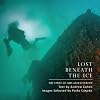
The story of the rediscovery of the wreck of HMS Investigator by Parks Canada in the frozen waters of Mercy Bay in July of 2010 captured the imagination of the world, and evoked the 'heroic age' of Arctic exploration in a way no other recent event has managed. In part, this is due to the way in which a ship, even in its watery grave, evokes the endeavor of exploration with far more gravity and magnificence than any recent discoveries on land have done (last summer's toothbrush, found at show more Erebus Bay, comes to mind). But it's also due to the fact that the Parks Canada team was uniquely positioned to undertake a thorough on-site survey of the wreck, and to transmit the news and images of their discovery via the Internet and the news media almost as they were happening. And, it should be mentioned, the chief reason that the archaeologists on the site had the kind of support and media access that they did was largely due to the predilection of the then and present Government of Canada for the symbolic significance of the Franklin expedition and those who searched for it, particularly in relation to the issue of Arctic sovereignty. This is not the place to debate the wisdom of that policy -- historians and the public must be grateful for the commitment of any kind of support to archaeological research of this kind -- but still, there is a certain irony surrounding the fact that, outside of Ryan Harris's team who features in this book, Parks Canada's archaeological staff has suffered from significant losses in funding and personnel.
That said, this is a glorious book, primarily for its beautifully-printed illustrative materials, which include many of the paintings of Lieutenant Gurney Cresswell, which until now were not readily available together, nor reproduced at such a generous scale. The original Admiralty schematics for HMS Investigator herself are also reproduced as double-page illustrations, along with images of some of the letters sent conveying the news of McClure's eventual rescue, and other materials of the day. The modern photographs, although they don't reveal new findings, are reproduced with excellent resolution, and possess a drama in the hand that's missing when the same images are viewed upon a screen. The overall quality of production is very high, and there's no other book of its kind that so dramatically evokes the hazards of Arctic navigation in the nineteenth century. I certainly can't imagine a more welcome holiday gift for any exploration buffs on one's list.
The text, alas, is somewhat less enlightening; while Andrew Cohen has exercised considerable skill in briefly recounting the voyage, the ship's imprisonment in the ice, and eventual abandonment, his lurid patches of language sometimes undercut the story's own intrinsic drama. He's more journalist than historian, which is fine insofar as the book quickly acquaints the reader, in broad strokes, with the history of Arctic exploration in Britain, the reasons the Franklin expedition was dispatched, and McClure's own role in the search for its missing ships. Those deep in the throes of what I like to call 'Franklinomania' will find nothing new, but then, the text isn't really meant for them. They will, however, find the illustrations and photographs as -- or perhaps even more -- valuable than the proverbial thousand words. show less
That said, this is a glorious book, primarily for its beautifully-printed illustrative materials, which include many of the paintings of Lieutenant Gurney Cresswell, which until now were not readily available together, nor reproduced at such a generous scale. The original Admiralty schematics for HMS Investigator herself are also reproduced as double-page illustrations, along with images of some of the letters sent conveying the news of McClure's eventual rescue, and other materials of the day. The modern photographs, although they don't reveal new findings, are reproduced with excellent resolution, and possess a drama in the hand that's missing when the same images are viewed upon a screen. The overall quality of production is very high, and there's no other book of its kind that so dramatically evokes the hazards of Arctic navigation in the nineteenth century. I certainly can't imagine a more welcome holiday gift for any exploration buffs on one's list.
The text, alas, is somewhat less enlightening; while Andrew Cohen has exercised considerable skill in briefly recounting the voyage, the ship's imprisonment in the ice, and eventual abandonment, his lurid patches of language sometimes undercut the story's own intrinsic drama. He's more journalist than historian, which is fine insofar as the book quickly acquaints the reader, in broad strokes, with the history of Arctic exploration in Britain, the reasons the Franklin expedition was dispatched, and McClure's own role in the search for its missing ships. Those deep in the throes of what I like to call 'Franklinomania' will find nothing new, but then, the text isn't really meant for them. They will, however, find the illustrations and photographs as -- or perhaps even more -- valuable than the proverbial thousand words. show less
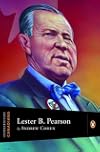
One of the titles in Penguin's Extraordinary Canadians series, this brief portrait offers a useful introduction to Canada's fourteenth prime minister. At under 200 pages, there's not a lot of detail. But Andrew Cohen's engaging account makes it very clear that even had Pearson not become prime minister, his earlier diplomatic achievements would have placed him high on any list of significant Canadians. Add to those the accomplishments of his five years in office and he becomes perhaps the show more most important Canadian of the twentieth century.
For those who lived through the daily chaos of Pearson's two minority governments, this book provides worthwhile perspective. Those for whom the sixties are only history will find it an excellent introduction to an outstanding man. show less
For those who lived through the daily chaos of Pearson's two minority governments, this book provides worthwhile perspective. Those for whom the sixties are only history will find it an excellent introduction to an outstanding man. show less
Lost Beneath the Ice: The Story of HMS Investigator by Andrew Cohen is a short history of the men of the HMS Investigator and their three winters stranded in the Arctic. Cohen is a professor of journalism and international affairs at Carleton University. He writes a syndicated column for Postmedia Newspapers and is a regular commentator on television. Cohen's previous books are While Canada Slept and Unfinished Canada.
Lost Beneath the Ice is separated into four sections. The first section show more is the story of HMS Investigator voyage into the Arctic, its beaching, and discovery of the Northwest Passage. The mid-nineteenth century was a time of adventure. England, after the defeat of Napoleon, needed something to do with its large navy in peacetime. One use of the navy was exploration. The Arctic offered a promise of a shortcut to the Indies by means of the long sought after Northwest Passage. There was profit to be found in a shorter route and avoiding the long and dangerous trip around South America. There was the sense of adventure (and money) in the exploration, and sometimes that competition and promises of glory lead to some bad decisions. One of those bad decisions was beaching for the winter in Mercy Bay. The men would eventually spend three winters in the Arctic struggling to survive.
The second part of the book deals with the project locate the wreck of the Investigator in 2010 by Parks Canada. The second half of the book are pictures. The first part are drawings of the the ship, the captain's notes, and some remarkable paintings. The final part of the book is pictures from the Parks Canada search for the Investigator. There are photographs of the ship still underwater, team members, and relics left from the ship and men.
Lost Beneath the Ice is a short history and the report of the recent discovery of the HMS Investigator. The illustrations make up an important part of the book both the historical and recent photographs. The history is very concise, but very good. It does make me wonder what the men of the HMS Investigator thought about their discovery of the Northwest Passage and the realization that is was ultimately useless for navigation. Three long winters in isolation, on limited rations, waiting for a thaw that never came...I guess something practical would have made most of the men happy-- to make it home alive. A very good read on a very limited topic. show less
Lost Beneath the Ice is separated into four sections. The first section show more is the story of HMS Investigator voyage into the Arctic, its beaching, and discovery of the Northwest Passage. The mid-nineteenth century was a time of adventure. England, after the defeat of Napoleon, needed something to do with its large navy in peacetime. One use of the navy was exploration. The Arctic offered a promise of a shortcut to the Indies by means of the long sought after Northwest Passage. There was profit to be found in a shorter route and avoiding the long and dangerous trip around South America. There was the sense of adventure (and money) in the exploration, and sometimes that competition and promises of glory lead to some bad decisions. One of those bad decisions was beaching for the winter in Mercy Bay. The men would eventually spend three winters in the Arctic struggling to survive.
The second part of the book deals with the project locate the wreck of the Investigator in 2010 by Parks Canada. The second half of the book are pictures. The first part are drawings of the the ship, the captain's notes, and some remarkable paintings. The final part of the book is pictures from the Parks Canada search for the Investigator. There are photographs of the ship still underwater, team members, and relics left from the ship and men.
Lost Beneath the Ice is a short history and the report of the recent discovery of the HMS Investigator. The illustrations make up an important part of the book both the historical and recent photographs. The history is very concise, but very good. It does make me wonder what the men of the HMS Investigator thought about their discovery of the Northwest Passage and the realization that is was ultimately useless for navigation. Three long winters in isolation, on limited rations, waiting for a thaw that never came...I guess something practical would have made most of the men happy-- to make it home alive. A very good read on a very limited topic. show less
Lists
Awards


You May Also Like


Statistics
- Works
- 10
- Members
- 292
- Popularity
- #80,151
- Rating
- 3.6
- Reviews
- 10
- ISBNs
- 130
- Languages
- 7