

Charles Lamb (1) (1775–1834)
Author of Tales from Shakespeare
For other authors named Charles Lamb, see the disambiguation page.
About the Author
Charles Lamb was born in London, England in 1775. He was educated at the well-known Christ's Hospital school, which he attended from age eight to 15. It was there that he met Samuel Taylor Coleridge, who became a lifelong friend; the friendship was to have a significant influence on the literary show more careers of both men. Lamb did not continue his education at the university, probably because of a nervous condition that resulted in a severe stammer. Instead, he went to work as a clerk, eventually becoming an accounting clerk with the East India Company, where he worked for most of his adult life. However, he continued to pursue his literary interests as well and became well-known as a writer. His best work is considered to be his essays, originally published under the pen name Elia, but Lamb also wrote poetry, plays, and stories for children under his own name. In 1796, Lamb's sister, Mary Ann, went mad and attacked her parents with a knife, killing her mother and wounding her father. She was placed in an institution for a time, but was eventually released into her brother's guardianship. This incident, and later periods when she was institutionalized again, had a great effect on Lamb, who had always been very close to his sister. Charles and Mary Ann Lamb collaborated on several books, including Poetry for Children, Mrs. Leicester's School, and Beauty and the Beast. Probably their best-known collaboration, however, was Tales from Shakespeare, a series of summaries of the plots from 20 Shakespearean plays, which was published in 1807. Charles Lamb died in 1834. (Bowker Author Biography) show less
Image credit: wikipedia
Series
Works by Charles Lamb
Lamb's Tales from Shakespeare (Complete and Unabridged) and Nesbit's Beautiful Stories from Shakespeare (2009) 16 copies
Delphi Complete Works of Charles and Mary Lamb (Illustrated) (Delphi Series Eight Book 8) (2017) 9 copies
Prince Dorus 5 copies
Essays and Sketches 4 copies
The Works of Charles and Mary Lamb - Volume 5 The Letters of Charles and Mary Lamb, 1796-1820 (2011) 4 copies
The complete correspondence and works of Charles Lamb (v.1): with an essay on his life and genius (1870) 4 copies
An American Family Shakespeare Entertainment, Vol. 2: Based on Charles & Mary Lambs Tales from Shakespeare, with scenes, soliloquies and music from Shakespeares plays. (Library) (2009) — Editor — 3 copies
The Works of Charles Lamb, to which are prefixed, his letters, and a sketch of his life by Thomas Noon Talfourd. [With a portrait.] (2010) 3 copies
Lamb's tales from Shakespeare every child should know (What every child should know library) (1939) 3 copies
Last Essays and Popular Fallacies 3 copies
Hamlet, Prince of Denmark 3 copies
On country living 2 copies
Literary sketches and letters : being the final memorials of Charles Lamb, never before published 2 copies
John Woodvil : a tragedy. 2 copies
The Letters of Charles Lamb to which are added those of his sister Mary Lamb. Volume One, Two, and Three (1935) 2 copies
Prose & poetry 2 copies
The letters and life of Charles Lamb 2 copies
Little Essays, Sketches and Characters, by C. Lamb, Selected from His Letters by P. Fitzgerald (2010) 2 copies
Album verses, with a few others 2 copies
Confessions of a drunkard 2 copies
The Collected Essays of Charles Lamb in Two Volumes (The Essays of Elia and the Last Essays of Elia/ Miscellaneous Essays & Sketches) (1929) 2 copies
Shakespearen satuja 1 copy
Three Tales From Shakespeare 1 copy
W. Eugene Smith papers 1 copy
Charles and Mary Lamb 1 copy
Plays and dramatic essays 1 copy
A First Book of Shakespeare 1 copy
The Works of Charles Lamb ... A new edition. [Edited by Sir Thomas Noon Talfourd. With a portrait.] (2011) 1 copy
Charles Lamb, bibliophile 1 copy
Some Essays of Elia 1 copy
Two Essays of Elia 1 copy
The Blue Jar Story Book 1 copy
Books for children 1 copy
Lamb 1 copy
Contos de Shakespeare v.2 1 copy
Contos de Shakespeare v.1 1 copy
The Riverside Literature Series. The Essays of Elia, Selected with Biographical Sketch, Bibliography, and Notes (2017) 1 copy
Tales from Shakspeare ... Introductory preface by A. Lang. Illustrations by R. A. Bell (1899) 1 copy
Essays of Elia vol. 2 1 copy
English romantic Essays 1 copy
The Pawnbroker's Daughter 1 copy
The Wife's Trial 1 copy
The King and Queen of Hearts 1 copy
Ten Essays of Charles Lamb 1 copy
The Witch Aunt [short story] 1 copy
Selected essays 1 copy
Selected letters 1 copy
Tales from Shakespeare/The Adventures of Ulysses/Other Outstanding Classic Books for Children 1 copy
Commonplace Books 1 copy
The Complete Works of Charles Lamb in Prose and Verse Including Poetry for Children and Prince Dorus (1898) 1 copy
Lamb's Works 1 copy
Associated Works
Restoration and Eighteenth-Century Comedy [Norton Critical Edition] (1973) — Contributor — 282 copies, 2 reviews
The Norton Anthology of English Literature, 4th Edition, Volume 2 (1979) — Contributor — 270 copies, 1 review
Out of the Best Books: An Anthology of Literature, Vol. 5: Community Responsibility (1969) — Contributor — 30 copies
Grolier Classics: Jane Eyre, Maxims and Reflections, Essays of Elia, Rubaiyat (1956) — Contributor — 21 copies
Tagged
Common Knowledge
- Other names
- Elia
- Birthdate
- 1775-02-10
- Date of death
- 1834-12-27
- Gender
- male
- Education
- Christ's Hospital
- Occupations
- clerk
essayist
literary critic
letter-writer
poet - Organizations
- British East India Company
- Relationships
- Lamb, Mary (sister)
Lamb, John (father)
Coleridge, Samuel Taylor (friend)
Fenwick, Eliza (friend) - Short biography
- Charles and Mary Lamb were siblings.
- Nationality
- UK
- Birthplace
- Crown Office Row, Inner Temple, London, Middlesex, England, UK
- Places of residence
- Crown Office Row, Inner Temple, London, Middlesex, England, UK
Pentonville, London, Middlesex, England, UK
London, Middlesex, England, UK
Edmonton, Middlesex, England, UK - Place of death
- Edmonton, Middlesex, England, UK
- Burial location
- All Saints' Churchyard, Edmonton, London, Middlesex, England, UK
- Map Location
- England, UK
Members
Reviews

First published in 1809, this children's book from brother and sister Charles and Mary Lamb, perhaps best known for their collaboration on Tales from Shakespeare (1807), opens as ten new pupils arrive at Amwell School. Sad and homesick, the girls are persuaded to gather and tell their life stories, each of which is presented as a separate chapter of the book. The stories include:
Elizabeth Villiers; or, The Sailor Uncle, which follows a motherless young girl, the daughter of a curate, who at show more first resents the arrival of her maternal Uncle James, but eventually comes to love and appreciate him.
Louisa Manners; or, The Farm House, which chronicles the first visit of a London girl to the country, to her grandmother's farm, when she is the tender age of four. The narrator, now seven years old, quotes from Isaac Watts' poetry.
Ann Withers; or, The Changeling, in which a young girl, raised as the daughter of aristocrats, discovers that she was switched at birth, and that she is truly the offspring of the woman she believed to be her nurse. Struggling with her pride, she is sent to school to avoid the humiliation her new circumstances might bring her in London.
Elinor Forester; or, The Father's Wedding Day, in which a young girl develops a close bond with her kindly stepmother, only being sent away to school when that lady has a new baby, and cannot give her as much time.
Margaret Green; or, The Young Mahometan, in which a young girl, happening upon a book entitled "Mahometanism Explained," believes every word she reads, and fancies that she herself must therefore be a Mahometan. She worries herself into an illness, convinced that her mother and the kindly woman her mother serves as companion to, will not be saved, because they are not believers. Eventually this is discovered, and she is set right.
Emily Barton; or, Visit to the Cousins, which follows a young girl's unhappy times at her aunt and uncle's home, until a strange gentleman comes and whisks her away, turning out to be her own father.
Maria Howe; or, The Effect of Witch Stories, which sees its eponymous little heroine, who enjoys her solitude and loves to read, becoming convinced that her aunt is really a witch, after reading various "witch stories." Eventually she is removed from her solitude, and gains a more balanced perspective.
Charlotte Wilmot; or, The Merchant's Daughter, which chronicles the experience of a girl raised in luxury and plenty, who believes that wealth is all-important, and who treats the daughter of her father's clerk unkindly. When her father loses his money, she is taken in by that same clerk, and the clerk's daughter treats her well, rather than attempting to be revenged upon her.
Susan Yates; or, First Going to Church, in which a young girl, living in isolation in the Lincolnshire Fens, has no idea what a church is, despite her religious education, until her father receives an inheritance that allows him to purchase a carriage, allowing them to attend a nearby church for the first time.
Finally, Arabella Hardy; or, The Sea Voyage, which chronicles a young girl's voyage from the East Indies to England, during which she is tenderly cared for by the brave but gentle first mate aboard ship.
Although Mrs. Leicester's School is often included in lists of early school stories - I believe I first saw it referenced in Sue Sims and Hilary Clare's The Encyclopaedia of Girls' School Stories - there really isn't much here of school content, as the bulk of the text is devoted to the girls' recollection of experiences from before they came to school. Still, the stories themselves were engaging, and two in particular struck me as interesting. The first was the tale of Margaret Green, and her brief fascination with "Mahometenism," AKA Islam. This is not the only early English girls' story that I have read, expressing concern about children reading books about this, and other religious subjects. As I recall, the first part of Richard Johnson's 1770 The Little Female Orators; or, Nine Evenings Entertainment, With Observations features a girl who was reprimanded for reading The Koran without permission. Apparently the subject of Islam was well enough known that it was a concern for educators at the time. Also of concern, and far more common, was the dangers of "popery," AKA Catholicism, which led to a number of lurid English tales set in convents. This theme also found its way into the girls' school stories of the 19th century, most notably, Rachel McCrindell's 1842 The School-Girl in France; or, The Snares of Popery: A Warning to Protestants Against Education in Catholic Seminaries and the 1848 The Convent: A Narrative, Founded on Fact.
The second story of interest to me was the final one, concerning the sea voyages of Arabella. The heroine's description of the first mate who cared for her - "this was he whose womanly care of me got him the name of a woman; who, with more than female attention, condescended to play the handmaiden to a little unaccompanied orphan, that fortune had cast upon the care of a rough sea-captain and his rougher crew" - put me strongly in mind of the personal circumstances and life stories of the co-authors here, Charles and Mary Lamb. Afflicted with some sort of mental illness, Mary Lamb stabbed her mother to death in 1796, in the midst of a mental breakdown. In and out of mental facilities for the rest of her life, she was cared for by her younger brother Charles, who never married, and who devoted his life to her care. Is the passage quoted above perhaps a reflection of, or inspired by that care? It's impossible to say, but I certainly saw the parallels.
All in all, this was an engaging read, and one I would recommend to those who have an interest in early 19th-century English children's literature, or in the Lamb siblings and their work. show less
Elizabeth Villiers; or, The Sailor Uncle, which follows a motherless young girl, the daughter of a curate, who at show more first resents the arrival of her maternal Uncle James, but eventually comes to love and appreciate him.
Louisa Manners; or, The Farm House, which chronicles the first visit of a London girl to the country, to her grandmother's farm, when she is the tender age of four. The narrator, now seven years old, quotes from Isaac Watts' poetry.
Ann Withers; or, The Changeling, in which a young girl, raised as the daughter of aristocrats, discovers that she was switched at birth, and that she is truly the offspring of the woman she believed to be her nurse. Struggling with her pride, she is sent to school to avoid the humiliation her new circumstances might bring her in London.
Elinor Forester; or, The Father's Wedding Day, in which a young girl develops a close bond with her kindly stepmother, only being sent away to school when that lady has a new baby, and cannot give her as much time.
Margaret Green; or, The Young Mahometan, in which a young girl, happening upon a book entitled "Mahometanism Explained," believes every word she reads, and fancies that she herself must therefore be a Mahometan. She worries herself into an illness, convinced that her mother and the kindly woman her mother serves as companion to, will not be saved, because they are not believers. Eventually this is discovered, and she is set right.
Emily Barton; or, Visit to the Cousins, which follows a young girl's unhappy times at her aunt and uncle's home, until a strange gentleman comes and whisks her away, turning out to be her own father.
Maria Howe; or, The Effect of Witch Stories, which sees its eponymous little heroine, who enjoys her solitude and loves to read, becoming convinced that her aunt is really a witch, after reading various "witch stories." Eventually she is removed from her solitude, and gains a more balanced perspective.
Charlotte Wilmot; or, The Merchant's Daughter, which chronicles the experience of a girl raised in luxury and plenty, who believes that wealth is all-important, and who treats the daughter of her father's clerk unkindly. When her father loses his money, she is taken in by that same clerk, and the clerk's daughter treats her well, rather than attempting to be revenged upon her.
Susan Yates; or, First Going to Church, in which a young girl, living in isolation in the Lincolnshire Fens, has no idea what a church is, despite her religious education, until her father receives an inheritance that allows him to purchase a carriage, allowing them to attend a nearby church for the first time.
Finally, Arabella Hardy; or, The Sea Voyage, which chronicles a young girl's voyage from the East Indies to England, during which she is tenderly cared for by the brave but gentle first mate aboard ship.
Although Mrs. Leicester's School is often included in lists of early school stories - I believe I first saw it referenced in Sue Sims and Hilary Clare's The Encyclopaedia of Girls' School Stories - there really isn't much here of school content, as the bulk of the text is devoted to the girls' recollection of experiences from before they came to school. Still, the stories themselves were engaging, and two in particular struck me as interesting. The first was the tale of Margaret Green, and her brief fascination with "Mahometenism," AKA Islam. This is not the only early English girls' story that I have read, expressing concern about children reading books about this, and other religious subjects. As I recall, the first part of Richard Johnson's 1770 The Little Female Orators; or, Nine Evenings Entertainment, With Observations features a girl who was reprimanded for reading The Koran without permission. Apparently the subject of Islam was well enough known that it was a concern for educators at the time. Also of concern, and far more common, was the dangers of "popery," AKA Catholicism, which led to a number of lurid English tales set in convents. This theme also found its way into the girls' school stories of the 19th century, most notably, Rachel McCrindell's 1842 The School-Girl in France; or, The Snares of Popery: A Warning to Protestants Against Education in Catholic Seminaries and the 1848 The Convent: A Narrative, Founded on Fact.
The second story of interest to me was the final one, concerning the sea voyages of Arabella. The heroine's description of the first mate who cared for her - "this was he whose womanly care of me got him the name of a woman; who, with more than female attention, condescended to play the handmaiden to a little unaccompanied orphan, that fortune had cast upon the care of a rough sea-captain and his rougher crew" - put me strongly in mind of the personal circumstances and life stories of the co-authors here, Charles and Mary Lamb. Afflicted with some sort of mental illness, Mary Lamb stabbed her mother to death in 1796, in the midst of a mental breakdown. In and out of mental facilities for the rest of her life, she was cared for by her younger brother Charles, who never married, and who devoted his life to her care. Is the passage quoted above perhaps a reflection of, or inspired by that care? It's impossible to say, but I certainly saw the parallels.
All in all, this was an engaging read, and one I would recommend to those who have an interest in early 19th-century English children's literature, or in the Lamb siblings and their work. show less
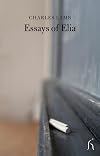
I am grateful that I came to these essays at a time when I have both the leisure to read them and some of the mental equipment to appreciate them. On the other hand, I find myself in the same position as the high school student, required to deliver an essay on Shakespeare, who wrote, "William is a very good writer. He has great use of language." So. Charles is a very good writer. He has great use of language.
These pseudonymous essays are looks back at the England of Lamb's youth. They are show more wonderful to read for the details of that vanished time as well as for their wit and thoughtfulness. (You thought I was going to write "wit and wisdom," didn't you? I recall but can't find his deprecation of onomatopoeia. And I am laughing again at sentences from the first essay, "dusty maps of Mexico, dim as dreams," or "--- for Mammon to have solaced his solitary heart withal, long since dissipated, or scattered into the air at the blast of the breaking of that famous bubble.")
I find my heart agreeing with his praise of Miss Susan Winstanley who insisted that her suitor treat poor women with the same courtesy that he used toward herself. I say "Amen!" as he explores the discomfort he feels when pious thanks are given for a sumptuous meal when others are hungry. If I am put off by his feeling of the loss of colorful beggars in his contemporary London, I simply think that I need to reread the essay.
I will reread the essays! This handsome paperback from Hesperus Press (Thank you, LT ER's!) has earned its permanent place on my bedside table, a book to compose the mind before sleep. show less
These pseudonymous essays are looks back at the England of Lamb's youth. They are show more wonderful to read for the details of that vanished time as well as for their wit and thoughtfulness. (You thought I was going to write "wit and wisdom," didn't you? I recall but can't find his deprecation of onomatopoeia. And I am laughing again at sentences from the first essay, "dusty maps of Mexico, dim as dreams," or "--- for Mammon to have solaced his solitary heart withal, long since dissipated, or scattered into the air at the blast of the breaking of that famous bubble.")
I find my heart agreeing with his praise of Miss Susan Winstanley who insisted that her suitor treat poor women with the same courtesy that he used toward herself. I say "Amen!" as he explores the discomfort he feels when pious thanks are given for a sumptuous meal when others are hungry. If I am put off by his feeling of the loss of colorful beggars in his contemporary London, I simply think that I need to reread the essay.
I will reread the essays! This handsome paperback from Hesperus Press (Thank you, LT ER's!) has earned its permanent place on my bedside table, a book to compose the mind before sleep. show less
 This review was written for LibraryThing Early Reviewers.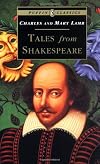
http://nwhyte.livejournal.com/1794123.html
It's really very good - a retelling of Shakespeare's dramas, which are not really easy reading for today's reader (or even the reader of 1807) in digestible prose, aimed at sophisticated teenagers. It's surprising what is censored and what is kept in, given how we tend to imagine nineteenth-century senisibilities - the blinding in King Lear is out, and the detail of Antiochus' incest (and Marina's life in the brothel) in Pericles, but so for some show more reason is the entire Malvolio subplot in Twelfth Night. However, the immorality laws of Vienna in Measure for Measure are explained, and so is the detail of Macduff's birth in Macbeth (of course an important plot detail but one that could have been worked round with imagination). Knowing what I now do about the authors, I was also struck by the sympathetic treatment of mental illness in the summary of Hamlet, which sets a good example rarely met in later literature. Strongly recommended. show less
It's really very good - a retelling of Shakespeare's dramas, which are not really easy reading for today's reader (or even the reader of 1807) in digestible prose, aimed at sophisticated teenagers. It's surprising what is censored and what is kept in, given how we tend to imagine nineteenth-century senisibilities - the blinding in King Lear is out, and the detail of Antiochus' incest (and Marina's life in the brothel) in Pericles, but so for some show more reason is the entire Malvolio subplot in Twelfth Night. However, the immorality laws of Vienna in Measure for Measure are explained, and so is the detail of Macduff's birth in Macbeth (of course an important plot detail but one that could have been worked round with imagination). Knowing what I now do about the authors, I was also struck by the sympathetic treatment of mental illness in the summary of Hamlet, which sets a good example rarely met in later literature. Strongly recommended. show less
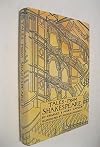
Well this is one way to end a relatively fruitful Shakespeare catch-up month… It started off strong with Hamnet, kept going decently with Titus Andronicus (even though it’s ridiculous, it is source material, so it can stay), and even though there were a few DNFs to cross off the reading list I was still in a hopeful mood when I cracked the spine on this book. Lamb’s Tales from Shakespeare, specifically the Arthur Rackham illustrated edition, was high on my thrift hunting list so I was show more pretty excited when I finally scooped a copy a little bit ago and was waiting for the perfect time to delve into their “classic” adapted tales for children. Unfortunately almost from the get go I was disgusted with their interpretation of Shakespeare’s stories… Sure, some of the premise and characters were there, but gone was the Shakespearean subtlety, wit, and drama and instead we’re left with infantilized moral tales unsuitable for any but the most vapid child. Starting off were two potentially strong tales, that even with the ribaldry taken out had plenty of room for highjinx and entertainment - the Tempest and a Midsummer Night’s Dream - but the stories were told in such a drab manner that all of the sparkle of magic was completely taken away. After that point I focused entirely on enjoying Rackham’s illustrations, so as not to ruin any beloved stories or spoil the ones I haven’t gotten to yet. This specific edition didn’t have the best versions of his colour work, being a Book of the Month club publication, and their placement was a bit arbitrary, but the simple line work for story headers and enders was well-reproduced and the paper quality was surprisingly lush. With a smidge more effort on the part of the colour reproductions (and a replacement of the atrocious travesty of text) this book actually would have been a solid example of an illustrated classic, as its size and weight was just about perfect for reading and it’s a great size to sit displayed on a shelf! show less
Lists
el (1)
Ambleside Y2 (1)
Ambleside Books (1)
Ambleside Year 3 (1)
Out of Copyright (1)
4th Grade Books (1)
Awards


You May Also Like


Associated Authors
Statistics
- Works
- 247
- Also by
- 26
- Members
- 9,558
- Popularity
- #2,516
- Rating
- 4.0
- Reviews
- 93
- ISBNs
- 678
- Languages
- 20
- Favorited
- 12


