
David Ball (1) (1949–)
Author of The Sword and the Scimitar
For other authors named David Ball, see the disambiguation page.
About the Author
David Ball lives in Golden, Colorado with his wife and two children.
Image credit: Photo by Precision Editorial
Works by David Ball
Associated Works
Constantinople the Way it Was & The Green Mosque at Bursa (2006) — Translator, some editions — 6 copies
Tagged
Common Knowledge
- Legal name
- Ball, David Wadsworth
- Other names
- Ball, David W.
- Birthdate
- 1949-09-12
- Gender
- male
- Occupations
- pilot
sarcophagus maker
businessman
taxi driver - Short biography
- David Ball has been to 50 countries on five continents. He has lived and worked in various parts of Africa. In the course of researching his novel Empires of Sand, he crossed the Sahara desert four times, and got lost there only once. Research trips for other novels have taken him to China, Istanbul, Algeria, and Malta -- a little island where so far he hasn't gotten lost at all.
A former pilot, sarcophagus maker, and businessman, David has driven a taxi in New York City and built a road in West Africa. He installed telecommunications equipment in Cameroun and explored the Andes in a Volkswagen bus. He has renovated old Victorian houses in Denver and pumped gasoline in the Grand Tetons.
He has a master’s degree in journalism from Columbia University and enjoys skiing, fishing, running (some have described it as more like hobbling), baseball, and opera.
His novels include Empires of Sand, China Run, and Ironfire. He is currently at work on a fourth book, which may be the best book ever written.
David lives with his wife, Melinda, and their children, Ben and Li, in a house they built in the Rocky Mountains. - Nationality
- USA
- Birthplace
- Denver, Colorado, USA
- Places of residence
- Boulder, Colorado, USA
- Associated Place (for map)
- Colorado, USA
Members
Reviews
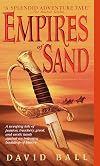
I'd never heard of this author, but one of his books was recommended by George R.R. Martin on his website (http://georgerrmartin.com/reading.html) - so I picked this one up.
It's actually NOT the book that Martin read (that was Ironfire, about the Knights of Malta), but I think he'd like this one as well. What an enjoyable book! Ostensibly, this is an historical novel, based on a true incident – a failed 19th-century French expedition to suss out the possibilities of building a show more trans-Saharan railroad. However, the book has only a marginally less tenuous connection to reality than, say, George R.R. Martin's books. (still reading A Feast For Crows, btw) Empires of Sand is first and foremost a grand adventure-drama, and if historical reality falls a bit by the wayside – who's missing it?
The book focuses on the relationship between Paul DeVries and his half-French, half Tuareg nomad cousin, Moussa. The first half of the book takes place against the backdrop of Paris during the French Revolution, and establishes their relationship as boys. The second half of the book is set in the Sahara. Paul is now an officer in the French army, but Moussa has gone back to the desert and reclaimed his Tuareg heritage... they must meet again, this time on different sides in a terrible conflict.
Along the way, there's plenty of violence, passion, daring escapes, rape, enslavement, cannibalism, miserable deaths, betrayals, revenge... all that good stuff! And plenty of it... it's 770 pages long. It's got enough manly/military type action to satify fans of that kind of thing (Bernard Cornwell, perhaps?) – but also strong female characters and enough romance for those more into the soap-opera dramatic epic kinda thing (Melanie Rawn?). A good balance. The historical background is richly panoramic, but the story itself is always about the personal relationships between the characters, which is something I personally like in this kind of epic fiction... Definitely recommended! show less
It's actually NOT the book that Martin read (that was Ironfire, about the Knights of Malta), but I think he'd like this one as well. What an enjoyable book! Ostensibly, this is an historical novel, based on a true incident – a failed 19th-century French expedition to suss out the possibilities of building a show more trans-Saharan railroad. However, the book has only a marginally less tenuous connection to reality than, say, George R.R. Martin's books. (still reading A Feast For Crows, btw) Empires of Sand is first and foremost a grand adventure-drama, and if historical reality falls a bit by the wayside – who's missing it?
The book focuses on the relationship between Paul DeVries and his half-French, half Tuareg nomad cousin, Moussa. The first half of the book takes place against the backdrop of Paris during the French Revolution, and establishes their relationship as boys. The second half of the book is set in the Sahara. Paul is now an officer in the French army, but Moussa has gone back to the desert and reclaimed his Tuareg heritage... they must meet again, this time on different sides in a terrible conflict.
Along the way, there's plenty of violence, passion, daring escapes, rape, enslavement, cannibalism, miserable deaths, betrayals, revenge... all that good stuff! And plenty of it... it's 770 pages long. It's got enough manly/military type action to satify fans of that kind of thing (Bernard Cornwell, perhaps?) – but also strong female characters and enough romance for those more into the soap-opera dramatic epic kinda thing (Melanie Rawn?). A good balance. The historical background is richly panoramic, but the story itself is always about the personal relationships between the characters, which is something I personally like in this kind of epic fiction... Definitely recommended! show less
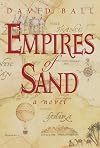
This is one of those rare escapist treasures that you pick up expecting to be good, not great, but find yourself thoroughly enjoying. The plot, characters and seamlessly interwoven historical research all combine into an adventure story reminiscent of Dumas or Kipling. There is love and lust enough to keep the story interesting, but not so overwrought and overdone as to turn it into a gratuitous bodice-ripper. I fully intend to seek more of this author's works out.
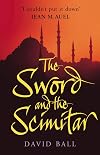
As with most books I’ve reviewed, I read this book when I was way too young and didn’t fully appreciate it for all its worth. I read it again in 2019, at the age of 25, and I think I finally properly understand the value of this incredible book.
One of the most important chapters of Maltese history is the Great Siege of 1565. It was a pivotal moment in European history, and a large part of the history of the Ottoman Empire as well. Against all odds, a country that had very little show more resources and manpower managed to wait out and win against one of the largest empires in history. This book uses this historical event as a backdrop, while it tells the story of three people embroiled in the conflict.
Maria is a young Maltese girl who’s brother, Nico, is captured by Ottoman pirates as a young boy and sold as a slave. He soon earns his freedom, and becomes an important member of the Ottoman Empire’s army, rising through the ranks until he inevitably ends up having to fight against his own people on the soil he once called home. Maria, through the years that Nico has been missing, has gone through her own conflict of sexual assault by the hands of a very powerful member of the community, as well as becoming semi-ostracized for it and for also being very good friends with the Jewish community of her area (as being Jewish was very illegal at the time). The third player in this story is Christian, a man who just wants to be a doctor but who ends up becoming a Knight of St John and, against his Order’s rules, falls in love.
The story is beautifully told through many different points of view, alternating between keeping up with Nico, Maria and Christian and showing us not only how they grow, but also how they think and feel in one of the best ways that I’ve ever seen ‘show, don’t tell’ exemplified in writing. The book also takes on a host of real historical figures from Malta’s history – the names of nobles, bishops, Knights and Grandmasters are all as accurate as can be, with the dates matching up almost exactly to who these people would have been in real life. It is clear that Ball did a lot of research going into this book and actually put a lot of effort into making this book not only historical accurate, but feel as real as it ever could. The characters he invented for the sake of the story feel as real as the characters that actually lived, and that is a feat that isn’t easily accomplished when writing historical fiction that so heavily relies on the truth.
I think my main criticism of this story lies in the fact that the armour and weaponry, as well as the distances he talks about in the novel from one city to another, aren’t the most accurate. However, that is a minor thing when considering everything else. The novel touches on so many different themes – religion, sexuality, slavery, identity, bonds, death, and war. It does so eloquently and without feeling like it’s trying to make a point about any of them because, at the end of the day, what it’s talking about are realities for the characters in the story.
All in all, this book deserves a 4/5, simply missing a star because if it had been a little bit more accurate with the distances between towns, I (as a native of the country) would have been much happier with it. show less
One of the most important chapters of Maltese history is the Great Siege of 1565. It was a pivotal moment in European history, and a large part of the history of the Ottoman Empire as well. Against all odds, a country that had very little show more resources and manpower managed to wait out and win against one of the largest empires in history. This book uses this historical event as a backdrop, while it tells the story of three people embroiled in the conflict.
Maria is a young Maltese girl who’s brother, Nico, is captured by Ottoman pirates as a young boy and sold as a slave. He soon earns his freedom, and becomes an important member of the Ottoman Empire’s army, rising through the ranks until he inevitably ends up having to fight against his own people on the soil he once called home. Maria, through the years that Nico has been missing, has gone through her own conflict of sexual assault by the hands of a very powerful member of the community, as well as becoming semi-ostracized for it and for also being very good friends with the Jewish community of her area (as being Jewish was very illegal at the time). The third player in this story is Christian, a man who just wants to be a doctor but who ends up becoming a Knight of St John and, against his Order’s rules, falls in love.
The story is beautifully told through many different points of view, alternating between keeping up with Nico, Maria and Christian and showing us not only how they grow, but also how they think and feel in one of the best ways that I’ve ever seen ‘show, don’t tell’ exemplified in writing. The book also takes on a host of real historical figures from Malta’s history – the names of nobles, bishops, Knights and Grandmasters are all as accurate as can be, with the dates matching up almost exactly to who these people would have been in real life. It is clear that Ball did a lot of research going into this book and actually put a lot of effort into making this book not only historical accurate, but feel as real as it ever could. The characters he invented for the sake of the story feel as real as the characters that actually lived, and that is a feat that isn’t easily accomplished when writing historical fiction that so heavily relies on the truth.
I think my main criticism of this story lies in the fact that the armour and weaponry, as well as the distances he talks about in the novel from one city to another, aren’t the most accurate. However, that is a minor thing when considering everything else. The novel touches on so many different themes – religion, sexuality, slavery, identity, bonds, death, and war. It does so eloquently and without feeling like it’s trying to make a point about any of them because, at the end of the day, what it’s talking about are realities for the characters in the story.
All in all, this book deserves a 4/5, simply missing a star because if it had been a little bit more accurate with the distances between towns, I (as a native of the country) would have been much happier with it. show less
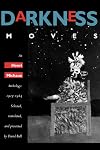
"Everyone enjoys economy for its relation to a certain morality,"
— Sheila Heti, How Should a Person Be
On Wasted Years
One wonders what excuse Michaux employs when he visits his bourgeois in-laws who are always asking about his current project. Perhaps he would claim to be working on a sequel to those Mr. Plume pieces everyone loved so much, and which, after witnessing their success in various salons, he could never bring himself put to paper again. Walter Benjamin, who always has the show more Arcades Project in his back pocket (in the sense of Capitalist Economies), was nowhere as economical as Michaux (in the sense of "Economy Class"), who one imagines rarely writing anything good in his pocket diaries and therefore saving quite a bit on chap-books over the years. In this way, many a Parisian has saved on shoe-leather by never visiting the Louvre. Such a thing is life. By the end of his career, Michaux has written perhaps five good sketches altogether (detailed below). On the subject of these un-productive years spent on mescaline, a (paraphrased) Arendt would recall, "well, he was neither the first nor the last to be ruined by [economy]."
Michaux's brightest moments are humorous investigations of the so-called "miraculating" moment; i.e. moments so "taken-for-granted" that they give the impression of having come into existence out of nothing. It takes a bit of real thought to suss out these hidden moments of origin and put something strange in their place.
On Bad Writers
"There may easily be thousands of sentences in a chapter and I've got to sabotage every one of them" (22).
On Catholic Virgins
When you come home on your wedding day, if you stick your wife in a well to soak all night she is flabbergasted. Even if she had always been vaguely worried about it . . . "Well, well," she says to herself, "so that's what marriage is like. No wonder they kept it all so secret. I've been taken in by the whole business" (28).
On Behavior in a Tragedy (for Insects and Man)
"The Wasp Relates: It is often not difficult to enter the dwellings of men. When you want to leave, it has happened more than once that you suddenly come up against an extraordinary, absolute prohibition. In vain do your eyes roam over the whole field of the visible. Flowers wave quite near you in the breeze. All you get are peremptory knocks on the head as soon and as many times as you try to reach them. So what can you do? Giving up all reasoned action, you have to throw yourself into the most violent delirium and, flying around blindly in all directions . . . suddenly you find yourself outside, safe and sound! This is the Secret. We don't know any other way of getting out of that jam" (162).
Michaux's elegiac pieces (mostly on the subject of pure suffering), are somewhat less brilliant, albeit tinged with the inventiveness of the absurd (though Michaux is not an "Absurdist").
Magic (good poem, work poem)
I used to be quite nervous. Now I'm on a new track:
I put an apple on my table. Then I put myself inside the apple. What peace!
It looks simple. And yet I'd been trying for twenty years; and I would never have succeeded if I had wanted to begin like that. Why not? Perhaps because I would have thought myself humiliated. This is possible. Then, too, I had to grope around, experiment—there's quite a story behind all this. Setting out isn't easy and neither is explaining it. But I can tell it to you in a word. 'Suffering' is the word. When I arrived in the apple, I was ice-cold" (33).
Dragon (good poem. cancer patient poem)
A dragon came out of me. He pulled out a hundred tails of flames and nerves.
What an effort I made to force him to rise, whipping him over me! His lower part a steel prison: I was locked inside. But I kept at it and his furor I withstood and the bars of the implacable jail finally came apart little by little, forced by the impetuous whirling motion.
It was because everything was going so badly, it was in September (1938), it was on a Tuesday, that's why I had to take on this peculiar form in order to live. And so I fought for myself alone when Europe was still hesitating, and set forth as a dragon, against the endless paralysis that arose from what was happening, over the voice of the ocean of mediocre men whose immense importance was once again suddenly, dizzyingly, revealed (36).
The best Plume sketch (the one about the solicitious surgeon) concludes with the punchline: "and besides, you may change," as if one could part with personality as easily as plume parts with his index finger — The implication being that one despairs of giving up these ghastly personality traits (in this case, the hatred of "cripples") even more than one despairs of giving up a slightly-swollen digit. Perhaps this applies also to such (antiquated) notions of personal economy, "wasted years," a life-work, and so on. It would be better to let such things go . . .
VII. Plume's Finger was Hurting him
Plume's finger was hurting a bit.
"You'd better see a doctor," said his wife. "Often all it takes is a little ointment." And Plume went.
"One finger to cut off," said the surgeon, "no problem at all. With anesthesia, it takes six minutes at the most. Since you're rich, you have no need for so many fingers. I'll be delighted to perform this little operation for you. After that, I'll show you several models of artificial fingers. Some of them are extremely graceful. A bit expensive no doubt. But naturally there's no question of cutting corners. We'll give you the best there is."
Plume sadly looked at his finger and apologized.
"Doctor, it's the index finger, you know, a most useful finger. In fact I was just going to write my mother again. I always use my index finger when I write. My mother would be worried if I put off writing her any longer; I'll come back in a few days. She's a very sensitive woman, she gets upset so easily."
"No problem," the surgeon said, "here's some paper, white paper, with no letterhead of course. A few heartfelt words from you will put her right. Meanwhile I'll call the Hospital and tell them to set everything up, so all we'll have to do is get out the sterilized instruments. I'll be back in a minute . . . "
He was back in a flash.
"Everything's perfect, they're waiting for you."
"So sorry, Doctor," said Plume, "you see, my hand's shaking, there's nothing I can do about it . . . umm . . ."
"There, there," said the surgeon, "you're quite right, it would be better not to write. Women are terribly sharp, especially Mothers. When it's their son, they can spot a bit of hesitation anywhere, and then make a mountain out of a molehill. For them, we're just little children. Here's your hat and your cane. The car is waiting for us."
And they went into the operating room.
"Listen, Doctor. Really . . . "
"Oh!" said the surgeon, "don't worry, you're being over-scrupulous. We'll write that letter together. I'll think about it while I operate on you."
And bringing the mask to his face, he put Plume to sleep.
"At least you could have asked my opinion," said Plume's wife to her husband.
"Don't go thinking it's so easy to find a lost finger once again. I don't much like the idea of a man with stumps. As soon as your hand gets a bit too bare, you can just forget about me. Cripples are nasty, they become sadistic right away. But I haven't been brought up the way I was brought up just to live with a sadist. You probably thought I'd volunteer to help you with those things. Well, you were wrong, and you should have thought before you . . . "
"Look," said Plume, "don't worry about the future, I still have nine fingers, and besides, you may change." show less
Lists
THE WAR ROOM (1)
Awards

You May Also Like


Associated Authors
Statistics
- Works
- 10
- Also by
- 4
- Members
- 791
- Popularity
- #32,199
- Rating
- 3.8
- Reviews
- 26
- ISBNs
- 90
- Languages
- 7