
Sheila Watson (1) (1909–1998)
Author of The Double Hook
For other authors named Sheila Watson, see the disambiguation page.
Works by Sheila Watson
Associated Works
Tagged
Common Knowledge
- Birthdate
- 1909-10-24
- Date of death
- 1998-02-01
- Gender
- female
- Education
- University of British Columbia
University of Toronto - Occupations
- teacher
professor
editor - Awards and honors
- Lorne Pierce Medal (1984)
- Relationships
- McLuhan, Marshall (thesis supervisor)
- Nationality
- Canada
- Birthplace
- New Westminster, British Columbia, Canada
- Places of residence
- Nanaimo, British Columbia, Canada
Vancouver, British Columbia, Canada - Place of death
- Nanaimo, British Columbia, Canada
- Associated Place (for map)
- British Columbia, Canada
Members
Reviews
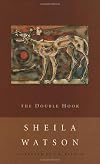
The whole book reads like a rumour from which you can only infer. To me this is the most terrifyingly beautiful literature.
This small book, 118 pages, isn't much longer than a short story but it sure packs a lot into that small size. On the back it reads "In spare, allusive prose, Sheila Watson charts the destiny of a small, tightly knit community nestled in the British Columbia interior." That is a very good description.
The setting is the Cariboo region of BC which, coincidentally, I visited for the first time this year. Only about a dozen people live in the valley scattered in a handful of houses. There is show more very little interaction with the outside world especially for the women. The mother of three of the inhabitants is seen by a number of people fishing along the creek one morning. But as the day goes along and a storm breaks the question arises as to where she is. The other thread of the story concerns Lenchen who has left her mother's home to find her lover who is the son of the old woman. The people move back and forth from one place to another, sometimes interacting, sometimes missing each other. Watching over all of them is Coyote, that "trickster and demi-god and buffoon embodying the motley nature of existence itself" (quote from afterword).
This is a book that has to be read very carefully as every word has a meaning, and sometimes more than one. Even the title has a double meaning. "He doesn't know you can't catch the glory on a hook and hold on to it. That when you fish for the glory you catch the darkness too. That if you hook twice the glory you hook twice the fear. That Coyote plotting to catch the glory for hiself is fooled and everyday fools others." (p. 50)
A book to ruminate over for a long time. I would recommend it to others who like to challenge themselves occasionally. show less
The setting is the Cariboo region of BC which, coincidentally, I visited for the first time this year. Only about a dozen people live in the valley scattered in a handful of houses. There is show more very little interaction with the outside world especially for the women. The mother of three of the inhabitants is seen by a number of people fishing along the creek one morning. But as the day goes along and a storm breaks the question arises as to where she is. The other thread of the story concerns Lenchen who has left her mother's home to find her lover who is the son of the old woman. The people move back and forth from one place to another, sometimes interacting, sometimes missing each other. Watching over all of them is Coyote, that "trickster and demi-god and buffoon embodying the motley nature of existence itself" (quote from afterword).
This is a book that has to be read very carefully as every word has a meaning, and sometimes more than one. Even the title has a double meaning. "He doesn't know you can't catch the glory on a hook and hold on to it. That when you fish for the glory you catch the darkness too. That if you hook twice the glory you hook twice the fear. That Coyote plotting to catch the glory for hiself is fooled and everyday fools others." (p. 50)
A book to ruminate over for a long time. I would recommend it to others who like to challenge themselves occasionally. show less
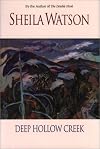
Deep Hollow Creek is the story of a young teacher's one year stay in a small village in British Colombia during the 1930s. Stella, a city girl, has chosen this adventure of slumming it in the wilds, and traveled to Deep Hollow Creek to find—first off—that two related families have been squabbling over who will have her as a boarder. And thus begins the year.
This is not a chronicle of Stella's teaching experiences, for we barely get to hear much about her one-room schoolhouse with its 10 show more or so pupils. What we do get is a wonderfully crafted tale of the land and its people during the tough economic times of the 1930s. As Stella gets to know both so do we.
The novella has a lyrical rhythm at times and Watson has a keen sense of language. I stopped more than once to read a passage out loud. Here's a sample:
"In the cleft of the valley the snow was falling on the roof for which old Adam Flower had freighted shingles from the coast. Over the mountain road which led from the Rock the snow was drifting in swirls and eddies, deepening in the hollows, crust forming on crust. The flakes fell and the cold tightened. Then the flakes stopped falling and the blue weight of a clear sky lay on the valley as the ice lay on the creek."
The dialog is written without quotation marks which creates a bit of distance, the feeling of looking at the story through a window, and lends a sort of wistfulness to the prose. Though largely autobiographical, written in the 1930s while Watson herself was a teacher staying in British Columbia, it was not published until 1992 and I cannot help but think that this wistfulness entered then. I can understand why this book is now considered a Canadian classic, the book captures brilliantly a time, a place and its people. [Deep Hollow Creek] is less a story of her becoming a part of this place than this place becoming a part of her. show less
This is not a chronicle of Stella's teaching experiences, for we barely get to hear much about her one-room schoolhouse with its 10 show more or so pupils. What we do get is a wonderfully crafted tale of the land and its people during the tough economic times of the 1930s. As Stella gets to know both so do we.
The novella has a lyrical rhythm at times and Watson has a keen sense of language. I stopped more than once to read a passage out loud. Here's a sample:
"In the cleft of the valley the snow was falling on the roof for which old Adam Flower had freighted shingles from the coast. Over the mountain road which led from the Rock the snow was drifting in swirls and eddies, deepening in the hollows, crust forming on crust. The flakes fell and the cold tightened. Then the flakes stopped falling and the blue weight of a clear sky lay on the valley as the ice lay on the creek."
The dialog is written without quotation marks which creates a bit of distance, the feeling of looking at the story through a window, and lends a sort of wistfulness to the prose. Though largely autobiographical, written in the 1930s while Watson herself was a teacher staying in British Columbia, it was not published until 1992 and I cannot help but think that this wistfulness entered then. I can understand why this book is now considered a Canadian classic, the book captures brilliantly a time, a place and its people. [Deep Hollow Creek] is less a story of her becoming a part of this place than this place becoming a part of her. show less
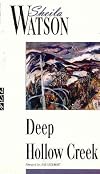
Yesterday I spent a few hours with Sheila Watson, reading Deep Hollow Creek. Watson is a little-known Canadian author who I was introduced to in a university course on Modern Canadian Literature. Her novel The Double Hook is one of my favourites, and the main text I studied for my Honours Thesis. Watson was not the most profuse of authors, and so these two books, plus a collection of five short stories, make up her entire bibliography. Most sources classify Deep Hollow Creek as a novel, but show more at just over 100 pages, I think it qualifies for novella status.
Though Deep Hollow Creek was published in 1992, Watson wrote it in the 1930s, following a stint as a teacher in northern British Columbia. She drew heavily on her own experiences; her protagonist, Stella, is teacher to a handful of children in Deep Hollow Creek, BC, a small settlement dominated by the Flowers family. Since Stella is the newcomer in a tight-knit community, she learns the history of her neighbours through the gossipy stories they tell about each other.
Watson's novella definitely falls into Oates' definition of the novella as "a rapturously extended prose poem driven by narrative..." - her writing is always more poetic than prosaic. Her sparse style echoes the wild, uncivilized landscape she describes, and the rather lonely lives of her characters. Stella is a literary woman thrust into a land far removed from the university scene, and it is here that she learns the power of language:
"If I hadn't come here, she said, I doubt whether I should ever have seen through the shroud of printers' ink, through to the embalmed essence. The word is a flame burning in a dark glass."
I love this image, this weight that Watson gives to words. Neither Deep Hollow Creek nor The Double Hook are long, page-wise, but that is because Watson puts so much power into every word. This is an incredible piece of writing. show less
Though Deep Hollow Creek was published in 1992, Watson wrote it in the 1930s, following a stint as a teacher in northern British Columbia. She drew heavily on her own experiences; her protagonist, Stella, is teacher to a handful of children in Deep Hollow Creek, BC, a small settlement dominated by the Flowers family. Since Stella is the newcomer in a tight-knit community, she learns the history of her neighbours through the gossipy stories they tell about each other.
Watson's novella definitely falls into Oates' definition of the novella as "a rapturously extended prose poem driven by narrative..." - her writing is always more poetic than prosaic. Her sparse style echoes the wild, uncivilized landscape she describes, and the rather lonely lives of her characters. Stella is a literary woman thrust into a land far removed from the university scene, and it is here that she learns the power of language:
"If I hadn't come here, she said, I doubt whether I should ever have seen through the shroud of printers' ink, through to the embalmed essence. The word is a flame burning in a dark glass."
I love this image, this weight that Watson gives to words. Neither Deep Hollow Creek nor The Double Hook are long, page-wise, but that is because Watson puts so much power into every word. This is an incredible piece of writing. show less
Lists
Awards


You May Also Like


Associated Authors
Statistics
- Works
- 6
- Also by
- 2
- Members
- 308
- Popularity
- #76,455
- Rating
- 3.6
- Reviews
- 9
- ISBNs
- 33
- Favorited
- 2