

Jean Anderson (1) (1929–2023)
Author of The American Century Cookbook
For other authors named Jean Anderson, see the disambiguation page.
About the Author
Image credit: Rudy Muller
Series
Works by Jean Anderson
The New German Cookbook: More Than 230 Contemporary and Traditional Recipes (1993) 142 copies, 1 review
Process This!: New Recipes for the New Generation of Food Processors plus Dozens of Time-Saving Tips (2002) 75 copies, 2 reviews
The Nutrition Bible: The Comprehensive, No-Nonsense Guide to Foods, Nutrients, Additives, Preservatives, Pollutants, and Everything Else We Eat and (1995) 54 copies
Good Morning America Cut the Calories Cookbook: 120 Delicious Low-Fat, Low-Calorie Recipes from Our Viewers (2000) 43 copies
The Green Thumb Preserving Guide: How to Can and Freeze, Dry and Store, Pickle, Preserve and Relish Home-Grown Vegetables and Fruits (1976) 29 copies
One-Dish Dinners: 275 Great-Tasting, Easy Recipes Using Fresh, Frozen, Canned, and Other Convenience Foods (2004) 19 copies
Associated Works
Tagged
Common Knowledge
- Legal name
- Anderson, Helen Jean
- Birthdate
- 1929-10-12
- Date of death
- 2023-01
- Gender
- female
- Occupations
- cookbook author
- Awards and honors
- KitchenAid Cookbook Hall of Fame (1999, body of work)
- Nationality
- USA
- Birthplace
- Raleigh, North Carolina, USA
- Associated Place (for map)
- North Carolina, USA
Members
Reviews
Much more than a cookbook, this is a wonderful encyclopedic collection of information about culture, wines, cheese, sausages and hams, herbs, spices, and sweets of the various regions of Portugual. Anderson explores the influences of the Moors, and the shipping trades the Portuguese were so famous for.
My introduction to Portuguese food came from my late mother in law. My husband's Aunt and his grandfather gave me more instruction in the family's favorites.
This book has been well used since I show more bought it in Portugal years ago, but I'd never taken the time to sit down and read the introductory information until now. The first 85 pages are all the history and glossary, and then each section, and often, each recipe, has introductory material telling how the ingredients are procured, what section of the country it comes from, and how Americans can cook in their kitchens. A fun book to look at if you've never tried Portuguese food. show less
My introduction to Portuguese food came from my late mother in law. My husband's Aunt and his grandfather gave me more instruction in the family's favorites.
This book has been well used since I show more bought it in Portugal years ago, but I'd never taken the time to sit down and read the introductory information until now. The first 85 pages are all the history and glossary, and then each section, and often, each recipe, has introductory material telling how the ingredients are procured, what section of the country it comes from, and how Americans can cook in their kitchens. A fun book to look at if you've never tried Portuguese food. show less

The downside to this older book is that, being American and printed in the 70s, none of its recipes are in metric - although the endpapers have a few useful conversions and notes.
On the other hand both volumes cover just about everything a 'ordinary' cook is likely to want to handle. it is one of the best general purpose/reference books for household cookery (in my opinion) until 'The cook's Companion' by Alexander Stephanie - and unlike than large tome, is small enough to prop on top of the show more counter for reference without danger of a hernia :) show less
On the other hand both volumes cover just about everything a 'ordinary' cook is likely to want to handle. it is one of the best general purpose/reference books for household cookery (in my opinion) until 'The cook's Companion' by Alexander Stephanie - and unlike than large tome, is small enough to prop on top of the show more counter for reference without danger of a hernia :) show less
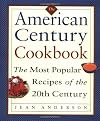
Even for those who don't cook, but who love the history of food and food lore, this is an interesting book. The author's intent was to write about the recipes that were influential in the 20th century, but in addition to recipes she intersperses throughout the book a food timeline and articles that talk about famous chefs of the period, the history of a particular food/recipe and other miscellany. I really enjoyed the soup merger chart that had been published in older editions of the Joy of show more Cooking. It's supposed to be tasty combinations of store bought condensed soups such as Campbells. I remain unconvinced about just how 'tasty' some of those combos really are. show less

Great concept for a cookbook, however, I find it difficult to actually find the recipes for the left over ingredients that I have. For example.. great book for sour milk.. that's something that you would throw out if you didn't have a great recipe to use it.. I made 'lasses Bread on pg 216. I also discovered with this book that any recipe calling for buttermilk can be interchanged with sour milk. I didn't give that many stars due to overall not loving this book.
Lists
Awards


You May Also Like


Associated Authors
Statistics
- Works
- 39
- Also by
- 2
- Members
- 1,929
- Popularity
- #13,346
- Rating
- 3.8
- Reviews
- 19
- ISBNs
- 100
- Languages
- 1