
Richard A. Billows (1) (1956–)
Author of Marathon : How One Battle Changed Western Civilization
For other authors named Richard A. Billows, see the disambiguation page.
About the Author
Richard A. Billows is a professor at Columbia University specializing in Ancient Greek and Roman history and Greek epigraphy. His books include Kings and Colonists and Julius Caesar. He lives in New York City.
Works by Richard A. Billows
Associated Works
The Cambridge History of Greek and Roman Warfare (Volume 1) (2007) — Contributor — 73 copies, 1 review
Tagged
Common Knowledge
- Birthdate
- 1956-03-15
- Gender
- male
- Education
- University of Oxford (AB, Bailliol College)
University of California, Berkeley (PhD) - Organizations
- Columbia University (professor)
Members
Reviews
The Spear, the Scroll, and the Pebble: How the Greek City-State Developed as a Male Warrior-Citizen Collective by Richard A. Billows
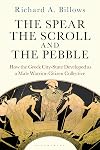
An interesting, yet rather idiosyncratic, look at the earliest history of ancient Greece (ca. 800-500 BCE): not a chronological narrative, but rather thematically organized reflections, sometimes quite in-depth in their analysis. Richard Billows (Columbia University) is a specialist on the much later Hellenistic period (ca. 300-100 BCE), but he apparently felt the need to offer his own perspective on the earlier period, thereby simultaneously correcting his colleagues. It is striking that he show more adopts an almost systematically revisionist approach and dares to question recent insights in the study of ancient Greece. I list some of his most important views: 1. while the Greek city-state was the most important form of government, that of the ethnos, the confederation, is still underestimated; 2. the numerous experiments in overseas foundations had a significant influence on the development of polis institutions in the mother country; 3. the economy of early Greece was much more dynamic, diverse, and robust than is usually appreciated. 4. Perhaps most striking is his renewed appreciation of the so-called Hoplitic Revolution, a phenomenon that had been systematically downplayed in the historiography of recent decades. Finally, 5. he points to the widespread spread of education, and especially literacy, as the most important explanation for what he still dares to call the "Greek miracle," a term academics generally no longer dare to use.
Billows is certainly sticking his neck out here, and I must say that his argument is at least provocative and enticing. However, his argument relies mostly on textual sources and almost completely ignores archaeological and external sources. More on this in my History account on Goodreads: https://www.goodreads.com/review/show/8021661871. show less
Billows is certainly sticking his neck out here, and I must say that his argument is at least provocative and enticing. However, his argument relies mostly on textual sources and almost completely ignores archaeological and external sources. More on this in my History account on Goodreads: https://www.goodreads.com/review/show/8021661871. show less
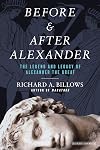
In this book, the classical scholar Richard Billows offers something different from the histories of the Alexander-centric historians who have preceded him. Rather than concentrating on Alexander, Billows expands his focus to encompass the pre-Alexander history of his homeland of Macedonia and the fate of his empire that followed. Though these subjects have been addressed by others, by bringing them together into a single book, Billows assesses Alexander's achievements from a different show more perspective — and the result is quite different from what might expect from previous books on the Macedonian conqueror.
The greatest consequence of Billows's approach is the highlighting of the achievements of Alexander's father, Philip. A great conqueror in his own right, while his reign has been overshadowed by his son, Billows makes clear how much of Alexander's success were due to his father's accomplishments. It was with Philip's army and Philip's commanders that Alexander waged his campaigns, which often used tactics that predated Alexander to win in battle. Yet Billows also notes that Philip himself was hardly an innovator, as he drew upon the experiences of decades of Greek wars in building his army into the Asian-conquering force of legend. This army was also the product of a region ripe for success, for as Billows details, its climate and geography gave it several natural advantages over the more tenuously-existing Green city states to the south.
From this perspective, Alexander's achievements were less as a creator than as an exploiter. This Billows underscores by emphasizing the unsustainable nature of his empire. As their abandonment so soon after Alexander's death makes clear, the Indian and Afghan territories comprising the easternmost edge of his conquests were simply too far off to be controlled from his resource base in Macedonia. While his plans for campaigns in North Africa and southern Europe may have been more realistic, they demonstrate that the essence of Alexander's achievements was conquest rather than construction. In this respect, his successors — the diadochi — deserve more credit for developing his legacy than Alexander himself merits, yet they too are often given only passing mention in most Alexander-centric considerations of the period.
All of this Billows lays out in an accessibly fluid text that makes for easy reading. He pulls no punches in his assessment of the "great" conqueror, and in doing so offers a valuable corrective to the overlarge reputation Alexander enjoys today. This is a book that anybody interested in a measured assessment of the legendary figure, one that details just how much of it rested on the shoulders of his predecessors and depended on the achievements of his successors. show less
The greatest consequence of Billows's approach is the highlighting of the achievements of Alexander's father, Philip. A great conqueror in his own right, while his reign has been overshadowed by his son, Billows makes clear how much of Alexander's success were due to his father's accomplishments. It was with Philip's army and Philip's commanders that Alexander waged his campaigns, which often used tactics that predated Alexander to win in battle. Yet Billows also notes that Philip himself was hardly an innovator, as he drew upon the experiences of decades of Greek wars in building his army into the Asian-conquering force of legend. This army was also the product of a region ripe for success, for as Billows details, its climate and geography gave it several natural advantages over the more tenuously-existing Green city states to the south.
From this perspective, Alexander's achievements were less as a creator than as an exploiter. This Billows underscores by emphasizing the unsustainable nature of his empire. As their abandonment so soon after Alexander's death makes clear, the Indian and Afghan territories comprising the easternmost edge of his conquests were simply too far off to be controlled from his resource base in Macedonia. While his plans for campaigns in North Africa and southern Europe may have been more realistic, they demonstrate that the essence of Alexander's achievements was conquest rather than construction. In this respect, his successors — the diadochi — deserve more credit for developing his legacy than Alexander himself merits, yet they too are often given only passing mention in most Alexander-centric considerations of the period.
All of this Billows lays out in an accessibly fluid text that makes for easy reading. He pulls no punches in his assessment of the "great" conqueror, and in doing so offers a valuable corrective to the overlarge reputation Alexander enjoys today. This is a book that anybody interested in a measured assessment of the legendary figure, one that details just how much of it rested on the shoulders of his predecessors and depended on the achievements of his successors. show less
The author tells the story in six large chapters. Much of these follow the narrative of Herodotos.
Chapter 5 is the actual battle narrative. This was outstanding — one of the best retellings of a battle I’ve read. It was marred for me only by the author’s use of future perfect (“will have done”), rather than the same in past tense (“would have done”), when he was retelling things historians cannot know about that day. Maybe that’s standard for ancient history in American show more English, I don’t know, but for me it stood out. This quibble, though, didn’t take away from the fantastic battle narrative.
The central claim, that the Battle of Marathon was central to safeguarding Western civilisation, is not one I can accept. It’s a ludicrous thesis given the 2,500 years between then and now, and everything that has gone on between those two points. Yes, if the Athenians had lost at Marathon, the Persians would probably have conquered all of Greece, as Billows shows. And that, undoubtedly, would have meant that we’d live in a different present. But surely a similar argument could be made about a lot of different points in the history of Western Civilisation. What if Hannibal had defeated Rome? What if the Franks had lost the Battle of Tours? What if the Ottomans had captured Vienna? And so on. This book does present this central thesis in the least-silly manner it could be presented, to its credit.
Billows’ central claim, however, does not derail the book’s narrative. In fact, the book is mostly about the context, political development, and military tactics of the two sides of the battle. (That is to say, the history itself). Most of the book is lead-up, and that’s where the book shines. It seems Billows is a firm believer in understanding the military event in the context of its time, and all that had gone before, an approach I really appreciated.
This book is a great introduction to the epoch. Working outwards from the battle of Marathon, Billows deftly describes ancient Greek and to some extent Persian life, technology, culture, politics, and society. Highly recommended to any who have an interest in the period, but don’t know what to read. show less
Chapter 5 is the actual battle narrative. This was outstanding — one of the best retellings of a battle I’ve read. It was marred for me only by the author’s use of future perfect (“will have done”), rather than the same in past tense (“would have done”), when he was retelling things historians cannot know about that day. Maybe that’s standard for ancient history in American show more English, I don’t know, but for me it stood out. This quibble, though, didn’t take away from the fantastic battle narrative.
The central claim, that the Battle of Marathon was central to safeguarding Western civilisation, is not one I can accept. It’s a ludicrous thesis given the 2,500 years between then and now, and everything that has gone on between those two points. Yes, if the Athenians had lost at Marathon, the Persians would probably have conquered all of Greece, as Billows shows. And that, undoubtedly, would have meant that we’d live in a different present. But surely a similar argument could be made about a lot of different points in the history of Western Civilisation. What if Hannibal had defeated Rome? What if the Franks had lost the Battle of Tours? What if the Ottomans had captured Vienna? And so on. This book does present this central thesis in the least-silly manner it could be presented, to its credit.
Billows’ central claim, however, does not derail the book’s narrative. In fact, the book is mostly about the context, political development, and military tactics of the two sides of the battle. (That is to say, the history itself). Most of the book is lead-up, and that’s where the book shines. It seems Billows is a firm believer in understanding the military event in the context of its time, and all that had gone before, an approach I really appreciated.
This book is a great introduction to the epoch. Working outwards from the battle of Marathon, Billows deftly describes ancient Greek and to some extent Persian life, technology, culture, politics, and society. Highly recommended to any who have an interest in the period, but don’t know what to read. show less
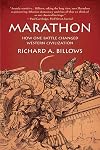
The author argues, probably correctly, that the battle of Marathon, where the Athenian army defeated a much larger force of invading Persians in 490 B.C.E., was one of the most important battles in Western history and that without it, the western world would be a very different place.
Now, I've certainly heard of Marathon before and I understood that it was an important battle. But I was initially worried that Billows was going to have trouble with a book-length treatment of it. After all, show more though we know the broad outlines of the battle, we know very little of the details. I therefore suspected that the initial chapters were going to give important background, and I suspected that I'd already know quite a bit of that.
I'm glad to say that was not the case. The initial chapters are indeed given over to background: Billows covers the development of the Greek city-states and their methods of war; the development of the Persian empire; the development of 5th century Athenian democracy; and the reasons for hostilities between the Greeks, especially the Athenians, and the Persians. But Billows gave a nicely detailed and nicely written account of all of these in which I learned quite a bit. Indeed this turned out to be one of the better summaries of pre-5th century Greek and Middle-Eastern history that I've read.
The discussion of the battle itself is a little short on detail, but that's what we've been left with from the historical record so we can't fault the author for that. The final chapter on the legacy of Marathon and how the world would be different without it I probably could have done without: lots of speculation. However I certainly agree with the main conclusion that the world would have been a very different place now had the Athenians lost the battle on that August morning. show less
Now, I've certainly heard of Marathon before and I understood that it was an important battle. But I was initially worried that Billows was going to have trouble with a book-length treatment of it. After all, show more though we know the broad outlines of the battle, we know very little of the details. I therefore suspected that the initial chapters were going to give important background, and I suspected that I'd already know quite a bit of that.
I'm glad to say that was not the case. The initial chapters are indeed given over to background: Billows covers the development of the Greek city-states and their methods of war; the development of the Persian empire; the development of 5th century Athenian democracy; and the reasons for hostilities between the Greeks, especially the Athenians, and the Persians. But Billows gave a nicely detailed and nicely written account of all of these in which I learned quite a bit. Indeed this turned out to be one of the better summaries of pre-5th century Greek and Middle-Eastern history that I've read.
The discussion of the battle itself is a little short on detail, but that's what we've been left with from the historical record so we can't fault the author for that. The final chapter on the legacy of Marathon and how the world would be different without it I probably could have done without: lots of speculation. However I certainly agree with the main conclusion that the world would have been a very different place now had the Athenians lost the battle on that August morning. show less
Lists
You May Also Like


Associated Authors
Statistics
- Works
- 6
- Also by
- 3
- Members
- 322
- Popularity
- #73,504
- Rating
- 3.9
- Reviews
- 9
- ISBNs
- 35
- Languages
- 3