
Elizabeth Gordon (1) (1861–1922)
Author of Flower Children: The Little Cousins of the Field and Garden
For other authors named Elizabeth Gordon, see the disambiguation page.
Series
Works by Elizabeth Gordon
A Sheaf of Roses 2 copies
The butterfly babies' book 1 copy
Associated Works
Tagged
Common Knowledge
- Legal name
- Canfield, Elizabeth Gordon
Gordon, Elizabeth (birth name) - Birthdate
- 1861-02-02
- Date of death
- 1922-04-02
- Gender
- female
- Occupations
- children's book author
- Nationality
- USA
- Birthplace
- Winn, Maine, USA
- Places of residence
- Chicago, Illinois, USA
Minneapolis, Minnesota, USA - Place of death
- Milwaukee, Wisconsin, USA
- Associated Place (for map)
- USA
Members
Reviews
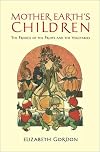
Contrary to the edition options currently on Goodreads, this book was not published in 2001, or 2014, or others listed. This was published in either the 20s or 30s, and I have one of the older versions. My dad enjoys collecting classical children's books and was quick to save a few that an elderly woman wanted trashed. I took this opportunity to read it.
Every page has a quatrain accompanied by a chubby character--often a child--that is either dressed in a vegetable costume or is actually show more part plant depending on the age you read this book. This book of poems is surprisingly educational. It includes many fruits and other botanical produce that I only vaguely remember reading the names of but have never heard pronounced or seen in a grocery store. The lines also indicate the seasons the plants grow in, what they look like during different life stages, and their original nationality--plenty to learn for an adult that grew up feeding from a typical modern American grocery store. Yet at the beginning the omnipotent, matronly voices says all these characters are in the child reader's home garden and tended to by their mother. Congratulations Mother, you have an incredible garden! show less
Every page has a quatrain accompanied by a chubby character--often a child--that is either dressed in a vegetable costume or is actually show more part plant depending on the age you read this book. This book of poems is surprisingly educational. It includes many fruits and other botanical produce that I only vaguely remember reading the names of but have never heard pronounced or seen in a grocery store. The lines also indicate the seasons the plants grow in, what they look like during different life stages, and their original nationality--plenty to learn for an adult that grew up feeding from a typical modern American grocery store. Yet at the beginning the omnipotent, matronly voices says all these characters are in the child reader's home garden and tended to by their mother. Congratulations Mother, you have an incredible garden! show less

One of many books that an elderly woman was giving up in order to move from her home and into the smaller confines of an assisted living suite, I thought I would give this a read before I donated it on her behalf.
It's fun to read books from the '20s because of the polite language, the articulate intelligence of younger characters, the illustrations, and just observing common sayings and what was known at the time. More Really-So Stories is nonfiction embedded in fiction. There are show more matter-of-fact stories told by Somebody to Billy about how maple syrup is made, moose and minks, aurora borealises, where we got the "Yankee Doodle" song, the history of linen, and so much more. It was a fun book to read even as a 27-year-old. show less
It's fun to read books from the '20s because of the polite language, the articulate intelligence of younger characters, the illustrations, and just observing common sayings and what was known at the time. More Really-So Stories is nonfiction embedded in fiction. There are show more matter-of-fact stories told by Somebody to Billy about how maple syrup is made, moose and minks, aurora borealises, where we got the "Yankee Doodle" song, the history of linen, and so much more. It was a fun book to read even as a 27-year-old. show less

The Turned-Into's is a treasured and long lost book from my mother's childhood (1930s) which she shared with me in my own childhood (1960s). The genre is fantasy/science (remember those? didactic fairy tales?), the plot is "gee, there are a lot of creatures in the garden that undergo metamorphosis", but the pictures are glorious art deco in full colour! I recently purchased a copy and found that I still like the book, and the language is even more enchanting than I recalled. I still long to show more visit the Daisy-Starred Meadow with Jane Elizabeth. show less
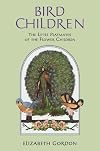
Published in 1912 this quaint little book of nature sprites is one of four by Elizabeth Gordon and one of three illustrated by M.T. Ross. (The 4th one, "Wild Flower Children: The Little Playmates of the Fairies" was illustrated by Janet Laura Scott and is by far the best.) This book features charming couplets of rhyme about various birds, including many that we don't see quite so much of these days like the Golden Pheasant, Indigo Bunting, Kingbird or the Redstart. The book is definitely show more worth seeing because it is so quaint and it once spoke to a sweet and innocent pre-Nintendo audience that probably adored the little bird beings it depicts. I loved the whimsy and delicate details of Gordon's flower sprites but somehow the concept of a flower-human hybrid just doesn't transfer well to the bird kingdom. The cute little children's faces sticking out of a bird's body is just a little bit creepy. The Guinea Hens, for example have a normal bird's beak and black button eyes, but underneath there is a human face and sticking out from the underside of the wings are human arms. It just doesn't work the way a Daisy bonnet does. As a collector's book this may be desirable but if you must choose, I suggest you go with one of the three plant themes and leave the birds, well...for the birds. show less
Lists
You May Also Like


Associated Authors
Statistics
- Works
- 30
- Also by
- 1
- Members
- 451
- Popularity
- #54,391
- Rating
- 3.9
- Reviews
- 7
- ISBNs
- 81