
Martin Pegler (1) (1954–)
Author of Out of Nowhere: A History of the military sniper (General Military)
For other authors named Martin Pegler, see the disambiguation page.
About the Author
Martin Pegler is a well-known military historian and writer who has made a special study of historic firearms and the battles of the Great War. He was Senior Curator of Firearms at the Royal Armouries Museum, Leeds and is the author of many articles in military history journals and magazines and show more has written seven books. He is a leading authority on the history of military sniping. Among his books are Out of Nowhere: A History of the Military Sniper, The Military Sniper Since 1914, The British Tommy 1914-18, Firearms in the American West, Attack on the Somme, Sniper Anthology and Posters of the Great War (with Frdrick Hadley). show less
Works by Martin Pegler
Sharpshooting Rifles of the American Civil War: Colt, Sharps, Spencer, and Whitworth (Weapon) (2017) 19 copies
Vickers-Maxim Machine Guns Enthusiasts' Manual: 1886 to 1968 (all models): An insight into the development, manufacture and operation of the Vickers-Maxim medium machine-guns (2019) 9 copies, 1 review
Powder and Ball Small Arms: Live Firing Classic Military Weapons in Colour Photographs (1998) 3 copies, 1 review
Associated Works
Tagged
Common Knowledge
- Birthdate
- 1954
- Gender
- male
- Short biography
- Since childhood, Martin Pegler has had a passion for the history of the First World War which eventually led him to involvement in the uniquely moving experience of personally interviewing and recording many Great War veterans during the early 1980s. After some 35 years of visiting the battlefields of France and Flanders, he has amassed detailed knowledge of the terrain and the nature of the fighting that took place.
Martin Pegler is the country's foremost authority on military firearms and specialises in the subject of military sniping. His specialist professional hands-on knowledge of the development of military firearms, ammunition and ballistics, gained during 20 years as Senior Curator of Weapons at the Royal Armouries Museum, is unparalleled.
A prolific author, popular speaker and military historical advisor, Martin also makes regular appearances on the BBC TV's hugely popular Antiques Roadshow, as a militaria specialist, and this included his involvement with two special Great War programmes which were filmed on the Somme for the 2014 centenary.
The Pegler's now live in Combles on the Somme, where they offer bed and breakfast accommodation at their home, Orchard Farm, (www.orchardfarmsomme.com). Combles was one of the last villages to fall to the Allies in mid-September 1916, and their back garden looks out over former German lines. They readily share their expertise and knowledge with their guests on the subject of the Great War 1914-1918.
http://consultancy.martinpegler.com/
http://consultancy.martinpegler.com/b... - Nationality
- UK
- Associated Place (for map)
- UK
Members
Reviews
Vickers-Maxim Machine Guns Enthusiasts' Manual: 1886 to 1968 (all models): An insight into the development, manufacture and operation of the Vickers-Maxim medium machine-guns by Martin Pegler
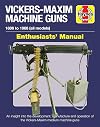
Subtitled “Enthusiast’s Manual”. “Enthusiast” usually brings to mind someone who likes baseball, or sports cars, or quilting; in this case it’s Vickers-Maxim machine guns. Not the sort of thing you imagine any of your neighbors are into, even in NRA-friendly areas. Author Martin Pegler is a genuine enthusiast, though, and there’s a color picture of him with his own Vickers gun (although he notes it was taken “…in the days when owning such weapons was possible and the cost show more of shooting 3,000 rounds of Second World War surplus .303 ammunition in an afternoon was not prohibitive”).
Ammosexuality aside, this is a nicely done and illustrated guidebook, starting with machine gun history (I learned that the notorious “Puckle Gun” of 1718 was not just a patent drawing but actually built and two were issued to British forces in St. Lucia (where they were described as “Machine Guns of Puckles”, the first time “machine gun” had ever been used to describe a weapon). Pegler goes on to describe various other early attempts – Gatlings and Gardners and Nordenfelts, until finally getting to Hiram Maxim of Maine, USA. Maxim was the first to successfully use the gun’s own recoil to extract a fired cartridge, eject it, recock the firing mechanism, and compress a return spring, which would then push the action forward to strip another cartridge off the belt and chamber it. Pegler notes that feeding from a belt rather than a hopper or drum was another of Maxim’s innovations, and that a Maxim gun relied on the near simultaneous development of smokeless powder cartridges. During WWI, both the British and Germans (and the Russians and later the Americans) used Maxim guns; the Germans the MG08 and the British the Vickers-made version. There are numerous pictures of Vickers-Maxims being manufactured (entirely by women; all the men were off in the trenches) and in action. The weapon continued in use in WWII and Korea; the last recorded use by British forces was in 1968 in Aden (and it’s likely still soldering on elsewhere). I hadn’t realized there were so many variants – the license built US Colts (chambered for .30-06); the Russian guns on their little wheeled carriages and with a large diameter cap on the water jacket so it could be filled with snow if necessary, and the large bore 0.5” guns (not the same as the US M2 cartridge), the 12.7mm (given a metric designation to avoid confusion with the 0.5” and still not the same as the US M2) and a version based on a French 11mm cartridge.
The chapter on service use was enlightening. There a tendency to think of machine guns as brooms, sweeping back and forth across a line of charging enemy; Pegler notes that in WWI the Vickers wasn’t used that way. They were too heavy to be employed in the front lines (not only were the gun and tripod heavy, but they consumed ammunition belts that had to be hauled up by manpower as well). Instead they were kept to the rear and positioned where they could enfilade attacking infantry. They were also used for indirect fire, equipped with artillery style sights so they could be fired at a position identified by map coordinates. I had heard this was done but assumed it was relatively rare; it turns out it was very common. A frequent tactic later in the war was using them to supplement a “walking barrage”; conventional artillery would shell in front of advancing infantry, with the barrage “lifting” a hundred yards or so every few minutes, based on the assumed pace of the troops. The Germans responded by evacuating their front line trenches before the barrage reached them, then quickly returning to meet the assault; the indirect Vickers fire was placed to catch them as they retreated.
Lots and lots of illustrations (including one of the unlikely Vickers crew of Brigitte Bardot and Jeanne Moreau from the film Viva Maria!), “exploded” drawings, detailed instructions for field and armory stripping and repair, reassembly, and troubleshooting. Bibliography and index. Just the thing to have handy if you run across a Vickers-Maxim at a garage sale.
See also show less
Ammosexuality aside, this is a nicely done and illustrated guidebook, starting with machine gun history (I learned that the notorious “Puckle Gun” of 1718 was not just a patent drawing but actually built and two were issued to British forces in St. Lucia (where they were described as “Machine Guns of Puckles”, the first time “machine gun” had ever been used to describe a weapon). Pegler goes on to describe various other early attempts – Gatlings and Gardners and Nordenfelts, until finally getting to Hiram Maxim of Maine, USA. Maxim was the first to successfully use the gun’s own recoil to extract a fired cartridge, eject it, recock the firing mechanism, and compress a return spring, which would then push the action forward to strip another cartridge off the belt and chamber it. Pegler notes that feeding from a belt rather than a hopper or drum was another of Maxim’s innovations, and that a Maxim gun relied on the near simultaneous development of smokeless powder cartridges. During WWI, both the British and Germans (and the Russians and later the Americans) used Maxim guns; the Germans the MG08 and the British the Vickers-made version. There are numerous pictures of Vickers-Maxims being manufactured (entirely by women; all the men were off in the trenches) and in action. The weapon continued in use in WWII and Korea; the last recorded use by British forces was in 1968 in Aden (and it’s likely still soldering on elsewhere). I hadn’t realized there were so many variants – the license built US Colts (chambered for .30-06); the Russian guns on their little wheeled carriages and with a large diameter cap on the water jacket so it could be filled with snow if necessary, and the large bore 0.5” guns (not the same as the US M2 cartridge), the 12.7mm (given a metric designation to avoid confusion with the 0.5” and still not the same as the US M2) and a version based on a French 11mm cartridge.
The chapter on service use was enlightening. There a tendency to think of machine guns as brooms, sweeping back and forth across a line of charging enemy; Pegler notes that in WWI the Vickers wasn’t used that way. They were too heavy to be employed in the front lines (not only were the gun and tripod heavy, but they consumed ammunition belts that had to be hauled up by manpower as well). Instead they were kept to the rear and positioned where they could enfilade attacking infantry. They were also used for indirect fire, equipped with artillery style sights so they could be fired at a position identified by map coordinates. I had heard this was done but assumed it was relatively rare; it turns out it was very common. A frequent tactic later in the war was using them to supplement a “walking barrage”; conventional artillery would shell in front of advancing infantry, with the barrage “lifting” a hundred yards or so every few minutes, based on the assumed pace of the troops. The Germans responded by evacuating their front line trenches before the barrage reached them, then quickly returning to meet the assault; the indirect Vickers fire was placed to catch them as they retreated.
Lots and lots of illustrations (including one of the unlikely Vickers crew of Brigitte Bardot and Jeanne Moreau from the film Viva Maria!), “exploded” drawings, detailed instructions for field and armory stripping and repair, reassembly, and troubleshooting. Bibliography and index. Just the thing to have handy if you run across a Vickers-Maxim at a garage sale.
See also show less
Excellent book on history of development of precision firearms, from the muskets, customized hunting weapons to modern high powered long range precision rifles.
As we are introduced to weapon development, author also shows ups and downs of troops that are known under different names - Jaegers, Riflemen, sharpshooters, designated marksmen and finally under [most coveted] title of military sniper. It is strange how role of precise shooter was so much looked down upon and forced to reinvent show more itself during the every major conflict.
While book is very informative for early years (17th to 19th century), crucial technological developments in the 19th century, and finally WW1 and WW2 rifles and combat experiences, as we approach the modern times coverage mostly focuses on the Western rifles, trainings and experiences (both training and weapon wise). I am surprised that Chechen Wars and low intensity conflicts in Caucasus were not mentioned in more detail, especially since use of snipers in both open fields and urban environments was very intensive. Also very interesting to me is missing Afghanistan War of 1980's - both from perspective of Soviets but also mercenaries and operators from the West tasked with training and equipping the Mujaheddin troops. Was this omitted because this is more about sniper operations and not about rifles as such? But then war on terror would also be relatively short chapter, wouldn't it? I mean, mentioning Dragunov but not talking about its use in very intensive combat operations is a little bit weird.
Also, anti-materiel, high caliber rifles are only mentioned in context of Korean War and modern day Barrett rifles. During WW2 these were also used to engage not just technical equipment but also personnel, which is something that saw a big come back in current conflict. Also there was no mention of exotic (but widely used nonetheless) high powered sniper rifles in calibers of 20mm. While there is mention of adaptation of M2 Browning MG with sniper scopes it would be interesting to learn more about it (although I do agree that this is maybe out of scope for the book, much more so than 20mm rifles).
Again, considering the size of the book and its purpose, it is well structured and highly informative edition that can be used as and introductory book for anyone interested in the field. For more details there are additional books that can be found in the bibliography section [many of which Mr Martin Pegler is also author, which is a recommendation on its own considering that author writes in a very clear and concise manner].
Highly recommended. show less
As we are introduced to weapon development, author also shows ups and downs of troops that are known under different names - Jaegers, Riflemen, sharpshooters, designated marksmen and finally under [most coveted] title of military sniper. It is strange how role of precise shooter was so much looked down upon and forced to reinvent show more itself during the every major conflict.
While book is very informative for early years (17th to 19th century), crucial technological developments in the 19th century, and finally WW1 and WW2 rifles and combat experiences, as we approach the modern times coverage mostly focuses on the Western rifles, trainings and experiences (both training and weapon wise). I am surprised that Chechen Wars and low intensity conflicts in Caucasus were not mentioned in more detail, especially since use of snipers in both open fields and urban environments was very intensive. Also very interesting to me is missing Afghanistan War of 1980's - both from perspective of Soviets but also mercenaries and operators from the West tasked with training and equipping the Mujaheddin troops. Was this omitted because this is more about sniper operations and not about rifles as such? But then war on terror would also be relatively short chapter, wouldn't it? I mean, mentioning Dragunov but not talking about its use in very intensive combat operations is a little bit weird.
Also, anti-materiel, high caliber rifles are only mentioned in context of Korean War and modern day Barrett rifles. During WW2 these were also used to engage not just technical equipment but also personnel, which is something that saw a big come back in current conflict. Also there was no mention of exotic (but widely used nonetheless) high powered sniper rifles in calibers of 20mm. While there is mention of adaptation of M2 Browning MG with sniper scopes it would be interesting to learn more about it (although I do agree that this is maybe out of scope for the book, much more so than 20mm rifles).
Again, considering the size of the book and its purpose, it is well structured and highly informative edition that can be used as and introductory book for anyone interested in the field. For more details there are additional books that can be found in the bibliography section [many of which Mr Martin Pegler is also author, which is a recommendation on its own considering that author writes in a very clear and concise manner].
Highly recommended. show less
This is the first book I've read in this series and it does a nice job of describing the origins of this weapon, how it became a cultural icon (in the hands of American criminals) before it became a standardized piece of military kit in the Allied arsenal, and its virtues and liabilities when compared to other submachine guns.
The author traces the history of extreme marksmanship down through the history of firearms. At times it seems to drag somewhat but this is in the formative. It is a good high level overview of how ranged fire changed infantry combat bot does not go into great detail.
Perhaps the best aspect of this book is the focus on the moral, ethical, and psychological aspects of the role.
Perhaps the best aspect of this book is the focus on the moral, ethical, and psychological aspects of the role.
Lists
Holding the Zero (3)
You May Also Like


Associated Authors
Statistics
- Works
- 22
- Also by
- 2
- Members
- 694
- Popularity
- #36,475
- Rating
- 3.9
- Reviews
- 7
- ISBNs
- 73
- Languages
- 3
