
Ian Morris (1) (1960–)
Author of Why the West Rules—For Now: The Patterns of History, and What They Reveal About the Future
For other authors named Ian Morris, see the disambiguation page.
About the Author
Ian Morris is the author of When Bad Things Happen to Rich People, published in 2014. He also wrote the forthcoming novel, Simple Machines from Gibson House. When he is not writing, he works as the managing editor of Punctuate: A Nonfiction Magazine, published by Columbia College. (Bowker Author show more Biography) show less
Works by Ian Morris
Why the West Rules—For Now: The Patterns of History, and What They Reveal About the Future (2010) 1,366 copies, 21 reviews
War! What Is It Good For?: Conflict and the Progress of Civilization from Primates to Robots (2013) 372 copies, 7 reviews
Burial and Ancient Society: The Rise of the Greek City-State (New Studies in Archaeology) (1987) 34 copies
Current Issues and the Study of Ancient History (Publications of the Association of Ancient Historians, 7) (2002) 8 copies
Social Development 1 copy
Democracy 2500?: Questions and Challenges (Colloquia and Conference Papers, No. 2) (1997) — Editor — 1 copy
Associated Works
City and Country in the Ancient World (Leicester-Nottingham Studies in Ancient Society) (1991) — Contributor — 32 copies
Inventing Ancient Culture: Historicism, periodization and the ancient world (1996) — Contributor — 29 copies
The Cambridge World History of Slavery: Volume 1, The Ancient Mediterranean World (2011) — Contributor — 29 copies
The Oxford Handbook of the State in the Ancient Near East and Mediterranean (2013) — Contributor — 21 copies
Money, Labour and Land: Approaches to the economics of ancient Greece (Routledge Classical Monographs) (2001) — Contributor — 20 copies
The Archaeology of City-States (Smithsonian Series on Archaeological Inquiry) (1997) — Contributor — 15 copies
Sex and Difference in Ancient Greece and Rome (Edinburgh Readings on the Ancient World) (2003) — Contributor — 14 copies
Remaining Invisible: The Archaeology of the excluded in Classical Athens — Contributor — 1 copy
Tagged
Common Knowledge
- Legal name
- Morris, Ian Matthew
- Birthdate
- 1960
- Gender
- male
- Education
- University of Birmingham
University of Cambridge
Alleyne's Comprehensive School, Stone, Staffordshire, England, UK - Occupations
- archaeologist
Willard Professor of Classics and Professor of History, Stanford University, USA
historian - Organizations
- Stanford University
- Nationality
- UK
- Birthplace
- England, UK
- Places of residence
- England, UK
USA - Associated Place (for map)
- England, UK
Members
Reviews
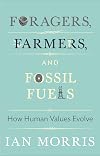
Ian Morris is clearly a big picture man. I had read his book on "War: what is it good for" and it is a similar attempt to provide some sweeping generalisations about human history ...and maybe even some "rules" which have universal application. In the case of the current book his basic thesis is that humankind's development can essentially be slotted into three broad categories: 1). The forager, 2). The Farmer and 3). The consumer of fossil fuels. (As he admits somewhere, he was trying very show more hard to achieve a catchy alliteration with his title: I think he achieved it).
If I can try and capture his line of reasoning he thinks that foragers were basically free-ranging individuals and there is little hierarchy. Wealth....such as it is....is fairly evenly distributed and "every man is his own headman". Rates of violence, particularly competition over women, was high ....he claims a 10 percent chance of dying a violent death. And, of course, energy use per person was low (around 5,000 kcal/capita/day).....probably most of that from fires to keep warm or to cook.
Things changed significantly as foragers settled down into agricultural communities. A pattern emerged of elites and a "general acceptance of glaring inequalities.....and occasional outburst of levelling rage". Pillage and rape and enslavement of adjoining agricultural communities was common. Though (the point he makes in his book about what is war good for?) when various communities were subjugated, that generally led to a period of peace under one overlord. Successful rulers gradually drove down the rates of violent death. And there was a tendency of religion to re-enforce the notion that the elites were placed there by the gods and a hierarchy was ordained by the gods.....this kept the peasants in their place!! Energy consumption per capita still remained low....generally around 6,000kcal/cap/day but might have risen to around 30,000kcal/cap/day in some societies. He makes the point (p158) that shipping gave an energy bonus all around the Atlantic of about 10% ...which he seems to attribute to comparative advantage and trade. (Though he doesn't seem to take into account the actual wind-energy harvested by sailing ships.....which must have been huge. (Sufficient to sustain the huge grain trade between India and the Roman Empire for hundreds of years). Rates of violence were apparently lower in agricultural communities than with foragers. And society was male dominated.
The discovery and use of fossil fuels (coal, gas, petroleum) changed everything. Hard to argue with this. Per capita consumption of energy rose abruptly in western nations from around 1800 to about 230,000 kcal/cap/day and other nations are following the same sort of trajectory but with a later start date. Populations exploded, demand for goods likewise exploded ...and the timing was fortuitous because factories were producing at a massively increased rate over cottage industries. Inequality increased...and fossil fuels tended to sweep away the demand for forced labour (Though this could be argued). Women have achieved much greater equality and form a much greater proportion of the paid workforce. There appears to have been a retreat of religion ....and, according to Morris, despite world wars etc., the chance of dying a violent death has continued to retreat. Democracy has expanded and continues to be the preferred political system by most people . (Though one might wonder about what is happening in China these days). Inequality (in terms of incomes) appears to have risen though Morris toys with the idea that equality might be more about "equal opportunity". In the USA the Gini index has risen from around 0.36 in the late 60's to around 0.47 in 2014. And even in China the Gini coefficient rose from around 0.3 in 1976 to 0.47 in 2009. (Higher number means more inequality).
Hence, Morris advances the thesis that there have basically been three forms of human social structures over the past 20,000 years or so and each has a characteristic usage of energy. And human values adjusted between these three stages of human social structures so there is a relationship between energy use and human values.
What is especially interesting about this book is that because these were "the Tanner lectures on human values" delivered in Princeton in 2012, we have the benefit of a series of "replies" from various specialists:
A Professor of ancient greek suggests that Morris does not truly account for farming values which vary widely..and singles out ancient Athens as a challenge for Morris.
A former Professor of History and expert on China suggests that Morris's broad stages of human development are maybe too sweeping and we miss the variation that a finer level of detail would give.
And the third commentator, a professor of philosophy, shows (really just as an aside) that Morris ignores the pastoralists in his categories. I agree. I think that nomadic herding is vastly different from sedentary farming and one did not necessarily lead to the other. So the values of nomadic herds-people might not align with his categories for farmers ....and certainly such people were a perpetual thorn in the side of the Middle East civilisations. (Not accepting political hierarchy, as farmers did, for example). She also criticises Morris's use of values along the "is-ought" criticism of David Hume. That is, Morris talks about the positive values (her words) that are actually applied by various cultures, versus real moral values which OUGHT to apply. (Hence, I think, she would argue that women's rights OUGHT to apply at all stages of human development, and slavery was wrong in all situations). Having written a Masters thesis about human values, I have some sympathy with her criticism. (Values terminology is inconsistent and rather loosely applied by everyone who writes about it).
But overall, it's a book that has made me think. One can nit-pick ...and I think that's really all the commentators have done. But, hard to totally disagree with his theses. I give it 4.5 stars. show less
If I can try and capture his line of reasoning he thinks that foragers were basically free-ranging individuals and there is little hierarchy. Wealth....such as it is....is fairly evenly distributed and "every man is his own headman". Rates of violence, particularly competition over women, was high ....he claims a 10 percent chance of dying a violent death. And, of course, energy use per person was low (around 5,000 kcal/capita/day).....probably most of that from fires to keep warm or to cook.
Things changed significantly as foragers settled down into agricultural communities. A pattern emerged of elites and a "general acceptance of glaring inequalities.....and occasional outburst of levelling rage". Pillage and rape and enslavement of adjoining agricultural communities was common. Though (the point he makes in his book about what is war good for?) when various communities were subjugated, that generally led to a period of peace under one overlord. Successful rulers gradually drove down the rates of violent death. And there was a tendency of religion to re-enforce the notion that the elites were placed there by the gods and a hierarchy was ordained by the gods.....this kept the peasants in their place!! Energy consumption per capita still remained low....generally around 6,000kcal/cap/day but might have risen to around 30,000kcal/cap/day in some societies. He makes the point (p158) that shipping gave an energy bonus all around the Atlantic of about 10% ...which he seems to attribute to comparative advantage and trade. (Though he doesn't seem to take into account the actual wind-energy harvested by sailing ships.....which must have been huge. (Sufficient to sustain the huge grain trade between India and the Roman Empire for hundreds of years). Rates of violence were apparently lower in agricultural communities than with foragers. And society was male dominated.
The discovery and use of fossil fuels (coal, gas, petroleum) changed everything. Hard to argue with this. Per capita consumption of energy rose abruptly in western nations from around 1800 to about 230,000 kcal/cap/day and other nations are following the same sort of trajectory but with a later start date. Populations exploded, demand for goods likewise exploded ...and the timing was fortuitous because factories were producing at a massively increased rate over cottage industries. Inequality increased...and fossil fuels tended to sweep away the demand for forced labour (Though this could be argued). Women have achieved much greater equality and form a much greater proportion of the paid workforce. There appears to have been a retreat of religion ....and, according to Morris, despite world wars etc., the chance of dying a violent death has continued to retreat. Democracy has expanded and continues to be the preferred political system by most people . (Though one might wonder about what is happening in China these days). Inequality (in terms of incomes) appears to have risen though Morris toys with the idea that equality might be more about "equal opportunity". In the USA the Gini index has risen from around 0.36 in the late 60's to around 0.47 in 2014. And even in China the Gini coefficient rose from around 0.3 in 1976 to 0.47 in 2009. (Higher number means more inequality).
Hence, Morris advances the thesis that there have basically been three forms of human social structures over the past 20,000 years or so and each has a characteristic usage of energy. And human values adjusted between these three stages of human social structures so there is a relationship between energy use and human values.
What is especially interesting about this book is that because these were "the Tanner lectures on human values" delivered in Princeton in 2012, we have the benefit of a series of "replies" from various specialists:
A Professor of ancient greek suggests that Morris does not truly account for farming values which vary widely..and singles out ancient Athens as a challenge for Morris.
A former Professor of History and expert on China suggests that Morris's broad stages of human development are maybe too sweeping and we miss the variation that a finer level of detail would give.
And the third commentator, a professor of philosophy, shows (really just as an aside) that Morris ignores the pastoralists in his categories. I agree. I think that nomadic herding is vastly different from sedentary farming and one did not necessarily lead to the other. So the values of nomadic herds-people might not align with his categories for farmers ....and certainly such people were a perpetual thorn in the side of the Middle East civilisations. (Not accepting political hierarchy, as farmers did, for example). She also criticises Morris's use of values along the "is-ought" criticism of David Hume. That is, Morris talks about the positive values (her words) that are actually applied by various cultures, versus real moral values which OUGHT to apply. (Hence, I think, she would argue that women's rights OUGHT to apply at all stages of human development, and slavery was wrong in all situations). Having written a Masters thesis about human values, I have some sympathy with her criticism. (Values terminology is inconsistent and rather loosely applied by everyone who writes about it).
But overall, it's a book that has made me think. One can nit-pick ...and I think that's really all the commentators have done. But, hard to totally disagree with his theses. I give it 4.5 stars. show less
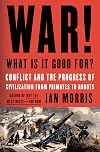
I ended my review of Ian Morris' last and highly readable book with a wish in 2012 "One can only hope that his next book will not follow Niall Ferguson down the conservative rabbit hole." Unfortunately, Morris burrowed even deeper, to a depth actually that should be uncomfortable to any ethical human. If an author sees the necessity to defend himself twice in a book that his argumentation is very close to that of Adolf Hitler, he would have better reconsidered whether he had fully thought show more through both the message and the consequence of his book. Especially as the second defense ends with the key difference that Hitler did not succeed with his ideas. Morris' pleads a "might makes right" that is seldom heard in modern society. History is written by the victors and the native Americans and Armenians may bitterly complain about their respective genocides but this will not change the facts on the ground.
As most conservatives, Morris is completely incapable to acknowledge the suffering of others (while quick to draw the victim card himself about the nasty things he had to endure in pre-Thatcher Britain). Morris thinks war serves the purpose of social-Darwinist purging the weak to make space for the wonders of the Übermensch. The war machine pushes for the establishment of larger and better government which leads to higher development. I think Morris' claim is deeply flawed: Good government can exist and prosper without wars. I'd even argue that the relative shelter from war helped Britain and the United States in their take-off. The case of war as an inventor neglects the giant opportunity cost. Instead of spending 3 trillion for Bush's futile war in Iraq, the money could have provided many a hungry child in the US with food and health care.
A truly vile book but unfortunately not alone as a product of bad thinking by the courtier class in Harvard and Stanford. Best to ask Condi Rice how the "birth pangs" in Lebanon are doing.The civil war in Syria must be music in Professor Morris' ears.
(As always with Campus, the quick and dirty German translation which came on the market even earlier than the original US edition is atrocious, but in this case fits the quality of the book.) show less
As most conservatives, Morris is completely incapable to acknowledge the suffering of others (while quick to draw the victim card himself about the nasty things he had to endure in pre-Thatcher Britain). Morris thinks war serves the purpose of social-Darwinist purging the weak to make space for the wonders of the Übermensch. The war machine pushes for the establishment of larger and better government which leads to higher development. I think Morris' claim is deeply flawed: Good government can exist and prosper without wars. I'd even argue that the relative shelter from war helped Britain and the United States in their take-off. The case of war as an inventor neglects the giant opportunity cost. Instead of spending 3 trillion for Bush's futile war in Iraq, the money could have provided many a hungry child in the US with food and health care.
A truly vile book but unfortunately not alone as a product of bad thinking by the courtier class in Harvard and Stanford. Best to ask Condi Rice how the "birth pangs" in Lebanon are doing.The civil war in Syria must be music in Professor Morris' ears.
(As always with Campus, the quick and dirty German translation which came on the market even earlier than the original US edition is atrocious, but in this case fits the quality of the book.) show less

Morris has written an engaging long-term history of what we call the United Kingdom and its place in the world.
He says he did that because he had to tell all the old stories so that we could understand the story of Brexit. The recent referendum and follow-on departure certainly echo earlier instances of insularity in the British isles, but I'm not really convinced you need to read the whole thing to understand the current chaos.
The next-to-last chapter, Keep Calm and Carry On (1992-2013), is show more an engaging read just on the events that led directly to the referendum that forced the UK to Leave. It's good on its own. The very short chapter that follows it, Can't Go Home Again (2017), where Morris returns to his hometown of Stoke on Trent and hangs out with regular folks, is likewise thought-provoking.
But the professional historian and Stanford professor does a good job with the big topic. I'd read his earlier book, Why the West Rules -- For Now, some years ago, and very much enjoyed it. This one is better, I think. Both make the point that China is already a global force, and that this century will see a remaking of the world order to accommodate that country.
I hope that Morris will write about that, too, in the next decade or so. show less
He says he did that because he had to tell all the old stories so that we could understand the story of Brexit. The recent referendum and follow-on departure certainly echo earlier instances of insularity in the British isles, but I'm not really convinced you need to read the whole thing to understand the current chaos.
The next-to-last chapter, Keep Calm and Carry On (1992-2013), is show more an engaging read just on the events that led directly to the referendum that forced the UK to Leave. It's good on its own. The very short chapter that follows it, Can't Go Home Again (2017), where Morris returns to his hometown of Stoke on Trent and hangs out with regular folks, is likewise thought-provoking.
But the professional historian and Stanford professor does a good job with the big topic. I'd read his earlier book, Why the West Rules -- For Now, some years ago, and very much enjoyed it. This one is better, I think. Both make the point that China is already a global force, and that this century will see a remaking of the world order to accommodate that country.
I hope that Morris will write about that, too, in the next decade or so. show less
War: What is it Good for?: The Role of Conflict in Civilisation, from Primates to Robots by Ian Morris
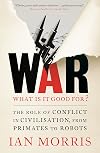
Got this book on a whim at the airport.
Morris' yardstick for "good" in "what is it good for" is "declining rates of violent death".
If the flaws in that line of reasoning are obvious to you, you will cringe many times over when reading this book. What's more, it could have done entirely without the opinionating, taking a more objective stance — the book would have come out much more readable and enjoyable.
That aside, it can be a good read if you are interested in an overview of human show more development and world history, with side journeys into subjects such as the development of (academic wars within) cultural anthropology, game theory, the how & why of the stability of various empires, chimp vs bonobo behaviour, the effects of technological breakthroughs such as ironworking and cotton-spinning, military history, economic history, and hunter/gatherer societies.
It's a comprehensive piece of work on interrelations between the aforementioned subjects, and written with style too, but if you are unconvinced by Morris' opinion you'll be needing a strong stomach. On the other hand, his opinionating certainly instigates discussion — which may or may not end violently, depending on the friends you could be discussing this topic with ;-) show less
Morris' yardstick for "good" in "what is it good for" is "declining rates of violent death".
If the flaws in that line of reasoning are obvious to you, you will cringe many times over when reading this book. What's more, it could have done entirely without the opinionating, taking a more objective stance — the book would have come out much more readable and enjoyable.
That aside, it can be a good read if you are interested in an overview of human show more development and world history, with side journeys into subjects such as the development of (academic wars within) cultural anthropology, game theory, the how & why of the stability of various empires, chimp vs bonobo behaviour, the effects of technological breakthroughs such as ironworking and cotton-spinning, military history, economic history, and hunter/gatherer societies.
It's a comprehensive piece of work on interrelations between the aforementioned subjects, and written with style too, but if you are unconvinced by Morris' opinion you'll be needing a strong stomach. On the other hand, his opinionating certainly instigates discussion — which may or may not end violently, depending on the friends you could be discussing this topic with ;-) show less
Lists
Awards


You May Also Like


Associated Authors
Statistics
- Works
- 26
- Also by
- 20
- Members
- 2,579
- Popularity
- #9,965
- Rating
- 4.0
- Reviews
- 35
- ISBNs
- 142
- Languages
- 11
- Favorited
- 3
