
Michael O'Brien (1) (1948–)
Author of A Landscape With Dragons: The Battle for Your Child's Mind
For other authors named Michael O'Brien, see the disambiguation page.
Michael O'Brien (1) has been aliased into Michael D. O'Brien.
Works by Michael O'Brien
Works have been aliased into Michael D. O'Brien.
Tagged
Common Knowledge
Members
Reviews
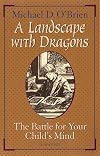
Michael O’Brien’s A Landscape with Dragons is an unusual and interesting book. O’Brien, the author of numerous works of Christian fiction (e.g. the superlative Father Elijah) and non-fiction, is also an expert on fantasy literature, especially for children. That genre is the ostensible subject here, but in fact O’Brien ranges widely, fitting together essays on the formation of the Christian imagination with readings of works from authors O’Brien recommends (e.g. Tolkien, C S Lewis show more and George MacDonald) as well as those he believes are fundamentally disordered and therefore off-limits for Christian parents looking to regulate their children’s reading.
Perhaps most interesting are O’Brien’s comments on works that fall somewhere in the gray area between obviously wholesome and utterly without merit. O’Brien assigns several prominent fantasy authors (whom many Christians find unobjectionable) into this ‘Read with extreme caution’ category, e.g. Ursula Le Guin and Madeleine L’Engle. O’Brien's standards are very strict indeed: any suggestion that powers or points of view associated with witchcraft or the occult can be used for the good are assigned a serious red flag. This means a ‘good witch’ is an oxymoron in O’Brien’s reckoning, and that dragons can never, ever be tamed.
I have a great deal of sympathy with O’Brien’s seriousness, and with his almost desperate urge to convince readers that the formation of a child’s imagination is crucial in raising that child in a godly way. But – and I suppose you sensed a ‘but’ was coming at this point – I wonder if O’Brien worries just a bit too much. Children are plastic and fragile, indeed, but they are also resilient and not stupid. I feared by the end of the book that O’Brien was granting mere storybooks vast, unwarranted powers over the fates of children. I realize this is not his intention – he is looking at the broad scope of the input into a child’s imagination over years – but again and again he suggests that a single exposure to a disordered story can scar and warp a child’s imagination, and even threaten her very soul.
This book was written in the late 1990s, just before the Harry Potter books became a global phenomenon. It’s no surprise that O’Brien quickly emerged thereafter as one of J K Rowling’s most prominent Christian critics. For O’Brien, no story that features witches and wizards can be a good story; this is inverting the Biblical order, and children cannot be trusted to realize that in our real world no one is born a witch with the power to choose to use magical gifts for good or ill.
But in this book I see O’Brien (rightly) laud Tolkien’s work, which features a wizard, one Gandalf the Grey, and I wonder where exactly lies the line that separates him from young Mr Potter. O’Brien anticipates this, and tries to divert the argument by suggesting that Gandalf doesn’t really employ the magical powers of a typical wizard, that he is more a moral and spiritual guide. But O’Brien – who is clearly a reader of great sensitivity and subtlety – must realize this is a convenient sidestep at best. I seem to recall Gandalf regularly hurling spells in open warfare against beings of his own kind or much similar, and carrying a staff that is simply Harry Potter’s wand writ large.
So I will agree to disagree with O’Brien on some points, but on the whole this is a book still highly worth reading. Of particular value is its last section, in which O’Brien lists out hundreds of books for children and young people of all ages that are sure to be solid food for forming Christian imaginations. Any Christian parent will benefit from access to these suggestions, and from the very powerful foundation for following them O’Brien provides. show less
Perhaps most interesting are O’Brien’s comments on works that fall somewhere in the gray area between obviously wholesome and utterly without merit. O’Brien assigns several prominent fantasy authors (whom many Christians find unobjectionable) into this ‘Read with extreme caution’ category, e.g. Ursula Le Guin and Madeleine L’Engle. O’Brien's standards are very strict indeed: any suggestion that powers or points of view associated with witchcraft or the occult can be used for the good are assigned a serious red flag. This means a ‘good witch’ is an oxymoron in O’Brien’s reckoning, and that dragons can never, ever be tamed.
I have a great deal of sympathy with O’Brien’s seriousness, and with his almost desperate urge to convince readers that the formation of a child’s imagination is crucial in raising that child in a godly way. But – and I suppose you sensed a ‘but’ was coming at this point – I wonder if O’Brien worries just a bit too much. Children are plastic and fragile, indeed, but they are also resilient and not stupid. I feared by the end of the book that O’Brien was granting mere storybooks vast, unwarranted powers over the fates of children. I realize this is not his intention – he is looking at the broad scope of the input into a child’s imagination over years – but again and again he suggests that a single exposure to a disordered story can scar and warp a child’s imagination, and even threaten her very soul.
This book was written in the late 1990s, just before the Harry Potter books became a global phenomenon. It’s no surprise that O’Brien quickly emerged thereafter as one of J K Rowling’s most prominent Christian critics. For O’Brien, no story that features witches and wizards can be a good story; this is inverting the Biblical order, and children cannot be trusted to realize that in our real world no one is born a witch with the power to choose to use magical gifts for good or ill.
But in this book I see O’Brien (rightly) laud Tolkien’s work, which features a wizard, one Gandalf the Grey, and I wonder where exactly lies the line that separates him from young Mr Potter. O’Brien anticipates this, and tries to divert the argument by suggesting that Gandalf doesn’t really employ the magical powers of a typical wizard, that he is more a moral and spiritual guide. But O’Brien – who is clearly a reader of great sensitivity and subtlety – must realize this is a convenient sidestep at best. I seem to recall Gandalf regularly hurling spells in open warfare against beings of his own kind or much similar, and carrying a staff that is simply Harry Potter’s wand writ large.
So I will agree to disagree with O’Brien on some points, but on the whole this is a book still highly worth reading. Of particular value is its last section, in which O’Brien lists out hundreds of books for children and young people of all ages that are sure to be solid food for forming Christian imaginations. Any Christian parent will benefit from access to these suggestions, and from the very powerful foundation for following them O’Brien provides. show less
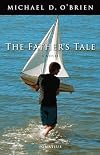
I have read all of Michael O'Brien's novels published by Ignatius Press, eight in all. He is one of my favorite modern authors. It pains me to give The Father's Tale only three stars but there were some serious flaws in this book. The biggest issue is the plot line of the lost son that literally falls off the pages. It was a great disappointment to have that thread become what felt like an afterthought at the end of the book. It is possible that the author was trying to convey that the show more journey was more important than the end goal but it did not work for me as a reader. By happenstance, right before I read The Father's Tale, I read The Brothers Karamazov and Anna Karenina. These gave me a greater appreciation for the Russian theme of the book and the detailed look into the daily life of the Russian doctor's family and village.
If you enjoyed the philosophical quality of the writing of The Father's Tale but were frustrated by the plot difficulties, I suggest trying my two favorite O'Brien books: Strangers and Sojourners and Island of the World. show less
If you enjoyed the philosophical quality of the writing of The Father's Tale but were frustrated by the plot difficulties, I suggest trying my two favorite O'Brien books: Strangers and Sojourners and Island of the World. show less
More of a 3.5 star read but can't up it to 4. There were some genuinely unique and beautiful insights as well as some rare writing in The Father's Tale. It was these that kept me going through the thousand pages. But it was all few and far between. For me at least, having read quite a bit on the topic, the history that he revealed was parochial and so simplified that in the end it gave you no real grasp of what the Russian people suffered (or despite his short token mystical nod, what the show more Chinese are now suffering through). I couldn't disagree more with the reviewers who paint O'Brien as a master of Russian literature. It seems more likely he has a keen eye for highlights and inserted them into his novel with some skill. As with most reviews I've read, I agree you could literally knock out the first 400 pages and begin there. Even after that, the book does NOT take you in the direction that you think it is taking you and for that I was actually glad, but it didn't make the "book" any better. The 400 or so pages wasted "developing" the character in the beginning could very well have been added at the end to flesh out the most important part of the ideas he was trying to convey. show less
A long, but fantastic story. At times it seems like it's going to be a cat-and-mouse type game, but thankfully it isn't. In truth, it is a tale of love, devotion, the richness of Christian culture, the dangers of a post-Christian society, and the softening of hearts by the Father in Heaven.
Awards

Statistics
- Works
- 7
- Members
- 621
- Popularity
- #40,535
- Rating
- 3.7
- Reviews
- 7
- ISBNs
- 130
- Languages
- 4
- Favorited
- 7