
Jean Hatzfeld (1) (1949–)
Author of Machete Season: The Killers in Rwanda Speak
For other authors named Jean Hatzfeld, see the disambiguation page.
Series
Works by Jean Hatzfeld
Associated Works
Tagged
Common Knowledge
- Legal name
- Hatzfeld, Jean
- Birthdate
- 1949-09-14
- Gender
- male
- Occupations
- Journaliste
- Organizations
- Libération, Journal (Journaliste)
- Relationships
- Hatzfeld, Olivier (Père)
Hatzfeld, Jean (Grand-père) - Nationality
- France
- Birthplace
- Madagascar
- Places of residence
- Madagascar (birth)
- Map Location
- France
Members
Reviews
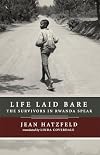
14 survivors of the Rwandan genocide provide first-hand, eyewitness accounts in Life Laid Bare, a heart-rending book by French journalist, Jean Hatzfeld.
French journalist and war correspondent, Jean Hatzfeld, brings a gut-wrenching work that is bound to leave you feeling disturbed. I spent many sleepless nights after reading this book. Unlike Philip Gourevitch’s We Wish To Inform You That Tomorrow We Will Be Killed With Our Families, this book is not about an examination of the genocide show more and will give you little context or history about what led to the events of 1994 in Rwanda. Life Laid Bare instead contains firsthand accounts of 14 survivors, told in their own voices.
Every survivor’s story is preceded by Hatzfeld’s vivid description of the place he is in – the quiet streets, the quaint shops, the silent people. In peacetime, the villages of Rwanda feel like any other countryside. But these are the places where, in 1994, over 100 days, an average of five out of six Tutsis were killed by their Hutu neighbours with machetes and other weapons. It was only when the Tutsi army, led by Paul Kagame (who was a rebel commander at the time and is today the President of Rwanda) liberated the country that the killings stopped and the survivors could come out from their hiding places.
Hatzfeld made several journeys through the area of Bugesera and talked to the people – from orphans to farmers to social workers. Their narratives are not easy to read. During those horrific weeks, there were men, women and children hiding in papyrus marshes, dealing with mosquitoes and snakes, but most of all, hoping that hidden between the fronds and covered with mud, they would remain disguised and live to see another day. Some ran to the safety of the churches, believing that the house of God would be immune from attacks and Western missionaries would intervene on their behalf. A few ran through the hills or became dependent on other’s charity hiding under beds or crossed international borders on foot. Families got separated as each member ran for his or her own life; new groups formed out of camaraderie to survive. Mothers clutched young ones to their breasts, were slowed down and cut down mercilessly. There was no safe haven – no home was spared, massacres took place in churches, and in the marshes killers came singing every morning, working till dusk, to slash anyone they could find – the infirm, the old, the newborn, it didn’t matter.
What the voices of these survivors show is the moral responsibility we as an international community bear to such atrocities. Every survivor’s story comes with their photograph – these black and white pictures will continue to haunt you long after you have finished reading their account. That’s how heart-breaking these stories are. show less
French journalist and war correspondent, Jean Hatzfeld, brings a gut-wrenching work that is bound to leave you feeling disturbed. I spent many sleepless nights after reading this book. Unlike Philip Gourevitch’s We Wish To Inform You That Tomorrow We Will Be Killed With Our Families, this book is not about an examination of the genocide show more and will give you little context or history about what led to the events of 1994 in Rwanda. Life Laid Bare instead contains firsthand accounts of 14 survivors, told in their own voices.
Every survivor’s story is preceded by Hatzfeld’s vivid description of the place he is in – the quiet streets, the quaint shops, the silent people. In peacetime, the villages of Rwanda feel like any other countryside. But these are the places where, in 1994, over 100 days, an average of five out of six Tutsis were killed by their Hutu neighbours with machetes and other weapons. It was only when the Tutsi army, led by Paul Kagame (who was a rebel commander at the time and is today the President of Rwanda) liberated the country that the killings stopped and the survivors could come out from their hiding places.
Hatzfeld made several journeys through the area of Bugesera and talked to the people – from orphans to farmers to social workers. Their narratives are not easy to read. During those horrific weeks, there were men, women and children hiding in papyrus marshes, dealing with mosquitoes and snakes, but most of all, hoping that hidden between the fronds and covered with mud, they would remain disguised and live to see another day. Some ran to the safety of the churches, believing that the house of God would be immune from attacks and Western missionaries would intervene on their behalf. A few ran through the hills or became dependent on other’s charity hiding under beds or crossed international borders on foot. Families got separated as each member ran for his or her own life; new groups formed out of camaraderie to survive. Mothers clutched young ones to their breasts, were slowed down and cut down mercilessly. There was no safe haven – no home was spared, massacres took place in churches, and in the marshes killers came singing every morning, working till dusk, to slash anyone they could find – the infirm, the old, the newborn, it didn’t matter.
What the voices of these survivors show is the moral responsibility we as an international community bear to such atrocities. Every survivor’s story comes with their photograph – these black and white pictures will continue to haunt you long after you have finished reading their account. That’s how heart-breaking these stories are. show less
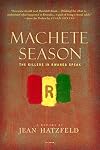
Jean Hatzfeld is a French journalist who spent quite a bit of time in Rwanda, interviewing first the victims of the horrendous genocide there for his book Life Laid Bare, then, for this book, some of their neighbors, a group of nine friends from the same area who grew up together, drank, played and worked together, killed together and now are in prison together. Between April 11 and May 14, 1994, all but 9,000 of 59,000 Tutsis were murdered in the district of Nyama, mostly by being chopped show more up, quickly or slowly by men like these with machetes. Hatzfeld elicits quite a lot of information from these men as to why and how they did what they did and how they felt about it afterward. Getting past their lies was his first challenge as a reporter; trying to understand their complete self-centeredness was the last. Several things contributed to these men and almost all other Tutu men in Rwanda being able to kill as they did, cruelly, unmercifully, relentlessly for 100 days, singing as they marched off each morning to do their grisley work. One was that anyone showing the slightest mercy to a Tutsi was usually killed by a neighbor or even relative Hutu. Another was that they enjoyed the spoils of those they slaughtered -- feasting on their cattle each night, taking their furniture, land, houses, clothes, money, cooking pots, everything. The ground had been prepared for these atrocities by relentless hate-filled radio "talk shows," by the way. And they saw the foreigners, the West, withdraw, showing indifference to the fate of the Tutsis. Nor did any church leaders speak out; instead, many priests and pastors joined in the killing. Also they fully expected to kill every single Tutsi, and expected no witness left, no punishment, only rewards, for what they were doing. The killers actually found satisfaction in cutting Tutsi's (especially the women) "down to size" -- quite literally, chopping off their legs and arms, which had been considered attractively long limbed, extending their suffering. The opening massacres in the Rwandan genocide in this region in April, 1994, took place in two churches, each of which sheltered 5,000 Tutsis, mostly women and children. In this country where 70% are Christian, the killers chopped up women and children, again literally, at the foot of the cross. In the afternoon, they poured gasoline on the surviving children and set them aflame. After that, it was off to the hills and swamps to try to kill every Tutsi in the country. This book is a troubling, powerful testimony to the horrible truths of how ordinary people are capable of doing extraordinary evil. show less
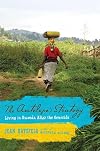
The Antelope's Strategy is the third in a trilogy of books about the Rwandan genocide by French journalist Jean Hatzfeld. All of the books are marvels -- reporting the incomprehensible cruelties and depravity of the killing (by machete) of Tutsis by Hutus over a period of a few months in 1994. The first book, Life Laid Bare, gives the witness of a number of Tutsi survivors, spare reporting, eloquent, breathtaking; the second, Machete Season, offers the more flat testimonies of a group of show more Hutu friends, killers all, from prison and how they remember those harrowing days; and this book The Antelope's Strategy, gives an update from both groups 13 years after the killings, when Tutsi survivors and Hutu murderers are again living side-by-side, if warily, in their villages. What happened is stunning to think about, and can only be described as, yes, total depravity. How to come out of such cruel and senseless carnage with a life is the question all these books take up, and The Antelope's Strategy gives as good an answer as we are likely to get. Many thanks to Jean Hatzfeld and his excellent translator, Linda Coverdale, for a work of tragedy, truth, and simple grandeur. show less
This book is a moving testimony to the strength, grace, and poetry of the human spirit and memory in the worst, the absolute worst of times. Between Monday, April 11, 1994 and May 14 of that year, 50,000 of 59,000 Tutsis in the district of Nyamata in Rwanda were slaughtered by their neighbors, mostly by machete. The horrors and cruelty met by old and young, innocents, slaughtered in their homes, on the roads, in the woods, in the marshes, in the churches are beyond comprehension. And yet the show more survivors in this book tell elegant, honest, truths about their unbelievable ordeals. Jean Hatzfeld, the French journalist, who recorded these stories, as well as some of the killers' stories (Machete Season), and an update, The Antelope Strategy, is to be commended for shining a light on the luminous testimony of the survivors, allowing them to bear witness to the best and worst in the human spirit. show less
Lists
Awards


You May Also Like


Associated Authors
Statistics
- Works
- 15
- Also by
- 1
- Members
- 969
- Popularity
- #26,569
- Rating
- 4.1
- Reviews
- 17
- ISBNs
- 76
- Languages
- 8

