
Eugenia Kim (1) (1975–)
Author of The Calligrapher’s Daughter
For other authors named Eugenia Kim, see the disambiguation page.
About the Author
Image credit: Courtesy E. Kim
Works by Eugenia Kim
Tagged
Common Knowledge
- Other names
- Kim, Eugenia SunHee
- Birthdate
- 1975
- Gender
- female
- Education
- Bennington College (MFA)
- Occupations
- writer
writing teacher - Organizations
- Fairfield Universit
- Awards and honors
- Borders Original Voices Award 2009 (Fiction)
Dayton Literary Peace Prize 2010 Nominee - Nationality
- USA
- Places of residence
- Washington, D.C., USA
- Associated Place (for map)
- D.C., USA
Members
Reviews
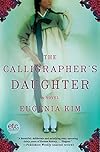
I learned I had no name on the same day I learned fear. Until that day, I had answered to Baby, Daughter or Child, so for the first five years of my life hadn't known I ought to have a name. Nor did I know that those years had seen more than fifty thousand of my Korean countrymen arrested and hundreds more murdered.
When a daughter is born to calligrapher Han and his wife shortly after the Japanese occupation of Korea, Han refuses to name her until the occupation ends. Najin eventually gets show more her unusual name through an American missionary's misunderstanding of a conversation. She hears adults speak of “self-determination” and, when it is explained to her, she decides that's what she wants for her life. Self-determination won't be easy with a father who clings to traditional ways in defiance of the new Japanese laws, nor with the ever-increasing restrictions the Japanese are imposing on Koreans. Najin has her mother's love and support, but she struggles with doubt as she tries to emulate her mother's strong Christian faith.
The words on the page embodied textures, tastes, and smells so strong that I felt I was in Korea with Najin. I was particularly fascinated by the intersection of Christianity and traditional Korean culture. Church was central to Najin's family. Najin's mother had internalized her Christian faith, while her father never really gave up his Confucian principles. Christianity was compatible with those ideals so he was able to integrate them into a system that worked. Najin struggled with her faith because of the suffering and injustice she experienced. The historical afterword explains that Korean Christianity was not the result of missionary efforts, but rather it came to Korea by way of Bibles that a Korean scholar brought back from China in the 17th century. Now I'll be looking for a history of Christianity in Korea to find out more.
Highly recommended for readers with an interest in early 20th century Korean history, Japanese history, women's history, or family novels. Although most readers wouldn't classify this novel as Christian fiction, it will appeal to many readers of Christian fiction. show less
When a daughter is born to calligrapher Han and his wife shortly after the Japanese occupation of Korea, Han refuses to name her until the occupation ends. Najin eventually gets show more her unusual name through an American missionary's misunderstanding of a conversation. She hears adults speak of “self-determination” and, when it is explained to her, she decides that's what she wants for her life. Self-determination won't be easy with a father who clings to traditional ways in defiance of the new Japanese laws, nor with the ever-increasing restrictions the Japanese are imposing on Koreans. Najin has her mother's love and support, but she struggles with doubt as she tries to emulate her mother's strong Christian faith.
The words on the page embodied textures, tastes, and smells so strong that I felt I was in Korea with Najin. I was particularly fascinated by the intersection of Christianity and traditional Korean culture. Church was central to Najin's family. Najin's mother had internalized her Christian faith, while her father never really gave up his Confucian principles. Christianity was compatible with those ideals so he was able to integrate them into a system that worked. Najin struggled with her faith because of the suffering and injustice she experienced. The historical afterword explains that Korean Christianity was not the result of missionary efforts, but rather it came to Korea by way of Bibles that a Korean scholar brought back from China in the 17th century. Now I'll be looking for a history of Christianity in Korea to find out more.
Highly recommended for readers with an interest in early 20th century Korean history, Japanese history, women's history, or family novels. Although most readers wouldn't classify this novel as Christian fiction, it will appeal to many readers of Christian fiction. show less
The narrative is delicate and sensitive as the mannerisms and language of traditional Korean propriety. And though the daughter of the calligrapher is born unnamed, her strength of character and unwavering discipline and grace evolves as naturally, artistically, and raw as the process of calligraphy itself. It goes without saying that the art of Korean calligraphy is one engraved with history, tradition, years of training, depth of feeling, artistic pride, and fluidity.
Yes, the novel is show more about the Japanese occupation of Korea in the early twentieth century, but it is more so about the resilience of Korean propriety, patriotism, duty, cultural tradition and history, faith, and the strong love and bond between family, specifically, mother and daughter as shown in the characters of Najin and her Umma-nim.
There are competing values in the book: tradition vs. modernism; Korea vs. Japan; propriety of women vs. men; aristocracy vs. the underprivileged; Christianity vs. Confucianism; domestication vs. pursuit of higher education; and the list goes on.
What I enjoyed most about the book was the window it provided in disclosing traditional Korean propriety and the secret world of the Korean aristocracy as shown by the Emperor and its Korean royalty. Where westernized values often demean subservience, conservative cultural practices, and even domestication, as well as self-discipline (viewed as a form of rigidity)—I, myself, from an Asian background, understand their significance and appeal.
The traditional propriety found in Korean practices come from an intent of honour and decorum, which I, from reading this novel, have come to truly appreciate. Others may scoff and march in bands of protest, the cries of “independence” and “liberation” and “modernism,” but I find as a native born into western culture, but raised by an ethnic (namely Asian) cultural paradigm, I feel the pull of sentimental tradition and its quiet, subdued, and subservient qualities, its actual richness— something that the west actually lacks. What could be naturally condemned in the novel by western beliefs is actually what I became nostalgic for in reading it.
It’s an elegant, lyrical novel with characters who are well-versed and practiced at concealing what is a deeply rooted passion for country, culture, history, tradition, and family. A beautiful read. show less
Yes, the novel is show more about the Japanese occupation of Korea in the early twentieth century, but it is more so about the resilience of Korean propriety, patriotism, duty, cultural tradition and history, faith, and the strong love and bond between family, specifically, mother and daughter as shown in the characters of Najin and her Umma-nim.
There are competing values in the book: tradition vs. modernism; Korea vs. Japan; propriety of women vs. men; aristocracy vs. the underprivileged; Christianity vs. Confucianism; domestication vs. pursuit of higher education; and the list goes on.
What I enjoyed most about the book was the window it provided in disclosing traditional Korean propriety and the secret world of the Korean aristocracy as shown by the Emperor and its Korean royalty. Where westernized values often demean subservience, conservative cultural practices, and even domestication, as well as self-discipline (viewed as a form of rigidity)—I, myself, from an Asian background, understand their significance and appeal.
The traditional propriety found in Korean practices come from an intent of honour and decorum, which I, from reading this novel, have come to truly appreciate. Others may scoff and march in bands of protest, the cries of “independence” and “liberation” and “modernism,” but I find as a native born into western culture, but raised by an ethnic (namely Asian) cultural paradigm, I feel the pull of sentimental tradition and its quiet, subdued, and subservient qualities, its actual richness— something that the west actually lacks. What could be naturally condemned in the novel by western beliefs is actually what I became nostalgic for in reading it.
It’s an elegant, lyrical novel with characters who are well-versed and practiced at concealing what is a deeply rooted passion for country, culture, history, tradition, and family. A beautiful read. show less

In 1950, four year old Inja is living with her grandparents and uncle in Seoul, while her slightly-older sister Miran is in America with their parents. The family’s intended return to Korea has already been delayed; the outbreak of war forces them to change their plans and delays their reunion with Inja even further.
This is a fascinating portrayal of two sisters growing up in different countries, and an incredibly poignant story about a family separated (inspired by the experience of one show more of the author’s older sisters, who was left with relatives in Korea when their family went to the US!). It’s compelling, and beautifully written, and despite moments of intense grief, hopeful. I liked how, in the end, Inja and Miran didn’t have all the answers -- some things are still a work in progress.
But I wonder if I would have found the ending more satisfying if I had a deeper understanding of who they both were as adults. Maybe if the book hadn’t glossed as much over their experiences at university. While that period of their lives was less relevant in terms of the themes of this novel, it’s a critical time in a person’s development.
(I have just discovered that Kim’s first novel, The Calligrapher’s Daughter, is about Inja and Miran’s mother. Hmm. I wonder if reading that would change one’s perspective on this novel?)
Her sister’s effortlessness with her appearance and body both awed her and made her envy her perfection, as well as her growing ease with language, boys, grownups Korean or American, and her easy acceptance of being different from everyone else in school, in the entire neighbourhood, and probably the entire city of Washington, DC. Maybe it was because she was so different, that she never knew she needed to fit in. For Miran, that yearning was nearly unbearable, unattainable as it was. There were too many hurdles: not only was she Oriental and her hair wouldn’t curl; she was skinny with oily skin that she battled with Sea Breeze, and she made her own clothes -- the final nail on the coffin of forever unpopular. She roamed the worn linoleum of Blair High School’s hallways, hugged her textbooks to her cleavage-less chest, and kept her eyes down -- a loser in every sense, and one who fit best into the books she read. show less
This is a fascinating portrayal of two sisters growing up in different countries, and an incredibly poignant story about a family separated (inspired by the experience of one show more of the author’s older sisters, who was left with relatives in Korea when their family went to the US!). It’s compelling, and beautifully written, and despite moments of intense grief, hopeful. I liked how, in the end, Inja and Miran didn’t have all the answers -- some things are still a work in progress.
But I wonder if I would have found the ending more satisfying if I had a deeper understanding of who they both were as adults. Maybe if the book hadn’t glossed as much over their experiences at university. While that period of their lives was less relevant in terms of the themes of this novel, it’s a critical time in a person’s development.
(I have just discovered that Kim’s first novel, The Calligrapher’s Daughter, is about Inja and Miran’s mother. Hmm. I wonder if reading that would change one’s perspective on this novel?)
Her sister’s effortlessness with her appearance and body both awed her and made her envy her perfection, as well as her growing ease with language, boys, grownups Korean or American, and her easy acceptance of being different from everyone else in school, in the entire neighbourhood, and probably the entire city of Washington, DC. Maybe it was because she was so different, that she never knew she needed to fit in. For Miran, that yearning was nearly unbearable, unattainable as it was. There were too many hurdles: not only was she Oriental and her hair wouldn’t curl; she was skinny with oily skin that she battled with Sea Breeze, and she made her own clothes -- the final nail on the coffin of forever unpopular. She roamed the worn linoleum of Blair High School’s hallways, hugged her textbooks to her cleavage-less chest, and kept her eyes down -- a loser in every sense, and one who fit best into the books she read. show less
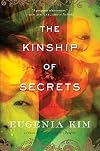
In 1948, a Korean family is split up. Najin and Calvin Cho want to go to the USA with their two daughters, but money is short and there is the issue of convincing the government that they intend to return. Leaving one daughter will solve both those problems, so they take baby Miran with them and leave Inja with Najin’s family. New born Inja doesn’t miss or remember them; to her, her uncle and aunt are parents. Her grandparents also share the house with them, so she has no lack of family. show more
When the Korean War breaks out, it makes the possibility of getting Inja out dimmer. Inja and her family find themselves running south from the North Korean troops, and spend time in a refugee camp with nothing to their names. It takes years for them to rebuild their lives again. Meanwhile, Najin sends packages to them every week with money, clothing, and other goods. She doesn’t know that Aunt and Uncle have to sell most of the goods to get enough money for food and necessities. The Chos work endless hours to afford a home in the suburbs as well, and Miran grows up as an American girl, albeit one who knows she is different.
It’s not until Inja is in high school that the Chos find a way to get her out. By then, Inja doesn’t want to go; she has friends, is doing very well in school, and she loves her Uncle and Aunt. She has no desire to see these people she doesn’t know; she speaks little English and her sister speaks no Korean. Miran is shaken by Inja’s arrival; suddenly she has to share everything including her room. Can two sisters so different find their way to love each other?
I loved this book. I felt great sympathy to all of them; they were all doing the best they could in bad situations. I held my breath to see how the sisters would do together; would they get along? Would they come to understand how the other had grown up? Would Inja grow to love her blood parents? The characters are easy to care about. The prose is wonderful. Five stars. show less
When the Korean War breaks out, it makes the possibility of getting Inja out dimmer. Inja and her family find themselves running south from the North Korean troops, and spend time in a refugee camp with nothing to their names. It takes years for them to rebuild their lives again. Meanwhile, Najin sends packages to them every week with money, clothing, and other goods. She doesn’t know that Aunt and Uncle have to sell most of the goods to get enough money for food and necessities. The Chos work endless hours to afford a home in the suburbs as well, and Miran grows up as an American girl, albeit one who knows she is different.
It’s not until Inja is in high school that the Chos find a way to get her out. By then, Inja doesn’t want to go; she has friends, is doing very well in school, and she loves her Uncle and Aunt. She has no desire to see these people she doesn’t know; she speaks little English and her sister speaks no Korean. Miran is shaken by Inja’s arrival; suddenly she has to share everything including her room. Can two sisters so different find their way to love each other?
I loved this book. I felt great sympathy to all of them; they were all doing the best they could in bad situations. I held my breath to see how the sisters would do together; would they get along? Would they come to understand how the other had grown up? Would Inja grow to love her blood parents? The characters are easy to care about. The prose is wonderful. Five stars. show less
Lists
Awards


You May Also Like


Associated Authors
Statistics
- Works
- 3
- Members
- 882
- Popularity
- #29,045
- Rating
- 3.9
- Reviews
- 60
- ISBNs
- 31
- Languages
- 1
- Favorited
- 2


