
Robert Kraus (1) (1925–2001)
Author of Leo the Late Bloomer
For other authors named Robert Kraus, see the disambiguation page.
About the Author
Robert Kraus was born in Milwaukee, Wisconsin on June 21, 1925. When he was 10-years-old, he won a cartoon contest staged by the Milwaukee Journal. He received a plaque and had his cartoon printed in the paper. Two years later, the newspaper hired him to produce a weekly cartoon called Public show more Nuisances. By the time he was 16-years-old, he was selling cartoons to magazines like Esquire and the Saturday Evening Post. He studied at Milwaukee's Layton Art School and the Art Students' League in New York. After selling a few cartoons to The New Yorker, he was hired by the magazine as a contract artist. He worked there for 15 years and created 21 covers. While there, he started writing and illustrating children's books. His books included All the Mice Came, Leo the Late Bloomer, and Whose Mouse Are You? He left The New Yorker in 1966 and founded Windmill Books. Within a year, the house had won a prestigious Caldecott Medal. After 20 years, he sold Windmill to Simon and Schuster. In 1983, he began a syndicated Sunday comic feature, called Zap! The Video Chap. He died of congestive heart failure on August 7, 2001 at the age of 76. (Bowker Author Biography) show less
Image credit: Robert Kraus
Series
Works by Robert Kraus
The Little Rabbit 1 copy
Musical Max - DVD 1 copy
Associated Works
The 20th-Century Children's Book Treasury: Picture Books and Stories to Read Aloud (1998) — Contributor, some editions — 1,821 copies, 14 reviews
Tagged
Common Knowledge
- Other names
- KRAUS, Robert
- Birthdate
- 1925-07-21
- Date of death
- 2001-08-21
- Gender
- male
- Education
- Art Students League, Manhattan, New York, USA
- Occupations
- writer
illustrator
cartoonist
publisher - Organizations
- Windmill Books
- Short biography
- Robert Kraus was born in Milwaukee, Wisconsin, where his first drawing appeared in the Milwaukee Journal when he was eleven years old. His cartoons appeared regularly in the New Yorker magazine until about five years ago when he started his own publishing company, Windmill Books. Mr. Kraus is the author-illustrator of forty children's books. Mr. Kraus lives in Connecticut with his wife and two sons. [adapted from Leo the Late Bloomer (1971)]
- Nationality
- USA
- Birthplace
- Milwaukee, Wisconsin, USA
- Places of residence
- Connecticut, USA
- Place of death
- Kent, Connecticut, USA
- Burial location
- Fairlawn Cemetery, Ridgefield, Connecticut, USA
- Associated Place (for map)
- Connecticut, USA
Members
Reviews

Constantly tormented by the village children, who insist on calling her a witch, the elderly Bunya denies the charge, until the words "Hocus Pocus" turn all of the children into frogs. When their irate parents come calling, demanding she reverse her spell, Bunya's efforts to explain, including describing how she said "Hocus Pocus," turn the village adults into pigs. Her efforts to undo these actions are successful, leading the villagers young and old to adopt a newly respectful attitude to show more their neighbor. That redoubtable old lady, however, wants their compliments no more than she does their insults, and delighted with her newfound powers, sets out to travel the world...
Originally published in 1971, and then reprinted in the edition I read in 1989, Bunya the Witch is a humorous and entertaining take on the witchy tale. I've read hundreds of picture books featuring witches—witchy picture books and early reviewers are a pet project of mine—and I find they usually fall into either the sweet witch category, or the less common but still present nasty/scary witch category. This one is something of an anomaly—an unknowing witch who discovers her powers after being the target of prejudice and harassment, and who, although essentially goodhearted, is a little too tart to be sweet. The figure of the crone—the old woman who is mistaken for a witch by superstitious or ignorant people—is a fascinating one, and although Bunya doesn't end up falling into that category, one feels the story draws on that theme. How fortunate that she ended up being a witch after all, as this allowed her to put a stop to the children's terror campaign against her; and despite her remorse, how richly those children deserved being turned into frogs! Although this won't be going on any favorites list, I'm glad to have read it, both for author Robert Kraus' amusing tale of a wise old woman and some villagers who got taught a lesson, and illustrator Mischa Richter's humorous cartoon-like illustrations. Recommended to picture book readers who enjoy witchy fare that's sharp and on the funny side. show less
Originally published in 1971, and then reprinted in the edition I read in 1989, Bunya the Witch is a humorous and entertaining take on the witchy tale. I've read hundreds of picture books featuring witches—witchy picture books and early reviewers are a pet project of mine—and I find they usually fall into either the sweet witch category, or the less common but still present nasty/scary witch category. This one is something of an anomaly—an unknowing witch who discovers her powers after being the target of prejudice and harassment, and who, although essentially goodhearted, is a little too tart to be sweet. The figure of the crone—the old woman who is mistaken for a witch by superstitious or ignorant people—is a fascinating one, and although Bunya doesn't end up falling into that category, one feels the story draws on that theme. How fortunate that she ended up being a witch after all, as this allowed her to put a stop to the children's terror campaign against her; and despite her remorse, how richly those children deserved being turned into frogs! Although this won't be going on any favorites list, I'm glad to have read it, both for author Robert Kraus' amusing tale of a wise old woman and some villagers who got taught a lesson, and illustrator Mischa Richter's humorous cartoon-like illustrations. Recommended to picture book readers who enjoy witchy fare that's sharp and on the funny side. show less

Leo the tiger was a late bloomer. He didn't learn to read and write when the other baby animals did, and he couldn't draw, eat neatly, or speak when they could. His father wondered aloud what the problem was, but his mother counseled patience, declaring that he would bloom when it was his time. After much worried watching, his father eventually let him be, and then... Leo bloomed!
Originally published in 1971, this classic picture-book addresses a common childhood (and parent) concern: the show more feeling that one's development, either overall or in some specific area, is delayed, because it doesn't happen at exactly the same time as it does with one's peers. The simple story here gently drives home the point that everyone is on their own schedule, and that it shouldn't be a cause of undue concern when one child develops a skill at a different time than another. I found Robert Kraus's text quite humorous, especially the depiction of Leo's father and his worried watching, and thought the illustrations by José Aruego, whose artwork I am familiar with from various folkloric retellings he has been involved in, were colorful and appealing. Recommended to anyone, parent or child, worried about development schedules. show less
Originally published in 1971, this classic picture-book addresses a common childhood (and parent) concern: the show more feeling that one's development, either overall or in some specific area, is delayed, because it doesn't happen at exactly the same time as it does with one's peers. The simple story here gently drives home the point that everyone is on their own schedule, and that it shouldn't be a cause of undue concern when one child develops a skill at a different time than another. I found Robert Kraus's text quite humorous, especially the depiction of Leo's father and his worried watching, and thought the illustrations by José Aruego, whose artwork I am familiar with from various folkloric retellings he has been involved in, were colorful and appealing. Recommended to anyone, parent or child, worried about development schedules. show less
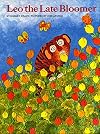
First sentence: Leo couldn't do anything right. He couldn't read. He couldn't write. He couldn't draw. He was a sloppy eater. And, he never said a word.
Premise/plot: Much of Leo the Late Bloomer covers conversations between a mother and father as they discuss their late bloomer, Leo. The father worries that Leo will never, ever bloom. His mother is confident that Leo will bloom. Seasons come and go but Leo hasn't bloomed. Then one day, he does. And Leo's "first word" isn't a first word, but show more a sentence: "I made it!"
My thoughts: I did not grow up with this one. In fact, I didn't meet Leo until I was in college. But I definitely connected with him once I met him. I liked the optimism of the mother tiger. I could understand, in part, the frustration of the father. And I cheered the happy, happy ending. Overall, I'm not sure that it's perfectly-perfect in terms of modeling what to do if your child has learning difficulties. But I'm not convinced that it has to be. This isn't a how-to book for children or parents.
Text: 5 out of 5
Illustrations: 4 out of 5
Total: 9 out of 10 show less
Premise/plot: Much of Leo the Late Bloomer covers conversations between a mother and father as they discuss their late bloomer, Leo. The father worries that Leo will never, ever bloom. His mother is confident that Leo will bloom. Seasons come and go but Leo hasn't bloomed. Then one day, he does. And Leo's "first word" isn't a first word, but show more a sentence: "I made it!"
My thoughts: I did not grow up with this one. In fact, I didn't meet Leo until I was in college. But I definitely connected with him once I met him. I liked the optimism of the mother tiger. I could understand, in part, the frustration of the father. And I cheered the happy, happy ending. Overall, I'm not sure that it's perfectly-perfect in terms of modeling what to do if your child has learning difficulties. But I'm not convinced that it has to be. This isn't a how-to book for children or parents.
Text: 5 out of 5
Illustrations: 4 out of 5
Total: 9 out of 10 show less
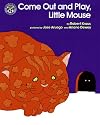
In my opinion, “Come Out and Play, Little Mouse” is an adorable story for a young child to read. One thing that I immediately liked about this story is that it displays the days of the week in it. I think that this is an excellent way to teach children the different days of the week. Each page is a different day and shows what the mouse will do on that day. The writing is very organized and paced well. The writing is predictable and repeated some of the same lines over and over. I think show more this is a great element for beginning readers, because it will help reinforce their learning of these words. For example, the cat says, “Come out and play, little mouse,” and the mouse says, “I can’t play today…,” and then he explains why he cannot play that day. The plot is well thought-out. The cat keeps asking the mouse to play with him, but the mouse is busy. When the mouse does come out of his home to play with the cat, the cat tries to catch him. The mouse’s big brother dresses up as a dog and scares the cat away to protect the little mouse. The mice then go home and play with their family. The cat is sad that the mice cannot play. However, the story leads readers to think that the cat learns his lesson to not play aggressively with the mouse. The book pushes readers to think about how to be a good friend and how to treat others. I believe that the big idea is to show readers that they should play nicely with their friends and that they should spend time with their family because family is one of the most important things in life. show less
Lists
Sonlight Books (2)
Awards


You May Also Like


Associated Authors
Statistics
- Works
- 118
- Also by
- 5
- Members
- 11,945
- Popularity
- #1,963
- Rating
- 4.0
- Reviews
- 143
- ISBNs
- 441
- Languages
- 9
- Favorited
- 3