
Peter McPhee (1) (1948–)
Author of Liberty or Death: The French Revolution
For other authors named Peter McPhee, see the disambiguation page.
About the Author
Peter McPhee is Professor of History at the University of Melbourne
Works by Peter McPhee
Tagged
Common Knowledge
- Birthdate
- 1948-01-24
- Gender
- male
- Nationality
- Australia
- Places of residence
- Melbourne, Victoria, Australia
- Associated Place (for map)
- Victoria, Australia
Members
Reviews

'History is replete with examples of regimes which have collapsed because of their own failure or inability to respond to crisis. It is much rarer that such collapses result in a revolutionary shift in who holds power and for what purposes. France in 1789 was one of those rare occasion.'
I have read this book as part of a MOOC I have done on Coursera - 'The French Revolution' by the University of Melbourne, the author being the tutor. All in all, this is an outline of the said course, but show more going, obviously, more in depth. What makes it interesting, is the focus of Peter McPhee on events outside France to explain what happened, why it took the turn it took (a descent into civil war and bloodshed barely seen before) and, above all, why the French Revolution had so much impact not only in Europe but also worldwide.
Where other historians before him were keen on explaining then France's financial ordeal by extravagant expenses and inept tax system from a self-serving elite, he is pointing towards the Seven Years' War and the French and Indian War in America as the final cause to the country's bankruptcy. Where other historians before him were keen on finding in Enlightenment philosophes the ideological seed behind it all he is, on the contrary, minimising their influence to find such ideological inspiration in the American War of Independence. Where other historians before him were keen on explaining the global spread of French revolutionary ideals by pointing to the Napoleonic conquests (e.g. the massive impact of the 'Code Napoleon') he is reminding us that the political turmoil engulfing France and Europe also resonated in the colonies across the Atlantic, raising questions especially on how to deal with slavery. In other words, not only he is looking for complementary reasons external to France to explain why the Revolution didn't stop in 1789 (as it should have; after all, the August Decrees were a massive victory in themselves) but, he is doing so by adopting a worldview, one with the Atlantic at its center, that better illuminate what makes such revolution a serie of events unlike any other before. Putting it all in such a global context (Atlantic-centred) which is too often neglected, such perspective is very interesting.
Is it relevant though? As much as I follow him on the minimal impact of the philosophes, I had trouble swinging the pendulum all the way towards what happened in America. Enlightenment philosophy and American politics are indeed to me both the same that is, such crucial debates surely echoed with radical intellectuals (themselves born, ironically, as part of the establishment) but I don't think the sans-culottes cared about it all. And wasn't it the sans-culottes who drove what started as an attempt to reform a system straight into violence, bloodshed, and, ultimately, dictatorship? From the storming of the Bastille to the assault on the Tuilerie and, even, the Terror orchestrated by the most extremists of the Jacobins, it is they who had set the brutal tone of it all; not the intellectuals of 'a republic of letters', whether looking across an ocean or not (a Robespierre had to send them all to the guillotine, this is no coincidence).
Now, sure, there was, undeniably, a cultural zeitgeist that, more and more, were bringing the inadequacies and irrelevance of absolutism and feudalism to the fore. And sure enough, that political zeitgeist owed as much to the philosophes as to the events in America, besides underlying the ideals behind the various drafted Constitutions (and, of course, the Declaration of the Rights of the Man and of the Citizen!). I therefore agree to say (but I am no historian) that the Revolution was unavoidable. But such influences should not be over-estimated.
If America had been such a source of inspiration, France would have been a Republic right from the start; yet it wasn't until 1792, and because of events unrelated to what was going on in the other side of the Atlantic. More importantly, without the sans-culottes' propensity for violence, those ideals may actually have been implemented for good. Instead of that, as the author himself acknowledges, the backlash against their excesses would be such that, the societal landscape in France would be, after it all, pretty much the same as before. A bourgeois elite would replace the noblesse of the Old Regime; women and workers' rights would not progress until late in the 19th and even 20th centuries; not much changed in the daily lives of peasants; and even slavery, abolished in 1794, would be reinstated in 1802! Now, I am not saying such Atlantic-view should be discarded when it comes to understand the causes of it all. It might indeed have influenced the elites who kickstarted it. I am just saying, again, that it shouldn't be granted as much importance as the author does here; as the influence of such elite quickly found itself run over by the mob.
Nevertheless, here's a fascinating read, that I particularly enjoyed because, despite his view, the author doesn't get bogged down into that old academic controversy minimalist vs maximalist (upon which he bounces back, for those unfamiliar with it). On the contrary, he is balancing it all brilliantly. Yes, the political and cultural impact of the French Revolution was absolutely massive (nationalism, liberalism, secularism...). But, yes too, it took time for it to tickle down to those who should have been its beneficiaries that is, commoners themselves. And so the question remains: was such a path needed?
Here's a great overview of a complex serie of events. Clear, it also bluntly demonstrates why it took the turn it took (the Civil Constitution of the Clergy, the war against Austria in 1792...). Gosh! Even the Terror is faced with that cold rational understanding it has been needed for so long! It's just, as much as I appreciate the importance of the Atlantic question, in my opinion, the author over-estimate it. Apart from that, this read is like the course it serves as guide to: brilliant. show less
I have read this book as part of a MOOC I have done on Coursera - 'The French Revolution' by the University of Melbourne, the author being the tutor. All in all, this is an outline of the said course, but show more going, obviously, more in depth. What makes it interesting, is the focus of Peter McPhee on events outside France to explain what happened, why it took the turn it took (a descent into civil war and bloodshed barely seen before) and, above all, why the French Revolution had so much impact not only in Europe but also worldwide.
Where other historians before him were keen on explaining then France's financial ordeal by extravagant expenses and inept tax system from a self-serving elite, he is pointing towards the Seven Years' War and the French and Indian War in America as the final cause to the country's bankruptcy. Where other historians before him were keen on finding in Enlightenment philosophes the ideological seed behind it all he is, on the contrary, minimising their influence to find such ideological inspiration in the American War of Independence. Where other historians before him were keen on explaining the global spread of French revolutionary ideals by pointing to the Napoleonic conquests (e.g. the massive impact of the 'Code Napoleon') he is reminding us that the political turmoil engulfing France and Europe also resonated in the colonies across the Atlantic, raising questions especially on how to deal with slavery. In other words, not only he is looking for complementary reasons external to France to explain why the Revolution didn't stop in 1789 (as it should have; after all, the August Decrees were a massive victory in themselves) but, he is doing so by adopting a worldview, one with the Atlantic at its center, that better illuminate what makes such revolution a serie of events unlike any other before. Putting it all in such a global context (Atlantic-centred) which is too often neglected, such perspective is very interesting.
Is it relevant though? As much as I follow him on the minimal impact of the philosophes, I had trouble swinging the pendulum all the way towards what happened in America. Enlightenment philosophy and American politics are indeed to me both the same that is, such crucial debates surely echoed with radical intellectuals (themselves born, ironically, as part of the establishment) but I don't think the sans-culottes cared about it all. And wasn't it the sans-culottes who drove what started as an attempt to reform a system straight into violence, bloodshed, and, ultimately, dictatorship? From the storming of the Bastille to the assault on the Tuilerie and, even, the Terror orchestrated by the most extremists of the Jacobins, it is they who had set the brutal tone of it all; not the intellectuals of 'a republic of letters', whether looking across an ocean or not (a Robespierre had to send them all to the guillotine, this is no coincidence).
Now, sure, there was, undeniably, a cultural zeitgeist that, more and more, were bringing the inadequacies and irrelevance of absolutism and feudalism to the fore. And sure enough, that political zeitgeist owed as much to the philosophes as to the events in America, besides underlying the ideals behind the various drafted Constitutions (and, of course, the Declaration of the Rights of the Man and of the Citizen!). I therefore agree to say (but I am no historian) that the Revolution was unavoidable. But such influences should not be over-estimated.
If America had been such a source of inspiration, France would have been a Republic right from the start; yet it wasn't until 1792, and because of events unrelated to what was going on in the other side of the Atlantic. More importantly, without the sans-culottes' propensity for violence, those ideals may actually have been implemented for good. Instead of that, as the author himself acknowledges, the backlash against their excesses would be such that, the societal landscape in France would be, after it all, pretty much the same as before. A bourgeois elite would replace the noblesse of the Old Regime; women and workers' rights would not progress until late in the 19th and even 20th centuries; not much changed in the daily lives of peasants; and even slavery, abolished in 1794, would be reinstated in 1802! Now, I am not saying such Atlantic-view should be discarded when it comes to understand the causes of it all. It might indeed have influenced the elites who kickstarted it. I am just saying, again, that it shouldn't be granted as much importance as the author does here; as the influence of such elite quickly found itself run over by the mob.
Nevertheless, here's a fascinating read, that I particularly enjoyed because, despite his view, the author doesn't get bogged down into that old academic controversy minimalist vs maximalist (upon which he bounces back, for those unfamiliar with it). On the contrary, he is balancing it all brilliantly. Yes, the political and cultural impact of the French Revolution was absolutely massive (nationalism, liberalism, secularism...). But, yes too, it took time for it to tickle down to those who should have been its beneficiaries that is, commoners themselves. And so the question remains: was such a path needed?
Here's a great overview of a complex serie of events. Clear, it also bluntly demonstrates why it took the turn it took (the Civil Constitution of the Clergy, the war against Austria in 1792...). Gosh! Even the Terror is faced with that cold rational understanding it has been needed for so long! It's just, as much as I appreciate the importance of the Atlantic question, in my opinion, the author over-estimate it. Apart from that, this read is like the course it serves as guide to: brilliant. show less
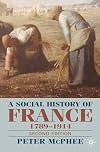
This book took a lot longer to read than many of the more narrative French history books I've been plowing through, but not because it was less interesting. (Though you might think that.) Rather, as a textbook-style summary of an era, McPhee's book is a condensed distillation of the most interesting and important facts and examples from hundreds of independent sources — so I could barely read a page without opening my laptop to take notes for my forthcoming French history podcast, The show more Siècle.
In a refreshing contrast to many other histories, McPhee puts the political events — all those revolutions and coups, empires and republics — into the background and focuses on the lived experiences of ordinary people: rich, poor and in between, urban and rural, early and late. This surprisingly rich field gives him plenty of material to draw on, from nationwide government statistics to carefully researched microhistories of particular villages. McPhee weaves it all together into a few chapter-length essays focusing on particular groups and periods. You can learn about how much food peasants ate, when agriculture modernized, what kind of contraception women practiced, the economic impact of the Revolutionary seizure of property, and more.
McPhee also adds a helpful "Further Reading" section at the end, listing many of his most helpful sources in both English and French.
My only real complaint is that I think the book would have been improved by some aggressive sub-headers, breaking up his long chapters which otherwise just flowed organically from topic to topic. This would enable both more casual reading as well as making the book more useful as a reference (though it has a helpful and ample index). (It's also a little light on the years after 1880 — a reflection of the fact that this was originally published as a social history of France from 1780 to 1880, and then expanded to 1914 for a second edition.)
If you're looking for an overview of France in the "Long 19th Century" this could be an excellent first start, especially if you want to get beyond the politics and war that often dominate discussions of the period (without ignoring them entirely). show less
In a refreshing contrast to many other histories, McPhee puts the political events — all those revolutions and coups, empires and republics — into the background and focuses on the lived experiences of ordinary people: rich, poor and in between, urban and rural, early and late. This surprisingly rich field gives him plenty of material to draw on, from nationwide government statistics to carefully researched microhistories of particular villages. McPhee weaves it all together into a few chapter-length essays focusing on particular groups and periods. You can learn about how much food peasants ate, when agriculture modernized, what kind of contraception women practiced, the economic impact of the Revolutionary seizure of property, and more.
McPhee also adds a helpful "Further Reading" section at the end, listing many of his most helpful sources in both English and French.
My only real complaint is that I think the book would have been improved by some aggressive sub-headers, breaking up his long chapters which otherwise just flowed organically from topic to topic. This would enable both more casual reading as well as making the book more useful as a reference (though it has a helpful and ample index). (It's also a little light on the years after 1880 — a reflection of the fact that this was originally published as a social history of France from 1780 to 1880, and then expanded to 1914 for a second edition.)
If you're looking for an overview of France in the "Long 19th Century" this could be an excellent first start, especially if you want to get beyond the politics and war that often dominate discussions of the period (without ignoring them entirely). show less
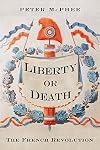
Not a bad book exactly but has some frustrating inadequacies as a single volume history. There's a deliberate decision to focus a lot on what's happening outside of Paris but it means the writing is spread way too thin. A lot of key events are just sort of glossed over and there's no real sense of how the Convention went through so many political changes. For example, the narrative sort of displays the Jacobins at the height of their power, doesn't really show any significant opposition... show more then Thermidor happens, Robespierre is killed and suddenly everyone has changed their views within a page. There's not even an attempt at explaining what on earth happened. Just a sudden switch. The other major events get similar treatment.
The focus on how the provinces reacted to what happened in Paris is a logical choice but because his explanation of what happened in Paris is so thin, even in terms of just the basic facts, a lot of the time you don't have the context to understand why X town is doing what it is. A lot of random stories and details about single small settlements are included but they don't form a cohesive whole or give you an understanding of how X broad area of France reacted. When useful statistics are introduced which give you an idea of opinion past anecdotes, they're still hard to interpret - for example if x% of priests in y area were non jurors, I have no idea what the size of y area is or where it is because I'm not familiar with the administrative geography of Revolutionary France!
Neither of these make the book bad exactly but I just keep feeling like I'm missing key information or it's just assumed I'll know it. There's lots of interesting stuff but I'm missing a big picture understanding of lots of stuff too show less
The focus on how the provinces reacted to what happened in Paris is a logical choice but because his explanation of what happened in Paris is so thin, even in terms of just the basic facts, a lot of the time you don't have the context to understand why X town is doing what it is. A lot of random stories and details about single small settlements are included but they don't form a cohesive whole or give you an understanding of how X broad area of France reacted. When useful statistics are introduced which give you an idea of opinion past anecdotes, they're still hard to interpret - for example if x% of priests in y area were non jurors, I have no idea what the size of y area is or where it is because I'm not familiar with the administrative geography of Revolutionary France!
Neither of these make the book bad exactly but I just keep feeling like I'm missing key information or it's just assumed I'll know it. There's lots of interesting stuff but I'm missing a big picture understanding of lots of stuff too show less
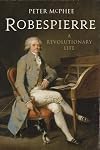
McPhee does a largely admirable job of documenting Robespierre's life, but the book is often lacking in context, leading any reader not thoroughly acquainted with the history of the French Revolution confused at times.
You May Also Like


Statistics
- Works
- 12
- Members
- 485
- Popularity
- #50,912
- Rating
- 3.7
- Reviews
- 6
- ISBNs
- 73
- Languages
- 4