
Molly O'Neill (1) (1952–2019)
Author of New York Cookbook: From Pelham Bay to Park Avenue, Firehouses to Four-Star Restaurants
For other authors named Molly O'Neill, see the disambiguation page.
About the Author
Molly O'Neill is the food columnist for the New York Times Sunday Magazine and a reporter for the style section of the New York Times. For ten years she worked as a chef and studied cooking at La Verenne in Paris. Twelve years ago she began writing for a living, first as a columnist at Boston show more Magazine, then at Food and Wine Magazine. In 1984, she became the restaurant critic for New York Newsday and moved to the New York Times in 1989. She has been nominated for Pulitzer Prize two times. Her first book, The New York Cookbook, won both the Julia Child/IACP and James Beard Awards. Her title One Big Table made the N.Y. Times Bestseller list for 2010. (Bowker Author Biography) show less
Works by Molly O'Neill
New York Cookbook: From Pelham Bay to Park Avenue, Firehouses to Four-Star Restaurants (1992) 384 copies, 1 review
One Big Table: 600 recipes from the nation's best home cooks, farmers, fishermen, pit-masters, and chefs (2010) 204 copies, 5 reviews
The Great American Cookbook 1 copy
Associated Works
The New York Times Seafood Cookbook: 250 Recipes for More than 70 Kinds of Fish and Shellfish (2003) — Contributor — 35 copies
Tagged
Common Knowledge
- Birthdate
- 1952-10-09
- Date of death
- 2019-06-16
- Gender
- female
- Education
- Denison University (B.A.|1975)
- Occupations
- cookbook author
food writer - Organizations
- The New York Times
New York Newsday - Relationships
- O'Neill, Paul (brother)
- Short biography
- https://www.nytimes.com/2019/06/17/din...
- Nationality
- USA
- Birthplace
- Columbus, Ohio, USA
- Places of residence
- Boston, Massachusetts, USA
New York, New York, USA
Rensselaer, New York, USA - Place of death
- New York, New York, USA
- Associated Place (for map)
- USA
Members
Reviews
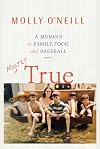
A few weeks ago I posted a review of Julia Pandl's Memoirs of the Sunday Brunch, and Sarah, a Goodreads friend, suggested I might like Molly O'Neill's Mostly True- A Memoir of Family, Food and Baseball. Since those are three of my favorite things, I searched and found the book and read it.
Sarah was right; what a fantastic memoir! Molly is the oldest O'Neill child, followed in succession by five boys in the 1950s and 1960s. They grew up in Columbus, Ohio, a close-knit crew, and much of their show more lives revolved around baseball (like mine growing up). Her dad loved baseball and encouraged his sons to play the game; youngest son Paul grew up to play for the legendary New York Yankees (and before that, the Cincinnati Reds, a team close enough to home for his parents to watch him play often).
Anyone from a big family will relate to Molly's memories of growing up in a big family. Molly's attitude towards food came from her parents, who had a different idea than many people at that time. Columbus was (and still is) the test-market capital for food products. Grocery stores were filled with product samplers, while ubiquitous today, were not found in may places in the Unites States back then.
The O'Neill's, however, did not serve their children pot pies or macaroni and cheese or tuna noodle casserole or even meat loaf. Her parents "practiced a separation of food groups. We had meat. We had potato. We had vegetable. We had salad. We had dessert.. Each was distinct and none was overcooked. It was humiliating."
Molly first became interested in cooking when she was trying to lose weight. She joined a weight loss support group because her brother mercilessly teased her about having unidentifiable kneecaps. There, a woman gave her a cookbook and Molly started cooking for herself because her mother would not make a separate meal for her. Soon Molly ditched the low calorie cooking and moved on to making recipes out of Julia Child for her grateful family.
She went to college in Massachusetts, became a feminist, wrote poetry and helped to start a feminist, humanist, vegetarian restaurant. As the women who ran the restaurant began to become more and more militant about what could be served, Molly became more creative with ways to make broth without any trace of beef and ways to use tofu.
After college, she settled in Provincetown, working at many restaurants. I loved reading about how Molly got her hands-on education, how she fought for her place in the male-dominated kitchens. Surely growing up with male siblings helped her here.
Molly gained a reputation, and a following, and soon two of her brothers followed her into the business. She got them jobs and they all cooked together.
Eventually Molly went to Paris to learn how to make desserts, she became friends with her neighbor Julia Child, she moved to New York and ended up a New York Times restaurant critic and a famous cookbook author.
Paul was playing for the Yankees while Molly was living in New York, so she spent many games sitting in the stands watching him and her father, who was so thrilled to have a son playing Major League baseball. Molly's mom was thrilled to be able to shop in New York.
This is a book for anyone who is fascinated by food, family and yes, baseball. But it is much more. It is the story of a woman finding her way through her passion and I absolutely loved it. I know I will read this one again and again. Thanks to Sarah for the suggestion!
rating 5 of 5 show less
Sarah was right; what a fantastic memoir! Molly is the oldest O'Neill child, followed in succession by five boys in the 1950s and 1960s. They grew up in Columbus, Ohio, a close-knit crew, and much of their show more lives revolved around baseball (like mine growing up). Her dad loved baseball and encouraged his sons to play the game; youngest son Paul grew up to play for the legendary New York Yankees (and before that, the Cincinnati Reds, a team close enough to home for his parents to watch him play often).
Anyone from a big family will relate to Molly's memories of growing up in a big family. Molly's attitude towards food came from her parents, who had a different idea than many people at that time. Columbus was (and still is) the test-market capital for food products. Grocery stores were filled with product samplers, while ubiquitous today, were not found in may places in the Unites States back then.
The O'Neill's, however, did not serve their children pot pies or macaroni and cheese or tuna noodle casserole or even meat loaf. Her parents "practiced a separation of food groups. We had meat. We had potato. We had vegetable. We had salad. We had dessert.. Each was distinct and none was overcooked. It was humiliating."
Molly first became interested in cooking when she was trying to lose weight. She joined a weight loss support group because her brother mercilessly teased her about having unidentifiable kneecaps. There, a woman gave her a cookbook and Molly started cooking for herself because her mother would not make a separate meal for her. Soon Molly ditched the low calorie cooking and moved on to making recipes out of Julia Child for her grateful family.
She went to college in Massachusetts, became a feminist, wrote poetry and helped to start a feminist, humanist, vegetarian restaurant. As the women who ran the restaurant began to become more and more militant about what could be served, Molly became more creative with ways to make broth without any trace of beef and ways to use tofu.
After college, she settled in Provincetown, working at many restaurants. I loved reading about how Molly got her hands-on education, how she fought for her place in the male-dominated kitchens. Surely growing up with male siblings helped her here.
Molly gained a reputation, and a following, and soon two of her brothers followed her into the business. She got them jobs and they all cooked together.
Eventually Molly went to Paris to learn how to make desserts, she became friends with her neighbor Julia Child, she moved to New York and ended up a New York Times restaurant critic and a famous cookbook author.
Paul was playing for the Yankees while Molly was living in New York, so she spent many games sitting in the stands watching him and her father, who was so thrilled to have a son playing Major League baseball. Molly's mom was thrilled to be able to shop in New York.
This is a book for anyone who is fascinated by food, family and yes, baseball. But it is much more. It is the story of a woman finding her way through her passion and I absolutely loved it. I know I will read this one again and again. Thanks to Sarah for the suggestion!
rating 5 of 5 show less
First, I'm not enamored of the early American so-called food writers, until the second half of the twentieth century, they all seemed very tedious and unfunny. Second, the entire book is way too heavily focused on French cuisine, which apparently Americans have been obsessed with for 200 years. Third, the receipes scattered throughout had little or nothing to do with the essays. They seemed randomly chosen. Fourth, the individual essays did not have dates, you had to hunt in the bibliography show more to see when they were written.
Overall the selections were disappointing. I think I would have chosen to start with the brief paragraph describing the Pilgrims' first Thanksgiving. I would have included Laura Ingalls Wilder's opening chapter to Little House in the Big Woods, with the shockingly violent and yet somehow joyful slaughtering of the pig, which is at the foundation of America's attitude to food.
I would have excerpted something from the incredibly influential Diet for a Small Planet. Instead of the endless writings about France the chapter of Elizabeth Fernia's description of a feast in an Iraqi village would have been a refreshing change. David Barry's description of food in Japan is fantastic, too, and way funnier than any of the comic writing here.
Where O'Neill did choose some good writers, she picked some of their most mundane prose. For example Ruth Reichl's famous review of Le Cirque, very typically American in its concern for equal treatment to all, should have been included instead of the workmanlike review of a sushi restaurant that O'Neill chose. Also something a little more amusing by Julia Child, maybe the chapter where her husband puts the dirty dishes in the pot of veal stock or something. And something from Nora Ephron's sad/funny Heartburn, for which I've always had a soft spot. How can you find something boring in the Federal Writers Project food writings? Somehow O'Neill managed to do it.
The whole thing was such a huge disappointment. One thing I will say is that it made me want to edit my own anthology someday. show less
Overall the selections were disappointing. I think I would have chosen to start with the brief paragraph describing the Pilgrims' first Thanksgiving. I would have included Laura Ingalls Wilder's opening chapter to Little House in the Big Woods, with the shockingly violent and yet somehow joyful slaughtering of the pig, which is at the foundation of America's attitude to food.
I would have excerpted something from the incredibly influential Diet for a Small Planet. Instead of the endless writings about France the chapter of Elizabeth Fernia's description of a feast in an Iraqi village would have been a refreshing change. David Barry's description of food in Japan is fantastic, too, and way funnier than any of the comic writing here.
Where O'Neill did choose some good writers, she picked some of their most mundane prose. For example Ruth Reichl's famous review of Le Cirque, very typically American in its concern for equal treatment to all, should have been included instead of the workmanlike review of a sushi restaurant that O'Neill chose. Also something a little more amusing by Julia Child, maybe the chapter where her husband puts the dirty dishes in the pot of veal stock or something. And something from Nora Ephron's sad/funny Heartburn, for which I've always had a soft spot. How can you find something boring in the Federal Writers Project food writings? Somehow O'Neill managed to do it.
The whole thing was such a huge disappointment. One thing I will say is that it made me want to edit my own anthology someday. show less

This took me two years to finish! Mostly because I kept it at my boyfriend's apartment to read when he was doing things like (appropriately) cooking dinner. Anthologies work very well for that. I think spacing out the reading actually kept the pieces more interesting because there wasn't the risk of them all mushing together after a while. I'd seen some of the pieces before, but that's inevitable for a collection of this sort. And I found quite a few new authors to look into further. Oddly, show more the (only) two really unpleasant pieces were back to back. show less
Excellent anthology of American food writing, with a great and very amusing selection. Selections cover the history of American food classics like gumbo, fried chicken, chocolate chip cookies and others; but also the creation of Mc Donalds, processed food and gourmet snobbery. Particular highlights are a cake recipe by Emily Dickinson (complete with dashes) and Russell Baker's hilarious mock-banquet.
Lists
Food Memoirs (1)
Awards

You May Also Like


Associated Authors
Statistics
- Works
- 8
- Also by
- 9
- Members
- 1,212
- Popularity
- #21,185
- Rating
- 3.8
- Reviews
- 10
- ISBNs
- 42
- Languages
- 1