

David Nicholls (1) (1966–)
Author of One Day
For other authors named David Nicholls, see the disambiguation page.
About the Author
David Nicholls was born in 1966 in Eastleigh, Hampshire, United Kingdom. He studied English literature and drama at the University of Bristol. When he graduated he won a scholarship to study at the American Musical and Dramatic Academy in New York. He appeared in plays at the Battersea Arts Centre, show more the Finborough, West Yorkshire Playhouse, Birmingham Rep, and had a three year stint at the Royal National Theatre, understudying and playing small parts. During this period he took a job at BBC Radio Drama as a script reader/researcher and he developed an adaptation of Sam Shepard's stage-play Simpatico with the director Matthew Warchus. He also wrote his first original script, Waiting, which was later optioned by the BBC. Simpatico was turned into a feature film in 1999 which allowed him to start writing full-time. I Saw You won best single play at the annual BANFF television festival. He has been twice nominated for BAFTA awards. His first novel, Starter for 10, was featured on the first Richard and Judy Book Club. His other novels include The Understudy, One Day, which won the Galaxy Book Award, and Us. (Bowker Author Biography) show less
Image credit: 2011 (photo from putnik on Wikipedia)
Works by David Nicholls
ShakespeaRE-Told [2005 TV mini-series] (2005) — writer "Much Ado About Nothing" — 51 copies, 3 reviews
The Making of the British Middle Class: Studies of Regional and Cultural Diversity Since the 18th Century (Sutton Modern British History, 4) (1999) — Editor — 5 copies
Associated Works
Tagged
Common Knowledge
- Other names
- Holdaway, David
- Birthdate
- 1966-11-30
- Gender
- male
- Education
- Bristol University (BA ∙ [1988])
Central School of Speech and Drama
Barton Peveril College - Occupations
- novelist
screenwriter
actor - Nationality
- England
UK - Birthplace
- Eastleigh, Hampshire, England, UK
- Places of residence
- Eastleigh, Hampshire, England, UK
New York, New York, USA
Members
Discussions
2014 Booker Prize longlist: Us in Booker Prize (September 2014)
Reviews
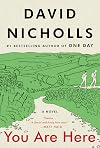
My God, I didn't plan on liking this. I expected it to be a quick, lightweight, Jane Austen-ian, two cranky middleaged people meet cute. I suppose it is that, but the writing is so sharp, so funny, so well-observed that it becomes more than the sum of it's parts.
I ended up liking it a lot. It's not even a guilty pleasure.
I ended up liking it a lot. It's not even a guilty pleasure.
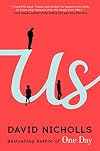
This is a difficult book for me to review, because there are basically only four characters in the book, and I absolutely could not stand three of them. It was actually painful for me to read it, just because I didn’t like them so much. But that has no bearing on whether or not the book is well-written or tells a good story, and in fact, many reviewers have loved this book.
The story is narrated by Douglas Petersen, 54, whose wife of 20 years, Connie, tells him at the beginning of this book show more “I think our marriage has run its course. I think I want to leave you.” But their only child, a 17-year-old son named Albie, is about to go off to college, and they have already planned a “Grand Tour” of Europe for the three of them before Albie leaves in the fall. They decide to go through with it, “for Albie’s sake.”
Alternating with Douglas’s account of what happened on this trip, he goes back in time to chart the course of his marriage to Connie. Granted, this is just his point of view, and I suppose if this book were by Gillian Flynn we might get a book in two halves with Connie’s perspective represented. But not hearing her take on the marriage except from Douglas’s eyes, I grew to detest Connie, Albie, and Kat, the girl Albie picks up mid-trip in Europe. Moreover, I can’t imagine what kept Douglas and Connie together for even a moment, not to mention twenty years, except that Douglas seemed overwhelmed by Connie’s looks, and - as a science geek without much experience with women - he idolized her and felt lucky to be the object of her attention. Or derision and contempt, depending on how you see it. Albie’s behavior was [also] execrable, and Connie’s endorsement of it irresponsible and cruel. And Kat actually made Albie look good by comparison. While I liked Douglas more than the others, his constant bowing and scraping to these cruel and boorish people led to a diminution of my respect for him.
Many reviewers have found Douglas “lovable” and “humorously self-deprecating.” I just had to shake my head.
Evaluation: I disliked this book, but it was very much tied to my loathing of the characters. If you don’t mind dysfunctional families and non-likable protagonists, you will appreciate this story much more than I. It made the Man Booker 2014 Longlist. show less
The story is narrated by Douglas Petersen, 54, whose wife of 20 years, Connie, tells him at the beginning of this book show more “I think our marriage has run its course. I think I want to leave you.” But their only child, a 17-year-old son named Albie, is about to go off to college, and they have already planned a “Grand Tour” of Europe for the three of them before Albie leaves in the fall. They decide to go through with it, “for Albie’s sake.”
Alternating with Douglas’s account of what happened on this trip, he goes back in time to chart the course of his marriage to Connie. Granted, this is just his point of view, and I suppose if this book were by Gillian Flynn we might get a book in two halves with Connie’s perspective represented. But not hearing her take on the marriage except from Douglas’s eyes, I grew to detest Connie, Albie, and Kat, the girl Albie picks up mid-trip in Europe. Moreover, I can’t imagine what kept Douglas and Connie together for even a moment, not to mention twenty years, except that Douglas seemed overwhelmed by Connie’s looks, and - as a science geek without much experience with women - he idolized her and felt lucky to be the object of her attention. Or derision and contempt, depending on how you see it. Albie’s behavior was [also] execrable, and Connie’s endorsement of it irresponsible and cruel. And Kat actually made Albie look good by comparison. While I liked Douglas more than the others, his constant bowing and scraping to these cruel and boorish people led to a diminution of my respect for him.
Many reviewers have found Douglas “lovable” and “humorously self-deprecating.” I just had to shake my head.
Evaluation: I disliked this book, but it was very much tied to my loathing of the characters. If you don’t mind dysfunctional families and non-likable protagonists, you will appreciate this story much more than I. It made the Man Booker 2014 Longlist. show less

This isn't great literature, but it's entertaining and told in a subtler way than I expected, despite a tricky mix of humour and sadness. In particular, the "ending" was not at all what I expected (and the better for it), but I would have stopped the book at that point, rather than drag out the story for a few more chapters, which I think weakened the overall impact.
PLOT
Dexter and Emma are at the same university and know each other by sight, but only meet properly on the evening after show more graduation, on 15th July 1988. Then they go their separate ways, but stay in touch, on and off. The book catches up with each of them on that date every year for nearly 20 years, through a mixture of his viewpoint and hers, including a few letters and voicemails. The format makes it quite a page-turner.
It is essentially a story of missed opportunities: Emma and Dexter were “unsure about what had happened and what would happen next” rather sums it up.
The central question is the "When Harry Met Sally" conundrum of whether men and women can just be friends, especially when there is an intermittent frisson between them.
The central problem was that I was never quite convinced why their friendship was so deep and enduring.
DEXTER and EMMA
Dexter is the indulged only-child of affluent parents: a vain, feckless hedonist. Emma is clever, idealistic, geeky and working class, with self-esteem issues.
Over the years, each has triumphs and failures and each has moments of wanting to make a move on the other. Sometimes their friendship is intense and at other times, very distant.
WRITING STYLE
One aspect that I liked was the way Nicholls plays with the reader's expectations. For example, some chapters open referring to "him" or "her", but tantalise the reader for a while as to whether that person is Dexter, Emma or someone else altogether. Similarly, sometimes you read a letter or message and only later discover that it was not received.
WILL THEY... WON'T THEY... WHY THEY?
So what do Emma and Dexter see in each other that binds them over so many years? They have almost nothing in common, and she realises from the outset that he is "an idiot" with a short attention span. Perhaps he likes knowing someone "ordinary", to convince others that he is vaguely in touch with reality, but there is guilt too, most noticeably early on when he wants to leave a generous tip in her restaurant, but "Emma felt another small portion of her soul slip away". Another time "He wanted to share all this excitement with Emma, introduce her to new possibilities, new experiences, new social circles", but is it really that he wants to share, is it that he feels his life is empty, or even than he wants to show off to her? At times they reveal a deep devotion, but Dexter "knows that he can always cancel Emma" if something better comes along. Is it that Nicholls can't decide or that the characters can't? (I can’t decide which.)
QUOTES
Some random quotes that capture the style and atmosphere of the book – some hint at SPOILERS:
* "Nothing here [Emma's room] was neutral, everything displayed an allegiance or point of view."
* "He wanted to live life in such a way that if a photograph were taken at random, it would be a cool photo."
* Making love, a man was "taking care throughout to ensure that he was in no way objectifying her".
* "At this stage in his life, his main criterion for choosing a career was that it should sound good in a bar, shouted in a girl's ear."
* "They were immune to each other now, secure in the confines of firm friendship."
* "Over the years she had reached a level of familiarity with Dexter where it had become possible to hear an idea enter his mind... she should hear the sound of his thoughts."
* "plagiarising 'girlfriend behaviour'"
* Living with a comedian, "Life continued against this tinnitus of mirth."
* "Reading and writing were not the same - you couldn't just soak it up and squeeze it out again."
* “Envy was just the tax you paid on success.”
* “Nothing in the world could be more melancholic than an unwanted engagement ring. It sat in the suitcase… emanating sadness like radiation.”
* Sex with [x] is like a particularly exhausting game of squash, leaving him aching and with a general sense that he has lost.”
* “These days grief seems like walking on a frozen river; most of the time [x] feels safe enough, but there is always the danger that [x] will fall through.”
Overall, it reminded me of some of Jonathan Coe’s books, and I later noticed that he had supplied a cover quote. show less
PLOT
Dexter and Emma are at the same university and know each other by sight, but only meet properly on the evening after show more graduation, on 15th July 1988. Then they go their separate ways, but stay in touch, on and off. The book catches up with each of them on that date every year for nearly 20 years, through a mixture of his viewpoint and hers, including a few letters and voicemails. The format makes it quite a page-turner.
It is essentially a story of missed opportunities: Emma and Dexter were “unsure about what had happened and what would happen next” rather sums it up.
The central question is the "When Harry Met Sally" conundrum of whether men and women can just be friends, especially when there is an intermittent frisson between them.
The central problem was that I was never quite convinced why their friendship was so deep and enduring.
DEXTER and EMMA
Dexter is the indulged only-child of affluent parents: a vain, feckless hedonist. Emma is clever, idealistic, geeky and working class, with self-esteem issues.
Over the years, each has triumphs and failures and each has moments of wanting to make a move on the other. Sometimes their friendship is intense and at other times, very distant.
WRITING STYLE
One aspect that I liked was the way Nicholls plays with the reader's expectations. For example, some chapters open referring to "him" or "her", but tantalise the reader for a while as to whether that person is Dexter, Emma or someone else altogether. Similarly, sometimes you read a letter or message and only later discover that it was not received.
WILL THEY... WON'T THEY... WHY THEY?
So what do Emma and Dexter see in each other that binds them over so many years? They have almost nothing in common, and she realises from the outset that he is "an idiot" with a short attention span. Perhaps he likes knowing someone "ordinary", to convince others that he is vaguely in touch with reality, but there is guilt too, most noticeably early on when he wants to leave a generous tip in her restaurant, but "Emma felt another small portion of her soul slip away". Another time "He wanted to share all this excitement with Emma, introduce her to new possibilities, new experiences, new social circles", but is it really that he wants to share, is it that he feels his life is empty, or even than he wants to show off to her? At times they reveal a deep devotion, but Dexter "knows that he can always cancel Emma" if something better comes along. Is it that Nicholls can't decide or that the characters can't? (I can’t decide which.)
QUOTES
Some random quotes that capture the style and atmosphere of the book – some hint at SPOILERS:
* "Nothing here [Emma's room] was neutral, everything displayed an allegiance or point of view."
* "He wanted to live life in such a way that if a photograph were taken at random, it would be a cool photo."
* Making love, a man was "taking care throughout to ensure that he was in no way objectifying her".
* "At this stage in his life, his main criterion for choosing a career was that it should sound good in a bar, shouted in a girl's ear."
* "They were immune to each other now, secure in the confines of firm friendship."
* "Over the years she had reached a level of familiarity with Dexter where it had become possible to hear an idea enter his mind... she should hear the sound of his thoughts."
* "plagiarising 'girlfriend behaviour'"
* Living with a comedian, "Life continued against this tinnitus of mirth."
* "Reading and writing were not the same - you couldn't just soak it up and squeeze it out again."
* “Envy was just the tax you paid on success.”
* “Nothing in the world could be more melancholic than an unwanted engagement ring. It sat in the suitcase… emanating sadness like radiation.”
* Sex with [x] is like a particularly exhausting game of squash, leaving him aching and with a general sense that he has lost.”
* “These days grief seems like walking on a frozen river; most of the time [x] feels safe enough, but there is always the danger that [x] will fall through.”
Overall, it reminded me of some of Jonathan Coe’s books, and I later noticed that he had supplied a cover quote. show less

There's a lot that appealed in this book before I even opened the front cover, not least the fact that I met my husband on a walking holiday in the north of England almost exactly 25 years ago, if nothing so strenuous as the coast-to-coast walk.
Turning his focus alternately on Marnie and Michael, David Nicholls allows the reader to follow them from trying to wriggle out of social commitments to being *persuaded* to join a mini-break with strangers walking through the Lake District, their show more preparations and arrival. This was a very neat stylistic device, as the separate narrative strands soon became joined, and it became more difficult to tell whether the spotlight in this section was on Marnie or Michael.
Soon it is just the two of them as the others capitulate in the face of the atrocious English weather, and they steadily make their way from Cumbria into Yorkshire. On the way they allow themselves to open up to each other, allowing the other person (and the reader) to get to know and to care about them. I found this easier with Michael than with Marnie, despite being able to recognise myself easily in her in parts; at one point I found her mannerisms so grating and embarrassing that I briefly considered throwing in the towel. Looking back, I can see that these were the actions and utterances of a person with low self-confidence over-compensating in social situations, but it wasn't half painful to watch. I expect that introverts will find a lot of common ground between themselves and the characters. I'm glad I persevered, though, as the feelings between them grow from irritating stranger to friend to something more.
The path we take with them is thought-provoking, poignant and also wryly humorous, with a couple of genuine chuckles, and Nicholls manages to paint the landscape they traverse in exquisite detail, so that it felt at times as if I was an invisible companion on the journey, marvelling at nature's majesty or wanting to jump on the bus with Marnie when it all got a bit too much in the relentless rain. Let's just say that not everything goes smoothly, but Nicholls manages to nail the ending, which was just right :) show less
Turning his focus alternately on Marnie and Michael, David Nicholls allows the reader to follow them from trying to wriggle out of social commitments to being *persuaded* to join a mini-break with strangers walking through the Lake District, their show more preparations and arrival. This was a very neat stylistic device, as the separate narrative strands soon became joined, and it became more difficult to tell whether the spotlight in this section was on Marnie or Michael.
Soon it is just the two of them as the others capitulate in the face of the atrocious English weather, and they steadily make their way from Cumbria into Yorkshire. On the way they allow themselves to open up to each other, allowing the other person (and the reader) to get to know and to care about them. I found this easier with Michael than with Marnie, despite being able to recognise myself easily in her in parts; at one point I found her mannerisms so grating and embarrassing that I briefly considered throwing in the towel. Looking back, I can see that these were the actions and utterances of a person with low self-confidence over-compensating in social situations, but it wasn't half painful to watch. I expect that introverts will find a lot of common ground between themselves and the characters. I'm glad I persevered, though, as the feelings between them grow from irritating stranger to friend to something more.
The path we take with them is thought-provoking, poignant and also wryly humorous, with a couple of genuine chuckles, and Nicholls manages to paint the landscape they traverse in exquisite detail, so that it felt at times as if I was an invisible companion on the journey, marvelling at nature's majesty or wanting to jump on the bus with Marnie when it all got a bit too much in the relentless rain. Let's just say that not everything goes smoothly, but Nicholls manages to nail the ending, which was just right :) show less
Lists
Awards


You May Also Like


Associated Authors
Statistics
- Works
- 15
- Also by
- 2
- Members
- 13,480
- Popularity
- #1,721
- Rating
- 3.7
- Reviews
- 633
- ISBNs
- 457
- Languages
- 25
- Favorited
- 8