
Theodore Roszak (1) (1933–2011)
Author of The Making of a Counter Culture: Reflections on the Technocratic Society and Its Youthful Opposition
For other authors named Theodore Roszak, see the disambiguation page.
About the Author
Theodore Roszak was born in Chicago, Illinois on November 15, 1933. He received a B.A. from UCLA and a Ph.D. in English history from Princeton University. He taught at Stanford University, the University of British Columbia, San Francisco State University, and California State University, Hayward. show more His only lengthy departure from academia was when he served as editor of Peace News in London during 1964 and 1965. His writings and social philosophy have been controversial since the publication of The Making of a Counter Culture in 1968. His other nonfiction works include Where the Wasteland Ends, Person/Planet, The Voice of the Earth, The Cult of Information, and Ecopsychology: Healing the Mind, Restoring the Earth. He also wrote several novels including Flicker, The Devil and Daniel Silverman, and Memoirs of Elizabeth Frankenstein, which won the Tiptree Award. He died of cancer on July 5, 2011 at the age of 77. (Bowker Author Biography) show less
Image credit: Grace Cathedral San Francisco
Works by Theodore Roszak
The Making of a Counter Culture: Reflections on the Technocratic Society and Its Youthful Opposition (1969) 684 copies, 6 reviews
The Cult of Information: A Neo-Luddite Treatise on High-Tech, Artificial Intelligence, and the True Art of Thinking (1985) 428 copies, 4 reviews
Sources: An Anthology of Contemporary Materials Useful for Preserving Personal Sanity While Braving the Technological Wilderness (1972) 58 copies, 1 review
The Making of an Elder Culture: Reflections on the Future of America's Most Audacious Generation (2009) 28 copies
From Satori to Silicon Valley: San Francisco and the American Counterculture (1986) 22 copies, 2 reviews
Associated Works
Small is Beautiful: A Study of Economics as if People Mattered (1973) — Introduction, some editions — 3,126 copies, 44 reviews
Tagged
Common Knowledge
- Canonical name
- Roszak, Theodore
- Legal name
- Roszak, Theodore
- Birthdate
- 1933-11-15
- Date of death
- 2011-07-05
- Gender
- male
- Education
- University of California, Los Angeles (BA|1955 - History)
Princeton University (Ph.D|1958) - Occupations
- author
professor
editor
novelist - Organizations
- California State University, East Bay
Stanford University - Awards and honors
- Tiptree Award (1995)
Grand prix de l'Imaginaire (2009) - Short biography
- The New York Times called Dr. Roszak "the generation’s cheerleader" for baby boomers, chronicling and extolling their youthful counterculture (a name he coined) and campus rebellions, and their "journey from hippies to hip replacement." He taught for 35 years at what is now California State University, East Bay, retiring in 1998.
- Cause of death
- liver cancer
- Nationality
- USA
- Birthplace
- Chicago, Illinois, USA
- Places of residence
- Berkeley, California, USA
- Place of death
- Berkeley, California, USA
- Associated Place (for map)
- California, USA
Members
Reviews
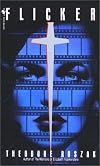
In this 1991 novel, we are introduced to film buff Jonathan Gates. Gaining his film education from his lover, Clare, he throws himself into the early 1960s film culture, rediscovering classic film before it was fashionable. In that process, he begins to come across references and snippets of film by a forgotten 1930s director, Max Castle. Castle directed Z-list horror shockers, and anyone watching them with a little knowledge or insight can see that they hide powerful and disturbing messages show more using a variety of almost subliminal techniques. Their overt content, Gates finds, can instill visceral feelings of disgust and revulsion; yet his growing technical knowledge tells him that Castle's work as a director is powerful and possibly important.
So he begins to gather information about Max Castle, tracking down remaining rare footage from his films, and then meeting actors and crew who worked with him. Slowly, Gates pieces together Max Castle's story, which leads him down unexpected rabbit holes.
The first half of this novel is a fly-on-the-wall portrait of the Californian film community from the perspective of the film buff fanbase. Gates, his lover Claire and Sharkey, a projectionist, run a down-at-heel art cinema and move in film buff circles, rubbing up against collectors, critics, film makers and a range of people from inside the industry. This portrait of an era has verisimilitude and some very effective character painting. Gates tracks down Zip Lipsky, Castle's cameraman, who gives him extensive insights into the character of the man he is pursuing. Lipsky is a particularly well-drawn character and I quite took to him.
There is a lot of humour in this part of the book, as well as some aspects of life in the 1960s and 70s that we would now find objectionable. There is quite a lot of sex and some casual anti-Semitism (from the mouths of expatriate Germans in Hollywood, it should be said) that some may find distasteful.
But from about the mid-way point of the book, things become more serious as Gates begins to realise that the subliminal aspects of Castle's films are not just there because of Castle wishing to show off; rather, they reflect his background as a scion of a heretical cult. Investigating this leads Gates to a major conspiracy.
This section of the book is quite hard going. Not only does Roszak present the reader with a lot of early church history and an exploration of Cathar conspiracies, but he also launches into an attack on the punk and post-punk nihilism of the era. This becomes quite visceral at times as Gates encounters post-punk filmmakers with a particular line on what were once called "video nasties" - indeed, the setting of the story is at the dawn of the video age, and Roszak takes a lot of trouble to explore the transition from film, viewed in one setting under specific circumstances, to television and video, viewed in the home, almost on demand, in a different set of circumstances. Given Roszak's earlier role as a cultural commentator, it should come as no surprise that there is a lot of discussion of media and media theory wrapped up in all of this book. Much of it is insightful, and reading it from the perspective of more than thirty years after it was written is interesting. At the same time, Roszak's vision of post-punk ultra-nihilism may be a bit too 'in your face' for some readers. And on a more practical note, his central character Jonathan Gates' progress from unpaid gopher in a seedy art cinema to a Professor of Film Studies at UCLA is suspiciously seamless.
Jonathan Gates goes so far down the rabbit hole that he suddenly finds that he cannot get out; the novel takes an unexpected turn, and something of the earlier sense of the book returns. We end where we began, looking in detail at old films, the problems of their preservation and showing, and the details of Max Castle's work.
Many of the insights and ideas in this novel, especially those on religion, sex and sexuality, will not please everyone. Some of the thoughts on media and the media landscape will equally upset some whose immediate focus is on those matters. Some of the ideas have been overtaken by events and our switch to a different, online media landscape; but the author of The Making of a Counter-Culture is always going to have something to say on how we watch film and television. Those who have read Neil Postman's Amusing ourselves to Death may find themselves quite chilled by this novel, even now. show less
So he begins to gather information about Max Castle, tracking down remaining rare footage from his films, and then meeting actors and crew who worked with him. Slowly, Gates pieces together Max Castle's story, which leads him down unexpected rabbit holes.
The first half of this novel is a fly-on-the-wall portrait of the Californian film community from the perspective of the film buff fanbase. Gates, his lover Claire and Sharkey, a projectionist, run a down-at-heel art cinema and move in film buff circles, rubbing up against collectors, critics, film makers and a range of people from inside the industry. This portrait of an era has verisimilitude and some very effective character painting. Gates tracks down Zip Lipsky, Castle's cameraman, who gives him extensive insights into the character of the man he is pursuing. Lipsky is a particularly well-drawn character and I quite took to him.
There is a lot of humour in this part of the book, as well as some aspects of life in the 1960s and 70s that we would now find objectionable. There is quite a lot of sex and some casual anti-Semitism (from the mouths of expatriate Germans in Hollywood, it should be said) that some may find distasteful.
But from about the mid-way point of the book, things become more serious as Gates begins to realise that the subliminal aspects of Castle's films are not just there because of Castle wishing to show off; rather, they reflect his background as a scion of a heretical cult. Investigating this leads Gates to a major conspiracy.
This section of the book is quite hard going. Not only does Roszak present the reader with a lot of early church history and an exploration of Cathar conspiracies, but he also launches into an attack on the punk and post-punk nihilism of the era. This becomes quite visceral at times as Gates encounters post-punk filmmakers with a particular line on what were once called "video nasties" - indeed, the setting of the story is at the dawn of the video age, and Roszak takes a lot of trouble to explore the transition from film, viewed in one setting under specific circumstances, to television and video, viewed in the home, almost on demand, in a different set of circumstances. Given Roszak's earlier role as a cultural commentator, it should come as no surprise that there is a lot of discussion of media and media theory wrapped up in all of this book. Much of it is insightful, and reading it from the perspective of more than thirty years after it was written is interesting. At the same time, Roszak's vision of post-punk ultra-nihilism may be a bit too 'in your face' for some readers. And on a more practical note, his central character Jonathan Gates' progress from unpaid gopher in a seedy art cinema to a Professor of Film Studies at UCLA is suspiciously seamless.
Jonathan Gates goes so far down the rabbit hole that he suddenly finds that he cannot get out; the novel takes an unexpected turn, and something of the earlier sense of the book returns. We end where we began, looking in detail at old films, the problems of their preservation and showing, and the details of Max Castle's work.
Many of the insights and ideas in this novel, especially those on religion, sex and sexuality, will not please everyone. Some of the thoughts on media and the media landscape will equally upset some whose immediate focus is on those matters. Some of the ideas have been overtaken by events and our switch to a different, online media landscape; but the author of The Making of a Counter-Culture is always going to have something to say on how we watch film and television. Those who have read Neil Postman's Amusing ourselves to Death may find themselves quite chilled by this novel, even now. show less
The making of a counter culture: reflections on the technocratic society and its youthful opposition by Theodore Roszak

Roszak's The Making of a Counter Culture is a collection of essays offering a critique of Western industrialised economy and its attendant culture. Two opening essays broadly outline first the situation and then the beginnings of a reasonable corrective. Middle essays look into specific aspects of the corrective, and the final two point to Roszak's overarching argument in another book, Where the Wasteland Ends.
Roszak's critique of society centers on his concept of technocracy, outlined in show more the opening essay. Technocracy is an organization of society resting upon three assumptions: [10, 37]
• Vital needs of society are technical in nature: they center on questions of how things should be done;
• Which is to say, social order is not primarily a question of knowledge (what should we do?), since the scientific analysis of human needs is virtually complete;
• And, the relevant decision makers best positioned to address these key social needs are certified experts, expert in the sense they are credentialed through a professional process.
The moral considerations of why or whether we should order society, toward what end or purpose, implicitly are left aside under technocracy.
Technocracy itself grows out of objective consciousness. Roszak is concerned to define objective consciousness (cold reason) and its effect on society and on its citizens. At the same time, he assesses the value of 1960s youth dissent in sensing the danger of technocracy and its underpinning consciousness, even if youth only partially understand them or the wide-ranging implications. This dissent – the counter culture, then, offers a nascent alternative to technocracy, but likely will prove ineffective precisely because it is without vision or a clear idea toward which to work, and without guidance will busy itself with a superficial resistance. It is tempting to suggest that historically that is what occurred, though it's an open question whether the opportunity is lost altogether or remains nascent.
Roszak's middle essays look in depth at specific historical trends characteristic of the counter culture, from the emphasis on psychedelics or mysticism, to trends in psychology and sociology and the youthful following each has nurtured.
His final two essays look at the same topic, but analytically rather than historically. In “The Myth of Objective Consciousness”, Roszak outlines 3 major characteristics of "the psychic style which follows from an intensive cultivation of objective consciousness":
• alienative dichotomy: all experience divided into In-Here and Out-There; In-Here “undertakes to know without an investment of the person in the act of knowing” [218], hence an alienative distancing, emptying out of all emotion from experience.
• invidious hierarchy: privileges In-Here with moral and epistemological priority (but not necessarily ontological priority); other persons are included along with rest of world. Draws a parallel between the operation in the individual of the In-Here vs Out-There, and in society of the technocracy and the citizen.
• mechanistic imperative: above 2 characteristics in tandem press toward AI and mechanistic substitution of the unreliable organic self. Not merely a lust for power driving this mechanisation, but also desire for routinization / predictability (emptying out individuation from individual)
“Eyes of Flesh, Eyes of Fire” outlines an alternative psyche, a revitalized sense of the sacred drawing on tradition and updated for contemporary society. This position is taken up in full by Where the Wasteland Ends.
Roszak is at various points strident and exaggerated, his achievement amounting to the clarity of his counterpoint to industrial reason and rationalisation. I suspect Wasteland may hold a similar weakness, though cannot recall from my reading a decade ago. Roszak does highlight the seductive power of technocratic culture, insofar as it's easy to be co-opted not so much out of greed or lax morality, but while sincerely striving to do good. In essence, that's what the counterculture is about, avoiding co-optation. The classic case is that of a physician genuinely striving to heal, yet treating and communicating with individual patients from a mindset of symptoms, or procedures, or clinical issues. This approach wholly undermines the physician's effort to heal the patient, whatever the clinical outcome. As a healthcare analyst, I can easily focus on data on clinical errors or underperforming a benchmark, and overlook how a report can come to define the overall care provided on a hospital unit (and by extension, the care provided by the staff on the unit), subsequently create a sense of frustration or personal attack, and ultimately have an altogether negative influence on patients and caregivers. show less
Roszak's critique of society centers on his concept of technocracy, outlined in show more the opening essay. Technocracy is an organization of society resting upon three assumptions: [10, 37]
• Vital needs of society are technical in nature: they center on questions of how things should be done;
• Which is to say, social order is not primarily a question of knowledge (what should we do?), since the scientific analysis of human needs is virtually complete;
• And, the relevant decision makers best positioned to address these key social needs are certified experts, expert in the sense they are credentialed through a professional process.
The moral considerations of why or whether we should order society, toward what end or purpose, implicitly are left aside under technocracy.
Technocracy itself grows out of objective consciousness. Roszak is concerned to define objective consciousness (cold reason) and its effect on society and on its citizens. At the same time, he assesses the value of 1960s youth dissent in sensing the danger of technocracy and its underpinning consciousness, even if youth only partially understand them or the wide-ranging implications. This dissent – the counter culture, then, offers a nascent alternative to technocracy, but likely will prove ineffective precisely because it is without vision or a clear idea toward which to work, and without guidance will busy itself with a superficial resistance. It is tempting to suggest that historically that is what occurred, though it's an open question whether the opportunity is lost altogether or remains nascent.
Roszak's middle essays look in depth at specific historical trends characteristic of the counter culture, from the emphasis on psychedelics or mysticism, to trends in psychology and sociology and the youthful following each has nurtured.
His final two essays look at the same topic, but analytically rather than historically. In “The Myth of Objective Consciousness”, Roszak outlines 3 major characteristics of "the psychic style which follows from an intensive cultivation of objective consciousness":
• alienative dichotomy: all experience divided into In-Here and Out-There; In-Here “undertakes to know without an investment of the person in the act of knowing” [218], hence an alienative distancing, emptying out of all emotion from experience.
• invidious hierarchy: privileges In-Here with moral and epistemological priority (but not necessarily ontological priority); other persons are included along with rest of world. Draws a parallel between the operation in the individual of the In-Here vs Out-There, and in society of the technocracy and the citizen.
• mechanistic imperative: above 2 characteristics in tandem press toward AI and mechanistic substitution of the unreliable organic self. Not merely a lust for power driving this mechanisation, but also desire for routinization / predictability (emptying out individuation from individual)
“Eyes of Flesh, Eyes of Fire” outlines an alternative psyche, a revitalized sense of the sacred drawing on tradition and updated for contemporary society. This position is taken up in full by Where the Wasteland Ends.
Roszak is at various points strident and exaggerated, his achievement amounting to the clarity of his counterpoint to industrial reason and rationalisation. I suspect Wasteland may hold a similar weakness, though cannot recall from my reading a decade ago. Roszak does highlight the seductive power of technocratic culture, insofar as it's easy to be co-opted not so much out of greed or lax morality, but while sincerely striving to do good. In essence, that's what the counterculture is about, avoiding co-optation. The classic case is that of a physician genuinely striving to heal, yet treating and communicating with individual patients from a mindset of symptoms, or procedures, or clinical issues. This approach wholly undermines the physician's effort to heal the patient, whatever the clinical outcome. As a healthcare analyst, I can easily focus on data on clinical errors or underperforming a benchmark, and overlook how a report can come to define the overall care provided on a hospital unit (and by extension, the care provided by the staff on the unit), subsequently create a sense of frustration or personal attack, and ultimately have an altogether negative influence on patients and caregivers. show less

I suspect Roszak's argument will translate as a diatribe to many, if not an outright rant. He recounts the many ways science has permeated urban-industrial cultures, and prevailed as a substitute for all thinking. It will be easy to take offence and assume he is against science altogether. In fact his argument is that science has become Blake's single vision; the problem is not that science is not valid, but that it isn't valid as the only or even dominant mode of thought. Roszak is so show more intent upon emphasizing his point it's likely a typical reader will mistake his emphasis for the point itself.
Roszak extends his argument from a prior book, The Making of a Counter Culture, postulating that transcendant vision in urban-industrial society (when present at all) has been alienated from its root intent, with political consequences. Both Christianity and Psychology began in consonance with the Old Gnosis, but ended sharply divorced from it, instead embracing what Blake termed single vision. The Romantic Movement re-connected with transcendant vision, which Roszak also refers to as Rhapsodic Intellect, but that perspective remains compartmentalised and minimised within mainstream culture.
Single vision is a diminished consciousness because its urban-industrial context alienates us from a broader environment, and because its attendant psychic worldview is flattened, finding reality only in appearances. A robust consciousness would find reality behind appearances, but the Freudian reality principle characterising modern culture denies that. "When, therefore, our powers of proprioception dim, it is more than a personal misfortune. It is also the foreclosure of our [collective] ability to know nature from the inside out." [90]
Rhapsodic Intellect's veridical experience persuades of its truth, and engages multiple dimensions of human experience. Ironically, Roszak suggests that it was precisely such a layered and engaging view which persuaded people to embrace science, and subsequently evolved into that urban-industrial culture which rejects its own origins. [173] That is, veridical experience is authentic and a better basis for culture, yet is no fixed or ultimate endpoint, for -- perhaps like our taste for sugar -- it can lead us in unhealthy directions. This weakness he explains as an "innate psychology" among humans, the need for an ethical purpose, and which science appealed to early in its evolution. People lost sight of the central fact that science can provide no purpose, instead is only ever a tool or means, and the allure of that means lies at the root of our cultural failing. The solution must be to establish a sound foundation for human endeavour, and link science (and our other myriad means of knowing) to that root.
Roszak ends with a discussion of the cultural concept of returning to heaven, or apocatastasis: reversing the path we've taken, revitalising society through rhapsodic intellect. He states explicitly such a cultural turn-around would be exceedingly difficult, but doesn't spend much time on attempting to persuade whether it's likely or exhorting the reader to make the attempt. I find it eye-opening to learn there is even a cultural tradition of such an existential turn, that the scenarios have been considered sufficiently seriously to be passed on as a concept (apocatastasis, or Buddha's Paravritti).
//
Goethe: Newtonian objectivity effectively manipulated natural phenomena, demonstrating how Nature can be made to behave, as opposed to disclosing how it works. It's not that science is false, so much as that one meaning (ecology, morphology) is exchanged for another (possibility, and a preference for control leading to artificial environments). Science becomes a means of torturing reality in order to provide answers, yielding answers which perhaps are true but also are manipulated and distorted.
Roszak argues the root of meaning (for transcendant symbols, but perhaps implicitly for all language) is the lived experience, and that such human experience is both subjective (varies with individual context) and universal (though it varies, we all have it). Symbols then are palimpsests or layered receptacles, containing layers of often contradictory information, unified in that all are meanings. Dream as the exemplar today, with puns and homonyms and associations hinting at the layers; in pre-modern culture, symbols did similar work as dreams.
Palimpsest model of meaning suggests Chapman's understanding of requirements for a politics rests upon a consistency that isn't so strict in transcendant meaning. Perhaps it could be adapted: each layer will only cohere with other meanings (or other symbols) in limited ways, but that then presents a view of the sorts of "filters" or subsets that work together in a politics, and not a position claiming a person might not live multiple, even contradictory politics, hopping from one layer or subset of layers to another, as specific interests become more of a priority or relevant to a new context. show less
Roszak extends his argument from a prior book, The Making of a Counter Culture, postulating that transcendant vision in urban-industrial society (when present at all) has been alienated from its root intent, with political consequences. Both Christianity and Psychology began in consonance with the Old Gnosis, but ended sharply divorced from it, instead embracing what Blake termed single vision. The Romantic Movement re-connected with transcendant vision, which Roszak also refers to as Rhapsodic Intellect, but that perspective remains compartmentalised and minimised within mainstream culture.
Single vision is a diminished consciousness because its urban-industrial context alienates us from a broader environment, and because its attendant psychic worldview is flattened, finding reality only in appearances. A robust consciousness would find reality behind appearances, but the Freudian reality principle characterising modern culture denies that. "When, therefore, our powers of proprioception dim, it is more than a personal misfortune. It is also the foreclosure of our [collective] ability to know nature from the inside out." [90]
Rhapsodic Intellect's veridical experience persuades of its truth, and engages multiple dimensions of human experience. Ironically, Roszak suggests that it was precisely such a layered and engaging view which persuaded people to embrace science, and subsequently evolved into that urban-industrial culture which rejects its own origins. [173] That is, veridical experience is authentic and a better basis for culture, yet is no fixed or ultimate endpoint, for -- perhaps like our taste for sugar -- it can lead us in unhealthy directions. This weakness he explains as an "innate psychology" among humans, the need for an ethical purpose, and which science appealed to early in its evolution. People lost sight of the central fact that science can provide no purpose, instead is only ever a tool or means, and the allure of that means lies at the root of our cultural failing. The solution must be to establish a sound foundation for human endeavour, and link science (and our other myriad means of knowing) to that root.
Roszak ends with a discussion of the cultural concept of returning to heaven, or apocatastasis: reversing the path we've taken, revitalising society through rhapsodic intellect. He states explicitly such a cultural turn-around would be exceedingly difficult, but doesn't spend much time on attempting to persuade whether it's likely or exhorting the reader to make the attempt. I find it eye-opening to learn there is even a cultural tradition of such an existential turn, that the scenarios have been considered sufficiently seriously to be passed on as a concept (apocatastasis, or Buddha's Paravritti).
//
Goethe: Newtonian objectivity effectively manipulated natural phenomena, demonstrating how Nature can be made to behave, as opposed to disclosing how it works. It's not that science is false, so much as that one meaning (ecology, morphology) is exchanged for another (possibility, and a preference for control leading to artificial environments). Science becomes a means of torturing reality in order to provide answers, yielding answers which perhaps are true but also are manipulated and distorted.
Roszak argues the root of meaning (for transcendant symbols, but perhaps implicitly for all language) is the lived experience, and that such human experience is both subjective (varies with individual context) and universal (though it varies, we all have it). Symbols then are palimpsests or layered receptacles, containing layers of often contradictory information, unified in that all are meanings. Dream as the exemplar today, with puns and homonyms and associations hinting at the layers; in pre-modern culture, symbols did similar work as dreams.
Palimpsest model of meaning suggests Chapman's understanding of requirements for a politics rests upon a consistency that isn't so strict in transcendant meaning. Perhaps it could be adapted: each layer will only cohere with other meanings (or other symbols) in limited ways, but that then presents a view of the sorts of "filters" or subsets that work together in a politics, and not a position claiming a person might not live multiple, even contradictory politics, hopping from one layer or subset of layers to another, as specific interests become more of a priority or relevant to a new context. show less
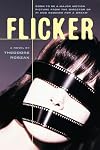
A horror novel for pretentious film buffs. Unfortunately, I tend to dislike books about movies. (Or movies about movies for that matter, although somehow I like books (and movies) about books).
Anyway: A film critic rediscovers the lost work of an obscure German horror director who was lost at sea during WWII, and although his work is generally dismissed as pulp, he finds a plethora of mysterious techniques at use in the work, making use of subliminal techniques to accentuate the horror of show more the stories. He's fascinated, and makes the director the main subject of his academic studies - but to his lover, the films are nothing but evil.
Gradually, his research draws him into some strange circles, as he discovers unsavory details - and a weird cult descended from medieval heretics which may still be influential today...
Strangely (and I'm sure the author would be dismayed to hear) I found the book to be a lot like the imaginary subliminal movies he speaks of: it was undeniably compelling reading, but I'm not sure I liked it, and I definitely disagreed with it. It strongly condemns pop culture (movies, music, etc) that is dark, trashy and nihilistic and waxes nostalgic about the faux-innocent works of a 'golden' past as being 'Good.' ("Singin' In the Rain is the ultimate anti-fascist film.") Lots of random criticisms of stuff I like and lame cardboard stereotypes of punk rockers... which led to me both thinking that, for a so-called 'scholar' the author really lacks social understanding, and also just made me want to go find him, waggle my tongue at him and say, "I am what you hate and fear!" show less
Anyway: A film critic rediscovers the lost work of an obscure German horror director who was lost at sea during WWII, and although his work is generally dismissed as pulp, he finds a plethora of mysterious techniques at use in the work, making use of subliminal techniques to accentuate the horror of show more the stories. He's fascinated, and makes the director the main subject of his academic studies - but to his lover, the films are nothing but evil.
Gradually, his research draws him into some strange circles, as he discovers unsavory details - and a weird cult descended from medieval heretics which may still be influential today...
Strangely (and I'm sure the author would be dismayed to hear) I found the book to be a lot like the imaginary subliminal movies he speaks of: it was undeniably compelling reading, but I'm not sure I liked it, and I definitely disagreed with it. It strongly condemns pop culture (movies, music, etc) that is dark, trashy and nihilistic and waxes nostalgic about the faux-innocent works of a 'golden' past as being 'Good.' ("Singin' In the Rain is the ultimate anti-fascist film.") Lots of random criticisms of stuff I like and lame cardboard stereotypes of punk rockers... which led to me both thinking that, for a so-called 'scholar' the author really lacks social understanding, and also just made me want to go find him, waggle my tongue at him and say, "I am what you hate and fear!" show less
Lists
Awards


You May Also Like


Associated Authors
Statistics
- Works
- 22
- Also by
- 1
- Members
- 3,310
- Popularity
- #7,730
- Rating
- 3.9
- Reviews
- 51
- ISBNs
- 136
- Languages
- 11
- Favorited
- 9