
Joseph Pearce (1) (1961–)
Author of Tolkien: Man and Myth
For other authors named Joseph Pearce, see the disambiguation page.
About the Author
Joseph Pearce has written ground-breaking biographical books on authors. Oscar Wilde, J. R. R. Tolkien, C. S. Lewis, Alexander Solzhenitsyn, and William Shakespeare. His books covering more than one author include Literary Converts and Catholic Literary Giants. He is the editor of the multi-volume show more Ignatius Critical Editions series. show less
Series
Works by Joseph Pearce
Catholic Literary Giants: A Field Guide to the Catholic Literary Landscape (2014) 79 copies, 1 review
Candles in the Dark: The Authorized Biography of Fr. Ho Lung and the Missionaries of the Poor (2013) 36 copies, 1 review
Shakespeare's Catholicism: A Critical Analysis of the Bard's Life and Plays (DVD) (2011) 4 copies, 1 review
Life Changing Evangelism 2 copies
Shakespeare's Catholicism (Audio CD): A Critical Analysis of the Bard's Life and Plays (2011) 2 copies
VILVOORDE BORDUURT VOORT 1 copy
Associated Works
Saint Thomas Aquinas / Saint Francis of Assisi (2002) — Introduction, some editions — 436 copies, 4 reviews
J. R. R. Tolkien's Sanctifying Myth: Understanding Middle-Earth (2002) — Foreword — 322 copies, 4 reviews
J.R.R. Tolkien: Myth, Morality, and Religion (1984) — Foreword, some editions — 128 copies, 2 reviews
Celebrating Middle-earth: The Lord of the Rings as a Defense of Western Civilization (2002) — Contributor, some editions — 63 copies
Revisiting Narnia: Fantasy, Myth and Religion in C. S. Lewis' Chronicles (2005) — Contributor — 54 copies, 1 review
The Coasts of the Country: An Anthology of Prayer Drawn from the Early English Spiritual Writers (2007) — Preface — 14 copies
Tagged
Common Knowledge
- Birthdate
- 1961-02-12
- Gender
- male
- Occupations
- writer
editor - Organizations
- Sapientia Press
Aquinas College, Tennessee
National Front - Nationality
- UK
- Birthplace
- Barking, East London, England, UK
- Places of residence
- Dagenham, Essex, England, UK
Haverhill, Suffolk, England
Nashville, Tennessee, USA
Merrimack, New Hampshire, USA
Ypsilanti, Michigan, USA
Members
Reviews
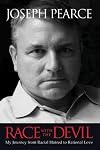
Having previously read and reviewed the author's work entitled "Literary Converts" and watched a pair of television series in which he made the case for Shakespeare as a recusant, albeit surreptitious Catholic and Great Books Every Catholic Should Know, it came as more than a bit of a shock to learn that Pearce had at one time been a member and in fact a leader of a white nationalist party that trafficked in some pretty nasty racism and fellow traveled with English neo-Nazis.
Thus, I snapped show more up a copy of Race with the Devil to find out how he came to be an extremist, serve two terms in prison for the crime of "hate speech" and how he gradually came to reject his racial hatred and embrace a life of rational love culminating in his own conversion to Catholicism.
It needs to be emphasized that, although he came from a modest socioeconomic background, Pearce was by no means an anti-intellectual meathead. His father was a fairly well-read autodidact who passed on to his son Joe a love of reading and especially English history and the glory of the British Empire. Pearce's father was a conventional nominal Anglican who also subscribed to conventional English prejudices against Catholics ("bead rattlers") especially the Irish and Jews. He taught himself German and unfortunately also taught young Joe the Horst Wessel song, the Nazi Party anthem. He respected the Nazis for their robust stand against Communism. According to Pearce his father characterized a Communist as a fellow "who demands that you be his brother or else he'll crack your skull".
When still a young child the family relocated from a relatively rural town of Haverhill to a London neighborhood to allow Joe's mother to reconnect with her relatives. Joe was a bright, but by no means model student and it didn't take long for him to be at war with his teachers. They were for the most part Marxists or at least socialists and their emphasis on British social history to the exclusion of British political and military history rubbed young Pearce the wrong way. He event took exception to the required reading of Romeo and Juliet instead of the Shakespearean histories especially Henry V.
At a very young age of sixteen Pearce drifted into the orbit of the British National Party whose core platform of a whites only Britain and rejection of the 1948 British Nationalities Act made the party the instantiation of anti-immigrant sentiment in British politics. Essentially, Pearce's career as a racist extremist lasted for a decade during which he was convicted of publishing articles in his newspaper "Bulldog" that were inclined to incite racial hatred. He survived the first prison stint fairly easily, serving four months of a six months' sentence. The second sentence was a bit tougher, and he endured his own "dark night of the soul". It is noteworthy that when he entered prison for the second term and was asked his religion he replied "Catholic".
Along the way Pearce had encountered the writings of G.K. Chesterton and was initially attracted to his writings on economics which argued for a middle way between capitalism and socialism called Distributism which was based on Pope Leo XIII's encyclical Rerum Novarum. Over time he immersed himself in Chesterton's works and those of Hilaire Belloc and C.S. Lewis beginning with Lewis's autobiography Surprised by Joy.
There was no clear-cut break with the National Party upon his release from prison, no "on the road to Damascus" moment. Rather the reading he immersed himself in worked on him like a steady stream of water eroding a rock until he realized he no longer had anything in common with his former colleagues and friends and ultimately concluded that indeed he was or at least wanted to become a Catholic.
After breaking with the National Front, he took a 9 to 5 job and at night worked on a book on a German Catholic author, Otto Strasser, a Catholic who had been at one time a Nazi and then rejected Hitler and the party. (His brother Gregor Strasser was among the party members assassinated during the 1934 Night of the Long Knives.)
Unable to find a publisher for the Strasser book, Pearce took another leap of faith and decided to become a professional writer and began a biography of his muse, Chesterton.
Pearce emphasized that Race with the Devil is a conversion story not a biography, but it is clearly both. It is a fascinating tale of sin and redemption and an inspiration to any reader especially those who are enduring their own dark night of the soul. show less
Thus, I snapped show more up a copy of Race with the Devil to find out how he came to be an extremist, serve two terms in prison for the crime of "hate speech" and how he gradually came to reject his racial hatred and embrace a life of rational love culminating in his own conversion to Catholicism.
It needs to be emphasized that, although he came from a modest socioeconomic background, Pearce was by no means an anti-intellectual meathead. His father was a fairly well-read autodidact who passed on to his son Joe a love of reading and especially English history and the glory of the British Empire. Pearce's father was a conventional nominal Anglican who also subscribed to conventional English prejudices against Catholics ("bead rattlers") especially the Irish and Jews. He taught himself German and unfortunately also taught young Joe the Horst Wessel song, the Nazi Party anthem. He respected the Nazis for their robust stand against Communism. According to Pearce his father characterized a Communist as a fellow "who demands that you be his brother or else he'll crack your skull".
When still a young child the family relocated from a relatively rural town of Haverhill to a London neighborhood to allow Joe's mother to reconnect with her relatives. Joe was a bright, but by no means model student and it didn't take long for him to be at war with his teachers. They were for the most part Marxists or at least socialists and their emphasis on British social history to the exclusion of British political and military history rubbed young Pearce the wrong way. He event took exception to the required reading of Romeo and Juliet instead of the Shakespearean histories especially Henry V.
At a very young age of sixteen Pearce drifted into the orbit of the British National Party whose core platform of a whites only Britain and rejection of the 1948 British Nationalities Act made the party the instantiation of anti-immigrant sentiment in British politics. Essentially, Pearce's career as a racist extremist lasted for a decade during which he was convicted of publishing articles in his newspaper "Bulldog" that were inclined to incite racial hatred. He survived the first prison stint fairly easily, serving four months of a six months' sentence. The second sentence was a bit tougher, and he endured his own "dark night of the soul". It is noteworthy that when he entered prison for the second term and was asked his religion he replied "Catholic".
Along the way Pearce had encountered the writings of G.K. Chesterton and was initially attracted to his writings on economics which argued for a middle way between capitalism and socialism called Distributism which was based on Pope Leo XIII's encyclical Rerum Novarum. Over time he immersed himself in Chesterton's works and those of Hilaire Belloc and C.S. Lewis beginning with Lewis's autobiography Surprised by Joy.
There was no clear-cut break with the National Party upon his release from prison, no "on the road to Damascus" moment. Rather the reading he immersed himself in worked on him like a steady stream of water eroding a rock until he realized he no longer had anything in common with his former colleagues and friends and ultimately concluded that indeed he was or at least wanted to become a Catholic.
After breaking with the National Front, he took a 9 to 5 job and at night worked on a book on a German Catholic author, Otto Strasser, a Catholic who had been at one time a Nazi and then rejected Hitler and the party. (His brother Gregor Strasser was among the party members assassinated during the 1934 Night of the Long Knives.)
Unable to find a publisher for the Strasser book, Pearce took another leap of faith and decided to become a professional writer and began a biography of his muse, Chesterton.
Pearce emphasized that Race with the Devil is a conversion story not a biography, but it is clearly both. It is a fascinating tale of sin and redemption and an inspiration to any reader especially those who are enduring their own dark night of the soul. show less
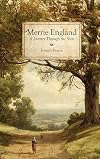
Just the right mixture of morbidity and the sublime that really gels with me, expansive horizons up and down our beautiful Isles are indicative of both death and the magnanimity of God. Pearce writes in that Christian, essentially English and patriotic mode that I love so much - he probably enjoys a good coronation chicken sandwich and a can of G&T from M&S, yet isn’t chanting colonial verses from Kipling or being an insufferable conservative arse (aside from lamenting the prevalence of show more materialism and the ugliness of modern English cities - but who could deny him that? He’s bloody spot-on, even if he does sometimes indulge in grumbling with the affectation of a jaded and cantankerous old man).
Anything that acknowledges the particularity of the English countryside, which manages to recognise its slight daemonic quality (in the same way that Socrates would describe his poetic bent as daemonic), is worth reading. Despite appearances, and even in spite of our national characteristic of bearing a stiff upper lip and of possessing a mediocre utilitarian/scientific temperament (just look at how scathing Nietzsche was when it came to the British), there’s a reason why folk-horror has such deep roots here and has borne such an abundance of fruit.
But of course everything in this book has an overbearing dimension of beauty as well, and to emphasise the bleakness, the wonderful bleakness of these vistas, their barren quality, would be to do Pearce a disservice. The Cathedrals he visits, the poets he quotes, the little spots he takes a break in during his long pilgrimage, they’re all perfectly lovely - and I say perfectly not in the sense of it just being sufficient, or to try to demean their significance in anyway whatsoever, they are all truly wonderful and provide a great comfort.
But the allusions to death are many, England is a land of ghosts, is animated and energised by these ghosts, which are more significant than those who wander blindly through the streets. And remember: always travel by foot! That is how one attains both revelations and madness, just ask Werner Herzog. (also my town was mentioned, big up the C-town massive, the largest crater and cesspit to ever be cobbled together on Blighty’s pictureseque shores, the true arsehole of the world).
Read this if you want a more Christian and human counterpart/companion to J.A. Baker’s The Peregrine.
“In between, vast and unavoidable, lies London. Its suburban outcrops creep, relentless and uninvited, to the very edge of Belloc’s beloved Sussex, crawling into Crawley and looming as an ever-present threat to the rural virginity of the weald.”
“Hedgerow, farmland, copse, and meadow, serenaded by robin, thrush, and blackbird, feast his eyes and ears. Wandering through villages with the delightful names of Good Easter and High Easter, his heart is resurrected. Here, at last, we see nature nurturing nativity and life itself defying the culture of death.” show less
Anything that acknowledges the particularity of the English countryside, which manages to recognise its slight daemonic quality (in the same way that Socrates would describe his poetic bent as daemonic), is worth reading. Despite appearances, and even in spite of our national characteristic of bearing a stiff upper lip and of possessing a mediocre utilitarian/scientific temperament (just look at how scathing Nietzsche was when it came to the British), there’s a reason why folk-horror has such deep roots here and has borne such an abundance of fruit.
But of course everything in this book has an overbearing dimension of beauty as well, and to emphasise the bleakness, the wonderful bleakness of these vistas, their barren quality, would be to do Pearce a disservice. The Cathedrals he visits, the poets he quotes, the little spots he takes a break in during his long pilgrimage, they’re all perfectly lovely - and I say perfectly not in the sense of it just being sufficient, or to try to demean their significance in anyway whatsoever, they are all truly wonderful and provide a great comfort.
But the allusions to death are many, England is a land of ghosts, is animated and energised by these ghosts, which are more significant than those who wander blindly through the streets. And remember: always travel by foot! That is how one attains both revelations and madness, just ask Werner Herzog. (also my town was mentioned, big up the C-town massive, the largest crater and cesspit to ever be cobbled together on Blighty’s pictureseque shores, the true arsehole of the world).
Read this if you want a more Christian and human counterpart/companion to J.A. Baker’s The Peregrine.
“In between, vast and unavoidable, lies London. Its suburban outcrops creep, relentless and uninvited, to the very edge of Belloc’s beloved Sussex, crawling into Crawley and looming as an ever-present threat to the rural virginity of the weald.”
“Hedgerow, farmland, copse, and meadow, serenaded by robin, thrush, and blackbird, feast his eyes and ears. Wandering through villages with the delightful names of Good Easter and High Easter, his heart is resurrected. Here, at last, we see nature nurturing nativity and life itself defying the culture of death.” show less
The book gives a good overview of the history of Christianity in England. However, the author is known to be a polemic, so he highly favors Catholicism over other forms of Christianity. He downplays the atrocities of Catholics and focuses more on the atrocities committed by Protestants. Where the truth is both Christian groups committed horrific acts against the other.
This in an interesting little book. I enjoy monographs on tight little topics—topics which throw light on something larger. For various reasons, I've read it pretty carefully, digested the facts and gone on to look at how the book is argued—misargued, I think.
The basic problem is empathy. Pearce ably demonstrates Lewis' asymptotic approach to Catholicism, but seems overly invested in advocating for a meeting that never happens. He doesn't have enough openness and empathy to see Lewis' show more Anglicanism as anything other than a dodge—to understand not only why Catholicism appealed to Lewis, and how he moved in some Catholic directions, but also why Lewis did not end up in the Catholic church.
In discussing Mere Christianity he can't accept the basic premise—a minimal statement that both Catholics and Protestants (and others) could agree on. No, Lewis, whose Great Divorce wins high marks for taking place in a sort of Purgatory—hardly proof that Lewis believed in Purgatory any more than Tolkien believed in elves—gets the sharp end of the stick for leaving out Mary, the "second Eve." I feel fairly certain Lewis had reasons for his resistance to ideas like this, and to words like this. I suspect that Lewis, like many Protestants—and some Catholics—see in "Mary the second Eve" an uncomfortable counterpart and reference to the far more ancient and universal idea of Jesus as the "second Adam." When Jesus is Adam and Mary is Eve, they're equals and something uncomfortable is suggested.
I can only guess on his reaction to this term, and, largely, as to why Lewis didn't become a Catholic. I would expect a book like this to examine the issue more carefully, and more sympathetically. show less
The basic problem is empathy. Pearce ably demonstrates Lewis' asymptotic approach to Catholicism, but seems overly invested in advocating for a meeting that never happens. He doesn't have enough openness and empathy to see Lewis' show more Anglicanism as anything other than a dodge—to understand not only why Catholicism appealed to Lewis, and how he moved in some Catholic directions, but also why Lewis did not end up in the Catholic church.
In discussing Mere Christianity he can't accept the basic premise—a minimal statement that both Catholics and Protestants (and others) could agree on. No, Lewis, whose Great Divorce wins high marks for taking place in a sort of Purgatory—hardly proof that Lewis believed in Purgatory any more than Tolkien believed in elves—gets the sharp end of the stick for leaving out Mary, the "second Eve." I feel fairly certain Lewis had reasons for his resistance to ideas like this, and to words like this. I suspect that Lewis, like many Protestants—and some Catholics—see in "Mary the second Eve" an uncomfortable counterpart and reference to the far more ancient and universal idea of Jesus as the "second Adam." When Jesus is Adam and Mary is Eve, they're equals and something uncomfortable is suggested.
I can only guess on his reaction to this term, and, largely, as to why Lewis didn't become a Catholic. I would expect a book like this to examine the issue more carefully, and more sympathetically. show less
Lists
Awards

You May Also Like


Associated Authors
Statistics
- Works
- 72
- Also by
- 11
- Members
- 3,591
- Popularity
- #7,055
- Rating
- 4.3
- Reviews
- 45
- ISBNs
- 181
- Languages
- 7
- Favorited
- 3
